
What Happens After the Hundred: Tigers & Flies and the Arithmetic of Persistence
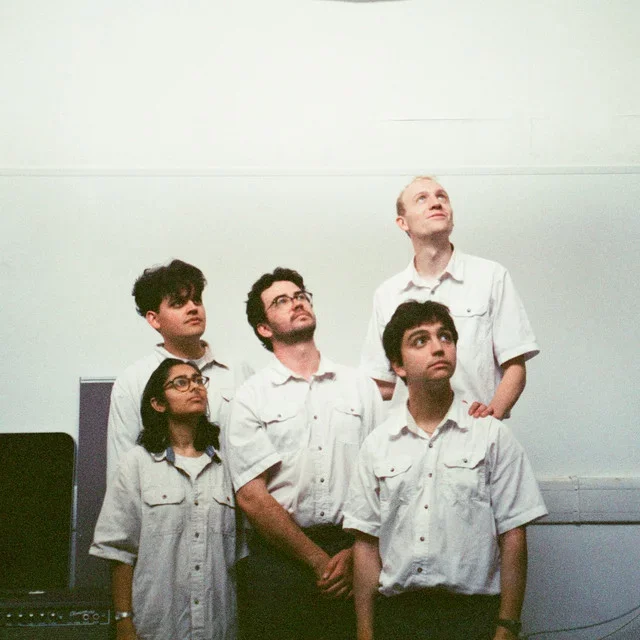
The hundred copies are gone. Not all of them - there might be twelve left, possibly fewer, the exact number depending on whether that bloke in Brighton ever transferred the money - but gone enough that the question shifts from "will anyone buy this?" to "so what now?"
This is the bit no one ever writes about. The morning after you've proved you can make something people want to possess, you're still working at the coffee warehouse. The maths teacher still has to explain fractions to teenagers who'd rather be looking at their phones. Nothing has fundamentally changed except that you now know, with uncomfortable specificity, that eighty-eight people think what you're doing matters enough to spend £25.99 on it.
The number matters because it's large enough to mean something and small enough to mean nothing. Eighty-eight people is a decent-sized dinner party if you're unhinged enough to attempt one. It's also a rounding error in any calculation of commercial viability. Violette Records pressed a hundred because that's what they could afford, which means Tigers & Flies exist at precisely the scale where making things costs real money but generates no money worth calling real.
Which would be depressing if the record wasn't actually good. Not ‘good for a small band’ or ‘promising given their age’ - good in the way that makes you irritated on their behalf that more people haven't heard it.
Listen to ‘Silver Lashing’ properly and you'll hear what I mean. Risha Alimchandani's trombone and Matteo Fernandes's trumpet don't function as decoration. They're structural, narrative voices in dialogue with Arthur Arnold's guitar and Eddie Wigin's bass and Arvin Johnson's drums. The brass enters and the song shifts. Most bands who add brass as an after-thought and get it wrong - the horns become punctuation, musical exclamation marks. Tigers & Flies use them as grammar. It's the difference between competent and genuinely good, and they're genuinely good, which makes the economics more frustrating rather than less.
The economics are worth examining. Five people scattered across Manchester, London, Brighton and Cumbria, rehearsing when they can afford the train fare, recording when they can align diaries and book the studio, playing shows that might cover petrol if they're lucky. The romantic version says they're doing it for love. The honest version says they're doing it because stopping would feel worse than continuing, and also because they're good enough that stopping would be a waste.
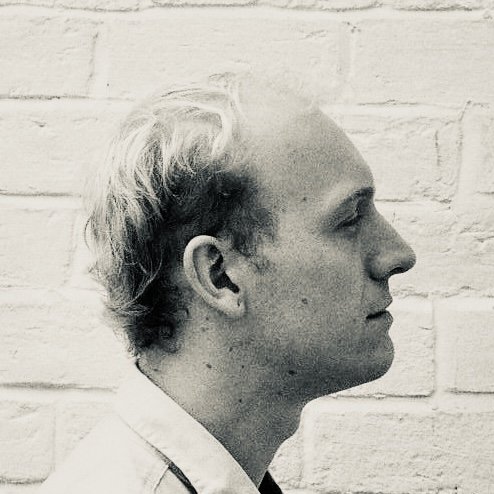
Arthur Arnold is twenty-six, studies Creative Writing at Goldsmiths, packs coffee beans for money. His first job was as a paper boy and his Sunday route took exactly one hour and thirteen minutes - the running time of A Black Path Retrospective by The Claim, his dad's band, which he played every Sunday without fail. Sometimes his dad probably doesn't believe him when he says they're his favourite band, but it's true. This explains quite a lot about Arthur's approach to music, and also why his lyrics occasionally disappear up their own cleverness in ways that a twenty-five-year-old Creative Writing student's lyrics inevitably will.
‘Compact Risk’ builds from tight nervous verses into a chorus that transforms paranoia into something communal. ‘Going To Bed’ treats retreat as reasonable response rather than defeat: "I don't know why it had to come to this, so I'm going to bed." There's a willow in that song and afternoon sunlight, and the specific exhaustion of being twenty-six and trying to make sense of things. ‘Walk In A Straight Line’ references Eric Dolphy and contains the instruction "LET THAT DOLPHY PLAY" delivered with enough conviction that you want to immediately put on Out to Lunch, which is the kind of move that could be insufferable except the song earns it by being genuinely strange.
‘Hulme High Street Ablaze’ is probably the most Manchester thing anyone's recorded this decade without resorting to obvious signifiers. No tedious references to rain or Ian Curtis, just Arthur shouting "brothers of the lung" - a phrase nicked from an evening watching The End of the Tour, apparently - over brass that cuts like wire and rhythms that refuse to sit still. It manages to be about Manchester's past and present simultaneously without collapsing into nostalgia or urban regeneration clichés. It shouldn't work. It does.
Matteo Fernandes teaches maths in Manchester and grew up listening to Lee Morgan and Clifford Brown. He's also a bloody demon on the tambourine. Eddie Wigin has moved to Sellafield to work on electrical infrastructure at a nuclear facility and plays bass lines that operate somewhere between melody and foundation. His playing has moved in a more rhythmic direction lately, mostly because he's sick of not being able to play songs properly at gigs. Arvin Johnson photographs on film - proper film that you have to develop - keeping the prints in albums with dates on the front. During their recent European tour, vending machine cheese croquettes played a pivotal role in keeping them fed and happy. This isn’t just incidental detail. It’s what allows five people scattered across three cities to justify logistics.
They have recurring conversations about "don and skunk of the week"-awards for people or places that have either helped them out or exhibited skunky behaviour. Norwich recently won don. Hull remains a repeat skunk offender. Risha Alimchandani, who works as an Editor at Manchester University and says she likes crackly noises - frying eggs, crackling fires, crunchy leaves - says her favourite song is ‘Silver Lashings’ because it has everything you could want: lyrical brass lines, gang vocals, Luddites, texture changes and lots of cowbell. She's not wrong.
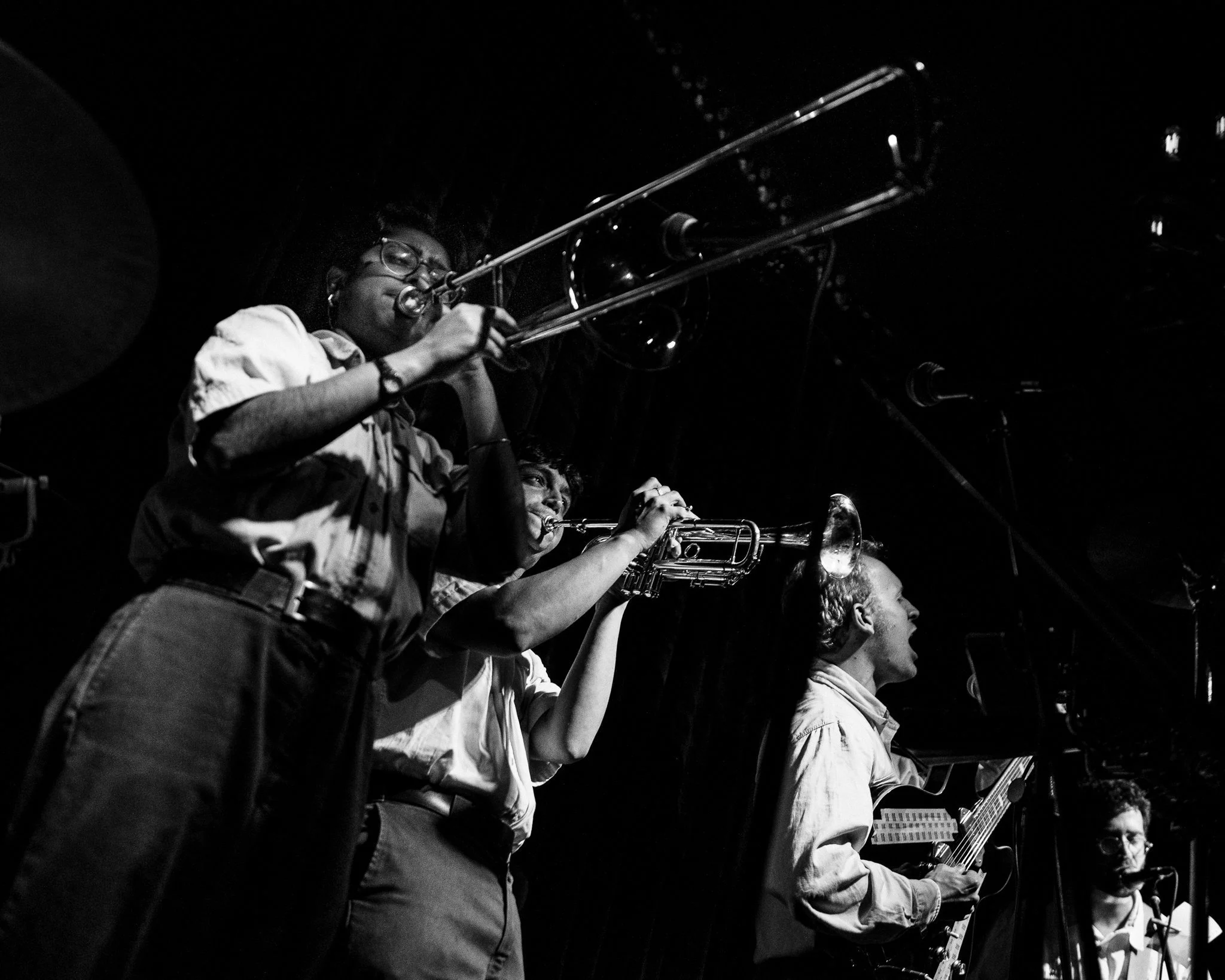
What happens at their shows is worth describing. Five people who genuinely enjoy playing together - not performing enjoyment but experiencing it - which turns out to be contagious in ways that performed enthusiasm simply isn't. You can see it in how they look at each other, the way Arvin, Eddie and Matteo lock in during percussion sections. The most connected Matteo feels to the audience is when the brass isn't playing and he can listen and groove to what the others are putting down, almost enjoying it as an audience member.
After shows, people buy the vinyl at the merch table. Cash or card, £25.99, transaction complete. Most bands have to explain what vinyl is, why it costs more than streaming, why anyone would want to own a physical object in 2026. Tigers & Flies don't have to explain because what they're doing on stage creates desire for the object itself.
The packaging of Expanded Play carries no words on the front. Just artwork, heavyweight paper stock, silk finish, the band's name tucked on the spine. This was either supreme confidence or a category error in basic marketing. Three months later we can confirm it was the former.
They're recording a full album in early 2026. This is five people who've demonstrated they can do something rare, making the thing that will show their full capabilities. Whether anyone beyond their current audience will hear it is a separate question. The structural impediments are real and probably insurmountable without external intervention - a label with significant resources, media coverage beyond scattered reviews, enough income from gigs to justify the costs.
None of this is Tigers & Flies' fault, which is precisely the problem. You can do everything right - write good songs, play them well, make records that sound great, build an audience that actually cares - and still discover that ‘everything right’ isn't sufficient. Arthur's definition of success shifts weekly, apparently, but one version goes like this: we've made it, because we get to do it. This is either naive or wise, and the distance between those two states gets narrower the longer you think about it.
What they've already proved though is that at the scale where they currently operate, making music that people want to possess rather than passively consume, they're succeeding. The hundred copies are gone because they made something worth owning. The brass works because Risha and Matteo understand they're place isn’t decoration. The songs work because Arthur writes them well and Eddie and Arvin know how to make them move.
Whether this proves commercially viable or critically recognised or simply personally sustainable is unknowable. What's knowable is that Expanded Play documents a band demonstrating capabilities most of their peers don't possess. The 2026 album - if they make it, if they capture what they're doing live - could be the thing that forces people beyond their current audience to pay attention. Or it could be the thing they make and almost no one notices except the five hundred people who buy it, and in thirty years music nerds might trade stories about seeing them in small venues.
The precedents aren't encouraging. For every Parquet Courts there are fifty bands who made records just as good to audiences of two hundred people and then dissolved because sustaining a band whilst working full-time jobs and getting no meaningful external validation is genuinely difficult.
The girl I told you about who didn't want to be at that show in Chorlton, who got converted mid-set and bought the record - she made the right choice. The eighty-eight people who own this record made the right choice. Whether the rest of you figure that out before the band runs out of money and energy is your problem, not theirs.
The hundred copies are gone. What happens next depends on variables that excellent musicianship can't control - train fares, studio availability, whether five people scattered across three cities still think it's worth it when the alternative is staying home and not spending money they don't have.
But here's what they've got that most bands don't: they actually like each other, they're making music they're proud of, and they've built an audience that buys vinyl at £25.99 without being cajoled into it. That's not nothing. The 2026 album is happening - they've written the songs, rehearsed them, booked the studio - they know what they're doing - and if they capture what they're doing live, it could be the thing that shifts the variables in their favour.
Based on the quality of what's in those grooves, you'd hope they keep going. Based on the fact that they've made it this far whilst scattered across three cities with day jobs and no meaningful external support, you'd be foolish to bet against them.