
Science & Magic | 18
I witnessed a masterclass in social paralysis in Starbucks last Tuesday. Two men, having clearly exhausted all possible avenues of conversation, were trying to leave. One of them performed the sacred ritual - a sharp, two-handed slap on the thighs, a deep intake of breath and the utterance of the phrase, "Right then."
This is the universal signal that means: "I love you, but I have run out of things to say and I would like to go home now please."
Usually it’s is the cue for a coordinated standing-up. But this time, the other man missed it. He didn't move. He just nodded and started a new sentence about his broken boiler. The first man, half-risen, was forced to slowly, painfully, lower himself back into his chair. The spell was broken. Exit velocity was lost. They were trapped in the purgatory of the long goodbye, destined to talk about central heating until at least one of them died.
We seem to live our lives governed by similar invisible scripts - tiny, unspoken contracts that keep society turning. But the most interesting moments seem to happen when the script breaks down. When the cue is missed. When the polished veneer of social competence cracks and reveals the awkward, stumbling human beneath.
There is a sweaty kind of honesty in the stumble. It’s the moment we stop being a series of well-rehearsed social habits and, instead, become.a collection of vibrating anxieties held together by a coat. It reminds us that we are all, to some degree, just improvising our way through the day, hoping no one notices that we’re winging it and we’ve forgotten the next line.
Welcome to the latest edition. We promise not to keep you too long.
Right then.
Matt
Ten Questions
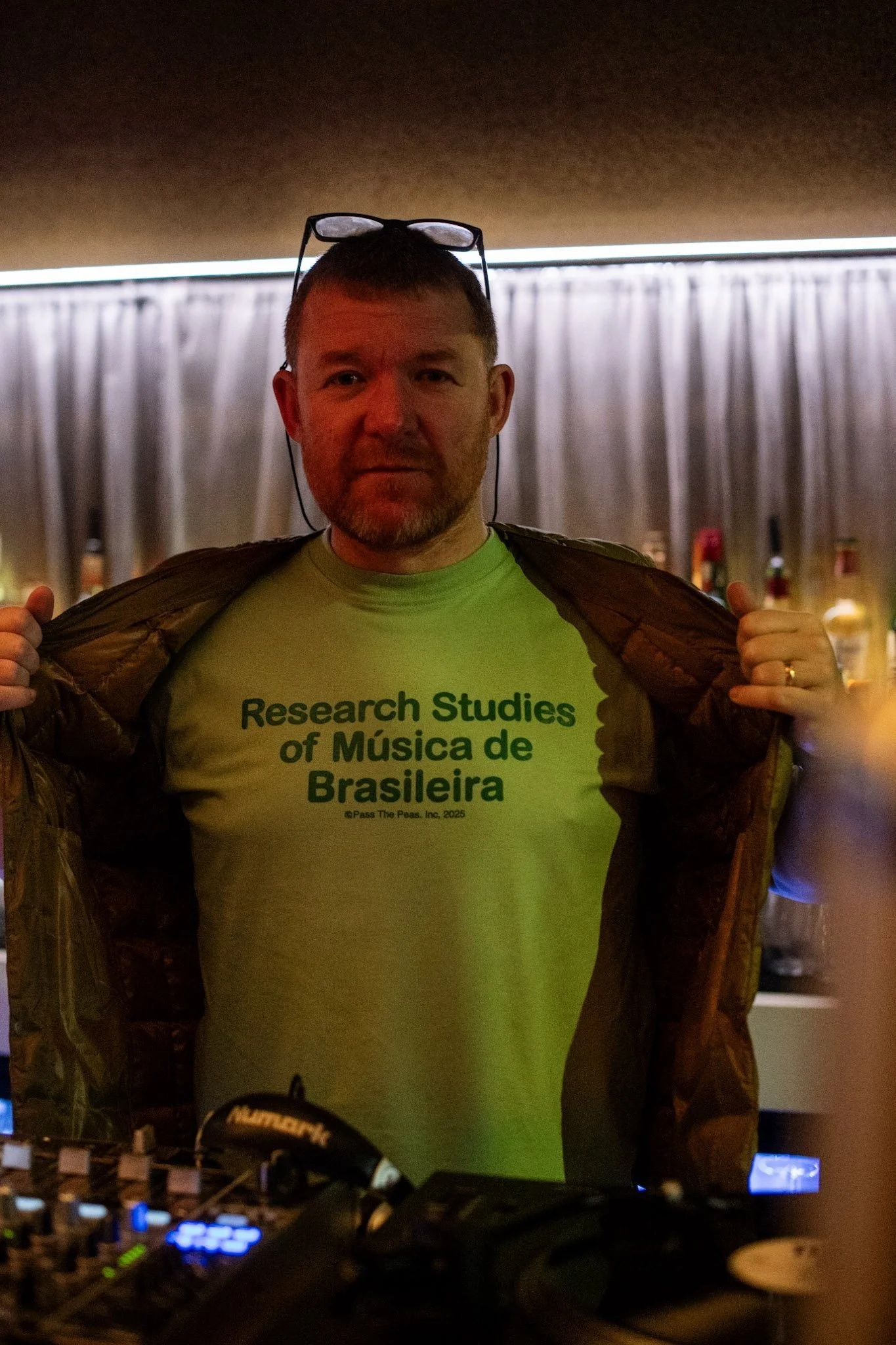
by Roy
PJ Smith, aka Roy, was born on Newby Street, a specific North Liverpool place that he has since dismantled and reassembled into a series of dark, sharp and brilliantly funny dispatches. For PJ, writing was less a career choice and more of a necessity - part of his way to build a stable structure out of internal noise. From this construct, Roy emerged: the "fella least likely" stepped onto a stage ten years ago and proceeded to hold the room with stories where good and evil snarl at each other like stray dogs over a discarded chip paper.
He is currently navigating that awkward transition from cult observer to an established voice, with a TV drama commission in the works and a new project starting at the Liverpool Everyman. His debut, Algorithm Party, announced a fully-formed literary voice, and he is now preparing the ground for its successor, Boomerang Process, due in March 2026. Between these institutionals, he continues to play records every Wednesday at L’aperitivo, frequently pausing to remind himself that he is, despite all previous evidence to the contrary, now a married man.
We invited Roy to select ten questions from our archive. His responses serve as an inisight on his own musical "big bang" - a trajectory that moves from bootleg CDs purchased at the bingo to the life-altering experience of hearing Abbey Road in the bath. This is a life lived between the "killer tune" and the "absolute shite," delivered with the unsentimental generosity of a master storyteller.

● What song is permanently fused to a specific place or holiday - to the point where hearing it transports you instantly?
Ace of Bass – 'All That She Wants', Tunisia circa May 1993. Two weeks in Hammamet. Pink and yellow Nike air huarache. Such a weird song.
● What song became the anthem of your first teenage friendship group, played endlessly during that one unforgettable summer?
Supergrass – 'Alright'. I turn fifteen. Few cans of Helden Brau super. Summer all year round. Everton win the FA Cup. We wake up, we go out, smoke a fag, put it out, see our friends, see the sights, feel alright.
● What music did your parents play that you initially rejected but later embraced?
Me Ma absolutely loved Simply Red. I didn’t. They weren’t cool. They’re still not. 'Holding Back The Years', though? What a fucking tune. He wrote it when he was seventeen. 'A New Flame' aswell. Absolute killer. You can throw 'Stars' in there, too. What a voice.
● What album would you press into the hands of an 18-year-old today, insisting they listen to it front-to-back right now?
Forever Changes. Always. My 16 year old step-son is a boss little guitarist. He writes his own songs. I think he’s slowly coming around to the music I send his way. I watched his face while I played him 'Looking Glass' by The La’s the other week, It’s happening.
● What's the last album or song that made you stop whatever you were doing and just listen?
Sessa – Pequena Vertigem de Amor. Released late 2025. I went to see him in Manchester the other night. It was great. The woman in his band had the most melodic voice I’ve ever heard. My kind of music. If you love all the tropicalia cats, you’ll love Sessa. The spirit of Gal Costa, Jorge Ben, Joyce and Caetano Veloso is alive. I played the album in full at a listening thing at Simones Cocktail Club recently. People were into it.
● What's your favourite sound that isn't music?
Rain. The heavier the better. Only when I’m warm and indoors though.
● What's a single line from a song that has stuck with you like a mantra or piece of life-changing advice?
‘The Universal’ by The Small Faces: ‘Working Doesn’t Seem to be The Perfect Thing for Me, So I Continue to Play...and If I’m so Bad, Why Don’t They Take me Away?’
Hmmm. Fuck work. Fuck responsibility. Fuck Them and fuck it. Didn’t end well for me, but turned out nice in the end.
● What album changed how you listen to music?
The Beatles – Abbey Road. Obviously, I knew of The Beatles. 'She Loves You', 'Yellow Submarine' and all that. In 1993 though, my Nan bought a load of knock off CDs in the bingo. Abbey Road was one of them. I used to listen to music when I was in the bath. I came home from footy training one wintery evening and lashed Abbey Road on. I was never the same from that moment on.
● What's your favourite cover version?
Widowspeak – 'Wicked Game'. I love the original by Chris Isaak. This cover is the same but different. I saw them at Heebiejeebies a couple of years ago. They didn’t play it. Shithouses.
● What song do you associate with a major world event or news story?
The Cars – 'Drive'. A horrible song. Pure shite. I remember being very young – four, I think – and seeing the images from the Ethiopian famine on telly. This song was playing. I didn’t understand what I was seeing. My four year old brain assumed that everybody had access to food. I had lots of questions.
Magnetic North
by Jeff Young
18 : Glimmers & Embers
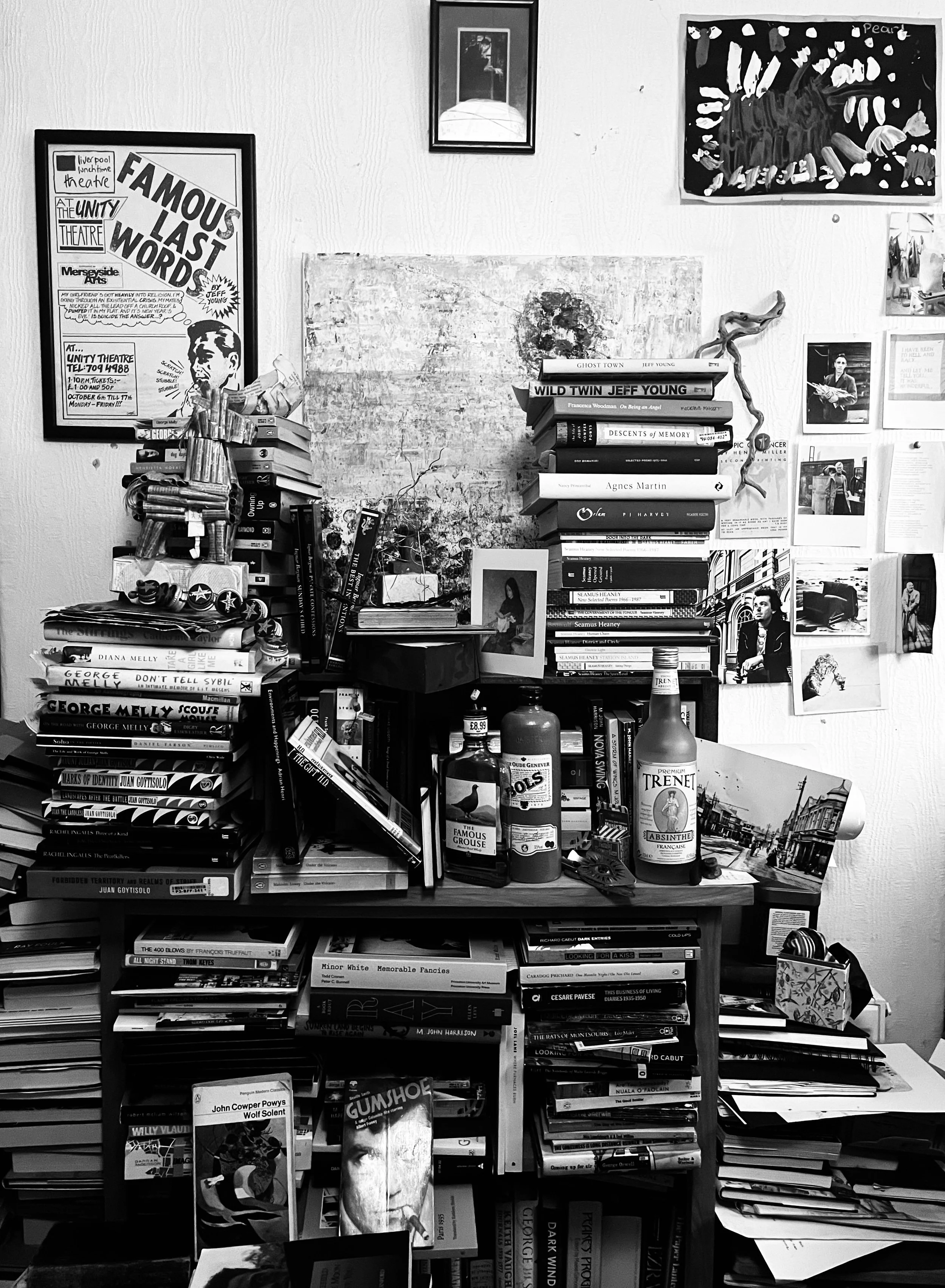
Bad weather and old bones have kept me indoors so I’m sitting in my office trying and failing to work on a book and making a kind of inventory of what I find here. If rooms are autobiographies told in objects and artefacts, the collected and accumulated archives of our lives, this is the bit where I’ve lost control, and the room is more of a burial chamber than an office. There is no order here – disorder being the preferred state for writing - but there are glimmers and embers that might lead somewhere, might help me to scratch out a page or two.
A framed poster for my first play, ‘Famous Last Words’ Unity Theatre 1986; box of crow skulls; dog bone found at low tide on the Thames foreshore; three Richard Cabut books; half empty absinthe bottle; dregs of Polish moonshine in a Famous Grouse bottle; Bols Genever bottle containing memories of Amsterdam (Note: I don’t drink alcohol); painting of an insect by my daughter Pearl, made when she was in primary school...
At the weekend we spent a whole day at the Compton Verney exhibition The Shelter of Stories. There were puppets and tapestries, strange maps, dioramas, ex-voto offerings, village green peep show dolls, dream landscapes, fantasies. A calligraphy machine built from feathers and detritus made by the Brothers Quay, an egg box creature, a mask bursting out of a vintage turntable, mythological sculptures, a terrifying siren like a mummified corpse, luring Odysseus to the rocks. I came back to Liverpool with a head full of visions and ideas, overloaded fever. And I couldn’t write a word.
But here’s a cardboard model of a Trojan Horse, also made by Pearl; three absinthe spoons; M John Harrison’s ‘The Sunken Land Begins to Rise Again’; a photograph of Don Van Vliet outside the Bluecoat Chambers; photographs of Derek Jarman and Samuel Beckett; a postcard of a handkerchief embroidered by Louise Bourgeois; Barbara Hepworth’s studio in St Ives...
This room is my magnetic north, the place I spend most of my life in, the place where I wrote ‘Ghost Town’ and ‘Wild Twin’ and ‘Deliria’. Pulling down books and thinking, ‘What would Alan Garner do? What would Frank Stanford do? Trying to find the words.
Here’s an abstract landscape painted with arthritic hands; a twisted, sun-bleached branch I beachcombed in Greece forty years ago; a photograph by Sean O’Halligan of an armchair washed up on Crosby beach; John Cowper Powys’s ‘Wolf Solent’; a photo of the Punch & Judy man Fine Time Fontayne in the Bristol Old Vic production of my play ‘Family Values’...
All these things were carried home and stored here for fuse and fuel and fire for the imagination. It's getting dark now but there are glimmers and embers. One morning soon I’ll visit the house on Falkner Square where I wrote that first play in 1987. And then I’ll write about it in this room, Magnetic North.
— Jeff Young, 10 February 2026
—
Jeff Young, whose memoir Wild Twin recently earned him the TLS Ackerley Prize, inhabits an inventory of his own creative history. His dispatch this week is a field report from his own office. This is a space he describes as a ‘burial chamber’ where crow skulls, absinthe spoons and the dregs of Polish moonshine serve as the load-bearing walls of his imagination.
The Paphides Principle
Pete Paphides operates on the unshakeable belief that a pop song is more than just three minutes of audio - it’s a life-support system. As well as scouting hooks and harmonics, he listens out for the specific, cellular moment where a melody twists to provide the precise nutrients required to survive another Tuesday afternoon.
In our world where we’re constantly shouted at by algorithms mistaking "popularity" for "importance," Pete’s fortnightly selection is a deliberate act of deceleration. It’s a chance to stop the clock and pay proper attention to a piece of work that has earned the right to be heard.
This is his latest find.
Fragment B - ‘Beautiful Dreamer’
This week, I want to talk to about a musician called Mark Tranmer. But before I do, I guess I ought to declare that I’m lucky enough to be pals with Mark. But don’t worry. This isn’t some sort of abuse of my position. The reason I’m friends with Mark is because, many years ago, I heard his music and I let him know (on more than one occasion). Back in those days, Mark was pretty lazy compared to how he is now. He was in just the two bands to start with. There was his “main” solo project GNAC, which would see him making roughly a dozen albums – all of which exist to make you feel like, with the aid of earphones, you’re the lead in the European art-house movie of your life.
Then, with The Montgolfier Brothers, Mark created a perfect musical setting for the fragile poetic disclosures of late singer Roger Quigley (whose brother Pearce is presently “having a moment” in Mackenzie Crook’s Small Prophets). Do you know who else loved The Montgolfier Brothers? David Gilmour. In fact, David Gilmour loved them so much that, a couple of years ago, he and his daughter Romany covered one of their songs (Between Two Points) and invited him into the entourage as they toured Europe performing that song (and several others).
What I didn’t know back in 2000 though, was that Mark was just getting going. With former Orchids frontman James Hackett, he made a quiet masterpiece of suburban bathos called Underneath The Stars, Still Waiting. With sometime Pale Saint Ian Masters, Mark formed Wingdisk and made the beautiful 2003 EP Departure Lounge. His 2016 collaboration with Italian composer Alessandra Celletti remains a masterpiece of modern classical music – a necessary acquisition for anyone who has already made room in their collection for Yann Tiersen, Erik Satie, Andrew Wasylyk and Philip Glass.
And perhaps the really mind-boggling thing is that [waves hand at imaginary carousel filled with Mark’s wares] all this isn’t even Mark’s day job. For the past decade, Mark has been Professor of Quantitative Social Sciences at Glasgow University’s School of Social & Political Sciences. If you click on his bio on the University’s website, there isn’t a single mention of his music – or the music of Durutti Column, Felt, Antena, Brian Eno or any of the other artists to whom he has been compared. And yet, does Mark have any plans to slow down? Seemingly not.
He conducts many of his lectures via Zoom, thus freeing himself up to set aside a percentage of his earnings on train tickets purchased at a discretionary fee, thanks to his recently acquired senior railcard. Lately, he’s been travelling to and from Lille quite a lot, where he’s struck up a fecund friendship with French musician Natasha Penot, formerly of Noughties electro-pop group Grisby. This week, as Fragment B, Mark and Natasha released the first fruits of their alliance. It’s a song called ‘Beautiful Dream’ which sees Mark turning in a rare vocal, harmonising elegantly with Natasha over a melody that glows like sunshine on the new town estates of Wester Hailes. I guess that, at some point, there’ll be an album. And after that, who knows? Yet another new project? Soon he’ll have more pies than fingers to put them in.
—Pete Paphides, 11 February 2026
Uneven Ground /
As Close As We Get To Flying
by David McDonnell
I loved cross country running at school.
An hour long escape in the middle of the day from the high-ceilinged echoey classrooms spent running across fields and through empty streets with your fiends - I loved the freedom.
Even better in the fog.
The feeling it produced permeated my brain.
Even now as an adult I still feel like on any run - you can change things.
Process questions and ideas away from the noise of life and arrive at an answer that has been forged from just your own thoughts and not from an online chorus of uninformed unified thumbs.
Just logic. No charger required.
Back then I ran to change what was happening at home. It didn’t change that but it did nourish me and open my mind’s eye.
That small escape into nature between Science and CDT made me believe there were great things ahead.
By my mid-teens my home life was bad.
Running in school was a peaceful release from that - and it was mine.
When you’re young distance is irrelevant.
Just being out and moving through an open space was a panacea.
I used to imagine if I could pass the front runners my home life would change.
It never did.
Or sometimes by leaving the set route and taking back streets, then whipping across a rival school’s field en masse, in a communal act of defiance - that maybe things that were broken in my life might be repaired. Again, They never were.
But as I ran I was healing - I was evolving.
I was starting to have my own hopes.
The hope became addictive.
I find the same mental rush at the start of writing a song or set of lyrics.
With effort and dedication - people can be reached, mistakes rectified, hope shared and the path ahead can be changed.
And that hour always brought a wave of happiness that made the rest of the school day just glide by.
I looked forward to it all week. We all did.
A weird community of misfits, fledgling musicians, Art addicts, Maths geniuses and Football fanatics all embracing the hour no matter the weather.
In Lord of the Flies-esque comprehensive - Any light was worth us all grabbing hold of.
I started to incorporate it into my life outside of school.
A 10 minute run to a friend’s house.
A wind behind me, late night jog all the way home past the graveyard.
(Hey! The wind gave me the speed - not fear)
I got into shape and felt myself getting stronger. Strong enough to leave home just before my 16th birthday.
I already spent less and less time there and as much time as I could with friends and pursuing music.
I feel that being physically fit helped me get mentally fit and take control of my situation.
On the other side of that - I discovered who I really was through friendships, the power of music and words.
Something I think all who read and contribute to Science & Magic have in common.
Why I’m grateful Matt and Tom have invited me into this.
This is the first thing I have ever written for the world that isn’t lyrics - So I’m aware the rhythm isn’t Hemingway.
Why the title?
Now I’ve digested my youth I realise I did specific things for specific reasons.
I’ve realised that the uneven ground was something I needed. I still do.
Predictability is boring and when surprise attacks from life throw us off course - travelling across uneven ground - being in control of your speed, direction and all the micro decisions that go along with travelling at under your own propulsion - It’s a positive form of control - that doesn’t affect other people’s lives.
For me it yields a peaceful mind.
A welcome feeling in the chaos of life.
If you write music or create in any form - there is not better way to get your synapses firing and wrestle and idea into something you feel is truthful and original.
Even after writing a song - a run serves a creative purpose - you can iron out the kinks of an idea and if after a run the song is still as existing - it’s done.
The run is like a final full stop on the idea from the sentient part of you.
In the past - if I found myself in company that was giving my soul heartburn - I would make my excuses and head home.
Craving music on headphones and to vanish into the night.
Word of warning - late night pavement running into unknown areas where you don’t know the exit route - this holds its own insanity. I’ve ended up in places that resemble the upside down - complete with demogorgons and demodogs.
I also think flashes of genius arrive on a run. Like when I slipped on a black microwave meal container - the type they never used to let you recycle.
It’s single use / uselessness, pissed me off so much that half way home I’d figured out a way to solve homelessness by using them.
The idea was to collect them all at supermarkets - melt them down into pellets - re-mould them into pre-fabricated easy assembly parts for a one-person pod and make safe mini cities on unused land on the outskirts of actual cities.
There would be numbered PO Boxes in a portakabin that had it’s own address.
Then people could utilise the address to access benefits and start the process of finding permanent accommodation.
By the end of the run the logistics, funding, carbon footprint, alcohol, drugs, security, electricity and plumbing had dismantled the whole solution and I felt the initial spark slip away. But you get the idea.
Unexpected thoughts on the move after a one-of-those surprise attacks meant to throw us of course.
I’d never have experienced any of it sat at home.
Mind fog also lifts on run and I envy people who say “Somewhere in the back of my mind” - I have never reached the back of my mind - too much junk.
I know I need a throw-out but I use bits of it sometimes. Especially on a run.
Like why do we reduce such a beautifully flowing coupling of Italian words like Spaghetti bolognese - to Spag Bol?
Why reduce it to sound like a Star Trek villain?
And who is God’s Mum? Etc
I think running is as close as we get to flying.
So as birds fly to find sustenance in winter.
Maybe I’m always flying to find something.
Nature shows that eventually the day comes to us all when our bodies no longer do what our minds desire.
So we should take running as an ancient reparative gift.
That can lift us, re-program us, inspire and heal us.
Alan Wills who started Deltasonic also shared a love of running and he often used it to process big decisions.
We shared the benefits of it over coffee. Music, films and running routes.
If I had a problem he used to say
“Time to get your running shoes on”
I miss hearing him saying that to me.
These days, between life and family there is less and less time to run but when I do get to head out - occasionally when evening stills - the atmosphere becomes calm and the light is right - It feels like he’s somewhere not that far away.
Whether that’s a real, unbreakable spiritual connection or simply my endorphins - it’s a real feeling. One that I covet.
So - if your reading this and you don’t like the space or place that your in.
Make a start to changing things by getting your running shoes on.
I promise it will work.
—
David McDonnell is an artist for whom motion and creation are inseparable. As the songwriter and architect-in-chief of The Sand Band, he has always understood that the most profound journeys - whether through a song or across a landscape - are the ones we take alone. His piece here is a testament to the persistent power of moving forward, of finding clarity in the fog and hope in the rhythm of a run. He writes with the same rare, unvarnished honesty that defines his music, reminding us that sometimes the simple act of putting one foot in front of the other is the most radical form of healing we have. We are honoured to have his voice in these pages.
All Puns Intended
by Nik Kavanagh
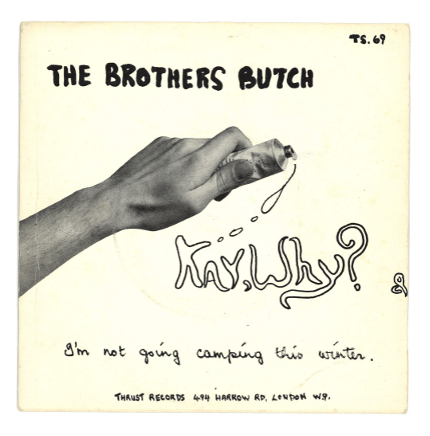
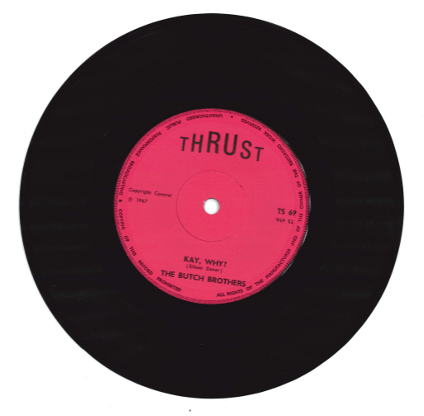
I don’t know if it is a result of growing up in a seaside resort, where saucy postcards and end-of-the-pier humour were worryingly ubiquitous, or if it was reading too much Viz when I was a kid but I’ve always had a soft spot for a double entendre. Why go for a single when a double will do eh? Perhaps it is this penchant for a pun made me the perfect audience for a single called ‘Kay Why?’ by The Brothers Butch (AKA The Butch Brothers) which I first came across on a compilation curated by the inimitable Jon Savage. It was unlike anything else I’d seen or heard before and I have been obsessed with it ever since.
‘Kay Why?’ could be described as a novelty single yet it contains enough reality to give a fascinating insight into the gay world at the time. It was recorded in 1967, the same year that homosexuality was partially decriminalised in the UK, and is a tongue in cheek paean to a particular brand of a water-based lubricant. It’s an absolute masterclass in subversion. A
high-camp slab of Vaudevillian music hall complete with a twist of psychedelia and lyrics rammed with innuendo. Featuring a plodding beat group instrumentation and Beatle-esque “ooh’s” the single illustrates a new confidence and glorious wordplay alongside standard insults like “why don’t you shut your face?”
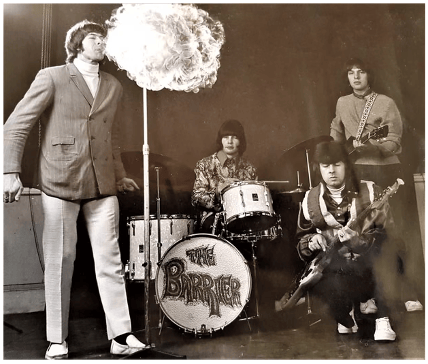
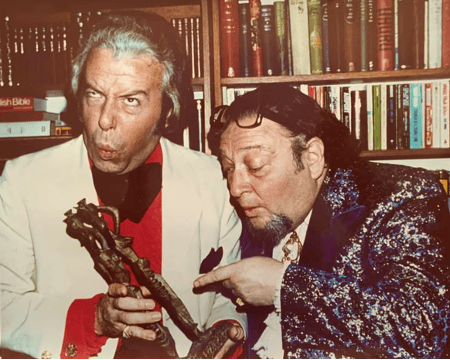
The people involved in writing and recording the tune, and the flipside ‘I’m Not Going Camping This Winter’, have been something of a mystery until relatively recently. The songwriter credited on the 7” is ‘Eileen Dover’ but in reality the tunes were penned by musical duo Iain Kerr and Roy Cowen. The twosome adopted the monikers George and Clarence when they performed the vocals. Fun fact: Kerr also co-wrote and played piano on ‘QPR – The Greatest’, by Queens Park Rangers footballer Mark Lazarus.
The backing tracks for both songs were provided by members of Fulham based, psychedelic, fire breathing four piece The Barrier (AKA The Purple Barrier). It’s not only the song that is magnificent but the sleeve and label information are outstanding too. The squeezed tube on the picture sleeve cover with the spillage spelling out the song title, the vinyl being released on the THRUST label and the catalogue number TS69. Fnar Fnar!
As the song unfolds we are treated to a cornucopia of comedy asides such as:
“George isn’t it nice having the group backing us? - You always were greedy, Clarence”
“Do you think the drummer is on something? - On? I don’t think he’s ever been off!”
“Didn’t hurt a bit now did it?”
My favourite moment changes with each listen but the best bit for me currently is the cautionary “Careful!” during the slightly wonky piano solo.
I’ve never seen a copy out in the wild and when it does come up for sale on Discogs, eBay or the like I’ve seen it reach triple figures so I’m forever grateful I was gifted a copy for my birthday many moons ago. It’s absolutely class and a whole lot of laughs.
—
Nicholas ‘Nik’ Kavanagh is a fine curator of the culturally slippery. His truest history of Britain is found in the groovier, subversive margins of the record shop - specifically the section where the Vaudevillian and the psychedelic once had a messy, high-camp collision. He treats the double entendre as a survival strategy, a secret code for those who spent 1967 hiding in plain sight. Nik remains the only man in Liverpool who can correctly identify a fire-breathing four-piece based solely on the smell of their lighter fluid.
Dead Air Anthologies
by Matty Loughlin-Day
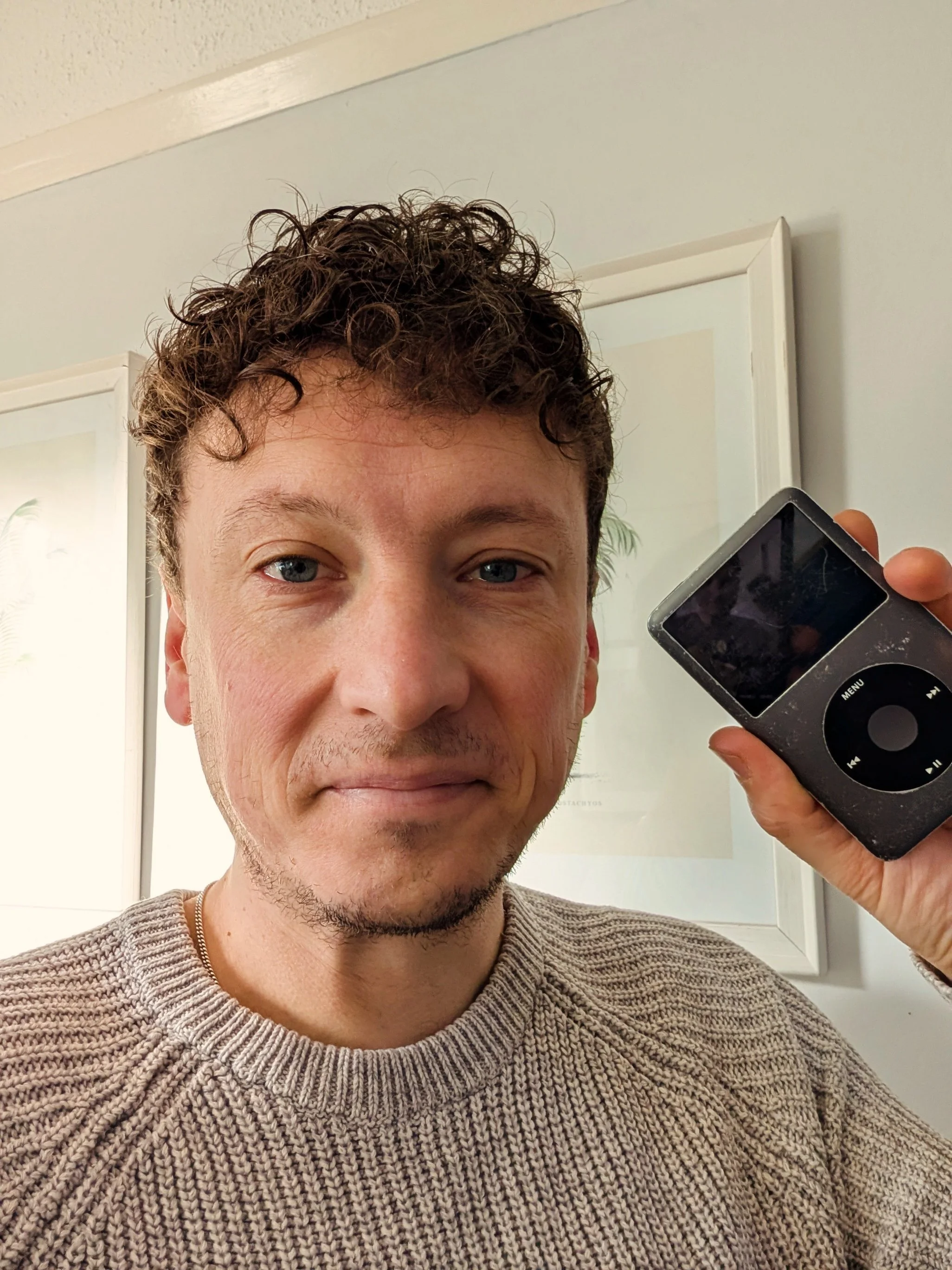
It might not be as romantic or glamorous as stumbling across a long-forgotten box of records in a dusty attic, or a job lot of rare vinyl in an abandoned lock-up, but whilst in the process of packing things up for a house move, I have recently unearthed an old iPod of mine which had faded from my memory many moons ago. Miraculously, after a bit of juice via an equally as antiquated charger, it still worked; and as such, I instantly regained access to a collection of music, podcasts, found sound, and other random curios that I had gathered over a period of roughly 20 years.
Having such a collection at my literal fingertips felt quite surreal. I absolutely do not want this to come across as "my music is better than yours," elitist, or worst of all, pretentious, but at some point in my late teens, on hearing 'Rain Dogs' by Tom Waits, I had a road to Damascus-like conversion and became almost instantly bored and uninspired by much of the music that was surrounding me. Almost overnight, out went all the CDs and t-shirts of bands I was never actually sure I really liked that much anyway, and in came an insatiable appetite for new sounds, ideas, and rhythms. To appropriate Joe Meek, I wanted to "Hear a New World" and sought out anything I could that was as far away from the lumpen, insipid stuff I'd spent far too long with.
I raided charity shops, second-hand vinyl stores, obscure blogs, local libraries, and much wiser family members' collections (nice one, Uncle Al!) for anything remotely different, obscure, or plain daft. At times -many times - I veered into parody on the hunt for something I'd never heard before. Returning back from a day trip to Llangollen with a CD of traditional Native American buffalo songs, or having to pay an overdue fine to Central Library for my CD of Indonesian Gamelan chants - I must have been (or still be) a nightmare to be in a band with, or in earshot of, but it's an itch that is never quite scratched.
As insinuated there, I'm in a band. We're called The Shipbuilders; you might know us, you might not, but over the years we've been going - which is many now - nobody, us included, have managed to pin down our 'sound' sufficiently to a genre or label. I wear this as a badge of pride, I must admit. I was recently talking with a songwriting hero of mine -of who it would be far too much like namedropping of me to reveal their identity - and they asked me where the Latin or Spanish influence came into many of our songs and queried if I was of that lineage. Similarly, we chatted about where the Eastern European 'gypsy' element came from too. In both instances, I was stumped for a satisfactory answer, other than it must have seeped into me as I veered from the middle of the road and into the ditch, as Neil Young said.
Due to the almost ephemeral nature of this stuff—blogs vanish, file-sharing sites get shut down, iPods get lost - a lot of it is heard once and then gone again, leaving a vague outline and blurry memory of its essence.
Therefore, to find this collection again reopened a trove of memories: a collection of traditional Georgian folk songs, Bangladeshi river songs, long split-up indie bands from Sweden or Portland, and so on. Much of it incredible, some of it inedible, but all of it wondrous in some way.
Via some technological jiggery and pokery, I was able to load the contents of the iPod onto my computer, where it nestled in with my current collection, which I still try to keep as varied and wide-ranging as possible - Cambodian psych-rock, Soviet disco, Sudanese jazz - if it piques me, it goes in.
But what good is the light of a music library if it is kept under a proverbial bushel? I want to share this stuff, and try to do so via an initiative I'm part of called Club Shipwrecked, but that's for another time. The very good folk at Violette have given me free rein to compile a show in the style of an old shortwave radio scan session, which I've called Pirate Radio Shipwrecked.
My love of the medium of radio is yet another topic for another time, but I wanted to present some of this music, spoken word, and found sound as if the listener were stumbling upon it as they scan the airwaves on an old transistor, late at night. Something emerges from the ether before vanishing again, leaving no footprint. That's why there's no tracklisting, but of course, if you do want to know, just ask me; I'm not trying to gatekeep or be holier-than-thou here, in any way.
Anyway, here is episode one. It's got Rajasthani ragas, some rockabilly, some esoteric jazz, and some plain bangers. I really hope you enjoy, and if anyone has anything they think fits the bill, send it my way. I'll be back in the next edition with episode two and some more words to set the scene.
Now tune in and drift away...
What Is Always Just Out Of Reach?
by Eimear Kavanagh
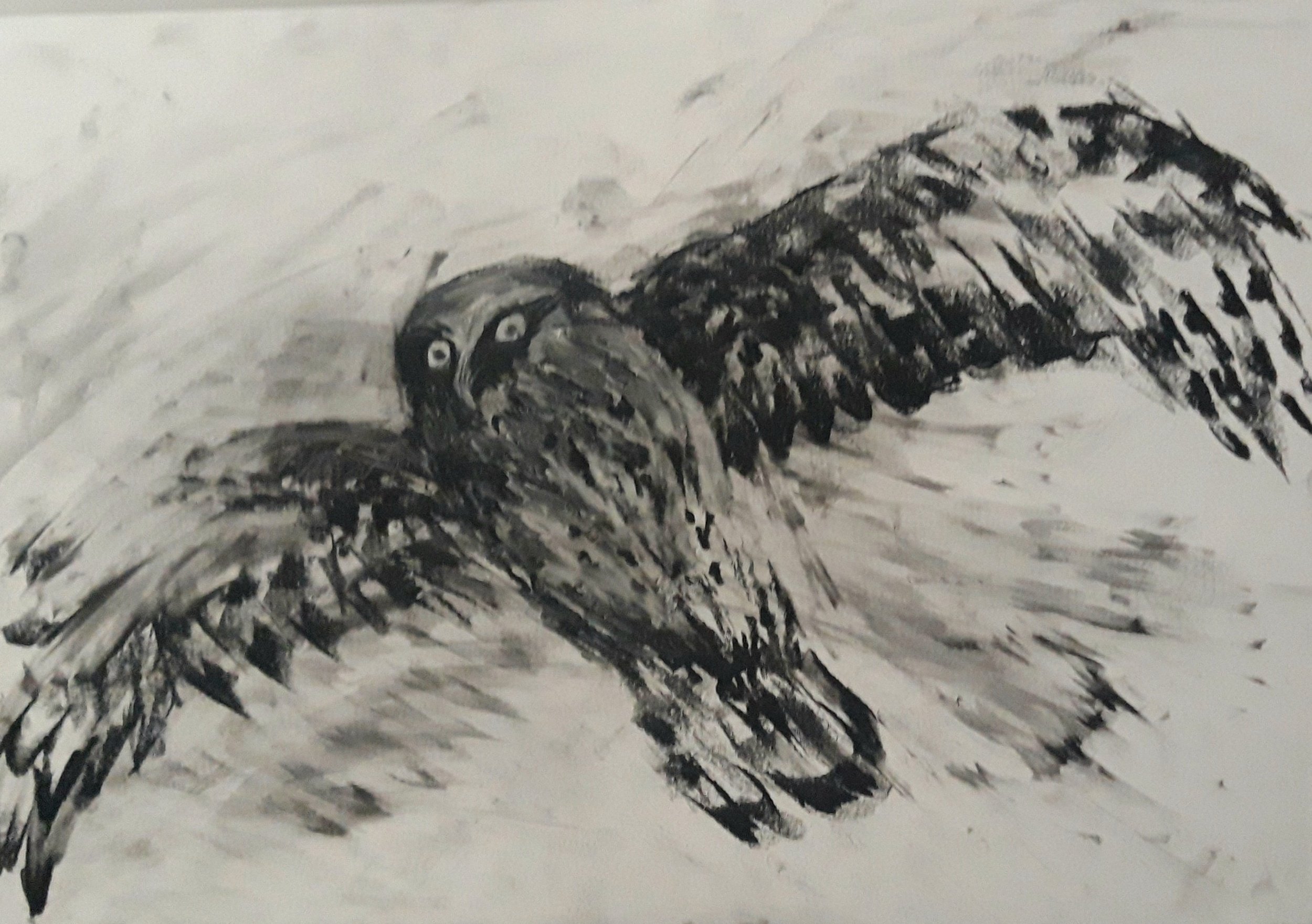
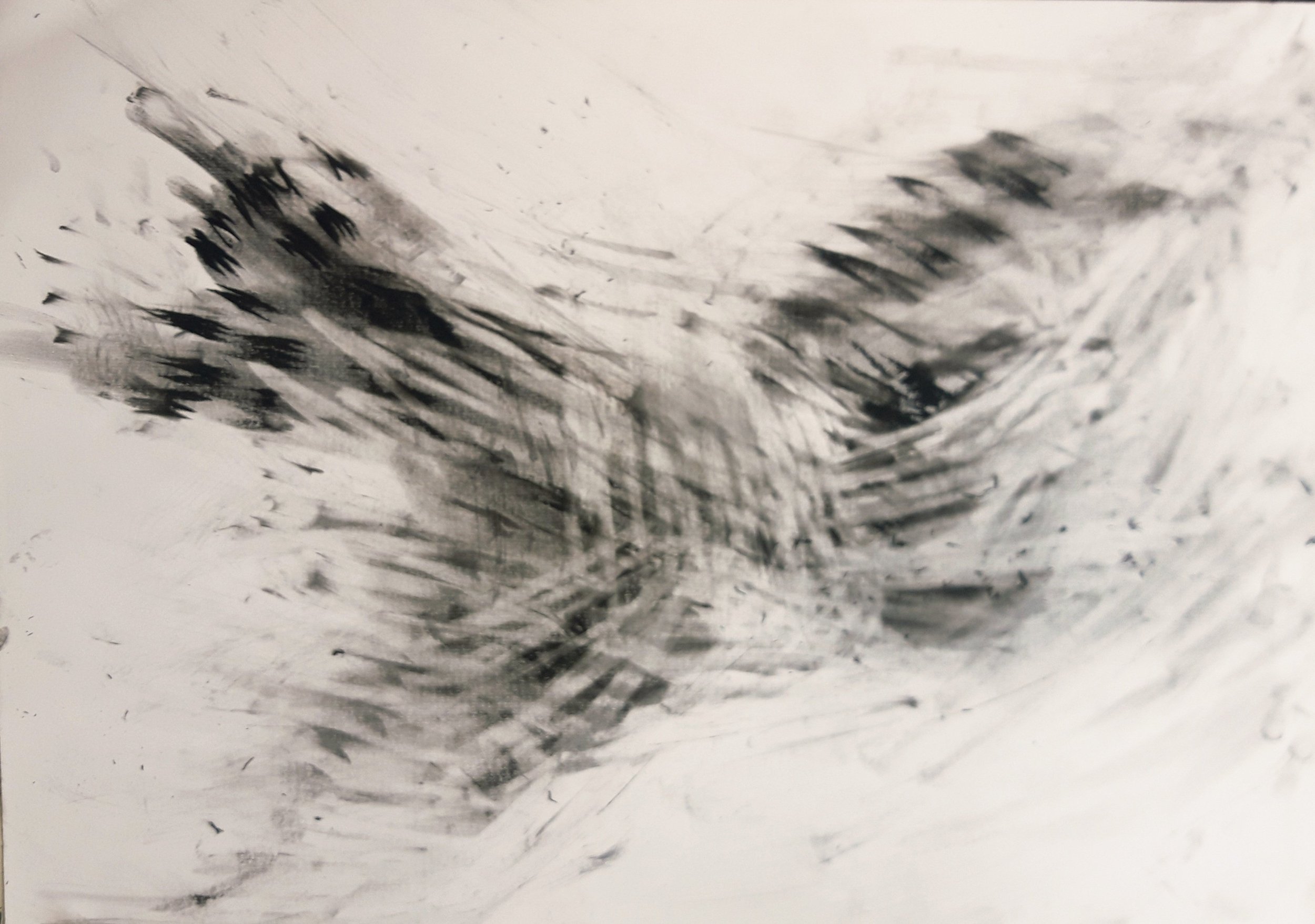
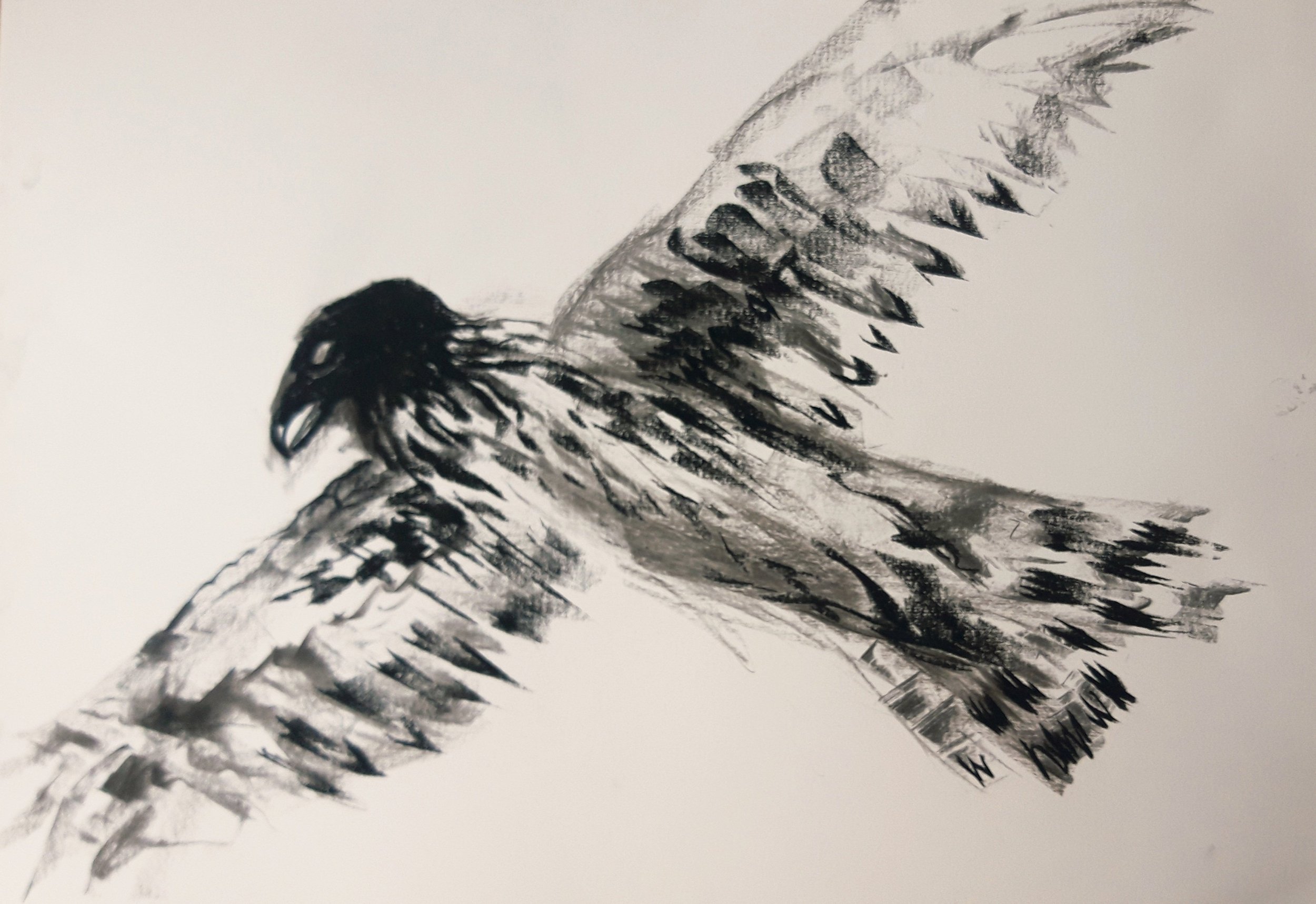
Routine. The very thing which I disfavoured became unatainable. Until now, I would never have known of it's true value.
Rhythm though, thank heavens for nature's rhythm. Even when I don't feel in sync with it, I know of it's potency to bring me back home.
Love, Eimear
—
Eimear has abandoned her attempts at a conventional schedule, having concluded that "routine" is a human fiction designed to distract us from the more powerful pull of natural rhythm. She treats her studio as a flight path, a space where she can align her own creative impulses with the "high-altitude logic" of the birds she documents. For this edition, her paintings of birds in flight serve as a study in that very tension: the desperate, beautiful effort to reach something that remains perpetually on the horizon.
Handwoven Hush
by Amy Collins
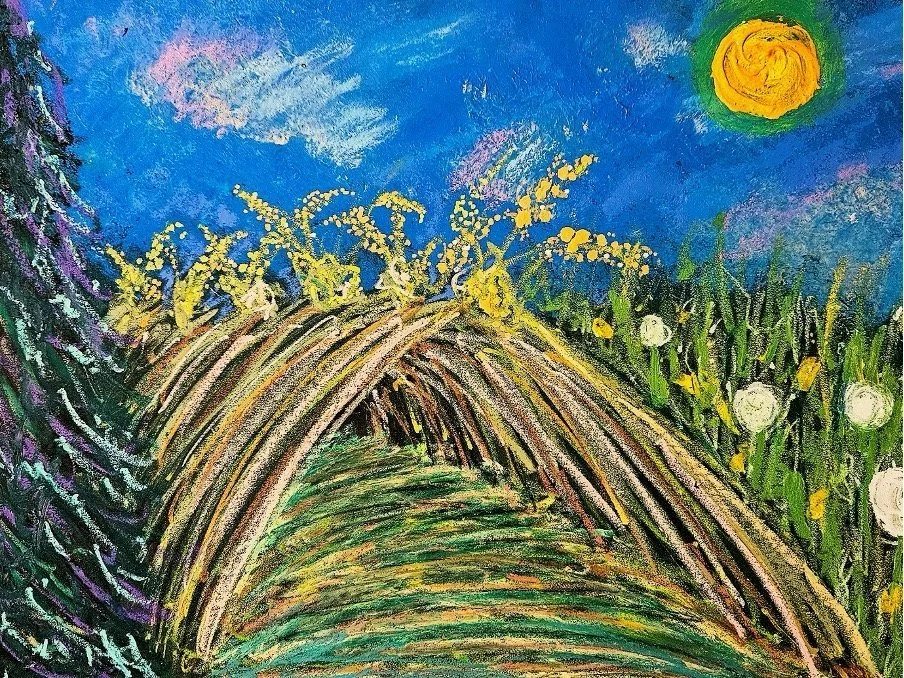
Between the coniferous barrier and the road
an unmowable bank of grass lay untouched,
waiting to be claimed by a girl.
A tender trench,
for burrowing beneath,
for grazing every strand,
for learning the integrity of it all.
Tiny, stained scythes and teeth cut through.
Whispering blades caress her,
thank her for pinching seeds into bouquets
and releasing them to their potential.
Swallowed in green locks,
she braids bunches,
knotting arcs in continuum.
The grassland’s restless choir sang approval of her mission,
drowning out the road
and the chaos of the house.
On the verge the grass maze grew;
junctions were installed,
a small soft body with elbows tucked wriggled through its inspections,
folding herself into the earth
and her accomplishment.
From cuckoo spit to dusk she tunnelled,
dandelion clocks kept time.
On her break she might take a spear
and pierce it through some delicate matter,
or dissect a new variety,
gently smelling, tasting, knowing.
Then she would return to the network,
to crawl through the handwoven hush
until tiredness came.
Under a thinning sun,
the girl lay cradled,
sheathed in blades,
claimed by an
unmowable bank of grass.
—
Amy Collins celebrates the "unmowable." She lurks on the fringe of the domestic, in the exact spot where the lawnmower's blades stop and the ancient, tangled logic of the earth begins. She believes that childhood afternoons spent in the long grass create a permanent, green-stained layer in the human psyche; a "tender trench" that we carry with us long into adulthood. Amy has recently begun a project to document the bio-mechanics of dandelion clocks, convinced they are the city's most accurate but overlooked time-keeping devices.
Water Back
by Rob Schofield
Some want to chat, while others wish you would pour their drink and shut the fuck up. Both are fine with me. Some like to keep a conversation going for hours, dipping in and out whenever they need a refill. The astute ones know to recap when they pick up where they left off. There are yet others who are prepared to pass the time of day and exchange pleasantries while they wait, but they’re not interested. That’s okay: it’s a bar and they are customers. I appreciate it if they smile, make the right noises, but it’s not a deal breaker. With some of them it’s like hero worship. You’d think I was stripping down to my undies on a stormy night at Blackpool, ready to save a drowning man. Or woman, although it does skew towards the male of the species.
I was working behind the bar when he appeared. As much as you keep an eye out for who’s in and who’s not, who’s sitting where they shouldn’t and who’s visiting the establishment for the first time, you can’t be on hand for the arrival of every poor sod that flops onto a stool in search of salvation. Also, that day, it wasn’t a good one for me. I hadn’t slept, the car was being temperamental, my washing machine was on the blink, and there was the matter of Mum having died two months ago and Dad six before that. The first three things I might share with some of the usual crowd, but what with the dead parents and grief and unresolved emotions, I wasn’t in the frame of mind where I might bare my soul to a person who exists in that zone where friendship, acquaintance, and business lock horns. I was walking a tightrope of tears, and I don’t mean the kind you can dab at with the corner of a tissue. Huge, gasping sobs were building up in my chest, and try as I might to maintain a professional façade, I was this much away from banshee mode. Those clever types I mentioned earlier were giving me as wide a berth as thirst would allow.
‘Pint of Peroni, shot of Stoli, water back,’ says a voice I haven’t heard before. There was a warmth to it, like he was drying his feet by a fire and revisiting a pleasant memory.
‘Ey?’ I look up from the mixers. One day some fucker will order bitter lemon.
‘Peroni, sorry. Forgot where I was for a moment.’
‘Where did you think you were?’ My money was on somewhere in the U S of A.
‘Across the pond,’ he says, quick as a flash. ‘The Big Apple. Nu Yoik.’ That’s how he said it: like a person trying to do the accent.
‘A transatlantic traveller? You’re a rare breed around here.’ I dug about for a Peroni glass. We’ve got a few, but most of them get nicked so we’re careful about giving them out.
‘I like that.’ He points at the glass.
‘They go home in handbags. Here you go.’ I placed the beer in front of him.
He nodded and licked his lips.
‘Knock yourself out,’ I said. ‘No one’s watching.’
‘You never know,’ he says, all serious. ‘I don’t like to drink on the clock.’
‘You’re not from the council?’ We’d had one or two issues with our risk assessments.
‘Nothing like that. Just sizing up a job.’
‘In a bar?’
‘As good a place as any,’ he said, continuing his surveillance of the lager.
‘Somewhere to think.’
‘Spot on,’ he says. ‘A place where one can assess the state of the world.’
‘Another barroom philosopher,’ I said, hand to my chest in mock exasperation; but a moment later, I remembered my woes and felt rotten for being so light-hearted, as though I’d betrayed all I had to worry about.
‘And if not the state, then perhaps the weight, which, if you don’t mind me saying, you appear to be carrying on your shoulders.’
Our conversation continued for an hour or so, albeit there were gaps while I serviced the regulars and newbies. He left when my back was turned, the pint of Peroni intact on the bar, minus the bubbles. I didn’t think about it at the time, but later, when I was sat in the car praying for it to start, I realised that we hadn’t spoken about him at all, or not enough for me to give an account of him, were one ever needed. My sketchy recollection is of flawless skin, a blonde crew cut, and a frame which was muscular, but not gym chiselled. As for what kind of person he was, I have no clue other than it felt good to be in his company. More than good: relaxing, comforting, positive. And that’s rare, don’t you think? I felt like that when I met Deano – like he got me and appreciated me – but no one before or after that. I lost touch with Deano.
I phoned in sick the next day. Midway through what would have been my afternoon shift, I found myself wishing I’d gone in. I wasn’t feeling guilty – a zero-hours contract confers instant and ongoing absolution – but I was bored and fed up with the car/laundry/Mum and Dad situation. A therapist once told me it’s important to recognise when you need help, and if you can do that, you’ve taken the first step. Everything’s a fucking journey with those people, but some of us our cars are knackered and it’s not so easy to get from A to B, never mind the far reaches of the alphabet. Okay, that’s a long-winded way of me telling you that I was thinking about the stranger and whether he had reappeared at the bar. We’d hit it off – not like that – and what with connections being difficult to make, I don’t mind admitting I was hoping I might have found a friend. Isn’t there a rule about that in the trade? Barkeeping 101? Maybe, but life is more important than work; and if you’re not in agreement I respectfully suggest you take your voyeurism elsewhere.
I spent another night lying awake for fear of sleeping in. As it was, Matthew phoned nice and early to check if I was fit. Paula, who does the opposite shift to me and doesn’t mind pulling a double when I’m unavailable, had contracted a virus, which we all know means couldn’t be arsed going in. I could hear in Matthew’s voice that he was shitting himself at the prospect of having to lift a finger, but fear not! I was happy, nay keen, to ride in on my charger and save the day, having reason other than lining his pockets to grace the bar with my presence.
There was a kid in black trackies and grey hoodie, all arms and legs, at the bus stop. His kecks were hanging off him, ripped and covered in God knows what. He had a filthy backpack slung over his shoulder, and when he grinned there were gaps where you and I have teeth. He made the driver wait while I ran across the road, raising a fist in solidarity as he trudged up the steps to the top deck. You put yourself at the mercy of these apps, which never tell you when something’s running early, when you should try having faith in people around you, even the scruffy ones that some of us – including you, be honest – dismiss as druggies rather than consider they might be as scared and vulnerable as you. Don’t we all want to go through life unbothered, with a teensy bit of hope and a shot at happiness? He looked like he didn’t have a bean beyond his bus fare, but he’d done that for me.
I watched Matthew through a window when I arrived. He was dealing beer mats onto the tables like the world’s least motivated croupier. The spring returned to his step when I pushed through the door. I started to tell him about the kid, but he was out the other way within two minutes, saying something about the wholesalers. I don’t know why he was going there. I’d stocked up two days earlier and ours isn’t a clientele reliant on sundries. Beer and hard liquor, yes; peanuts and crisps, maybe. Food? What’s wrong with peanuts and crisps? You get the picture.
Time dragged along with the clock at the end of the optics. You can torture yourself with a lot of thoughts from one second to the next. I wiped down the bar top and did it again. I moved on to the tables where dirty streaks told me that Matthew hadn’t been up to the job. My eyes were weeping with cheap detergent from his beloved wholesaler. My nostrils were raw with it. I made myself a coffee and stared at the main doors until the brew made a beeline for my bladder. He was sitting at the bar – same stool – when I came back from the loo.
‘Pint of Peroni, shot of Stoli, water back.’ I cocked my thumb and finger like a pistol and pointed it at him. ‘Sorry, don’t know where that came from.’ I holstered the gun with a shrug.
‘One out of three. Surprise me.’ He played along, doing the accent again.
‘You remembered?’ I reached for a Peroni glass.
‘And so did you.’
‘Part of the job,’ I said.
‘I know what you mean,’ he replied.
He let me tell him about my bus stop saviour, nodding and frowning as I gabbled on.
‘Something went wrong.’ He was peering at the glass again, hands nowhere near it.
‘How do you mean?’
‘Who’s looking out for him?’
‘Who’s looking out for anyone?’
‘Something’s broken. Tell me where you saw him.’
‘Why?’
‘Maybe I can help.’
‘You going to give him money? Find him a place to live?’
‘I can try. I can listen. You could have listened.’
‘I’ve got enough on my plate.’ I polished a clean glass and looked for another to work on.
‘Like what?’
‘My car broke down. The washing machine is fucked. I told you about Mum and Dad.’
‘Machines can be fixed. The other stuff you can get help with.’
‘Assuming you’ve the time and money.’ I pointed at his glass. ‘What’s wrong with it?’
‘Nothing. Sorry,’ he said, ‘I know you have your troubles.’
‘No sweat.’ But he’d irked me. I should have followed the kid upstairs and said a proper thank you.
Someone, by which I mean me, had to cover Paula’s shift. Enough regulars crawled in to keep me busy, with Matthew back from his travels and coiled like a spring in the office for backup. He can pour a drink when the toilet needs unblocking, but otherwise he’s fucking useless, and I’d rather fly solo. I hadn’t noticed my new barroom buddy slipping away, but it didn’t bother me: he hadn’t lived up to our first meeting and even though it might not have been fair, I blamed him for that. I can’t say that I was happy to see him as I pulled down the shutters on another day, but I was intrigued enough not to mind when he fell in step with me. The air was damp, heavy, Dickensian. It might as well have been raining, or snowing, since it was cold enough. Amidst the sirens, there was the suggestion of wind. I could have been enjoying a nightcap while putting the world to rights, but Matthew’s not the type. Homeward bound is what I was, and if this feller wanted to tag along, that was fine with me.
He hadn’t said where he had come from, and I hadn’t asked. Nothing about him screamed local, but he knew his way around and didn’t complain about me taking the long way home. We walked slow, unsteady. I was wired and exhausted and in no rush to get back to the flat. I wandered around the edge of the bus station, then went inside.
‘Looking for someone?’ he asked.
‘The kid from this morning.’
‘Why would we find him here?’
‘He was on the bus.’
‘That was then. He could be anywhere.’
‘You’re right. I don’t know what I’m doing half the time. I’m knackered and I need my bed.’
He paused by my jalopy, flattened a palm on the bonnet and pursed his lips. I turned around at the top of the steps. He hadn’t moved except to close his eyes. You come across all sorts when you work behind a bar, but a man with his hand on a bonnet in the middle of the night was a new one on me. I’d say he was praying if it didn’t sound so ridiculous. I stood there waiting until he was done.
‘Coffee would be good,’ he said, joining me on the steps.
‘Sure.’ I was trying to come up with a strategy for getting rid of him, but when we sat down with our mugs it was like he’d flicked a switch, and there I was again, pouring out my heart. We talked about death and grief and how time would help. He said I should talk to friends, and didn’t mention family, which was just as well seeing as though I’m on my lonesome.
‘Did you get on with them?’ His mug sat on the table, untouched. I feared he was about to make excuses and skedaddle.
‘We were solid, as much as you can be. I had to do a lot for Mum.’
‘And now you’re feeling lost.’
‘There’s a void.’
‘Bound to be. You’ve got to think about what’s next.’
‘But I need time to take it all in.’
‘Maybe you do and maybe you don’t. Tell me about Deano.’
It had come out of the blue, but now I wonder if this was what it had all been about. We are all wounded – some more than others, like the bus-stop kid – and it’s a sad fact that many of us carry multiple injuries. Mum and Dad had taught me well, and it wasn’t like I didn’t know I’d be an orphan one day; but nobody ever teaches you how to let go of a friendship. A person comes into your life and BANG: you’re on the same wavelength. Yes, they laugh at your jokes, and they might like the same books and music, but what’s miraculous is when someone knows to let you have your silences without feeling the need to interrupt. They have your back, your front, and your side. There’s an inexplicable comfort in their presence and you miss them to the point of physical pain when they’re not around. Years later you wonder if they’d take your call, while another part of you won’t let go of the belief that they’ll be there when push comes to shove. Like, for example, if someone close dies.
‘He made an impression on you.’
‘Deano?’ I blew into my hands, trying to catch a breath. I hadn’t realised I’d been talking.
‘The way you speak about him, he could be your brother.’
‘I wouldn’t know.’
‘Fair point. A close friend like that, though: what happened?’
‘Life.’
‘People move on?’
They do when things get intense; when they think it would be a good idea to spend some time apart. They might not want to hurt you, mate – always with the mate, pal, bud – but there comes a time when they would appreciate some space. It’ll do you good too, and it won’t be forever. I believed him when he said that; and I hold my hand up to thinking too much into things. I see it now, my mistake, but when you’re in the middle of it, when you’re being cast aside for no reason other than he’s bored and wants to shake his life up a bit, you cling on with everything you’ve got.
‘And then Dad died, and Mum died.’
‘You said.’
‘That’s what I mean about life: you can’t control the timing.’
‘All you can do is keep moving forward.’
‘You’ve said that before.’
‘It’s worth saying again.’
‘But it’s not so easy.’
There is so much to deal with when someone dies. Admin, for starters. Certificates, funeral services, interments, cremations. Insurance. Utilities. Bills, bills, bills. And when all that’s done, you take stock. There was only me at the crem for Mum. When I’m ready, I’ll bury her ashes at Dad’s grave. I should sort out a headstone. Who tells you what to write on them?
‘It all comes down to grief.’ I don’t remember him saying anything after that. I should have gone easy on the brandy, but it goes so well with coffee.
The flat was empty when I woke. I peeled my face off the couch and wiped my mouth. Two slices of a pizza I don’t remember cooking had found their way under the table. His mug of coffee, topped with scum, rested on the glass. Mine was on the floor next to the pizza. I’m not sure what was worse: the smell, or the taste of last night’s booze. I found my watch, said a little prayer that Paula was fit for duty, and crawled to the bathroom. There was a Post-it stuck to the mirror with a list scribbled in pencil:
New battery
Find the kid
Deano?
The question mark was what bugged me while I showered, put in a call about the washer, made porridge, and ate my brekky. I got a neighbour – the one that speaks to me – to push, and we got the car going. That was all it was: the battery. They’re not cheap, but they don’t break the bank. I drove around town, but I couldn’t see the kid. I’ll see what he needs when I find him. I don’t know what to do about Deano.
—
Rob Schofield, who previously received a Northern Writers' Debut Fiction Award for his novel The Queen of Kirkhill, here presents us with a masterclass in the art of the barroom confession. ‘Water Back,’ is a work of quiet, devastating observation, documenting the moment where professional facades crack and the raw weight of grief and isolation spills out onto the counter. Rob lives by the belief that a person's true story is found in the messy, ways they attempt to connect with others, in the shared silence of a late-night coffee, the instinctive solidarity of a raised fist at a bus stop or the cryptic list scribbled on a Post-it note left on a bathroom mirror.
The Gen Alpha Lexicography
by Maya Chen
15: 'Rizz'
Etymology: Middle English charisma (the gift of grace), brutally truncated by Gen Z. A quantifiable metric of charm, seduction, and the ability to attract a partner without seemingly trying.
My husband recently attempted to negotiate a discount on our home insurance renewal over the phone. He used his ‘charming voice’- a specific, slightly deeper register he believes makes him sound like a trustworthy news anchor. My daughter watched this performance from the kitchen doorway, chewing toast with the blank expression of a judge at a sentencing hearing. When he hung up, victorious, she didn't congratulate him. She simply shook her head and whispered, "Negative rizz."
'Rizz' is the gamification of personality. It is charisma re-imagined as a stats bar in a role-playing game. You can have 'W Rizz' (Win) or 'L Rizz' (Loss). It implies that charm is not an innate quality, instead it’s a skill tree that can be levelled up through grinding. It turns human interaction into a series of pass/fail tests.
What fascinates me is the implicit cruelty. 'Charisma' was a gift from the gods; 'Rizz' is a commodity you either possess or lack. To be told you have 'no rizz' is to be told you are a non-player character in the game of attraction. It suggests that your entire way of being in the world is fundamentally uncompelling. And the worst part? You can’t learn it. The first rule of Rizz Club is that if you have to say the word 'rizz', you definitely don't have it.
Next time: 'Matcha Male' - the weaponisation of soft masculinity and the performative aesthetics of being a "good guy."
—
Maya Chen has now been completely absorbed by the culture she observes. She spent the last three days attempting to communicate with her toaster using only the lyrics to Skibidi Toilet. She has recently begun introducing herself to strangers as "The Final Boss of Ohio," a title her children have informed her is grounds for immediate emancipation.
Free
by Victoria Raftery
I liked going to Jenny’s. She had a massive bedroom with white cupboards and a matching dressing-table and a window so big it had a seat with cushions and there was space enough to accommodate her mum and dad's old radiogram, ousted from the Big Lounge in favour of a brand new hifi system which we girls were instructed not to touch.
I went to her house quite a lot after school and occasionally at weekends.
Sometimes I had tea there, sometimes I didn’t. It depended on Mrs Pritchard and what mood she was in. She seemed to be happy for us to entertain ourselves as long as we were not thundering up and down the stairs like a herd of elephants.
We had a number of favourite games. One was doing Pan’s People. We both had a tape recorder. Jenny had had one for ages; I’d been given mine for Christmas. Jenny’s room was more conducive to doing Pan’s People than mine. We would tape the hit parade on a Sunday night and then Monday morning at first playtime we’d pick our chosen song; by lunchtime we'd already be planning our dance moves.
We loved Pan’s People but sometimes they let us down. Badly.
‘It’s going to be The Pushbike Song, it has to be!’
What other song was there?
We started to formulate our dance actions: grasping imaginary handlebars, pedalling imaginary pedals (we were used to riding imaginary horses so this was easy), getting the sshhes and the ooohs and the aahhhs in the right place. We could have taught Flick Colby a thing or two.
By Thursday, we were very excited. Pan’s People were going to do The Pushbike Song that night, we just knew they were. The question was: was their choreography going to be as good as ours?
We went straight to Jenny’s from school. Mrs Pritchard, who had been to Bellissimo that day and had had her black backcombed helmet transformed into a Cappuccino Shag by top stylist, Luigi, was in a mood. I sensed straight away that there would be no tea in this house for me tonight.
Jenny gave me a look.
‘She’s got one of her heads.’
The curtains were shut in the Big Lounge, just one sidelight glowed. From her supine position on the cream leather sofa, Mrs Pritchard flapped a hand at Jenny.
‘There’s stuff in the cupboards, sort yourselves a snack out. Keep the noise down.’
We took our jam-and-bread and squash up to Jenny’s room.
While we ate, she lined up The Pushbike Song on her cassette player. I was all ready to start practising when she held a finger up to her lips.
‘Come on!’ she hissed. ‘While the coast’s clear.’
I knew straight away what she was up to. We were going to play another of our games. Exploring was code for rifling through her older brother’s bedroom when he wasn’t there. We rarely had such an opportunity, ever aware that Mrs Pritchard could materialise on the landing at any moment with a laundry basket full of dirty washing or armfuls of just-ironed clean clothing or loo rolls for the bathrooms and catch us at it.
Today, we knew we were safe.
We crept towards his room, our socked feet sinking into the soft cream pile, any slight noise we might make covered by the music.
PRIVATE!! KEEP OUT!! STRICTLY NO ENTRY!!
As always when we played Exploring, I felt a bit scared. Mark was fifteen and, to my ten year-old self, he seemed like a fully-grown man: tall, muscly, hairy and scathing.
If I hadn’t had Jenny with me, I would have taken those warning signs very seriously but they didn’t phase her at all.
‘Quick, get in!’
His room was bigger than hers. As well as the bed, the cupboards and the bookcases there was room for a large desk and an old squishy leather sofa that his parents had let him have when they had bought their new suite.
‘That’s where he does snogging,’ said Jenny, as if I didn’t know. Our other game, Spies, was all about eavesdropping on him and Cheryl. Snogging. On the sofa.
I knew what a sofa was.
Primed and ready to run at the slightest hint our cover had been blown, hands clamped over our mouths to stifle our hysterics, it was a simple yet satisfying pastime.
‘They snog like this.’
She held the back of her hand up to her mouth, slurping at it, her tongue darting in and out as if she were extracting ice cream from a wafer.
Mark's room smelled funny.
‘Let’s look through his records.’
They had weird names like doors and who and free; and pink floyd which sounded like something sweet you would eat with a long spoon.
And then it happened and all of a sudden, I felt a bit sick.
Mum and I settled down to watch Top of the Pops. She'd made a chicken casserole and she and I had eaten it when it was at its most juicy.
‘Tough on your father now it's all dried out.’
She perched on the arm of the settee, glass in hand, while we waited.
It had to be The Pushbike Song, it just had to be.
It wasn't.
Pan’s People had let us down.
Even Mum seemed disappointed, wiping away tears through their whole performance of We've Only Just Begun.
‘Okay, bedtime you.’
My room wasn't as big as Jenny's but I liked it anyway. It had familiar sounds. Airlocks in the pipes, the decanter unstoppering, the telly, Dad's car coming up the drive.
I changed into my nightie.
It hadn't been me. It hadn't been me who'd stepped back onto the record. It had been her. Okay, I'd lunged at her but only after she'd come right up to my face. I’d pushed her and she'd stepped back. It was Fire and Water that had taken the hit. A sharp snap! and then the sound of the front door opening.
Mark.
Mrs Pritchard sent me home.
‘Come back when you learn how to behave,’ she said.
Jenny promised she'd pay me in back-copies of Jackie but she never did.
January 1971. I was ten. At the time, it was the end of the world.
But hey, it’s All Right Now.
—
Victoria Raftery remains a devoted celebrant of 1970s domestic interiors, maintaining that the density of a cream-pile carpet can effectively muffle the sounds of a herd of elephants and a covert bedroom exploration. Victoria continues to write exclusively on her G-Plan desk, though she has recently added a strictly enforced "No Entry" sign to her study, written in her very best handwriting in silver ink on black paper. She is rumoured to be building a scale model of the Top of the Pops studio using only matchsticks, toilet roll tubes and back-copies of Jackie, an undertaking her husband, Kevin, has been instructed not to touch under any circumstances.
The Lambient Rebellion
by Matthew McPartlan
It is difficult to avoid the omni-presence of the artificial wherever we look, often raising the question is what we are seeing or hearing real? The ease in which something can be created makes these technologies and practices tempting but from a consumer’s point of view its hard not to feel like Deckard in Blade Runner (1982) when he looks inquisitively at Tyrell’s owl.
“Is it artificial?”
“Of course it is.”
A scene that underlines the recognition that a world shaped by precision has quietly allowed the living, the messy and the unpredictable to slip away.
Much like other corners of the creative world, music finds itself preparing for the long‑term impact of the artificial. Musicians of varying statures have openly expressed their apprehensions about what this shift might mean. Bandcamp recently stated that they will be an AI‑free platform. In truth, though, artificial music is hardly new; computer‑generated, perfectly polished, soulless textures have been about for a while now; replicants convincingly lifelike, yet somehow hollow.
Add to that the ever-present algorithms and our reliance on streaming platforms, which promise access to all the world’s music at the touch of a button. Convenience has become our own kind of dystopia: a frictionless world where nothing demands anything of us, where attention spans shrink and music becomes more “product” than presence.
There is, however, a quiet resistance to the artificial that seems to have wings. Small pockets of folk and DIY artists, labels and communities are seeking out experimentation and championing an authentic kind of beauty, complete with glorious mistakes and genuine integrity. Their work is steeped in ancient folk roots that never feels nostalgic but alive, exploratory and defiantly human.
One of the artists who epitomises the ethos is Newcastle based experimental folk musician Jasmine Padgett.
Her 2025 album Sounds are Spirits and we are the Temples they Travel Through instantly appealed to me with its title and the offer of purchasing a handmade CD including wax sealed cover. The album is a glorious mix of experimental and traditional. Ranging from a traditional Norweigen waltz, Lithuanian spoken work to referencing 16th century playwright Nicholas Udall. Recorded on tape it features an array of different sounds and instruments that demand repeated listening to identify and marvel at the sonic creativity and the emotional resonance it evokes.
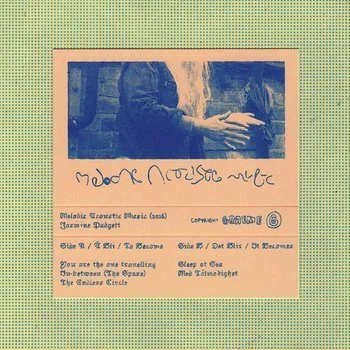
This was followed by Melodic Acoustic Music, released on January 1st this year. An astonishing collection of four musical pieces, each running over 15 minutes. Together they form a collage of shifting sounds built around an omnipresent drone, interwoven with perfectly blended spoken word, field recordings, banjo melodies and what is attributed to as “surprise sounds.” It’s a true bricolage approach to music-making: an ecstatic journey that, despite its low tempo, still manages to get the heart racing. So much so listening to the healing closer Med talmodighet gave me a genuine “moment” one of those rare, healing experiences that demanded immediate repetition.
Jasmine has described the album as “an exploration of varied acoustic sounds on tape — a warm, warbling, lambient and kinetic journey; a gentle adventure into the fuzzy forest of frequencies,” and I think that’s the perfect summary. I’ve been happily lost in that forest for a while now and will be for some time.
At a time of shortened attention spans and the demand for instant impact, Padgett’s work invites a slow attentiveness and active engagement. The tactile presentation is a push back against the expectation that music should be immediately digestible and disposable. By existing outside streaming platforms (it is only available via Bandcamp) and foregrounding process over polish, the album reframes music as something to be encountered rather than consumed.
My love for this music has grown not just as a reaction against digitally precise or soulless sounds, but because it offers something real to hold onto. It’s the origami unicorn that lets us know we are real. So, if you can, take a moment to stop and listen. Sit with these albums and let the music wash over you. You might be surprised by how much of what feels alive has been missing.
—
Matthew McPartlan, who records under the musical alter ego M. Haiux, is a man who believes that Christmas is a permanent emotional frequency. His seasonal EP, The Cold Nights of Late December, is a testament to this obsession. He once famously declared that any song can be improved by the addition of a distant sleigh bell, provided it is used with absolute, non-ironic sincerity.