
Science & Magic | 22
I try not to judge. Truly, I do. In my more enlightened moments, usually after that second cup of coffee when the morning light hits the kitchen table just right, I subscribe to a very pure live and let live’ philosophy. After all we are all just doing our best to navigate our own friction of existence.
But then I step outside. Or I open my emails. Or I overhear a conversation in a queue. And the fight really begins.
It’s a very specific sort of internal struggle. It’s an involuntary flinch I experience when, say, I discover a person I previously respected actually enjoys playing golf. The full, checked-trousers, early-Sunday-morning ritual of it. To me it’s a hobby that feels less like a sport and more like a very slow, very expensive way of admitting you’ve given up on the mystery of life.
The list, if I’m being honest, is longer than I’d like. I once lost a genuine connection with an old friend when they admitted, over a perfectly good pint, that they had voted ‘Leave’ in the Brexit referendum. I tried to be magnanimous. I tried to see the ‘nuance.’ But all I could see was the hairline fracture in the foundation of our shared reality. It’s the same feeling I get when someone tells me they think Coldplay are ‘underrated,’ or when a person refers to Twickenham as ‘HQ’ without any trace of irony.
These things shouldn't matter. After all they’re just surface-level aesthetics and minor tribal markers. Being a decent human being tells me that character is built on kindness, integrity and shared humanity.
But the bit that actually makes life worth living is found in the specific, the idiosyncratic and the fiercely independent. It’s found in that ‘blurry bit’ where we have choose our tribes based on a shared aversion to the bland and the corporatised.
So, I keep fighting the urge to judge. I remind myself that even these people probably have internal lives, secret sorrows and a favourite childhood record. I strive for tolerance. I aim for grace.
But if you turn up to a Violette event in a Pringle jumper with a set of clubs in the boot, please don't be offended if I’m suddenly very busy trying to work on a solution for an imaginary glitch in the bass player’s monitor.
Welcome to the latest edition.
Matt
Ten Questions
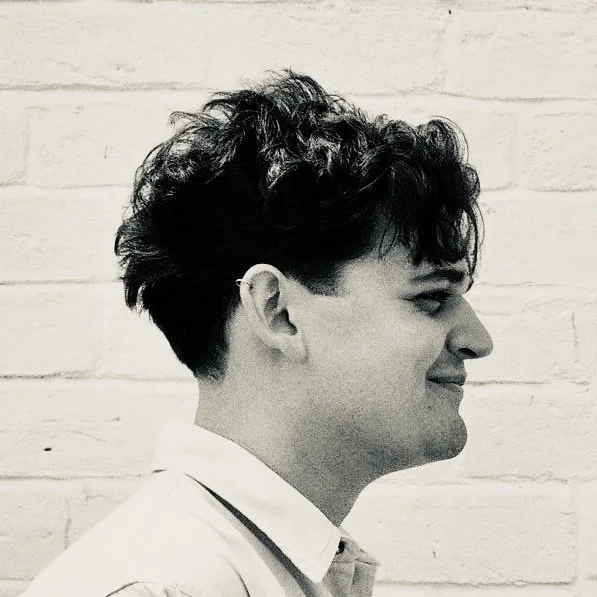
by Arvin Johnson
A musical education is often a matter of sugar crashes and subversion. It starts in a front room in Hounslow, watching The Essential Clash DVD on repeat at age three and winds its way through a crazy teenage metal phase fuelled by the "genuinely scary" visuals of Kerrang! TV.
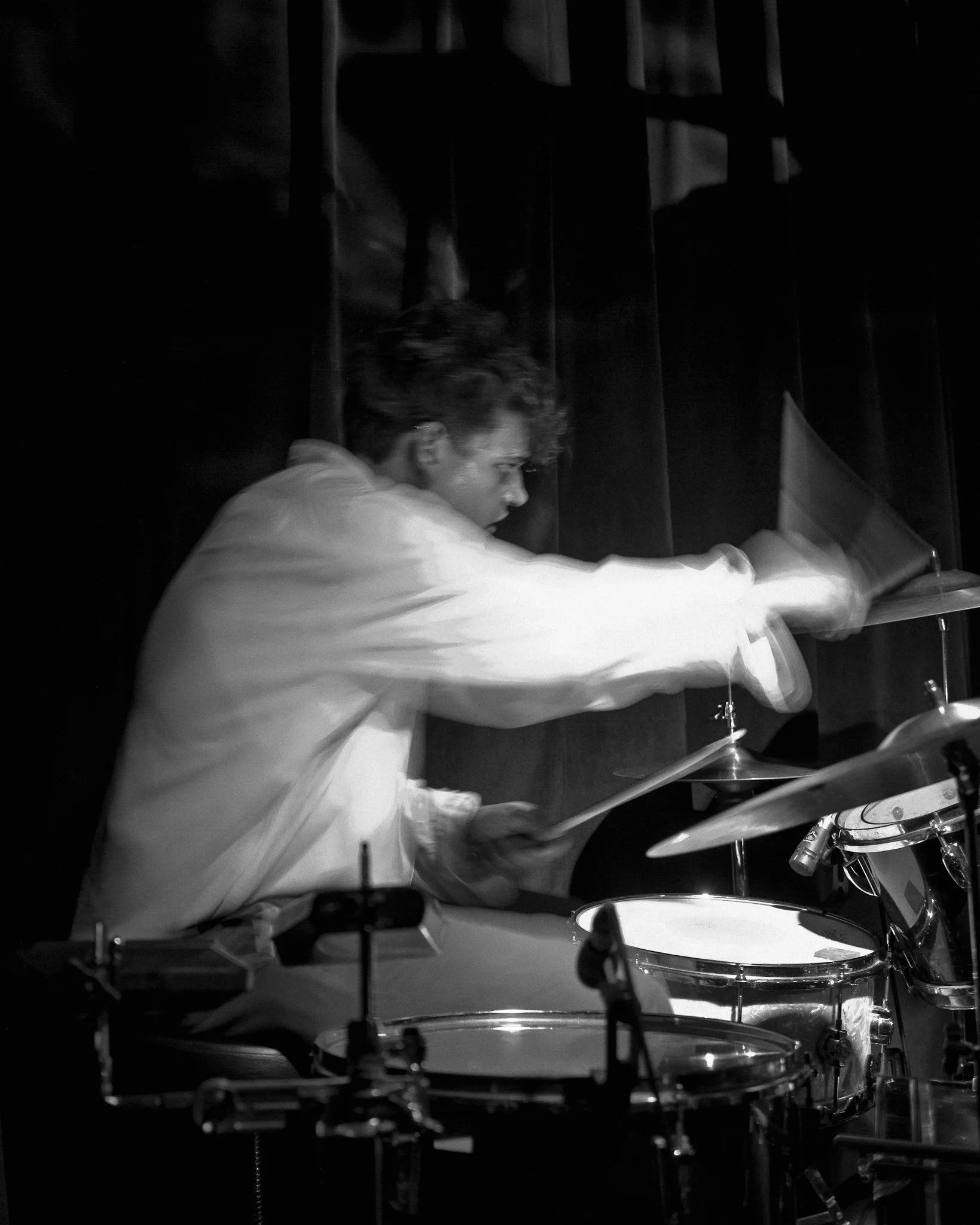
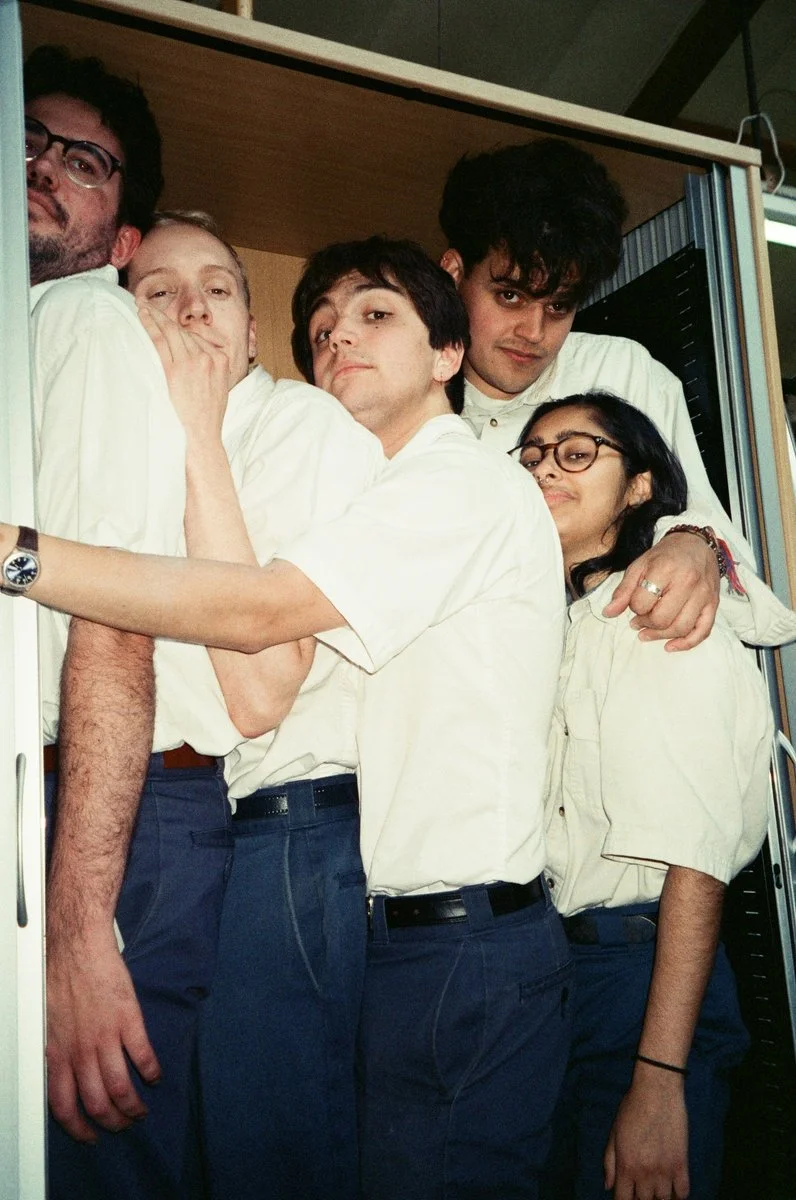
Arvin Johnson is one-fifth of the semi Manchester-based edge-pop combo Tigers & Flies, a band whose ‘art-pop-meets-jazz’ assaults has become a staple of the Violette Records turntable and stable. Arvin’s path is really one defined by a steadfast refusal to be fed by any algorithms. He prefers the human recommendation of a record shop owner in Copenhagen or Berlin to anything some rigged machine can offer. And he is a listener who finds the tonic-free tension of Curtis Mayfield as vital as any flamboyant drama Ziggy Stardust can conjure.
So we invited Arvin to select ten questions from our archive. His responses are the ultimate field guide to a life shaped by the cleansing fire of punk, the influence of his Dad (the folk musician Robb Johnson) and the pursuit of music that demands your complete and undivided attention.
● What song is permanently fused to a specific place or holiday - to the point where hearing it transports you instantly?
When I was three, me and my dad had a weekday tradition that involved dropping my older brother off at school, going to the park for a run around, and securing and devouring the largest double chocolate muffin we could find, before heading home to watch something on TV just as the sugar crash set in. We’d watch Norman Wisdom, Laurel and Hardy, Charlie Chaplin, maybe Will Hay, all the cutting edge comedians of the time. But, more crucially, on heavy rotation was also The Essential Clash DVD, which was basically a collection of all The Clash’s music videos and a few live clips. We’d watch this on repeat, start to finish. My favourite song was Tommy Gun. It really hooked me - I think it was the song’s intro, with the repeated drum fills and all the space and the feedback from the guitar, that I found - and still find - so exciting. I watched the video recently and it’s pretty rubbish, so it really must’ve been the song itself that I latched on to. So whenever I hear Tommy Gun I’m transported back to the front room of our house in Hounslow, which is a nice little nostalgia trip.
● What album would be most likely to bring you out of a coma?
I think it’d have to be Of a Nature or Degree by DUDS. Off-kilter, moody, spikey, unnerving, frenetic, jumpy, are all words that come to mind when I think about this album. I don’t think my comatosed unconscious mind would stand a chance! That or Buy by James Chance & The Contortions for the same reasons.
● Who gives you the best music recommendations these days?
I try my best to avoid being fed recommendations by the Spotify algorithm, so make an effort to get as many recommendations from as many people as I can. I find the best music recommendations, unsurprisingly, come from people who sell records for a living. I’ve amassed many a great recommendation this way, with some honorable mentions including: Martin from CAN Records in Copenhagen who recommended an album by Norwegian post-punk band Kjøtt; the owner of Schallplanet Records in Berlin who played me quite a strange record by cult German Krautrock collective Embryo; Neil at Kingbee Records in Chorlton (hands down the best record shop on the planet), who told me about Dislocation Dance; Dave at the Carlton Club record fair who put me on to Big Flame and Tools You Can Trust; and Brandan at Sticky Black Tarmac in Leigh who highly recommended I pick up a copy of Turkish city pop singer Peki Momés’ new album (I did and was not disappointed!). What I like about getting recommendations this way is that you not only find out about albums and bands that you probably wouldn’t otherwise, but there’s also a memory - a person and a place - attached.
● What song or album makes you want to create?
Easy one - London Calling by The Clash. It’s such a sprawling album overflowing with imagination and ideas that it’s hard not to feel inspired after listening. It’s the only record that can get me out of a creative rut, and is equally adored by my partner in art pop Arthur - when we’re working on a new song, it’s only a matter of time before one of us suggests that we should “try making it sound more London Calling”, which is usually followed by one of us playing 30 seconds of Rudie Can’t Fail or The Right Profile or Clampdown through our phone speaker. Vague and unhelpful as this may be in practice, I think it’s the essence of the album that we want to imbue in everything we make.
● What genre or artist did you come to embarrassingly late, kicking yourself for missing out?
I only realised the genius of Curtis Mayfield last year after finding one of his records (There's No Place Like America Today) in a charity shop in Peckham. I then worked my way through the rest of his catalogue, which was a real treat! His self-titled LP (the one with the yellow suit) is just so great - I knew it was one of those ‘classic’ albums but didn’t realise just how good it really was until I listened to it in full, top to bottom. I love how the album is paced - side A ends with this epic, sermon-like song about how true freedom for African Americans gets stifled when racist stereotypes are internalised, warning that something must change soon before it’s too late. The song ends without returning to its tonic, leaving you with the same sense of tension and urgency that the lyrics preach. And then you flip the record and are hit with one of the most joyous and groovy songs to have ever been written, about perseverance, love and resilience. Musically and thematically, that’s powerful stuff! In a way I’m glad I came to it late because it shows there are still things out there to fall in love with.
● What music video changed how you thought about visual art?
Between the ages of roughly 12 and 15 I went through a bit of a metal phase, fuelled almost exclusively by Kerrang! - I’d buy the magazine religiously every Wednesday and watch the Kerrang! TV channel most days after school. The channel basically showed pop punk and heavy metal music videos on repeat. I remember finding some of the metal videos absolutely horrifying, like really genuinely scary! But at the same time, I must’ve had some sort of morbid fascination with them because I kept going back for more. I remember the video for the song Dig by Mudvayne being quite unnerving. But there was one video in particular, Obscure by a Japanese band called Dir En Grey, that really creeped me out. The song itself is super heavy, and the video is basically just loads of unbelievably gruesome things in rapid succession: a decapitated head shaking on a surgeon’s table; a wriggling body bag; a man who repeatedly sticks his fingers into his chest, eventually pulling out his heart; some sort of masked and sexual satanic ritual; a limbless torso hopping about; vomit; a surgeon with various sharp bloody objects; dwarves on unicycles; clowns; basically anything horrific you can think of, it’s probably in the video. How they got away with showing this on prime time TV I do not know. I remember looking it up on YouTube and finding, to my disappointment, not only was the video age restricted but there was also an uncensored version (??) which was, obviously, also age restricted. So I suppose in terms of how it changed the way I thought about visual art, it was probably the most gruesome thing I’d ever seen so opened my eyes to how extreme and shocking visual art could be. Probably not the sort of thing a 13 year old kid should have been watching but it was defo formative!
I just watched the music video again, having not seen it in over 10 years, and it still makes me feel pretty icky, probably partly in a nostalgic way but also because it’s just a fucking horrible video! I urge you to give it a watch if you’re feeling brave.
● If you could only listen to one record for the rest of your life, what would it be?
Now this was a tough one, but I think it would have to be The Rise and Fall of Ziggy Stardust by David Bowie. I don’t think I’ve ever listened to it and felt bored, probably because it’s such a dramatic and flamboyant album. Five Years and Rock 'n' Roll Suicide are the perfect songs to open and close a perfect album.
Some honourable mentions: Cut by The Slits, Skylarking by XTC, Amplified Heart by Everything But The Girl, Blood on The Tracks by Bob Dylan, Acabou Chorare by Novos Baianos, Born to Run by Bruce Springsteen.
● What artist do you think is criminally underappreciated?
Okay I might be slightly biased with this one but I think it has to be my dad, Robb Johnson. He’s been consistently writing and releasing music for about 40 years, and shows no signs of stopping! He’s probably best described as a folk musician, but one that’s been “scoured by the cleansing fire of punk” as he puts it, a bit like post-Tubthumping Chumbawumba. His lyrics are really great - they’re clever, funny and often political (but not in an on-the-nose sort of way), and he spent most of his career as a teacher so has some really lovely songs about people that are like little vignettes. My favourite albums are Metro, The Big Wheel and Clockwork Music, but Pennypot Lane is a good place to start. While he’s probably appreciated in folky circles (Martin Simpson often ends his sets with a cover of More Than Enough), on the whole I think it’s fair to say he’s largely underappreciated.
● What new artist or band are you most excited about right now?
Last month we played at The Greyhound in London with a band called SHY, they were a real hoot! They had all the tongue-in-cheek arts-and-craftiness of a Stiff-affiliated mid-70s pub rock band without any of the dated and embarrassing machoism. I think it was their third or fourth gig or something, and I’m pretty sure they’ve not released anything yet, so keep your eyes and ears peeled! Mine certainly are.
● What's the last album or song that made you stop whatever you were doing and just listen?
We have the radio on at work, and Smooth FM seems to be my colleagues’ station of choice. I don’t mind it, but by the end of the day it does all sort of meld into a sludge of soft, indistinguishable background noise. Sometimes, if I get in first, I’m able to stick on Radio 6, but this also ends up sounding pretty homogenous, if with slightly more pretensions to trendiness. My ears do occasionally prick though - a few weeks ago I heard a song called Chestnut Tree by Matthew C Whitaker, which took my attention away from the spreadsheets for a good few minutes. I’d not heard of him before (turns out he’s the singer of extraterrestrial rock band Henge, which is a far cry from his solo stuff), but I really fell in love with that song. The EP that it comes from is equally great. I’m a sucker for a soft buttery voice and lush harmonies, he sort of reminds me of a slightly quirkier Richard Hawley which is a win in my books.
Magnetic North
by Jeff Young
22 : Easter
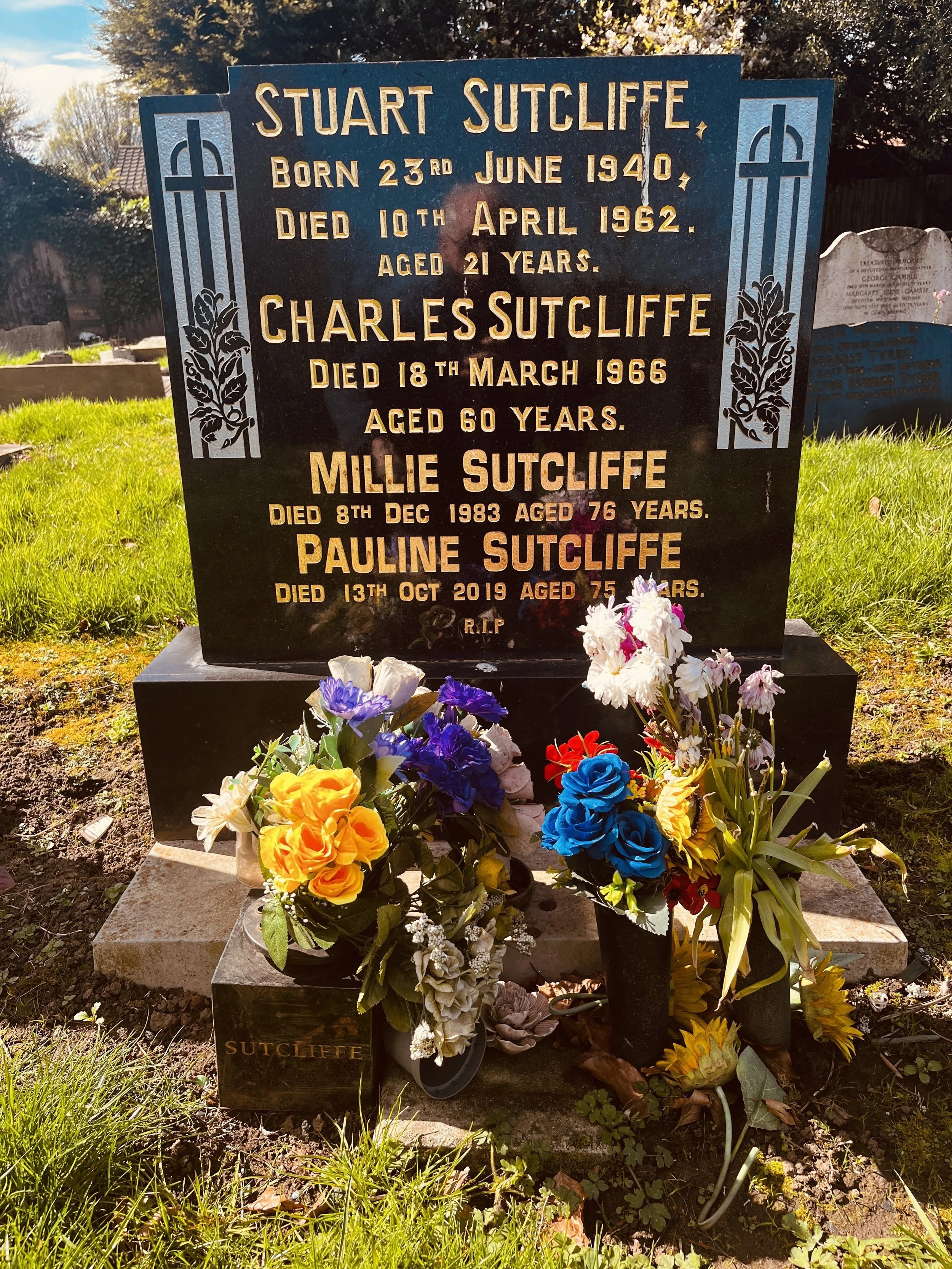
Easter Monday, a bright Spring morning and once again I’m in a graveyard. I’m looking at war graves, the young men dead at 20, dancing light of dandelions scattered around their ghosts. And then I’m kneeling in the dew-wet grass that covers the grave of Stuart Sutcliffe, the Fifth Beatle, the painter, dead at 21.
Who’s your favourite Beatle? Sometimes I say Billy Preston or Mal Evans, but Stu was the prettiest, the coolest, the one with the best hair (thanks to Astrid Kirchherr, the Reeperbahn beatnik). He was the art school angel, and he looked like the future, but he’d never see the future. I’m kneeling on the dew-wet grass in front of his grave and I’m wondering why I’m here...
In Paris, I go to cemeteries and look at the graves of poets and painters. At Oscar Wilde’s grave, long ago in Pere Lachaise, I watched a beautiful woman pressing her lips against the tomb, leaving lipstick traces behind in a swarm of bright red kisses left by a thousand lovers, the kisses sinking into the stone and damaging it, the unintended corrosive power of love.
On Samuel Beckett’s austere grave, big as a king-sized granite bed, I found a love letter weighted beneath a pebble, its words disappearing like invisible ink, dissolving in autumn rain. And just across the way from Sam, Serge Gainsbourg’s wine bottle and champagne cork strewn grave, like an unmade bed in a garret, the dead Gainsbourg still drinking in a pit of cigarette butts. I picked a champagne cork from the chaos and popped it in my pocket, a talismanic token from the dominion of the dead.
Touch the graves, hope for signals, hope for something, hope to be somehow changed. Hope to hear their voices, hope that they will listen to our prayers. They’re still here, the dead, still present and somehow participating in our lives. They’re still there in memory, in the clothes in the wardrobe, the retirement watch, in photographs, in the books we read, in films and paintings, in architecture. I can see them and hear their voices because I choose to believe in ghosts...
There are flowers on Stuart Sutcliffe’s grave, bright yellow, purple, white and blue. The Easter Monday sun lights up the dandelions in the grass on the prettiest of days. If you’re reading this on the day the 22nd edition of Science & Magic is published it will be the 10th of April, the date that Stuart Sutcliffe died 64 years ago. And he’s my favourite Beatle.
— Jeff Young, 8 April 2026
—
Last month, Jeff Young began a series of delicate negotiations with the city’s statues. He maintains that if you lean your ear against a granite plinth at the precise moment a cloud obscures the sun, you can hear the internal monologue of the nineteenth century, a low hum of top hats, industrial coal and unrequited longing. His latest project involves leaving blank notebooks in the hollows of ancient trees, believing that the wind will eventually ghost-write a definitive history of the future using only the language of rustling leaves and shifting shadows. He too also refuses to wear a watch, stating that time is merely a suggestion made by people who don't understand the rhythmic integrity of a ticking grandfather clock in a room where no one is allowed to sit.
The Paphides Principle
Pete has a theory that some records don't simply sit on a turntable, they inhabit the room like a houseguest who knows all your secrets.
This week, he heads to umGungundlovu to track down the spiritual jazz of Nduduzo Makhathini. It's music that functions equally as a song and a "blissful sanctuary" for anyone trying to forgive the unforgivable.
Nduduzo Makhathini - ‘Kuzodlula’
Nduduzo Makhathini is a South African jazz musician from umGungundlovu – which, is actually the Zulu word for "the secret conclave of the elephant”. This, of course, begs the question: “Hey Nduduzo! How did the elephants feel about the Zulus effectively revealing their secret by calling your area that?”
Anyway, I’m sure it’s fine. Nduduzo is about to release his second album for Blue Note, entitled The Myth We Choose – and everything I’ve heard from it so far is stunning. He says: “I feel there is a uniqueness about South African jazz that created an interest all around the world and we are slowly losing that too in our music today. I personally feel that our generation has to be very conscious about retaining these nuances in the music we play today.”
Nduduzo’s musical lodestone is John Coltrane’s classic quartet featuring McCoy Tyner. It was through listening to Tyner’s work on A Love Supreme that he came to understand his own voice as a pianist. Not that you’d know it, but Nduduzo came to jazz late. “I had always been looking for a kind of playing that could mirror or evoke the way my people danced, sung, and spoke. McCoy Tyner provided that and still does in meaningful ways.”
Kuzodlula is the opening song from The Myth We Choose. To me, it sounds hymnal. A blissful equidistant mood between Thelonius Monk’s version of Abide With Me and Find Your Peace, the opening shot from Keyon Harrold’s ravishing 2024 album Foreverland – and yes, of course I’m mentioning these things in the hope that you’ll go out and listen to them too. But start with Kuzodlula, which Nduduzo describes as a meditation on forgiveness: “real forgiveness is the very attempt to forgive the unforgivable.” I hope he keeps that in mind if he ever reads my facetious elephant aside.
— Pete Paphides, 8 April 2026
A Toria Memoria
by Angie Woolfall
Today in my dressing gown
Not deliberately dressing down
More holding off the day ahead
The door went- probably postman I said
So I got up and answered it
Despite looking like a pile of shit
Not being on the ball
And not expecting a man to call
It took me a minute to understand
Violette t shirt in his hand
I could have posted it through the letter box
But I decided not to and to give you a knock
I explained in detail about my clothes
Or lack thereof, said I did propose
To get dressed soon-its just sometimes,
He agreed, we hugged and said goodbye
My mind flashed back to Tuesday night
Where we all laughed at the sharp insight
About someone you know wanting to call
To maybe bring you a T Shirt in a Small
And you don't know cos they didn't say
But you answer the door anyway
Cos in the words of that northern lass
That's how you know you're working class.
—
Woolfgang Angeleas Mozart tests the structural integrity of the ‘dressing gown delay’ as a tactical defence against the afternoon. Her research into the physics of the unexpected knock suggests that a hand-delivered T-shirt carries a life-affirming frequency that a letterbox simply can't replicate. She was last seen attempting to bottle the communal echo of a Tuesday night laugh, convinced that it’s the only substance strong enough to waterproof a soul against the upcoming week.
What Have You Made Out Of Resistance?
by Eimear Kavanagh
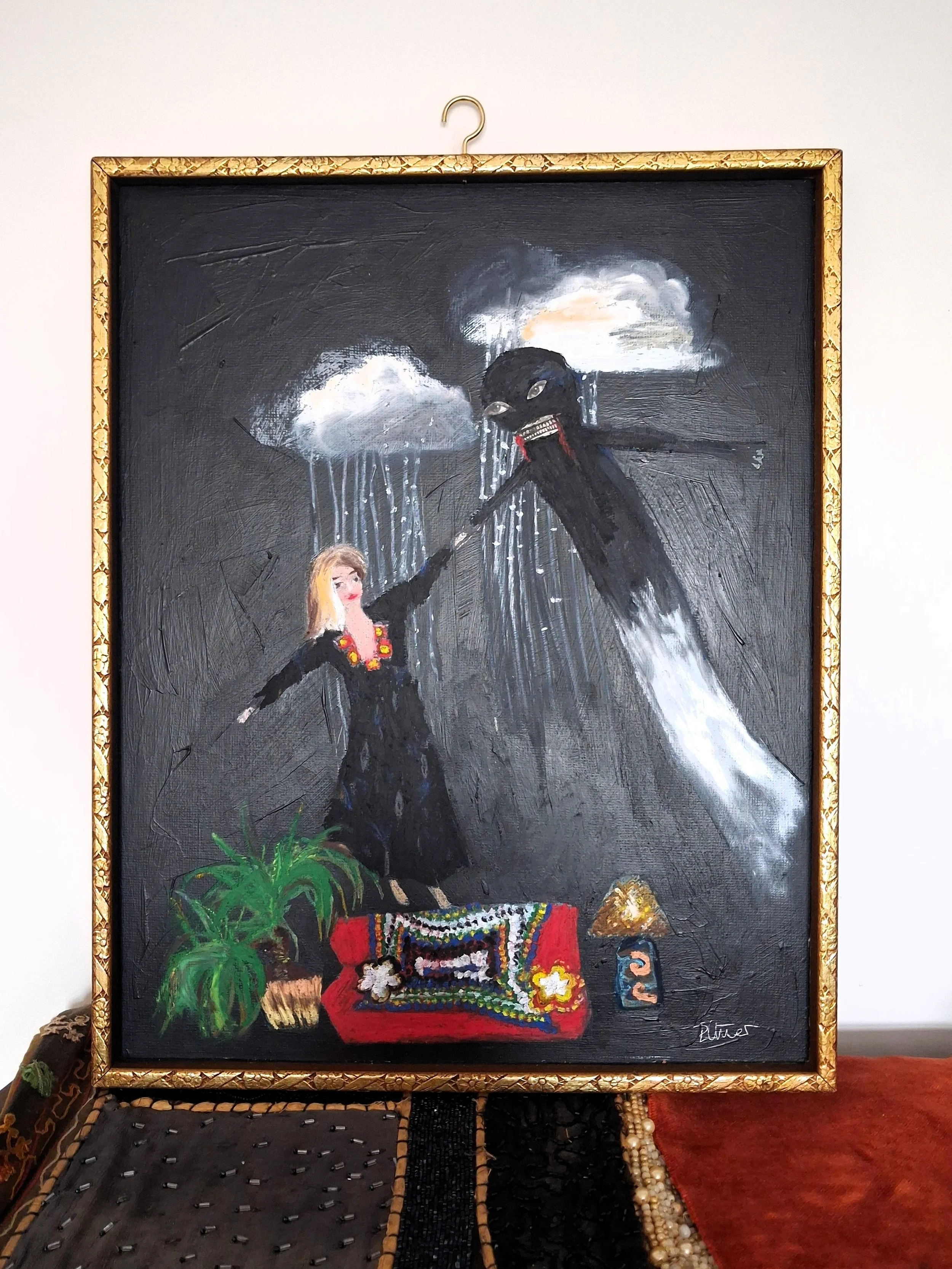
I think around 2021 I had a little-huge turning point.
It was a moment in time where I had realised that if I surrender to pain, it means I decide to accept it.
What else was I left with otherwise? Fighting it was exhausting and it became a self fulfilling prophecy. I was clinging onto the idea that this is pretty shitty for me and this is how it is.
It was like a real fuck-it moment. C,mon pain, ravage me, you might as well cos I can't beat you. Take me.
It wasn't an end-of-scenario to all my problems, but an exercise which I learnt and still repeat time and time again through all areas of my life.
It's good, like letting go of the wheel because sure, I don't know what's ahead but I can give up the fight for my peace of mind.
Love, Eimear
—
Eimear conducts regular experiments in what she calls "voluntary disorientation." She spends most of her Tuesday afternoons navigating her local park while walking backwards, claiming that the only way to avoid the future is to refuse to look at it. She believes that the resistance offered by a stiff breeze or a slightly uphill gradient is a kind of secret, kinetic advice from the universe which she translates into her paintings using a brush made from the hair of a horse that once belonged to a high-ranking member of the Irish gentry. She has recently been observed sitting perfectly still in her studio for six hours at a time, waiting for the dust motes to reach a consensus on where she should place her next stroke of ochre. She forever maintains that surrender is not a defeat but a sophisticated form of aerodynamics.
Dead Air Anthologies
by Matty Loughlin-Day
You know that John Peel quotation; it’s used everywhere, on t-shirts and tea towels, posters and online posts. The one that says when someone was expressing a preference of CDs over vinyl, due to CDs not having surface noise, Mr. Peel apparently replied, “life has surface noise, mate”, or something to that effect. It’s a lovely, trite and wry anecdote that you can only hope is true, and the type of line you wish you had been quick enough to think of in countless past social situations.
This quip was buzzing round my head the other week when I was listening to The Cleaners from Venus, and led to some musings that quickly mushroomed and got me to thinking some very big things indeed.
A significant part of the allure and charm of The Cleaners from Venus is the fact that their early albums were recorded in an extremely amateur fashion, and distributed only on cassette tapes, the result of which is that these glorious slices of jingle-jangle magic are smothered in wobbly layers of what we might call here ‘surface noise’. There’s hiss everywhere and certain instruments get pushed into the red zone of gain, meaning they sound distorted or crackled. At times it feels like the power is about to fizzle out and leave everyone in silence and blackness. Slick 80’s pop this ain’t.
In a world which strives for aural purity and cleanliness, it’s positively anathemic and should be disregarded by audiophiles, yet these recordings are absolutely mesmerising and captivating, not in spite of, but because of this messiness. Indeed, the band’s later albums, which were recorded much more ‘properly’ suffer to some degree for not having this charm and for sounding, well, ‘good’.
There are endless other examples – the raw, fuzzy recordings of Jimmy Reed, Charlie Patton or early Wailers records, the warm tones of Ben E King and O.V. Wright, I could go on forever, but the imperfections of the sound quality of all of these make them sound more vital – more alive. I’m no purist and don't reject anything recorded after 1960 for instance, but there can be no denying the magic these recordings have that can’t quite be defined or identified.
My thinking led me further afield and up into the ionosphere. Many, many years ago, I had a fascination that bordered on obsession with shortwave radio. I would spend night after night in the wee hours playing with my antenna (stop giggling at the back) in the search of distant radio stations that included North Korean propaganda, voices from the heart of Europe, amateur ham enthusiasts and even real-life ‘spy’ broadcasts. I could bang on for an age about this – and likely will in another essay – but what undeniably made this such a thrill and hooked me so much was the other noises that were competing for bandwidth. The static, the crackling, the whirring, the drifting of one channel into another; this layer of surface noise brought with it an excitement and vibrancy that can’t be recreated. I could easily have accessed these stations online and in seconds be streaming a crystal-clear broadcast of Radio Taiwan International for instance, but that would be missing the point; the static made me feel connected with something much, much bigger than myself. It’s just as important as the noise that lies underneath.
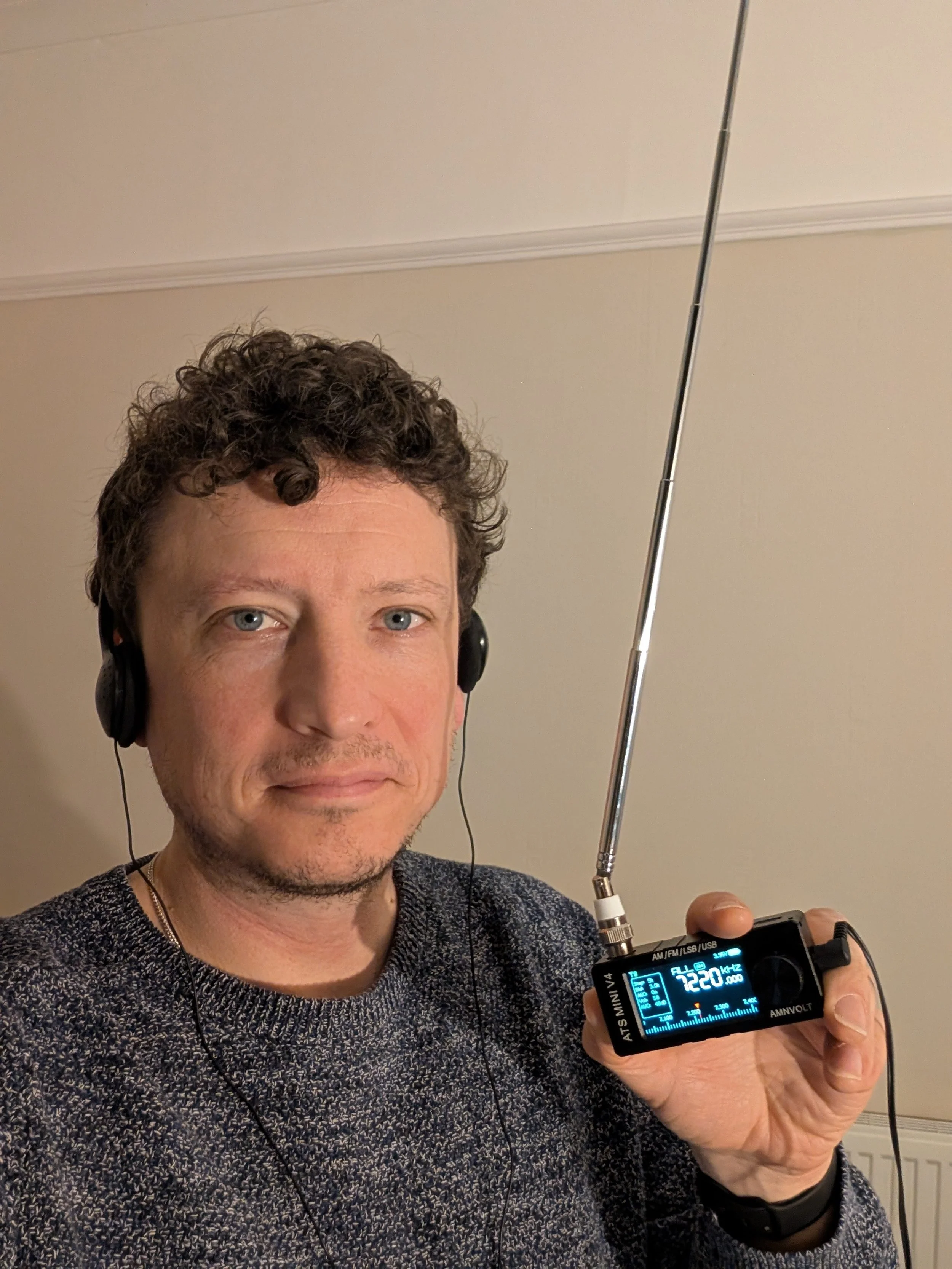
Last week, after about a decade away from it, I treated myself to a relatively cheap radio to see what remains on the increasingly sparse shortwave radio bands. There’s nowhere near as much to listen to, with many countries abandoning these frequencies, but the act of searching through the static was no less of a thrill. I’ve never fished (veggie, you see), but I imagine it’s a similar experience; the waiting, the baiting, the mindful act of tuning in – it’s not so much as what you catch, as the time spent doing it.
Regardless, all of this got me to thinking - what exactly is it about this hiss and interference that John Peel was referring to that is so alluring? Why does it strike me and move me so much, when on paper, it is a factor that any musician or listener should want to remove? I strongly run the risk of charging headlong into Lee Mavers-style babble here, so I request you indulge me once more, but it’s something that lately I have been pondering much more than I probably should
My first thinking was that this surface noise makes everything sound more ‘real’, which is increasingly important when residing in a landscape that can hear the rumblings of a distant-but-nearing AI storm coming over the hills.
The more I thought about this however, I concluded that while ‘real’ is a good start, it doesn't quite satisfy; it's not enough. It's not one hundred percent accurate either; if you were in the studio at the exact time The Cleaners from Venus were recording ‘Only a Shadow’, you wouldn’t hear that hiss, the notes wouldn’t be so wobbly and everything would be much clearer, so this isn't the 'real' sound, is it? Similarly, the signal being beamed out of, say, Cuba or Cairo doesn't have the crackle and fizz that reaches us via our radio aerial. This surface noise therefore appears to be a secondary layer of noise that only appears once the sounds have been captured by a mute device. So what's going on here?
Here is where I push our boat out into deeper waters of abstract thought, but after much contemplation, I reached the conclusion that the reason this surface noise, the crackle, the hiss, is so enticing and exciting is because it is the sound of the distance in-between. It’s the sound of the room that is inaudible to human ears; it’s the sound of the air that is being vibrated by noise - it’s the sound of the ether.
There is so much around us that we can’t experience just by using our senses alone; wavelengths and frequencies we can’t see, hear or feel. Information and conditions whirring all around us that our brains can’t receive, comprehend, or even know about, so any capturing of this is, really, quite supernatural. Just as the fish does not know water, there is so much of our existence we don’t know about, or cannot access, so to hear a rough translation of this space in between the origin of the sound and the device capturing it, is quite a wonder.
It is a similar school of thought to what Rebecca Solnit labels 'The Blue of Distance' in her fabulous book 'A Field Guide to Getting Lost'. In one of its lead essays, she identifies how the blue hue that seems to fill the distance between two points contains a powerful longing and desire that can never truly be captured, because we never quite reach it. I can't paraphrase it better than she writes, so to quote a part of it;
"For many years, I have been moved by the blue at the far edge of what can be seen, that color of horizons, of remote mountain ranges, of anything far away. The color of that distance is the color of an emotion, the color of solitude and of desire, the color of there seen from here, the color of where you are not. And the color of where you can never go. For the blue is not in the place those miles away at the horizon, but in the atmospheric distance between you and the mountains..."
So perhaps this 'surface noise' is just like the Blueness that Solnit refers to. It's something we can never truly grasp, but only experience. Perhaps it is why digital or direct input can sound so sterile - because all of that richness, that organic information has been stripped away. In doing so, you’ve stripped away the heart of it - the life. Life on This Blue Earth has surface noise after all.
Enjoy the mix; it features perhaps my favourite bit of recorded music ever, which is, naturally, smothered with surface noise.
—Matty Loughlin-Day
Tyrannosaurus
by Louis Foster
Elijah knew three languages but couldn’t speak the truth in any of them. At thirty years of age, he’d begun to grow into his face, but still hadn’t grown to like it. He’d spent his teens and twenties resembling a frying pan with a broken nose on it, and while some of his features were individually quite pleasant, none of them looked as though they belonged on the same face. For example, it was difficult to tell if his eyes were too big or his head was too small, but either way they were aesthetically incompatible.
“You look well,” I say, adding, “Considering.”
Elijah was a distant cousin of mine but sadly not distant enough. Around the time I was still saying miggle when I meant middle, Elijah began to display what various specialists referred to as ‘prodigious attributes’. He was a chess champion by the age of 12, graduated with a degree in astro-physics at 16 and was abducted by aliens on the eve of his twenty-ninth birthday. Since his return to Earth, he’s spent most of his time snorting cocaine and underwhelming a string of affordable prostitutes. He’d dabbled with acid and meth before graduating to mainlining heroin, which I’d always felt was quite a leap, but Elijah was not one to do things by half.
“I look like shit,” Elijah replies.
It was at the height of Elijah’s drug taking that we stopped speaking. I mean, weed made me throw up once, so I doubt I could stomach heroin, but after a year without any communication, the sudden death of Elijah’s father prompted an unexpected reunion. It began at 6am, as the rat-a-tat of the letterbox flap pierced the stillness of the early morning and, undeterred by the ungodly hour, I dragged myself downstairs, curious due to the unmistakable sound of something being posted through my door. A phone call would have done, I thought to myself as I picked up a folded piece of paper off the welcome mat. It read:
The Barlow Arms.
1pm. Be there.
Elijah.
I can hardly say it was a relief to hear from him, but deep down there was a sense of guilt and shame that I hadn’t been the one to break the silence. When we were kids, he’d enjoy telling me all of the facts he had stored in that big brain of his, like how a day on the planet Venus is longer than a year and how butterflies taste with their feet. In adulthood, I just avoided him and while in many ways we were the closest thing we each had to a brother, I couldn’t stand seeing what addiction had done to him. The lies and the deceit and the many other moral compromises for which habitual drug taking is famous had become too much for me, so I withdrew. But here I was, perched on a stool in a dark corner of a dingy pub, secretly pleased that he’d selected a location where I would have cheap and plentiful access to alcohol.
“How was rehab?” I ask.
Elijah lights a cigarette and says, “Enlightening.”
Elijah had recently spent 28 days at the New Horizons Recovery Centre, and even more recently had found his father’s dead body early one Sunday morning. This was a family still in mourning over the death of Lady Diana, a family with a permanent shrine to the People’s Princess on the mantelpiece, so it came as quite a surprise when Elijah found his dad swinging from the living room light fittings with a slice of lemon in his mouth and his wife’s underwear concealing his dignity. A video cassette of Tim Henman’s Wimbledon highlights was on pause, a close up shot of the tennis player smiling stared out from the television screen into the living room where Elijah’s dad dangled like a Christmas decoration.
“You’re probably still in shock,” I tell him. “At least he put the Lady Di photo face down,” I continued. “She’s probably been through enough without seeing that.”
It’s Elijah’s mother I feel for the most. Her husband was a man with all the charm and charisma of a Butlins magician. A man with strong stepdad energy, rank with the whiff of a desperate need for respect and affection that, deep down, he knew would never be forthcoming. And yet, little did she know, he was brimming with personality after all, albeit a deeply disturbed one. As if it wasn’t bad enough that she had a son who claims his arse was fingered by ET, she now has to live with the fact that her husband was a secret deviant, compounded by his staggeringly plain taste in men.
“Mum’s still not doing too well,” Elijah says. “She barely speaks a word and just sits around watching Wheel of Fortune every day, pounding glass after glass of pinot noir.”
I instinctively offer a sympathetic nod and hear myself say, “Don’t fucking blame her.”
Much like Marion Crane may have experienced a pang of regret for stealing forty grand as she was being stabbed to death in the shower by a man dressed as his dead mother, I too began to consider my questionable decision making. However, I felt it was finally time to broach the subject of my cousin’s close encounter of the fourth kind.
“So, I hear you recently paid a visit to the Andromeda Galaxy?” I enquire, trying to lighten the mood.
“If you’re going to take the piss then forget it,” Elijah states. “I asked to meet you because I thought you’d be the only one who might believe me.”
I watched as Elijah sank deeper into his chair, though his body seemed reluctant to settle. His right leg bounced underneath the table, a rapid and steady rhythm that seemed beyond his control providing a soundtrack for his cosmic anecdote.
“Sorry,” I offer. “Only joking.”
“I was standing in the kitchen,” Elijah starts. “Making a butty -”
“What was on it?” I interrupt.
“What does that matter?” Elijah asks.
I glance up at the television. The news is on, muted, but you can tell what each segment is about. A politician apoligises for an untruth. A dead body is found at a Holiday Inn Express. Then at the end, something full of dystopian heartbreak repackaged as a ‘feel good’ story.
“Just does,” I insist.
“Peanut butter and blueberry jam,” Elijah states.
“Good choice,” I say.
I was standing in the kitchen,” Elijah repeats, this time with an attitude. “I was looking at the tap dripping. I was thinking about how I kept meaning to fix it and how I never get around to doing the things I need to. Then I noticed something out of the corner of my eye.”
“So…what did it look like?” I ask.
“It looked kinda like an orb at first,” Elijah replies, before pausing to think. “It just looked like a floating orb about five feet away, but it almost looked like it was hiding from me - like it didn’t want me to notice it was there.”
I could tell he was telling me the truth, or at least his version of the truth. We sat in silence for a moment, drinking; Elijah slowly ripping a beer mat into a dozen pieces, scattering them all over the table, before picking up another one and repeating the process.
“I thought I was going mad,” Elijah continued, now peeling the label off a bottle of Heineken. “I thought I was seeing things, but then it moved closer, and it started pulsing, like it was breathing heavily, and I realised I was breathing heavily, and I thought maybe it was parroting my movements.”
“Um-hmm,” I offer, maintaining a compassionate demeanor.
“It was just silent,” Elijah goes on. “But like the silence of something that didn’t need words because it already understood everything it needed to.”
“Maybe it was silent because it was a fucking orb and orbs can’t talk,” I say. “Or don’t exist, for that matter.”
“I know how it sounds,” Elijah replies.
“Do you?” I ask. “Do you fucking really?” I ask again, the compassion I felt a moment ago, or at least pretended to, quickly evaporating.
“Listen-“
“No, you listen,” I interrupt, “I’m sick of your Good Will Hunting bullshit. You’re a genius, I get it, you get bored easily. Or maybe this is some sort of coping mechanism, I don’t know. But if you’re on the wind up you can just –“
“This isn’t a fucking wind up,” Elijah insists. “I’m telling you the truth.”
“I will only ask you once,” I say. “Were you fucking high?”
“I told you,” Elijah states. “I haven’t touched the stuff since I got out of rehab.”
“I mean, I wouldn’t blame you. You’d just found your dad and- “
“Don’t get me wrong,” Elijah cuts me off. “When I found him, I made a decision there and then to get back on it as soon as possible, but…” he trails off, his eyes fixed on a point at the bottom of his drink.
“Okay,” I say. “I believe you. Carry on.”
“Well, I’m standing there in my kitchen holding a sandwich and I’m looking at this fucking orb and I don’t know what to do so out of some sort of confused awkwardness I say, ‘Excuse me, are you fucking lost?’”
“To the orb?” I ask.
“Well, yeah,” Elijah says with a what was I meant to say expression on his face.
“And then what?”
“And then I was gone. Just, gone. No noise or bright light, just nothing. And then I was in this white room that looked and smelled like a hospital, but it wasn’t one and I stood there still clutching my sandwich and I could feel the softness of the bread between my fingers as I squeezed, and the peanut butter and jam was dripping all over my hands.”
“Okay,” I say, nodding encouragingly, hoping that my calm exterior relaxes Elijah, whose jittery leg betrayed the stillness of his voice with every bounce.
“I looked around and the orb was gone, but there were these…beings. They looked kind of like people, but completely different at the same time. There were maybe six or seven of them and they didn’t say anything, not out loud anyway - I just understood what they wanted to say.”
I nod my head and drink my drink and contemplate which scenario is more likely; the drugs have frazzled his mind, or he is having a nervous breakdown. Or maybe this was some kind of dream mistaken for reality. When I was a kid, I had a dream where I thought I was dead, then God appeared in my house to tell me I wasn’t dead, but I was dying, and he resembled AS Roma forward Francesco Totti. Sometimes the subconscious just goes for a wander.
“They told me that they’d been watching me since childhood,” Elijah continues. “That they’d been watching people for thousands of years and there were other people there with me. There was a woman who communicated solely through haikus and a 12-year-old boy who had memorised the complete works of Shakespeare. The woman who spoke in haikus said:
Aliens swoop down,
“You’re a genius!” they state -
Now we are their pets
“And there was a man,” Elijah continues. “There was a man from Nepal who could tell you precisely how many grains of sand were on each beach on planet Earth. He didn’t know how he knew, he just did. Another could tell you how many seconds you’d been alive for if you told him your birthday.”
“All incredibly useful gifts,” I say.
“And these…things,” Elijah says, choosing to ignore my remark. “They’ve been studying human culture forever. Reading our books, listening to our records. There was Kafka, Balzac, Goethe. One of them enjoyed reading Infinite Jest and listening to Pink Floyd, so he must have been the cunt of the group, but others were into Pixies, Joy Division, Roxy Music, you name it!”
“You’re telling me Glam Rock is popular in deep space?” I say.
“Bowie in particular,” Elijah states, with a confidence I can only admire. “They study our cinema too,” he continues. “Taxi Driver, Deliverance, On the Waterfront!”
“I coulda been a contender,” I say, in my best Brando.
“I coulda been somebody,” Elijah replies, then pauses and looks down at the space on the floor between his feet. “I just never wanted to be,” he says with a shake of the head. “I never had the motivation to do anything at all with my life.”
I’ve often wondered how people who lack motivation find the motivation to go and see a motivational speaker. The very fact that they were motivated enough to go and see a motivational speaker shows that they don’t need a motivational speaker at all. The motivation was inside them all along.
“Do you know what the last words I said to him were?” Elijah asks. “The last words I said to my dad?”
The moment hangs in the air like a foul smell crawling out of the mouth of something dead. I shake my head and hear my jaw crack and feel a satisfying pop reverberate through my skull.
“He was talking about my future and what my plans were,” Elijah says. “He was going on about my potential and asked me what I wanted to do with my life. I didn’t say anything at first, not because I didn’t have an answer, but because I didn’t know what a good one would be.”
This time I nod, encouraging Elijah to open up and I focus on breathing in, breathing out and try to suppress the concern that my voice does not carry the requisite warmth for such a conversation.
“He was saying I could go back to uni,” Elijah continues. “Maybe now I was clean again I could make something of myself. He sounded proud, optimistic. And I said I’d rather shit in my hands and clap. Those were my final words to my dad.”
I clear my throat and try to think of something to say, something helpful, but nothing comes.
“One of them held me,” Elijah says, breaking the silence. “On the ship one of the aliens held me and it touched the back of my head,” he continues. “And it was like all of my thoughts and all of my feelings were being sucked out of me, like they were being downloaded.”
“They were reading your mind?” I ask.
“It was like they wanted to study me,” Elijah says. “But they were overcome with the most profound sadness. Like they understood.”
Elijah pauses to light another cigarette. Blowing out smoke he says:
“Do you know what it’s like for an alien to look at you with fucking pity? They don’t even have eyebrows, but I could tell. Those intergalactic bastards pitied me. But they felt grief, my grief. Maybe it was the first time they had really felt anything and maybe that’s something we had in common.”
“And did they…you know?”
“What?” Elijah asks.
I lower my voice and lean in closer to Elijah’s face. I take a quick glance to my left, then to my right and once more to my left, for a final check that there are no eavesdroppers.
“Did they probe you?” I enquire.
“For fuck’s sake.”
“You can tell me, you know? I won’t judge, I mean your dad seemed into some freaky shit, so I thought maybe- “
“They didn’t fucking probe me!” Elijah interrupts.
“I’ll take your word for it,” I offer.
Iggy Pop’s ‘The Passenger’ comes on the jukebox, and I order us another round at the bar, with a swift Jameson’s chaser for myself before I sit back down. I feel like my lungs are slowly filling up with wet cement, my insides beginning to harden as it sets. I’m handed the drinks by a barmaid who looks as though she’s just stepped out of a catalogue that exclusively sells brown clothes, and my feet reluctantly walk me back to my seat.
“I just don’t know what to do about my mum,” Elijah says as I sit down, placing two bottles on the table.
She isn’t a cultured woman, Elijah’s mother. She once entered a Magic Radio phone-in and won a personalised message off Ronan Keating live on air by correctly guessing what colour socks he was wearing. She started crying and said it was the best day of her life as Elijah, her only child with his genius IQ, stood next to her.
“Yeah, she’s had a lot on her plate,” I say.
“Sometimes she cries,” Elijah says. “And sometimes I think that she isn’t crying out of pain or sadness, but the anticipation of it, and then she cries harder because she realises that she doesn’t feel a thing.”
“Maybe it's okay to be numb,” I say.
“Maybe,” Elijah says. “But maybe Dad took a piece of her with him when he died and now what was left behind just gets up every day and puts on bottom drawer clothes and waits until it's time to put them away again.”
“Maybe,” I say. “But she is on what can only be described as a heroic dose of anti-depressants.”
Elijah nods like a bobblehead on a dashboard going down a bumpy road. He takes a long swig of his drink in an attempt to disguise the tears welling in his eyes.
“So, what happened next?” I ask. “With the aliens?”
“I was just suddenly back in my kitchen,” Elijah says. “Still clutching the sandwich and I thought about my dad and the years of silence between us, and I cried and all I could hear was that tap, still dripping as if I’d never left.”
The air around us is unusually still, like it is holding its breath, and I struggle for the right words. I realise I’ve been biting the inside of my cheek, and I relax my mouth and feel the warm rush of blood wash over my tongue and down the back of my throat. I wash it down with Heineken.
“Tell me a fact,” I eventually ask. “Like you used to when we were kids.”
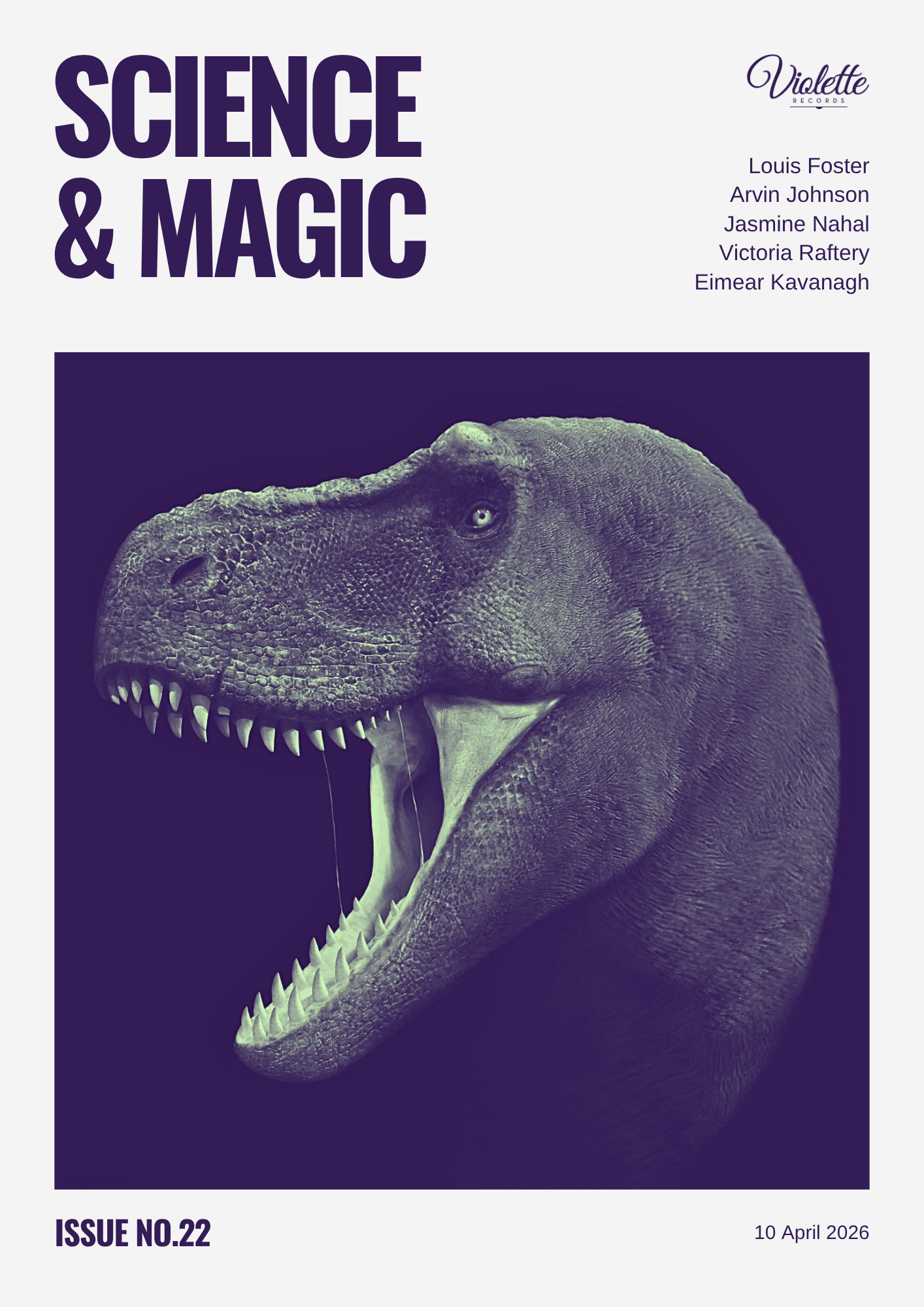
Elijah pauses momentarily, “Tyrannosaurus Rex,” he says, “had teeth the size of a banana.”
We each force half a smile and take another mouthful of now lukewarm lager. I look at Elijah and he looks back at me and there’s nothing really more to say so we just sit there and wait for the next moment to arrive, like it always does.
The Gen Alpha Lexicography
by Maya Chen
19: 'Gatekeep'
Etymology: Originally a sociological term for controlling access to information or resources. Repurposed by the internet (c. 2021) as a moral accusation leveled against anyone who refuses to reveal the source of their cool stuff.
I made the mistake of asking my daughter where she’d bought a particularly striking vintage jumper she was wearing. She looked at me with the blank, unblinking intensity of a border guard and replied, "I'm gatekeeping it, Mum. It’s for the best."
In the Gen Alpha universe, to 'gatekeep' is to commit a crime against the collective. We live in an era of enforced radical transparency, where "link in bio" is the only acceptable response to a compliment. To hold onto a secret- a tiny, independent boutique, an obscure B-side, a specific shade of lipstick - is seen as an act of pathological selfishness. If it isn't shared, indexed and made available for mass consumption, does it even exist?
The irony is that my generation spent its entire youth gatekeeping. We guarded our record collections like holy relics. If you found a great band, you didn’t broadcast it to five thousand strangers; you whispered it to two friends you trusted not to ruin it. Exclusivity was the point. The "gate" was there to ensure that the things we loved weren't flattened by the steamroller of mainstream approval.
But for the digital natives, the gate is an affront. In their world, social capital is built through curation and dissemination. To hoard a source is to stop the flow of the feed. They have been taught by the algorithm that everything is a data point meant to be shared, and that personal mystery is just another word for market inefficiency.
By 'gatekeeping' her jumper, my daughter wasn't just being difficult, she was performing a rare act of digital asceticism. She was keeping a small part of herself offline, un-shoppable and un-trackable. She is better at this than I am.
Next time: 'Delure' - When "modest" becomes a performance and "mindful" becomes a meme.
—
Maya Chen runs a project to gatekeep her own thoughts, convinced that if she thinks them too loudly, they will be used to train a generative AI that specialises in abject maternal disappointment. She spent yesterday afternoon whispering her secrets into an empty jam jar, which she then buried in the garden according to a grid reference decoded from a 19th-century occultist. She believes that the only way to save language is to make it completely unsearchable, and has started replacing all the vowels in her emails with small, hand-drawn symbols representing different types of weather. Her children have reported her to the Vibe Police.
Nine Lives
by Victoria Raftery
You think you’ve only had one chance at life. I think you may have had two or three or four already
The time on the Masada in ‘84 when it could have gone either way, the sleeping bags, the scorpions, the soldiers
The cab ride from that London cab driver in ‘87 who wasn’t a cab driver
The trip to Melbourne to greet my two-week old niece in ‘98 and could have stayed
The time we were nearly run off the road, you, me and your little brother in ‘04, that Cat & Fiddle route, what a wanker that other driver was, he flicked me the vees whilst he was facing me head-on
The time in ‘24 that the polyp turned out not to be a polyp
That's five I can recall off the top of my head so four left
The soldiers gave us bread
We trekked the narrow paths upwards just as the last cable car was bringing the last of the tourists down
There was something about that cab that was off
There's a certain light up there, it glinted off the top of his roof
Tuck your trousers into your socks
Don't get in
Slow down, he's coming at you too fast
Scorpions
Sunrise over the Golan Heights
The sound of a key fitting its lock
The screech of brakes, looking back, both are sleeping
Safe
Polyp has been nuked
You think you've only had one chance at life?
Think again
—
Victoria Raftery believes that we are all inhabiting the "director's cut" of our own lives and that every near-miss is just a scene where our stunt double did the heavy lifting. She carries a small, silver counter in her pocket, which she uses to track the exact number of times she has narrowly avoided being erased from the timeline and she’s auditing the universe for the remaining four chances she’s owed. Her husband has learned to ignore the fact that she occasionally tucks her trousers into her socks at dinner, understanding that in Victoria's world, you never know when the next mountain path is about to materialise under the kitchen table.
And finally…
Tuesday Afternoon
I was transfixed by a tree trunk the other day
As I neared it, walking slowly in the usual spring showers, I slowed
A lady in a beige cagoule sat nearby.
She was eating a sandwich - far too slowly for the risk of sodden bread, I thought
The bark looked like symmetrical veins
It was like seeing a long lost friend
I should have rest my hand on the oh so solid but exposed inner workings
But the waterproofed lady was watching me
I thought she might post a picture of me to a ‘Defenders of Western Values’ Facebook group
So I just walked home instead
—Jasmine Nahal