
Science & Magic | 21
My inbox is an absolute war zone. Because I use my direct email address for the glamorous, world of marketing an underperforming independent record label, I am a magnet for the kind of digital detritus that the most robust spam filters eventually give up on. I am offered, on a daily basis, opportunities to improve my SEO, invest in crypto-currency schemes run by princes and enlarge parts of my anatomy that I was previously unaware needed enlarging.
Usually, I delete them with the weary muscle memory of a man swatting fat flies. But last year, one slipped through the net. It was from a man named Laszlo in Hungary and he was writing to me with a very specific, very urgent opportunity to purchase wholesale industrial-grade hydraulic seals.
I think it was the specificity that might’ve got to me. I don’t know what a hydraulic seal is, but I was charmed by his confidence that Violette Records was the missing piece in his supply chain. So instead of deleting it, I replied. I thanked him for the offer, explained that our current hydraulic seal needs were fully met, but asked him how things were in Budapest. Was it raining there too?
I expected silence. Laszlo wrote back.
We have now exchanged about fourteen emails. I know about his daughter’s piano lessons. He knows about the latest Professor Yaffle record. We’ve discussed the specific melancholy of a Sunday afternoon and the relative merits of paprika on chicken. Against all odds and the logic of the internet, we have become digital pen pals.
It turns out that behind every offer of wholesale industrial parts, there’s just a bloke named Laszlo trying to get through his week.
This newsletter too is a collection of humans speaking directly to other humans about things that have nothing to do with efficiency or profit.
Happy birthday, Laszlo. I hope the seals are selling well.
Welcome to the latest edition.
Matt
Ten Questions
by David Keenan
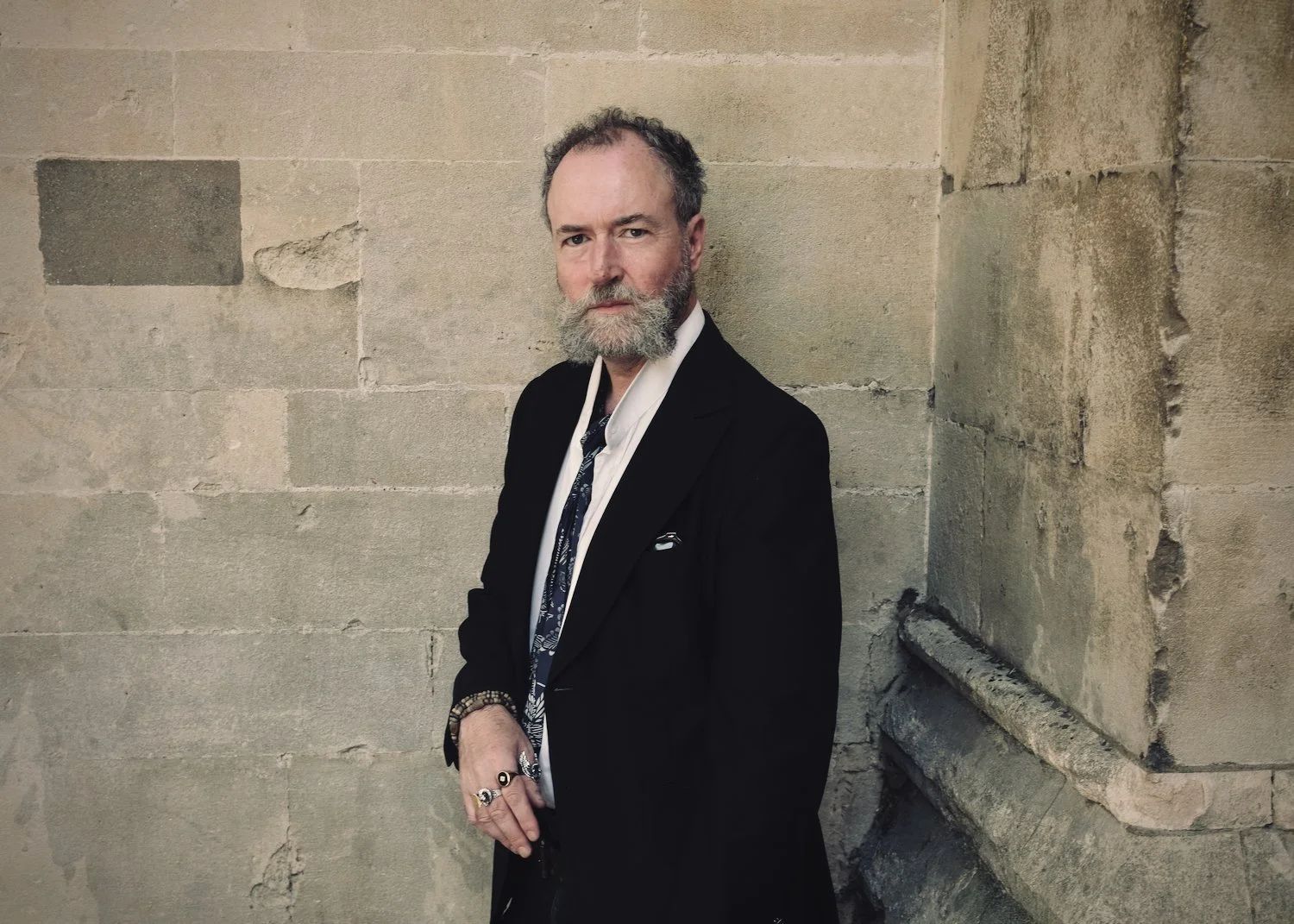
David Keenan is a writer who has spent his life mapping the places where things gets really weird. As a critic for The Wire, he gave the underground its vocabulary, coining terms like "hypnagogic pop" and "free folk" to describe sounds that previously defied classification. His non-fiction masterpiece, England’s Hidden Reverse, remains the definitive guide to the esoteric underground.
But it is as a novelist that he has truly built worlds. His breakout, This Is Memorial Device, is a hallucinatory love letter to the post-punk scene of small-town Scotland. It’s a book that feels less like fiction and much more like a recovered memory. His latest novel, Boyhood (published by White Rabbit), continues his exploration of the mystical and the mundane, while his collected music writings, Volcanic Tongue, have just been released in paperback.
So we invited David to select ten questions from our archive. His answers are a perfect reflection of his work. A place where the high avant-garde of free jazz sits comfortably alongside the pop perfection of Adam & The Ants and where the sound of a wood pigeon is as significant as a line from Bob Dylan.
● What's a single line from a song that has stuck with you like a mantra or piece of life-changing advice?
“What cannot be imitated, perfect, must die” – Bob Dylan, ‘Farewell Angelina’.
● What’s your favourite cover version of someone else’s song?
‘Eight Miles High’ by Husker Du.
● What genre or artists did you come to embarrassingly late, kicking yourself for missing out?
Acid house.
● What’s your favourite sound that isn’t music?
The sound of the wood pigeons in Craigtoun Caravan Park in St Andrews.
● What’s your go-to song for pure, uncomplicated, turn-it-up-and-dance joy?
‘Let Her Dance’ by Bobby Fuller.
● What music did your parents play that you initially rejected but later embraced?
Perry Como.
● What song instantly takes you back to your school disco?
‘Prince Charming’ by Adam & The Ants.
● What was the first song you ever learned to play on an instrument (even badly)?
‘Crashing Through’ by Beat Happening.
● What music do you play when you’re cooking?
Free jazz.
● What song makes you cry and you’re not entirely sure why?
‘Heroin’ by Lana del Rey.
Magnetic North
by Jeff Young
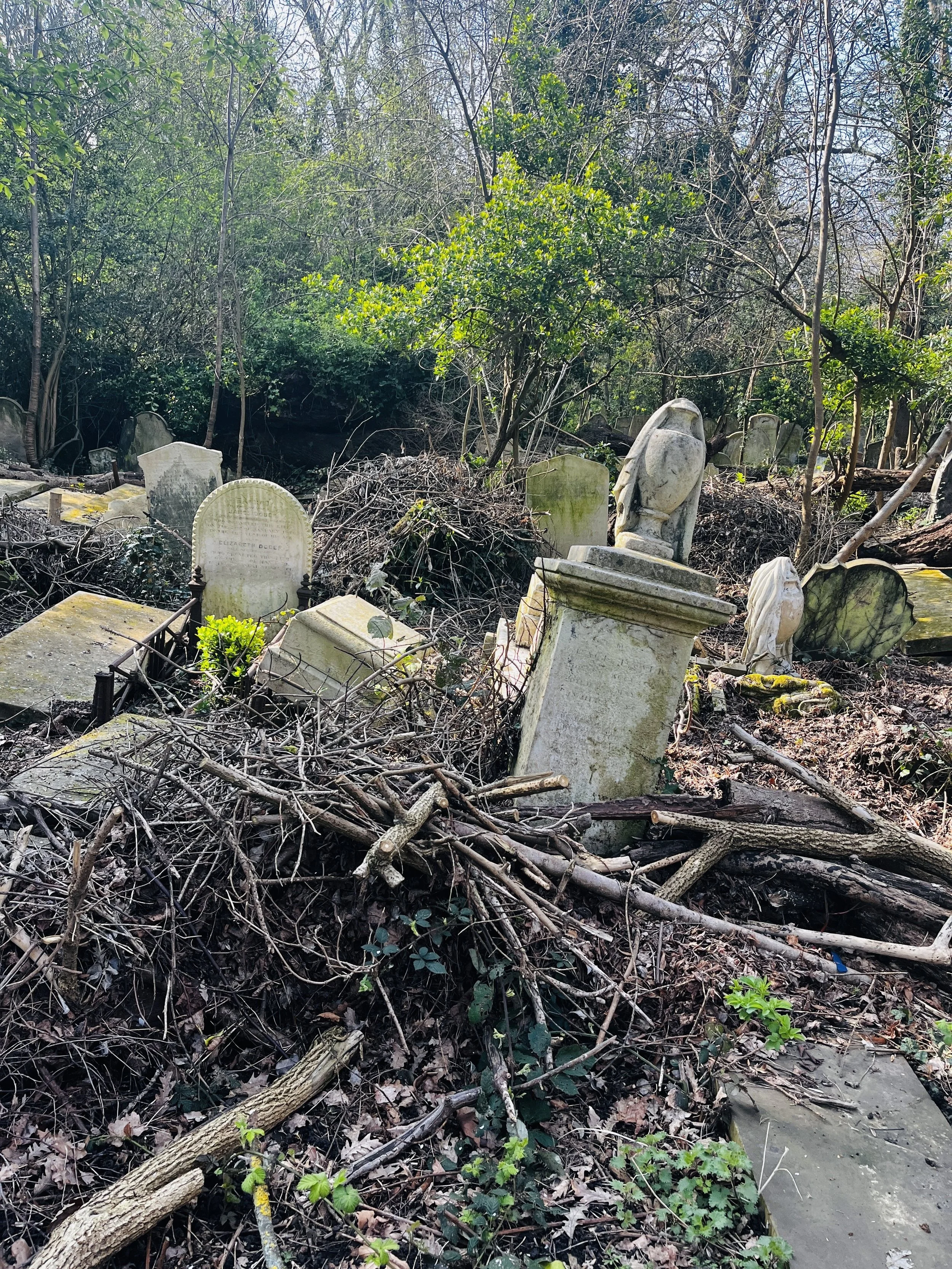
21 : Dead Cemeteries
Dreaming of cemeteries, the dream continuing even when I realise I’m awake. Moonlight falling on rose petals scattered across the pillow, the pillow becoming gravestone, becoming cinema screen...Lying awake watching my grandfather a century ago, hauling broken coffins from a churchyard, loading up the wagon and driving them out to a new cemetery on the edge of the city... Childhood, my sister Val and I placing dead flowers in the hands of broken angels, daisy chains hanging like rosary beads from their praying fingers...
At the weekend I walked in cemeteries looking for the graves of music hall singers. Parakeets in tree branches, primroses in amongst the weeds, the laughter of children somewhere, the cemetery becoming a playground...Childhood, my sister Val and I pressing acorns into the war memorial earth, hoping they would grow into a forest of oaks, ghosts of soldiers walking through tree shadows, becoming trees themselves...Tombstones of the long forgotten, the ghost voice of a singer on the morning breeze: The boy I love is up in the gallery, the boy I love is looking down at me...Plastic flowers on a singer’s grave, the song becoming a Memoria Uncanny lullaby for those sleeping in the earth...Childhood, my sister Val and I picking up fallen birds and realising they were dead and no matter how hard we wished them back to life that’s how they stayed. Burying them in the yard and marking their graves with ice-lolly sticks, a small cemetery of birds...
Dreaming wide awake, watching flickering visions of funeral parades on my bedroom wall in Winslow Street, bagpipe music, church bells ringing, lace handkerchiefs in the hands of frail grandmothers, flowers falling from hands into the earth, a strange, frightening, beautiful cinema in the bedroom of a child...Walking through dream cemeteries, through broken and fallen stones sinking into earth, memorials to the loved and now forgotten...Thinking about the sweet, sad inevitability of death, remembering the people I have lost.
I would place dead flowers in the broken hands of angels if it meant you would come back and say hello...
— Jeff Young, 25 March 2026
—
Jeff Young has recently accepted a position as the night-watchman for his own subconscious. He spends his waking hours attempting to project silent films onto the backs of his eyelids, featuring a cast of thousands of Victorian ghosts. He believes that every parakeet in Liverpool is a reincarnated music hall star in disguise, and is currently recording their squawks in the hope of assembling posthumous greatest hits albums. He maintains that if you plant an acorn in the right kind of silence, it will grow not into a tree, but into a ladder leading directly to the past.
The Paphides Principle
Pete Paphides has a theory about nostalgia: it is often just a lazy way of admitting we have stopped paying attention. He believes that the golden age of songwriting didn't end in 1975 or 1996, it’s happening right now, in the corners we forget to check.
His column is a fortnightly corrective to the idea that "they don't write them like they used to." This week, he presents a piece of evidence so compelling - a song by the wonderful Michael J. Sheehy that bridges the past and the present - that it suggests the problem isn't the writing at all. It might just be the listening.
Michael J Sheehy - ‘Full Moon, Empty Belly’
We bemoan the passing of the old world, yet hasten that very process by our choices. We grieve for the empty high street from the convenience of the retail park. We yearn for cobblers and tailors in our trainers and hoodies. Within minutes of turning on the radio, we wonder whether they write them like they used to. Either passively or otherwise, this is what we chose. And yet, the longing persists. What are we going to do with the longing? I can only speak for myself at this point. Here’s what I do with the longing. I let it lead me to a place of belonging.
Michael J Sheehy’s music is one of those places. His songs have a way of appearing at the exact moment you most need them. For me, that moment came near the end of 2020, during the second lockdown. Distance Is The Soul Of Beauty was Michael’s seventh album; his first in eleven years; and his first created in the silence of sobriety. Like the flowers that started to grow between paving stones on empty thoroughfares, these subdued psalms of hope and humanity felt like the beginnings of something like a future. Perhaps it doesn’t much matter how you choose to listen to your music – but for Michael, to have these songs on an actual record you could hold in your hands… well, that was significant. To be able to touch and look at something for which the doubting voices in his head couldn’t deny him agency.
Whatever else might taken away from him, this was real. This was hard-won evidence. Michael learned that to renounce your sins, you have to find within you the patience of a saint. You see, in the two years after starting his recovery, not a single song came to him. And when the songs did start to land, they inevitably formed a bridge of sorts, connecting his past to his present. If you want to visit that place, you can do so by pre-ordering Michael’s beautiful new album Don’t We Deserve Some Kind Of Love?
But while that’s due in June, a couple of songs from it are already out there. On Full Moon, Empty Belly, backing vocalist Sandy Mill shadows Michael in tones that call to mind those of Leonard Cohen’s long-time vocal foil Sharon Robinson.“Sometimes when I’m writing lyrics,” Michael told me, “I try to stay out of my own way and let the words go where they will.” And on this particular song, Michael thought his protagonist was a werewolf wondering what the night has in store for him. It was only much later, listening back to his original demo, that he was reminded of a period in his early 20s when, grappling with an eating disorder and a compulsion to self-harm, he was admitted to the Royal Free Hospital, streets away from Kentish Town where he grew up.
It seems that songs can even reveal secrets to their creators if they write them well enough. And very few write them as well as Michael J Sheehy. So next time someone tells you they don’t write them like they used to, just smile and put it to them that maybe they’re not listening like they used to.
—Pete Paphides, 25 March 2026
Cata-list
by Angie Woolfall
Certain people I am drawn to
Certain people that I see
Hold a rare and precious secret
That gets passed along to me
I didn't see it back then
But I see it clearly now
Certain people carry secrets
Like a treasure map to how
To do things better next time
Where to find the hidden doors
How to light the darkest corners
When to access upper floors
And each time that I see them
I will look their way and think
Of how good it was to know them
When we found ourselves in synch
And someday they may realise
Maybe one day who knows how
That they played a very special role
In the good I am right now.
—
Angie le Woolf views the population of Liverpool as a series of walking, breathing combination locks. She thinks that certain strangers hold the specific codes required to access the locked rooms of her own consciousness. She treats any chance meeting as a potential heist, a moment to quietly lift the ‘treasure map’ from someone’s pocket. She’s currently compiling a directory of these ‘catalyst people,’ cataloguing them by the specific hue of the epiphany they inadvertently triggered while waiting for the bus.
What Would The Work Say If It Spoke Back?
by Eimear Kavanagh
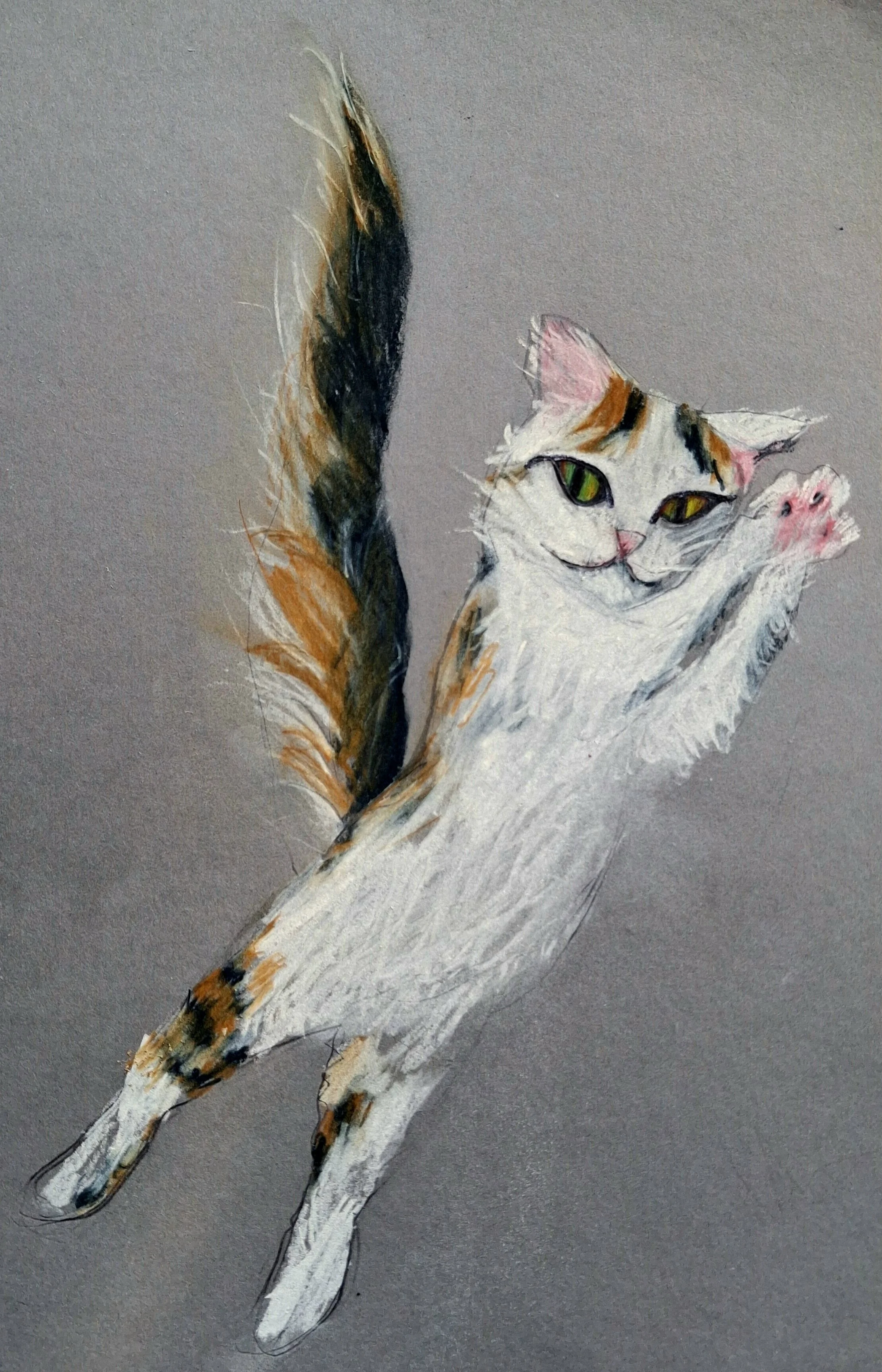
'Ride on, see you'
Throughout the making, words from the great Christy Moore have been singing to me.
Love, Eimear
—
Eimear Kavanagh suspects her recent paintings have formed a union. She said that the works are no longer passive objects but active critics, muttering low-level feedback about her technique the moment her back is turned. She has begun leaving etiquette manuals open in the studio overnight, hoping to teach her creations some manners, but reports that they simply stare back at her with a “profound, pigment-based insolence.” She is currently considering evicting a particularly rude watercolour for "unreasonable behaviour.”
Dead Air Anthologies
by Matty Loughlin-Day
There exists a small but magical realm, nestled between the extremes of ignorance and complete knowledge, where life is at its most vibrant and colourful. This realm is made up of those moments where wonder strikes; those split seconds where you are presented with something that you have never encountered previously and feel instantly moved by - crucially without quite fully knowing why, before reasoning and thought catches up with itself and the spell is broken.
This state is all too often overlooked or neglected. Life gets in the way. The drudgery and horror of the mundanities of everyday adult life bury these moments beneath positively tectonic layers of banality, duty and responsibility.
Prior to The Great Fall of Innocence that afflicts most of us at some point during our puberty, life is full of these micro moments - I see it in my son now. He is not far off three years old, and is seeing the miracles of the world for the first time with the purity of new eyes - a ladybird climbing up a brick wall, a tossed balloon taking its time to float back down to earth, a cow’s moo, ‘She Loves You’ by The Beatles, they are all met with a thrilled celebration and reverie, as the universe reveals itselfand its natural laws, building block by building block, to him. Being so free of clutter and noise, his infant machinery can receive these signals in their clearest, most immediate form and interpret and convert them into the full, unfiltered experience, allowing him to enjoy the absolute brilliance and absurdity of existence. What sheer, utter joy.
Post-Fall, these moments are few and far between. It’s not our fault of course; there are bills to pay, genocides to witness, shopping to be put away. So when they do cut through, it is vital therefore not to ignore them or save them for later - they don’t come back again. These moments are fleeting, transient, but vital. They are portals to a world that lies beneath the hiss and interference of the Modern World.
As I’ve outlined in previous writings, by trade (at least until someone pays me big bucks to play my daft music for a living, which would be fantastic, thank you) I’m a Clinical Psychologist. There is a modality of therapy called Acceptance and Commitment Therapy – ACT – which makes a point of highlighting the importance of ‘flow states’, which I suppose ties in with what I’m rambling on about here. ‘Flow State’ has become a bit of a trendy buzz phrase amongst the communities of online wellness grifters that I can’t be arsed to talk about here, but like most things they espouse, there is a grain of truth and science tucked away underneath the rest of the guff they spout. ACT outlines that ‘Flow State’ is an internal process in which the individual is completely immersed in an activity or process, that veers into transcendence, as we tune out from the rest of the world. ACT urges us to find these flow states in anything we do - and it can be anything. Runners talk about a ‘runner’s high’, for instance, foodies describe the moment a novel or expertly cooked meal floods their senses, some find it in throwing themselves into their work - us musicians chase that elusive moment in which the song takes over and the rest fades away.
It’s not so much being on auto-pilot as being completely lost in that moment and activity - again, that sweet spot between ignorance and knowledge. This isn’t just new-age hokum, as there is a neurophysiological element to this, and research is ongoing anddebated as to what parts of the brain are exactly involved in flow state, but I don’t concern myself too much with that side of things – too much thinking, after all, takes the magic away.
At the furthest reach of all of this is the contested, dare I say it, mythical affliction that is Stendhal Syndrome. This is a psychosomatic condition (or load of bollocks, depending on who you are asking) in which the exposure to objects of great beauty or seminal works of art leads to overwhelming feelings of confusion, rapid heartbeat and even fainting and psychosis. Its Patron Saint, Stendhal, first described it upon visiting the Basilica of Santa Croce in Florence during the 19th century, whereby he recounted how he was “absorbed in the contemplation of sublime beauty... I reached the point where one encounters celestial sensations... Everything spoke so vividly to my soul”, and as flowery as that might sound, I’m sure you can relate to some degree. Whilst I don’t subscribe to the idea of it as a medical, diagnosable condition, I will freely admit, for instance, to crying when I saw Van Gogh’s ‘Starry Night’ up close, in person, and I’m sure you, dear reader, can recall a time when you heard a song for the first time, or heard line in a film and it took your breath away, or at the least, gave you goosebumps, with everything else falling into the background. These instants are automatic and can’t be forced – that sacred middle ground between ignorance and knowledge. They are the moments that make life worth living, aren’t they?
It is imperative therefore to have one’s antenna open and switched on for them, for they are ephemeral and cannot be recreated – they go as easy as they come. The brain does not like confusion or uncertainty, and so will instinctively and automatically strive for clarification, or more information, by which point, that spark of magic and the sensory flooding of wonder is classified and organised by the mind, inevitably losing some of its charm. Even if this information taken in gets filed into the ‘amazing’ folder, and we revisit it time and time again, by playing that wonderful song again, or re-reading our favourite book, that initial fleeting feeling of magic is never quite attained again; the signal has been channelled, filtered and tainted by cognition. You cannot get the same high as your first high, after all.
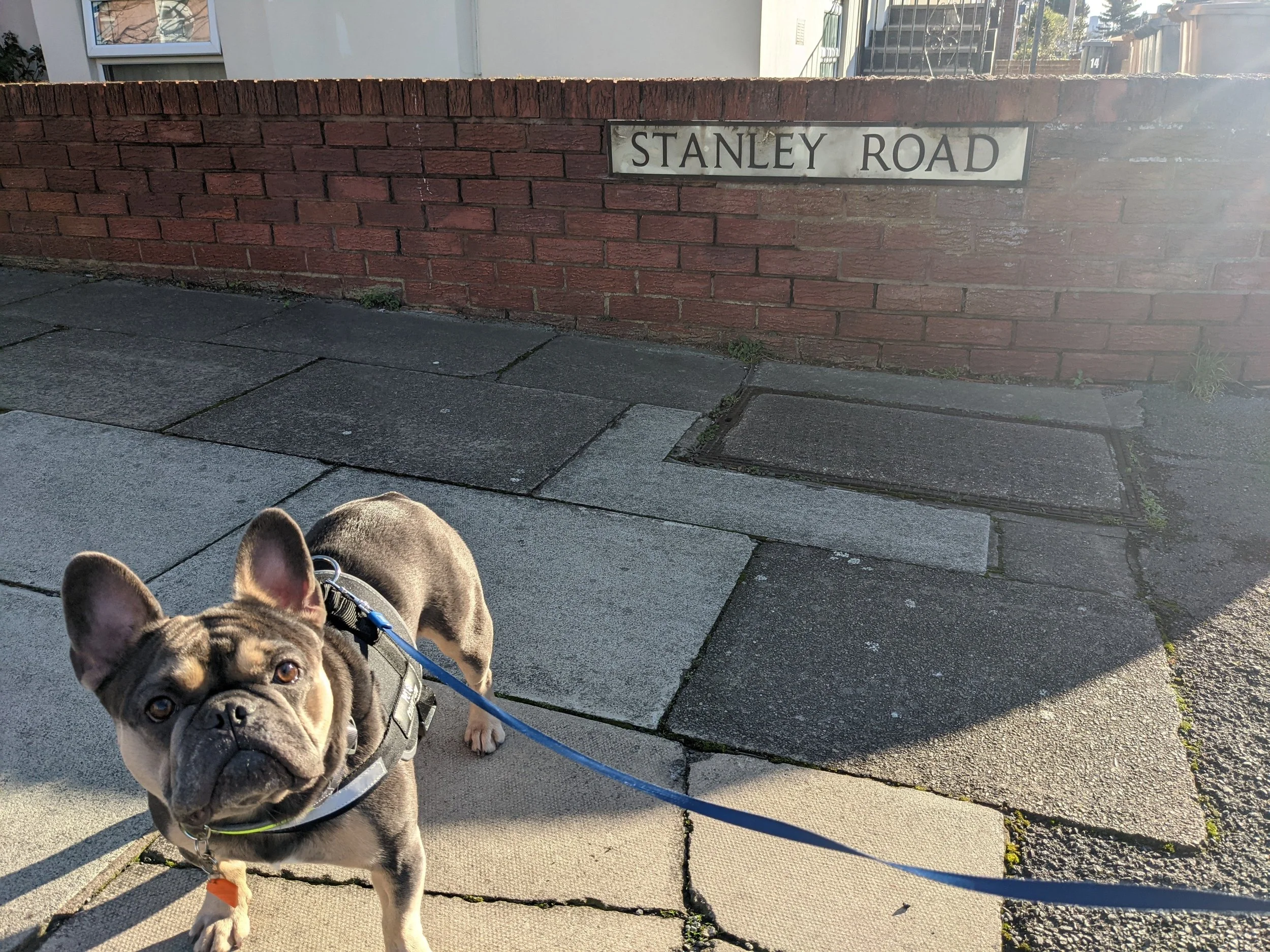
I was thinking about the last time I experienced this, and recalled how several months ago, I took Stanley, my French Bulldog (and best mate) for a walk. We landed upon the grounds of a former church and wandered in and had a mooch about in the twinkling of twilight. I had my headphones on and heard for the first time a recording of a performance given by the experimental musician Terry Riley and legendary trumpeter Don Cherry, recorded in Köln in 1975. It stopped me in my tracks. It was quite unlike anything I’d heard before. I was familiar with both artists’ work and their styles, but the juxtaposition of both created something brand new for me and in that instant, I was dumbfounded. Whilst I wasn’t struck down with Stendhal Syndrome, it wasn’t a million milesaway from Flow State, in that all my attention and amazement was focussed on this repetitive, spiritual piece of minimalistic ambient jazz and for those brief moments in which my brain was hearing this new world, there was no thought, only feeling. That middle ground again.
As hinted at in my description of the music there, it’s probably not for everyone, but I am listening to it now, and whilst it is still a remarkable, startling piece of music to me, and always will be, it does not have the immediacy of being heard for the first time; that ‘stop everything and give it your full, undivided attention’ factor that novelty brings, nor can it ever. Such is life, I’ll have to go hunting for my next one. Go fetch your lead and harness Stanley, I'll grab my headphones; let’s go find anotherabandoned church.
Crikey, I’ve done it again, haven’t I? I’ve gone all William Blake on you all. Believe it or not, I actually sat down and started this essay with the intention of writing about the Shipping Forecast. Maybe next time. Anyway, enjoy this mix - it might be my favourite yet. I’ve tried to curate it in such a way that there are at least a few moments of wonder. Keep your antennas open, gang, and let the magic in. Nice one.
—Matty Loughlin-Day
Boomerang Process: An Evening with Roy
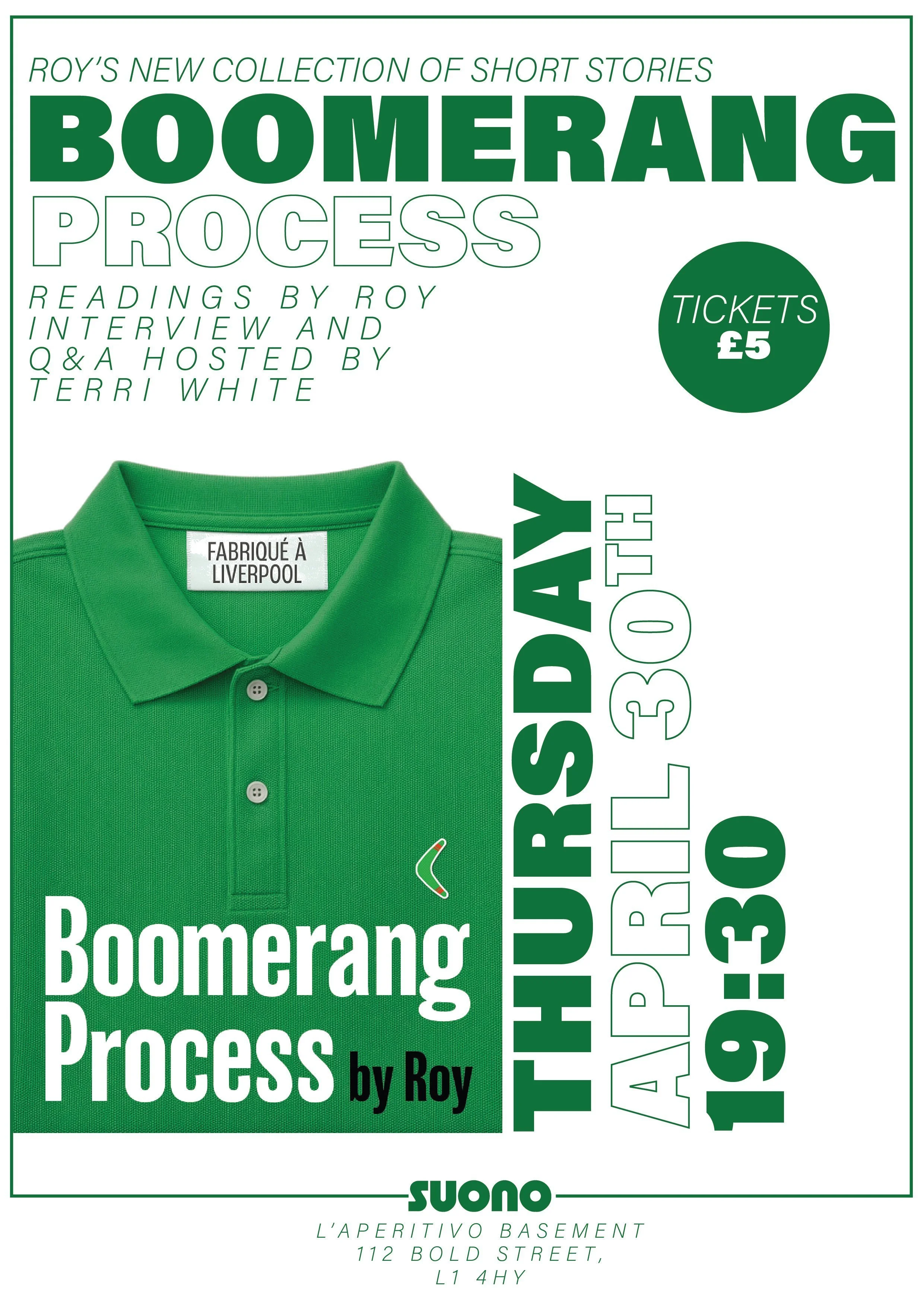
Join us for an intimate and arresting evening with PJ Smith - the Liverpool-born writer and storyteller behind Roy, known for his visceral, darkly comic and fiercely human tales of life on the margins. PJ will be discussing his new collection, Boomerang Process, the gripping follow‑up to his acclaimed debut Algorithm Party. Published as the first title from TNC Books, this collection expands Roy’s world, delivering a set of intense, spectral and sharply observed stories wired directly from the edges of Liverpool life.
Through Roy’s voice, PJ captures a city’s poetry in its grit: characters who haunt pubs and pavements, absurdity that hides beneath everyday survival and the complicated tenderness of growing up in communities marked by humour, hardship and unspoken codes. His work draws directly from his personal history - from addiction recovery to unexpected creative breakthroughs, shaping narratives that are chaotic, compassionate and brutally honest. Far from nostalgia, Boomerang Process is his contemplation on consequence, identity and the relentless pull of the places that shape us.
The event will feature readings by Roy, followed by an in-depth interview and Q&A hosted by the brilliant Terri White. This promises to be a night of laughter, astonishment and hard-boiled psychodrama in the basement of L’Aperitivo.
Date: Thursday, April 30th
Venue: Suono (L'Aperitivo Basement), 112 Bold Street, Liverpool
Doors: 7:30pm
Tickets: £5
The Gen Alpha Lexicography
by Maya Chen
18: 'Mother'
Etymology: Originated in LGBTQ+ ballroom culture (the "House Mother"), appropriated by Stan Twitter to denote a female figure of supreme authority, glamour and aesthetic dominance.
I was recently on my hands and knees, scrubbing a stubborn stain out of the living room rug, when my daughter walked in. She looked down at me - her actual, biological mother, engaged in an act of literal domestic care - with mild indifference. She then held up her phone, displaying a video of a pop star simply walking out of a hotel, and whispered, with the reverence usually reserved for religious deities: "Mother."
In the lexicon of Gen Alpha, 'Mother' is no longer a relational term. It’s a title. It is a rank. It’s has been stripped of all its associations with nurturing, sacrifice or biology, and repackaged as a badge of pure, unadulterated slayage. To be 'Mother' is not to raise a child; it is to wear a really good outfit, deliver a withering comeback or simply exist with a level of confidence that disintegrates lesser mortals.
The irony, of course, is that actual mothering - the messy, unglamorous, stain-scrubbing reality of it - is the antithesis of 'Mother'. Actual mothers are cringe. Actual mothers ask you to put a coat on. The internet's 'Mothers' simply are. They exist in a vacuum of perfection, unburdened by the need to separate recycling or re-schedule dentist appointments.
It’s a fascinating linguistic coup. They have taken the most loaded, complex role in human history and flattened it into an aesthetic. 'Mother' is now a vibe. And as I looked up from the rug, smelling of carpet cleaner and exhaustion, I realised I had failed the audition. I was just a mum. I would never be Mother.
Next time: 'Gatekeep' - The noble art of refusing to tell anyone where you bought your trousers.
—
Maya Chen has recently begun referring to herself in the third person as "The Matriarch of the Mainframe." She is currently attempting to legally adopt the internet, believing this is the only way to regain custodial rights over the English language. She spends her evenings issuing formal "cease and desist" orders to the family cat for "failing to serve," and has petitioned the local council to have her kitchen designated a site of historical significance as the place where she "birthed a thousand snacks." Her children have responded by changing the Netflix password.
Writer’s Block
by Victoria Raftery
There is nothing that quite
Induces more fright
When a deadline is loomin’
And you have no bloomin’
Idea
What you’re going to
Write
When what stares in your face
Is the big empty space
Of a page
That’s indelibly
White
It’s shite
—
Victoria Raftery views writer’s block as a form of spiritual congestion that can only be cleared by rearranging the furniture. She spent the days leading up to this week’s deadline moving every chair in her house three inches to the left, convinced that the perfect line was trapped beneath a sideboard leg. She asserts that the most effective cure for a blank page is to stare aggressively at a specific patch of damp on the ceiling until it reveals a plot twist. Her husband has learned to recognise the specific, frantic silence of a looming deadline and now simply leaves cups of tea by the door before retreating to a safe distance.
Archie Stoddart - Clarinet Marmalade Blues (1918)
by Mike Stoddart
Musical history is dependent on happenstance as much as anything else. A dropped lyric sheet; a cat jumping out of an office window; a spur of the moment decision about where guitar groups are going. These are but a few of the twists of fate that have impacted upon the narrative of popular music. And some of them go unnoticed, fortune not even looking, let alone smiling. In my great-grandfather’s case, fortune drew the curtains and blew out the candles.
This, the first ever British jazz record, was issued only once, in April 1918. Since then it would appear to have been written out of history, escaping even the obsessed gaze of the jazz discographers. What crack did it disappear down? Are you sitting comfortably, children? Then I’ll begin.
Able Seaman Archibald Stoddart reached the end of his time with the Navy in Louisiana. He stuck around, entranced by the new music he kept hearing in New Orleans and beyond. He hit the road with a second hand clarinet, thrashing out something approaching a living and something approaching a tune, and encountering many of the future fathers of jazz in his peregrinations. He got good, and even had an opportunity in 1915 to make what would have been the first ever jazz records, with trumpeter Freddie Keppard. Never mind. Freddie, more than commonly fond of whisky, felt making records would be giving his ideas away. What did anybody expect from a man who played trumpet with a handkerchief over his hand to hide his fingerings? In New York at the beginning of 1917, Archie fell in with the Original Dixieland Jazz Band and formed his own short-lived quintet which caused the same kind of excitement in the city. The band split when he was forced to return to Liverpool later that year, but not before he secured a deal with the Victor Talking Machine Company to record for their British arm, RCA Victor, upon his return. Nick La Rocca even gave him a written reference: “Archie Stoddart and his quintet have been burning up New York City in a manner second only to my own band, the ODJB, and he can blow that stick hotter, and with fewer clams, than any man I’ve heard, hotter even than our own Larry Shields. London, watch out, you’ve got another great fire on the way!” Things were looking up! Or at least sideways.
Shortly after arriving in England he travelled to London to record for RCA, with musicians drawn from Liverpool’s State Ballroom Orphean Dance Orchestra. With little idea of what might be expected of them, they offered clunky but energetic backing. At the end of the session he jokingly referred to himself as Sausage Roll Stoddart to an engineer with no sense of humour. The name was logged accordingly, and bewildered staff at the pressing plant, hitherto accustomed to classical and light opera, mislabelled the entire run. What should have been an historical musical document, matrix number 6422-A, was credited to Archie “Sausage” Stoddart and presented as a novelty. Crestfallen, and weary of attempting to coax other musicians to join him at what, at the time, was music’s cutting edge, Archie settled for a life of anonymous stability within the ranks of Lancashire's dance bands, providing hot breaks in bands that were struggling to absorb the music he had brought to the country. Twenty years of exasperation ended with his death in June 1938 – squinting in the sunlight and not a little refreshed as he left a lunchtime show in Liverpool's Grafton Ballroom, he wandered into the path of a tram and was flattened, dying immediately. For once the stars aligned for him: the tram was a number 64. There were 22 people on it.
One copy of 6422-A is known to exist, in a terraced house in South Liverpool, in a sealed wooden box that was handed down to his great-grandson. He won’t take it out. He just looks now and again at a picture of Brian Rust, the great-grandfather of jazz discographers, and smiles to himself, happy in the knowledge that even Rust’s definitive work had an omission. Imagine if the box was opened, and the truth came out, would the picture be any different? Probably not, but the box is staying shut. We’ll never know.
—
Mike Stoddart operates as the sole proprietor of the Stoddart Family Archive of Nearly-Famous Moments. He believes that official history is just a first draft that requires constant, creative correction. He spends his weekends meticulously cataloguing historical glitches - moments where the universe almost produced a masterpiece but got distracted by a typo or a tram. He claims to possess a second, even more secretive wooden box that contains irrefutable proof that the electric guitar was actually invented in a shed in Garston in 1934, but was suppressed by the accordion lobby.
And finally…
Slice of Perception
The fleeting respite of driving under a bridge during a storm
That half a second feels like free falling
Like taking flight from a skateboard and gliding up with baited breath
Knowing there's a slab of concrete waiting for your face
—Jasmine Nahal