
Science & Magic | 25

I’ve finally reached a definitive conclusion about the British healthcare system. If you ever find yourself in the unfortunate position of having a limb hanging by a thread or an organ making a desperate bid for freedom, do yourself a favour and stay at home. Seriously. Bleeding to death in the familiar comfort of your own armchair is a much more dignified option than going to A&E these days.
I was there the other night. Nine hours, as it turned out. Nine hours is, to the minute, the running time of Claude Lanzmann's Shoah, with enough change for a walk to the petrol station, a Twix and a bottle of Lucozade and the discovery on your return that no, your number has not been called, the wristband still says what it said when you arrived and the man two seats down is still doing the breathing thing nobody else has elected to mention.
You stop being a person the moment you enter door. You instead become a row in a database that anyone has long since given up on the idea of clearing. The fluorescent lighting has a way that makes everyone look as though they died last Tuesday and have not yet been informed. The smell is industrial floor cleaner over the top of something else (the base note of British public-sector failure), and is the same in every A&E from Truro to Aberdeen. The ventilation runs at a constant flat hum. Somewhere in the middle distance, a machine beeps that almost certainly shouldn’t be. But nobody is taking any notice.
The only reading material is a 2014 copy of Woman's Weekly with a festive recipe for a Coronation Chicken ring. I read it twice. By hour five I had started to think it might be worth a go if I ever get out.
It seems that the rest of the modern world is built entirely around impulse. Your phone delivers a book in eight seconds. The supermarket arrives before the kettle has boiled. The film starts when you sit down rather than when some BBC scheduler says it will. We’re no longer required to wait for anything except that precise moment our biological machinery has given out and waiting becomes a matter of some urgency. At that moment we are escorted to a blue plastic chair under a strip light and invited to consider our entire existence.
I can’t blame the staff. In fact the staff are the only thing keeping any of it standing. The doctor who eventually saw us had been on shift for a length of time I really did not want to know, and she did the job with a precision and a courtesy I would not have been capable of in the same conditions. The failure is in the building, the funding, the rota and the long quiet decision this country has taken about what it values enough to pay for and what it does not.
So the advice stands. If the end is coming for you, let it come at home. Side two of Abbey Road on the stereo. The lights down low. The people you genuinely like in the room (both of them, if you must). It’s a better way to go than under that flickering strip light in a building that smells of the communal despair of thirty people waiting for the same overworked doctor to acknowledge that they exist and might matter.
Welcome to the latest edition. We are still here, somehow.
Matt
Ten Questions
by Paul Fitzgerald
A life in music is rarely a straight line, it is more like a series of vivid, often hallucinatory, loops. For Paul Fitzgerald, that loop began with a childhood staring in shock at the crying babies on the cover of The Human League’s Reproduction and peaked in 1990 when he and a "loony Liverpool posse" descended on Paris for a three-day bacchanal that resulted in mass eviction and a legendary NME review.
Paul is a writer, a musician, and a survivor of the "scally comic-strip rappers" Eat My Dog. He is a man who understands that the "Science" of music lies in the rhythmic integrity of a Stax bassline, while the "Magic" is found on a rainy Tuesday in Sefton Park, watching the Bunnymen play on a bandstand with no fences, no bar, and no booking fees.
We invited Paul to select ten questions from our archive. His responses serve as a field guide to a life shaped by the "syrupy sweetness" of Trojan reggae, the renegade mastery of Andrés Segovia, and the enduring belief that a perfectly crafted pop song like 'There She Goes' will undoubtedly outlive all other forms of life on Earth.
Here are his coordinates.

● What music makes you feel at home when you’re not?
Home is Ray Charles. One of the sounds of my childhood became the soundtrack to my life. Ray brings me untold joy, he soothes my tears and makes me dance, he makes me smile, he makes me laugh. I named my daughters after his songs—Georgia and Ruby. That’s how bad he got me. I met him once in Blackpool, of all places. Yes, home is Ray Charles Robinson. They called him The Genius for very good reason.
● What’s your favourite sound that isn’t music?
An open window and the sound of a city sleeping.
● What do you listen to when you need to think?
I find myself reaching for Andrés Segovia’s Bach pieces for these moments. Segovia was a renegade and a true master. A maverick who pretty much transformed the Spanish guitar into a newly respected classical instrument. He heard possibilities that others didn’t, so set about finding new expressions in Baroque period pieces, expanding and exploring new horizons for his instrument. He didn’t just rewrite the rule book. He is the rule book.
● What piece of music do you hope survives 500 years from now?
'There She Goes' will undoubtedly outlive all forms of life on Earth. Pure, perfect pop, magnificently simple and simply magnificent. Send it to space and give the aliens a blast.
● What album cover has had the most profound impact on you—either as art in its own right or as a gateway to the music within?
I’m surprised by how quickly I came up with an answer for this, so I'd call that a profound impact. It was an instant reply, top-of-my-head and tip-of-the-tongue stuff. It arrived in a rush, like I’d been waiting years to be asked.
My brother once brought home a copy of The Human League’s debut album, Reproduction. The cover features the well-dressed feet of two women and a man. They’re dancing in their fancy footwear on a glass dance floor, and there are cracks in the glass. Under the glass, a dozen naked babies lie, mostly crying. In October 1979, to my 12-year-old eyes, it was a shocking image—disturbing, weird and unlike anything I’d seen before. We grew up in a house with a holy water font near the front door, and I was shocked and amazed that it had got past the holy censorship of our all-seeing mother. I couldn’t stop looking at it, I stared at it for weeks, grasping for some meaning. It felt like taboos were being broken here and I liked that.
Inside its folds, a darkened room of steely electronica, great songs like 'Empire State Human', 'The Path of Least Resistance' and that cover of 'You’ve Lost That Loving Feeling', draped in heavy curtains of atmosphere. It was a harsh listen, stainless and clean. Angular, jagged and wonky, each bleep a pure thrill. And for me, a much-needed and welcome introduction to music made by machines. The cover still lingers above it all, though. I still wonder about those babies.
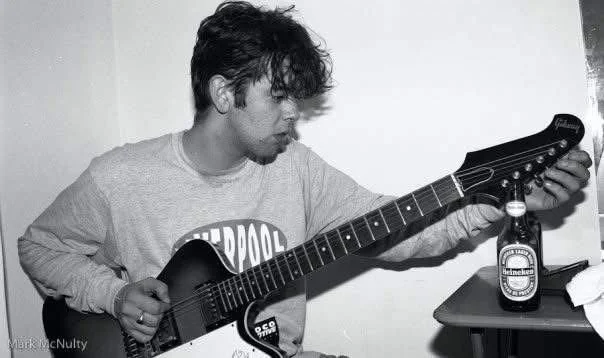
● What critically acclaimed or universally loved album do you secretly believe is overrated?
There’s nothing secret about it, believe me. Astral Weeks enjoys a reputation it really doesn’t deserve. It leaves me cold, uncharmed and not even for a single moment entertained. As a good friend of mine might put it, “it was that bad, it made the drugs stop working”. He’d be right too. Astral Weeks can take the shine off your day from a hundred yards. People have died because of its unbearable dullness, I’m sure. Anyway, I much prefer Van Morrison when he used to sit in that rocking chair in his nice cardigan, singing to all those women sitting on the floor.
● What Top of the Pops performance changed you?
No single performance changed me per se, but there was a time in 1984 when almost every episode of Top of the Pops featured at least one act from my home town. These were actual real people I could see walking through town, not the ghosts of some fellas who’d walked the same streets but exploded off into the cosmos twenty years previous. Inspiration was everywhere for a young buck 17-year-old wannabe with a guitar in those days. The streets were littered with our own stars, it seemed, and here they were, Thursday evening 7:30pm, on the box. It seemed anything was possible.
● What’s the best gig you’ve ever been to?
I’ve been looking for years, trying to find something that would give me the same thrill as witnessing the Bunnymen’s 1982 gig on the bandstand in Sefton Park for the BBC’s Pop Carnival. So far, I’m happy to report that I’ve been unsuccessful. It was just too magical, too wondrous an occasion. No bar, no food, no toilets, no security, no fences, no infrastructure, no lights in the park, no admission, no booking fees, no support act. Just the best band in the world at their most powerful, their most vital. Somebody should do a walking tour, telling these stories…
● What record belongs to a specific season for you?
The 1973 Trojan Records compilation John Holt’s 1000 Volts of Holt is one of the sounds of my summers. There’s something deeply appealing about the syrupy sweetness of it all. It can lean toward the schmaltz on occasion too, I know. I don’t care. The sun shines in your ears when John Holt sings.
● What’s the last thing you listened to before going to sleep?
Last night it was an album from 2003 called Parsley Sounds by a duo called Parsley Sound. I’d never heard of it until last week when my mate Rob sent me it. He’s good at that, my mate Rob. Always finding little nuggets he knows I’d like. Like that time he introduced me to Sinatra’s A Man Alone album, which is probably the least Frank Sinatra album Frank Sinatra ever recorded. My mate Rob, every home should have one. Fair play to the man, he nailed it with this Parsley Sound one.
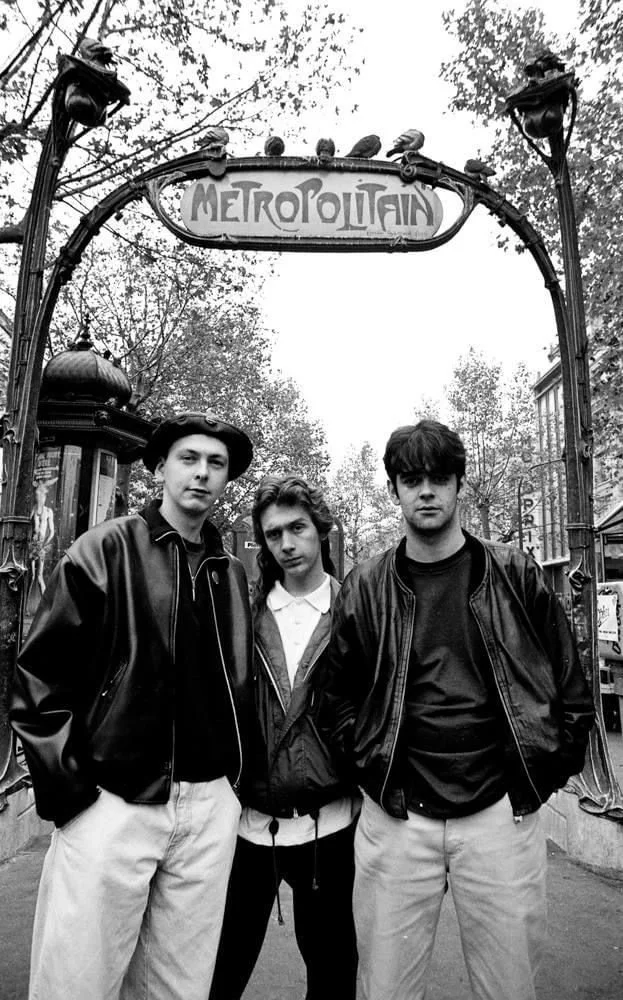
Magnetic North
by Jeff Young

25 : Saloon
Irish Dave was the best Elvis Presley impersonator in Kirkdale. Our afternoon haunt was the Lighthouse on Stanley Road, although we never called it that, we called it the Lambeth. Dave was – in his words – fromThe Bogs and his accent was impenetrable, yet beautiful. He always wore the same road builder suit, always carried a pig’s head and five pounds of potatoes in a Kwik Save bag and smoked his bummed fags down to the filter.
If business was slow in Young’s junk shop a few doors down the block we’d hit the pub for a pint or two of mild. At some point during the second pint Dave would borrow the landlady’s carpet sweeper to use as a microphone stand, invisible guitar slung over his shoulder, full on hip-swivel and curled lip for the imaginary women drinking sherry by the dart board, his Bog thick accent transforming him into The King before my eyes. He was primal, delinquent, carnal, heartbreaking, voice like a preacher on heat, howling in a hillbilly church.
I was his only ever audience.
Sometimes he’d borrow the carpet sweeper and bring it to the shop where he'd become Elvis Presley against a backdrop of Victorian wardrobes. Perfect renditions of ‘That’s All Right’, ‘Blue Moon of Kentucky’, encoring with ‘Heartbreak Hotel’. And then, after taking a bow and soaking up my enthusiastic applause he’d croon a hymnal chorus of ‘Always on My Mind’ before wandering off home to wherever he lived, pig’s head and potatoes in his Kwik Save bag. I’d take the carpet sweeper back to the pub and drink another pint of mild, wondering if I’d imagined him. And then one day he walked away forever, and I never saw or heard of him again.
Boarded up pubs are surely haunted. In the wee small hours of the morning saloon bar ghosts sing dream songs, broken hearts on fire, yearning for lost love. The midnight Patsy Clines and twilight Sinatras, the lost highway Hanks and bar stool Dinos. And behind the shutters of the Lighthouse on Stanley Road Irish Dave’s ghost is still singing Elvis songs, mopping sweat from his brow with the imaginary handkerchiefs of swooning women, pulling the words down from heaven. Little things I should have said and done; I just never took the time...You were always on my mind...
You were always on my mind.
— Jeff Young, 20 May 2026
—
Last week, Jeff Young acquired one of those 1970s carpet sweeper at a house clearance in Bootle and has been carrying it around the boarded-up pubs of north Liverpool, holding it up to the shuttered windows and listening for the residual frequencies of every song ever performed. So far the device has picked up three Patsy Clines, two Hanks and one unconfirmed but plausible Dino. He is considering working on an addendum to his cosmology of saloon bar ghosts that will accommodate Elvis impersonators of unspecified Irish origin who carried pig's heads in carrier bags and disappeared without leaving a forwarding address. The pig's head, he says, is all part of the data.
The Paphides Principle
Pete Paphides once had the uncanny ability to hear a song once and know it would take up permanent residence in the national consciousness. He could spot a hit the way a safe-cracker can hear a tumbler click into place.
That gift, he assures us, has long since deserted him. But something else has taken its place - an ear for the songs that should have been hits in a parallel universe where good taste reigns supreme. This time, he makes the case for Arab Strap's glorious, lumbering return.
Arab Strap - ‘You You You’
“I've got a hole in my shoe that lets in rain
And another new lump in another vein
I've got pills for breakfast every day
To keep my pains and fears at bay
I've got a portly paunch I just can't shift
I feel undesired, dismissed, adrift
My get-up-and-go is long gone
And the days keep dragging on”
Can you remember the first time you realised you could no longer confidently predict a hit? I’m not talking about songs that probablymight scrape the top ten as long as they get a few plays on the radio. I’m talking about songs that you hear once and you know that they will confidently walk through the reception at Broadcasting House – in fluoro tabard if necessary, carrying a silver platter of sandwiches all the better to glide through security and install themselves into the collective megamind, via a lengthy spell on the Radio 1 playlist.
“I've got a hole in my head that can’t be filled
Time is never spent, it's only killed
I'm always bored, it seems nothing excites me
My own limbic system fights me
I've got watchlists I'll never watch
And pruritus scroti in my crotch
I've got a seething sadness in my soul
That might just swallow me whole”
Back in 1998, my hit-sniffing Spidey senses were working perfectly well when I stumbled upon ‘Sexy Boy’ by Air. I recall playing that one to an old uni pal of mine, staring intensely at him just like Paul McCartney must have stared at Cliff Bennett and the Rebel Rousers halfway through The Beatles’ European tour when he played them his newly-acquired test pressing of Revolver. He returned my gaze and quizzically exclaimed “Two effete French guys singing 'Sexy boy over and over again?!?' Are you sure about this?!” But I was right.
“I've got tears in my eyes again tonight
As the tyrannised unite and fight
There’s a fiery frog in my throat now
From all that singing: Bella ciao!
I've got my day in court that can't be missed
'Cause the government claims I'm a terrorist;
I fear for my son, I fear for my daughter
But in this world of slaughter”
My smash hit sonar was no less sharp in 2012 when I heard Daft Punk’s ‘Get Lucky’ and told my wife: “This is so perfect that it’s already making me feel nostalgic about the year it will soundtrack – a year that still has eight months to go.” And yes, once again, I was right. Then two years later, Beck trailed the release of his album Colors with a song called ‘Dreams.’ And I duly told anyone who would listen that this was going to give him his first chart-topper. Reader, it didn’t even make the Top 75.
“And if you're streaming this song on Spotify
Then we both fund weapons-grade AI
But if it wasn't here, then how would you hear it?
We're over a barrel, but we don't have to cheer it
I don't know what the fuck to do
When hypocrisy reigns and nothing is true
And nobody pays for abhorrent behaviour
Fuck these demagogues cosplaying saviours”
That was thirteen years ago and I mention all of this as a preamble to the news that Arab Strap are back back back with ‘You You You’ – an outrageous play for your long dark mid-life disco of the soul. Aidan Moffat and Malcolm Middleton’s return glides with all the sluggish elegance of your mullered uncle lovingly ferrying three pints of Deuchars IPA through the Friday night throng to their intended destination. This lethal itemisation of modern woes – both internal and external – is mitigated by the continued presence of our protagonist’s loved one, a string of sparkling arpeggiations and a BPM that proceeds at the slowest speed you can ride a bike drunk without actually falling off.
“ButI've got you, you, you, you
I've got you, you, you, you
I've got you, you, you, you
I've got you, you, you”
In a different time, I wouldn’t have hesitated to pronounce this almighty synergy of incongruents a whopping great hit. But: (a) I'm not sure if you can confidently expect a hit whilst coating off Daniel Ek and drawing attention to what his invention has done to the vast majority of artists who once used to scrape a living from their music; and (b) like I said, I lost my magic touch a long time ago. Happily, the same can’t be said for Arab Strap.
— Pete Paphides, 21 May 2026
What Detail Are You Still Obsessed With?
by Eimear Kavanagh
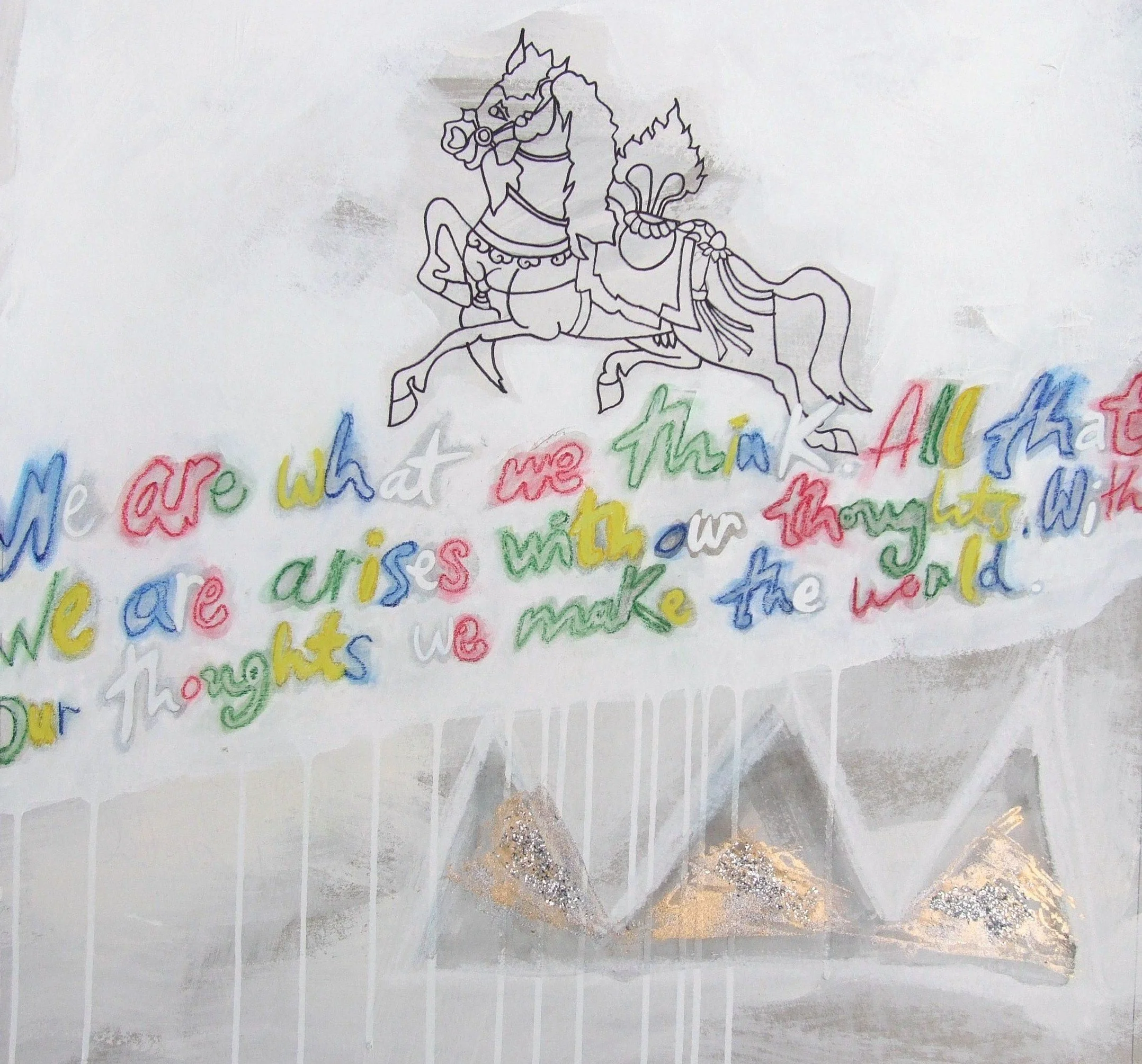
I am just 5 days in, on a 9 week Mindfulness programme.
Mindfulness is where my Spiritual journey started out many moons ago, and so I thought it would be a really nice return to a practice whereby I can purely observe what's happening within, nothing more. Going back to basics, I thought. Why not?
Wow. I obsess over SO many details! There are some crazy levels of thinking happening. So many mental loops.
I feel acutely aware right now of how often I burn food, break glasses, drop things, rush things, multi-task.
Turn up early, turn up late, don't turn up at all.
Obsess over doing things, this is my make-up.
Overwhelm - flare up - burn out.
Something that I saw / something I said / something he or she said / something I have to do / something I forgot / something I didn't finish / something I love / someone I love / something I feel uncomfortable about / something I dread.
I'm only human after all!
Love, Eimear
—
Eimear has recently taken up a practice she describes as "watching the watcher watching the toast." She reports that the toast continues to burn at approximately the same rate it always did, but the burning has, in some preliminary way, become more interesting. Her catalogue of recent incidents now runs to a saucepan, the corner of a tea towel, an unread letter from the council and one transitional event involving the side of her own thumb which she does not yet feel ready to discuss. She maintains that mindfulness is not the cessation of the mental loops but the patient and faintly amused observation of the loops as they overtake one another on the inside lane.
Banished
by Victoria Raftery
Ron’s ghost leaves his body nine minutes and fourteen seconds after the car hits him. He, along with his meat-and-potato pie and six cans of pale ale bounce off the bonnet and onto the asphalt in an eruption of gravy, beer and splintered bone. He falls into immediate unconsciousness, coming round only briefly when he feels a rhythmic pressing on his chest and hears the voice of Barry Gibb. Another voice, muffled and indistinct, urges him to breathe, come on breathe, but then it fades, becoming fainter and fainter, until all he can hear is…. nothing. He can’t see, either, which he finds perturbing. But something tells him to be patient, to wait it out. A couple of minutes of forbearance reward him. He hears a loud rushing sound and whooshes! into weightlessness, blinking hard against the bright clarity of the scene below. Surveying the greasy scalps, bald spots and greying partings of the gathered crowd, he watches, dispassionately, as paramedics shake their heads, pull out the long, thick respirator tube from his throat and cover him with a blanket. The spectators exhale in unison, a resigned let's-call-it-a-day kind of sigh, tinged with a frisson of relief that there but for the grace of God.
Doreen Apsley from number ninety-five insinuates herself to the front of the crowd where she makes a show of dabbing at her eyes with a scrappy remnant of stained tissue. She genuflects: once, then twice in case no-one has noticed, then a third time for good measure.
Ron’s ghost grins, wryly: the news will be all round town within the hour.
He wonders who will tell Glennis; that young copper over there, most likely, the one talking into his radio.
Well, he’d better be quick. Doreen couldn’t half shift when she wanted to.
The ambulance doors slam shut and the crowd disperses. The spectacle is over.
What now? he wonders.
Home, he supposes.
And with that thought, he is transported whoosh! straight into his very own kitchen. He notes, with satisfaction, that his tea-tray has been laid out in readiness for his homecoming: a knife, a fork, the sauce bottle, some bread-and-butter on the side and a plate warming under the grill. Good, he can’t stand a cold plate. Glennis has even washed-up after herself – it’ll have been a bit of salad or some soup while she watched her soaps – drying up and tidying after herself as always, knowing well enough that he can’t abide pots left out to drain.
‘That’s what tea towels were invented for,’ he had lectured her, not long after they were married. ‘Dry up and tidy away. Got it, love?’
She was a quick learner, Glennis; you usually only had to tell her once.
He hears the phone ring and floats to the kitchen door, catching his wife coming out of the living-room into the hallway to answer it. The habitual sigh of irritation at the sight of her escapes him and he sees her glance, startled, in his direction. His first reaction is to pull back but realises in an instant from the quick shake of her head and slight furrow of her brow that he isn’t visible to her.
‘Hello?’ he hears her say into the phone. ‘Oh, hello, Bill. No, he’s not back from the pub yet.’ She pauses to glance at the hall clock. ‘He should be home by now but it’s not unusual for him to have an extra pint on a Friday night. I’ll get him to call you when he gets in, shall I? All right then, bye.’
Ron’s ghost appraises the mousy, flat little thing that is his wife. Shirley in packing, now there was a real woman. Bouncy. Bouncy hair, bouncy laugh, bouncy chest, bouncy thighs. Not scared of showing off her assets, that one. Whereas Glennis. What can Ron say about Glennis? Not much going on under those sad and faded shapeless shift-dresses she wears day in, day out. Not much at all. He watches her replace the receiver, watches as she turns back towards the kitchen and then they both jump at the sound of a loud rapping at the door.
‘Ron?’ he hears her say as she grapples with the front door knob. ‘Did you forget your…. oh! sorry! I thought it was my husband forgetting his keys again, he does that sometimes.’
Her voice falters.
‘Is everything alright?’ he hears her continue. ‘Oh please God not Michael! It’s not Michael, is it?’
Michael? The bloody cheek of the woman.
The young copper stands on the doorstep, his expression stricken.
‘That’s my husband’s wallet.’
‘Yes, Mrs Beckett. I’m afraid I have some bad news. Can I come in?’
Glennis returns from the hospital some hours later. Mary Twiss had gone with her for moral support seeing as Glennis has never had to identify a body before.
Mary had offered to stop with her for a while, put the kettle on, but Glennis had told her to go, that she would be fine on her own, honestly.
She realises the grill is still on low and grabs an oven mitt to remove the plate. Good job it hasn’t cracked, she thinks. And then: may as well have a piece of toast.
It had been an interesting experience, identifying Ron. He had looked like himself and yet different: pale and flat, a bit like the way she grilled her bread. The ambulance people had had to force a breathing-tube down his gullet which had left red marks and dried blood around his mouth, exactly the colour of her favourite raspberry jam. It should have disturbed her but it hadn’t bothered her at all. She had nodded at the police officer. Yes, that’s my husband, her nod had said. That’s him.
She butters her toast and then spoons jam onto it. Plenty of jam. No scrimping tonight. Usually, she would have a cup of tea with her toast. But not tonight. Instead, she goes into the pantry and opens one of Ron’s whiskeys. Well, he won’t be needing the stuff anymore, will he?
She carries everything into the living-room. Living-room?! A misnomer if ever there were one. It is spotless, dusted daily to within an inch of its life; Ron wouldn’t tolerate a speck.
‘I don’t slave my fingers to the bone every day to have you sitting on your backside. The least I expect is to come home to a clean house.’
He’d only told her once, she was a quick learner.
It had been hard, very hard, when Michael had come along; how can you tell a child not to make a mess?
She and Michael had had to have all their fun on the quiet while Ron was at work. My God, if he’d seen the state of the kitchen when they were scone making, he’d have had a fit!
Toast crumbs fall into her lap.
She would have to fetch the dust-pan-and-brush in a minute, she couldn’t leave crumbs on the carpet.
And then it occurs to her: she can leave crumbs on the carpet.
She can do whatever she pleases.
She takes a long slug of whiskey and, with an indolent, insolent, motion, she flicks at her plate.
flick!
flick!
flick!
A hundred tiny toast crumbs shine up at her: a hundred tiny crumb-stars twinkle against a night sky of dark-brown woven Wilton.
It’s not enough.
She stands and shakes out her dress until every last crumb falls.
It is still not enough.
The whiskey feels wonderful.
She pours another glassful and carries it up the vacuumed staircase to the airing-cupboard on the landing where sheets, pillowcases and towels are folded and stacked in neat columns on slatted shelving: her hiding place.
He had never found it.
Why would he have done? He'd never changed a bed in his life.
She reaches in amongst the worn cotton sheets and frayed towelling, her fingers searching for the thin plywood box with the sliding lid that had once housed a bottle of malt given to him years before on his sixtieth by his taproom cronies.
She doesn’t keep much in it, just the few photos of Michael that he hadn’t managed to destroy, a telephone number written carefully on the back of an old Boots receipt, and the talcum powder Michael had given her a couple of Christmases ago.
The talc tin has a bronze cap and is decorated in luscious greens and sumptuous purples: april violets in relief; she has only ever used it in secret, patting it on whilst standing in the tub so as not to let any drift onto the bathroom floor, making sure to sluice down the enamel with the plastic jug kept for rinsing out her hair, whisking round the sink and the sills afterwards with a towel so as to remove every trace, like it was some illicitly-taken drug.
The lid of the box slides back and she grasps the tin, twisting the cap open, holding it against her cheek, breathing in the decadent green and purple scent of rebellion.
Ron’s ghost is in shock.
Not only has she not shed one single tear at the news of his demise but she is hopping around the living-room shaking that talc tin like some Formula 1 champion’s celebratory bottle, cackling all the while like a drunken hyena.
He tries to stop her, tries to grab her by the neck, wants to throttle the life out of her but each swipe of his hands passes clean through her.
Fine white powder has settled on every surface, all over the three-piece suite, the coffee table, the carpet. She’s even chucked it all over the telly!
‘Michael?’ he hears her say down the phone. ‘Michael, it’s me. No, no, don’t worry, everything’s fine. No, I’m not calling from the phonebox, I’m at home.’
He cannot believe he is footing the bill for her to chitter-chat with that, that abomination of a son. And not quietly, either. Gone is the simpering whisper he’s so used to. Her voice rings out and it sounds positively joyful.
‘Michael, I’ve got some good news, some really good news!’
The bloody woman is dancing on the spot, swigging back his whiskey like it’s going out of fashion!
‘Michael, my love; something wonderful has happened, something truly wonderful!’
Glennis makes sure she looks her very best for the funeral.
She has been to Gail’s and gone for the lot: fingernails, toenails, upper lip and eyebrows. Sally at Scissor’s has done her a tint and a cut-and-blow, and earlier in the week, Michael’s other half, Simon, took her to Marks and treated her to a smartly tailored suit in a rich, sumptuous magenta.
‘I don’t want anything black,’ Glennis had said. ‘I want something I can wear again.’
The house is spotless - it’s hard to change the habits of a lifetime - although she hasn’t bothered vacuuming under the furniture now that there is no-one there to inspect her work. In fact, she is relishing the thought that a light film of talcum powder still lurks in the shadows and crevices of the otherwise pristine living room.
She has agreed with Michael and Simon that Jackson should attend. Well, he was fourteen now and looking very smart too, in a collar and tie bought especially for the occasion.
‘It feels strange, going to the funeral of someone you’ve never met,’ Jackson had said to her that morning.
‘You don’t have to if you don’t want to.’
‘No, I’ll go. He was Dad’s dad, even if he didn’t want anything to do with us….’
Glennis reaches up to touch his cheek.
‘You don’t half look like your dad when he was your age…'
Afterwards, after they watch the coffin being dropped into the hole and after they’ve chucked some soil on it, they go to The Griffin. The landlord has given her a special rate, what with it having been Ron’s favourite watering hole.
‘Police still looking, Glennis?’
‘So they say, but if they haven't caught ‘em now, they never will.’
‘Bloody joyriders. Need stringin’ up.’
Mary comes over with Bill.
‘You’re bearing up so well, Glenn,’ she says, settling down heavily on the leatherette sofa beside her. ‘Still doing alright in the house on your own?’
Glennis shrugs and sips her port-and-lemon.
‘I cope. You know me.’
‘There one minute, gone the next. I don’t know. Have you felt him at all? People say that, you know. People say they come to say goodbye.’
‘Christ, Mary! Sorry Glenn, you know what she’s like.’
‘It’s fine, Bill,’ she murmurs but Mary’s words take her back to that night, the night of the talc and the whiskey, when her neck had prickled and her ears had twitched, when, through a haze of alcohol, she had put the phone down to Michael and walked into the living-room to see him outlined in a faint glister of April Violet, when she had stood tall, as tall as she could stretch, right up on her tiptoes, squaring up to him, her face right up to his whilst baring her teeth and snarling.
‘Piss off, you bastard!’ she had yelled at him. ‘Piss off! You can’t touch me now! Get out of my house, go on, out with you! You can bloody well piss off and GO TO HELL!!!’
She had seen him off.
She had banished him.
She had been the one to say goodbye.
She looks over to the bar, to her son and grandson standing there ordering another round, and smiles. Her port-and-lemon tastes warm and sharp.
Tomorrow, she decides, she is going out to buy a cat.
—
Victoria Raftery has taken to leaving toast crumbs on the carpet at deliberate intervals. She calls this ‘calibration’ and reports that the practice has produced an uptick in domestic morale. She is also compiling, on no evidence other than instinct, a private register of widows in her village whom she suspects of keeping decorative talcum tins in the airing cupboard for purposes that have nothing whatsoever to do with personal hygiene. Her husband, having now lived through the silver counter, the trouser-tucking and the long staring sessions at ceiling damp, has now resigned himself to a future in which the household's soft furnishings could, at any moment, be enlisted as evidence in a case nobody has yet been asked to bring.
Dead Air Anthologies No. 8
by Matty Loughlin-Day
I turn 40 this year. I know, I know – shorely shome mishtake?! - but as fantastical as that may seem, I hit the supposed milestone this year. I’ve never cared for my age, which, when I really think about it, is likely a subconscious defensive mechanism that prevents me from considering all the things I haven’t done yet, allowing me to kid myself I’ve still got bags of time left (I’ll get to Tonga yet…), but regardless, it’s not something I spend much time worrying about.
Ageing is, of course, a privilege. There are countless souls I can think of that were never gifted the chance to age and grow old, so it feels a bit churlish and self-indulgent to be concerned with gazing at my navel and worrying about the number of candles on my cake – not to mention, it’s utterly pointless, only leading to stagnation and defining yourself by how you are supposed to be or act at a certain point in life.
Balls to that.
It reminds me of something I read about 14 years ago that has always stuck with me. It was an article in which Lloyd Cole (he of …and the Commotions fame) was asked to review Bob Dylan’s wonderful 2012 album, ‘Tempest’. In the review, Cole commented on howtimeless our Bobby sounded, in the sense that he was refusing to be constrained by the expectations of what a man in his late seventies should sound like. The line that struck me most was when Lloyd Cole reflected something along the lines of “I don’t think Dylan even knows how old he is”. Isn’t that fantastic?
Over recent years, there have been a number of psychological studies exploring the link between ones outlook on ageing and subsequent wellbeing in later adulthood, with the vast majority suggesting that a more positive, or at least a not-pessimistic, view of growing older is linked with better mental and physical health when that hill is climbed. The possible takeaway from this is that dwelling on and fretting about your old age and the singular direction of time’s arrow leads to a slower, generally less happy outcome as you shuffle along the mortal coil. Of course, of course, there are more factors than this that come into play, but there exists increasing data that hypothesises that fearing or grieving growing old is, basically, not a very good use of your time.
So, hurtling towards middle age and my forties doesn’t really fill me with dread or existential angst (I can find that in plenty of other sources, thank you), but understandably, people have been asking me about it in that small-talk manner we adopt around such topics – what am I going to do to celebrate? What do I want as a gift? How grey is my hair going? My answer is typically the same for all such enquiries; I don’t know, I haven’t really given it much thought.
A drink with a pal the other week however forced me to look at this all from a bit of different angle. He is of a similar age to me, and we were discussing, in a roundabout way, the things we have noticed as we close the door on youth. One theme that emerged was the way we now approach our cultural tastes and the quite liberating process of casting off cares about what we are supposed to like or loathe.
My friend was reflecting on how he has found himself returning to things he liked when much younger that might not be troubling any NME Cool Lists (Christ, remember them? Ghastly stuff), but whether it is for nostalgic reasons or taste, he loves. Your Ocean Colour Scenes and so on. We spoke about the importance of the stuff that leaves itself imprinted on you when the concrete of your soul is still wet, but I considered that rather than doing this, over recent years, I have increasingly found myself drumming up the courage to disregard and let go of things I never really liked anyway, but often found myself proclaiming I did, or kidding myself, as that was what was expected of me.
Deep breath here, but I’ve never really cared for The Fall. They’re OK. ‘Barmy’ is an excellent song and ‘Kurios Oranj’ and ‘Blindness’ are world class, but the rest I find… well, just alright. I get why people like it, but I just find it… alright. However, I am positive that in countless instances throughout my twenties and thirties, I’ve proclaimed a love for them and feigned worshipping at the altar of Mr. E. Smith. Why? Well, why does a daft lad do anything else but to appear cultured, interesting and interested? There was probably an aspect of me feeling that a chap like me should like them, so if I blagged it for long enough, eventually, the enthusiasm would seep into me in an osmosis-esque manner and I’d eventually see the light. Of course, it doesn’t work like this, does it?
In the interest of being kind to myself, the brain is hardwired to fear judgement – one of the biggest evolutionary anxieties we have is the worry of being kicked out or excommunicated of our peer group, which goes back to a primal need for finding safety in numbers, so it’s not really my fault, but for sure, over the decades, I have assimilated into many a clan with an, if not feigned, certainly strained, affection for bands such as The Fall. See also; The Byrds (meh), Bowie and The Velvets. In the case of the latter two, I like them - please don’t get me wrong! - but I’m not losing my mind over them in the way others do, and crucially here, as I’ve probably said I do.
Why, it’s as if taste is a highly personalised and individual thing, who’d have thunk it?
Taking this one step further, growing old and caring less and less about the expectations or judgements of others for one’s taste has also freed me up to look at other pieces of art that I would have absolutely crucified anyone for professing a love for. I’m taking another deep breath here, but here goes.
My nearly three year old son is currently obsessed with the music from ‘Grease’. Now, before anyone calls safeguarding or social services, he’s thankfully still too young to grasp or understand the translucent innuendo and in some cases outright filth contained within the film – I nearly spat my tea out and jumped for the remote when Rizzo asks “is this a gang bang?”… good LORD! – and he just wants to skip ahead to the songs and the car chase. Perfect. Either way, musically, everything is ‘Grease’ in our household at the moment; it is very much The Word. But in seeing him get lost in the songs, the dancing and the daftness of it all, coupled with the increasingly carefree approach to my taste, a strange thing has happened. I – and I really did have to think hard about typing this – love it. Has it aged well? Heavens above, no. There are more plotholes than there are potholes in a Reform controlled council (oh, biting satire!) and the moral and ethical value is beyond questionable, in fact it is reprehensible, but I’ll be damned if those songs haven’t worked their way under my skin and nested there.
It started slowly. Rolling my eyes and sighing quickly gave way to delight at seeing my son impersonate John Travolta, throwing himself to the floor proclaiming “it’s electrifying!”. This delight led me to sing and dance along with him, which in turn leads to his requests for the soundtrack during car rides being met. Soon, this forces me to consider, at first quietly, “it’s a bit of a banger this one” when the song ‘Sandy’ comes on, before eventually, I find myself becoming quite emotional and - genuinely - getting goosebumps at the end of the film at such deeply poetic and profound lyrics as “we go together like rama lama lama ka dinga da dinga dong…” and wondering why. I then philosophise and try to unpack why I'm so moved. I ponder some more and reason it’s because, right at the end, the gang are all saying goodbye to each other – they’re saying goodbye to youth! – without even knowing it. They’re saying goodbye by saying they’re not saying goodbye. Just like we all do. It's not just the end of school, it's the end of innocence, the end of that carefree world that exists in the shadow of the forthcoming Adult World. They’re oblivious. As that car flies off into the sky (for some inexplicable reason), as she turns back to us, Sandy isn’t just waving goodbye to her pals, or to us, she’s waving goodbye to her youth - to all of our youths! Her andDanny are flying off into eternity. Alone. Together. The rest of the crew wave back, with wide grins and the rest of their lives ahead of them. They don't even realise it. We’ll always be together. Always. It never works out that way, does it? It's so bittersweet it almost hurts. But, oh that optimism! That blithe, naive optimism! Oh, youth, sweet youth! Come back!
Sorry, where was I?
In years gone by, I would have castigated and chastised such views and shot them down immediately. The 17-year-old me, who was on a puritanical mission in the footsteps of Lee Mavers et al wouldn’t have entertained the notion of this at all. Not rootsy la, not rootsy at all. But nearly 40-year-old me doesn’t give a toss anymore. It’s quite cathartic. It also puts me in mind of a former resident of this Parish, Dave ‘Wiggo’ Wiggins, who was always vocal in his love of ‘Grease’ alongside a non-ironic and strong affection for the Bay City Rollers, whilst also finding room for the ‘proper’ stuff like Arthur Lee & Love and whatnot. It was – and remains – inspiring, and a lesson in how to consume and be consumed by art, regardless of anything or anyone else. In thinking about him, it helps me consider that there is just as much room for ‘Grease’ as there is for the LP of Mongolian 80s Jazz both my Mum and wife scolded me for playing at dinner the other night. Although he had his own idiosyncratic and at times maddening rules for living and the arts, Wiggo was trying to tell us, it’s all a bit of fun, really, isn’t it? God, I miss him.
Blimey. Fathers forgive me. I have confessed – in a public forum, no less – to not really liking The Fall all that much and to getting emotional to Grease. It’s a good job I’m not in a band or anything daft like that, isn’t it? Anyway, in a somewhat similar vein, this Pirate Radio Shipwrecked is a bit of a balls-to-the-wall affair, and I’ve tried not to overthink it, but rather lean into the wilder, more anarchic stuff, so there is a 10 minute jam recorded in a water tower, some Sudanese rock ‘n’ roll, spiritual jazz and reggae and more. Enjoy. After all, it’s later than you think.
— Matty Loughlin-Day, 20 May 2026
The Cult Continuum
with Matthew McPartlan
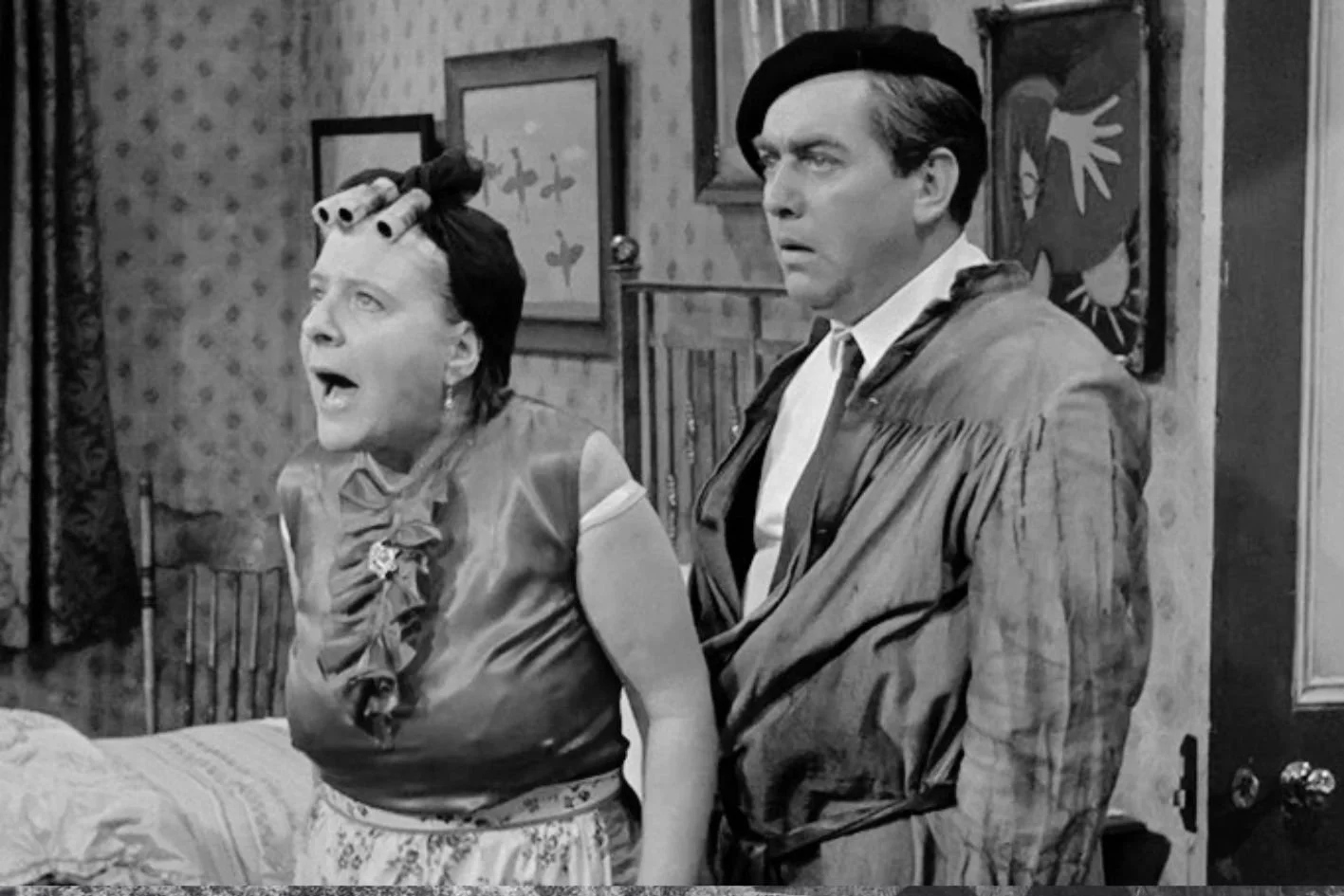
This week Matt McPartlan dwells on The Rebel, in which Tony Hancock plays a bored clerk who decides, with the kind of theatrical sincerity only a Hancock character can sustain, that he is in fact an artist. He goes to Paris. He paints. Things happen. They unravel. Matt has been watching this film since childhood and it’s become a kind of mirror that updates each time he looks at it. What he saw at art school is not what he sees now, and not what he will see in another twenty years. And that’s what cult films are all about.
#3 The Rebel (1961)
Snails, eggs and chips…. and a cup of tea
When I think about The Rebel, I think of my first year of art school. A foundation course at Harrogate College of Arts and Technology. The sudden, intoxicating sense of freedom that hits when you go from rigid timetables to the loose, eccentric rhythms of art school life.
It was also the year I began obsessively recording old films from daytime television. Ealing comedies, Peter Sellers curios, anything that felt a bit out of step with what everyone else of my age was watching.
That’s when The Rebel found me; or when I found it. The British comedy film starring Tony Hancock who plays an office clerk with big dreams of living the artistic life. I had seen it previously as a child when old films were consistently shown on BBC2 and I was already a fan of Tony Hancock having watched and loved the repeat showings on Hancock’s Half Hour with my parents. This film felt like an extension of that world, just stretched out and given room to breathe.
It has remained an ever-present reference that has accompanied me throughout my life. Not only as a film that I return to frequently but as a cautionary tale and reminder of the dangers of taking yourself too seriously and the pitfalls of hubristic delusion. It is also the perfect example of a film that has been enjoyed through the varying lenses of my life.
The synopsis is simple enough: Hancock plays a bored clerk and frustrated artist who heads to Paris and, through a series of comic misunderstandings, becomes the darling of the art world before it inevitably unravels. It opens with him quietly wilting under the weight of routine, filling his ledgers with elaborate doodles instead of doing any real work. He’s dragged into his bemused manager’s office, his sketches and caricatures are laid bare and he finally snaps.
“I’m being choked, crushed, bogged down in a sea of triviality. I’m not a machine. I’m flesh, I’m blood. I can see, and hear, and smell, and feel. I’m vital, you hear? You can’t crush me in this monotonous, soul destroying everyday routine forever. Every man must find his own salvation, live life as it was supposed to be lived.”
Whilst it’s theatrical it is completely recognisable. The private fantasy of breaking rank, of standing up in the middle of the office to declare your humanity like a revolutionary. It’s that moment, more than anything, that lingers: the sincere expression of that universal urge to escape and reinvent yourself. (If you want to understand the heart of that longing, Jeff Young’s book ‘Wild Twin’ gets right to the bone of what Parisian escape and transformation really looks like.)
On my foundation course, that version of Hancock felt utterly recognisable You could see it in my fellow students; the seriousness, the talk of “form” and influence, French cinema and the desire to be taken seriously. Watching it now, that feeling has shifted. It’s less about spotting others and more about recognising something in myself.
That’s where the film really lands for me. It’s not in the mechanics of the story, but in what it says about creativity. The way belief can be mistaken for talent. The way confidence can carry something further than it should.
It’s also why the satire works. The art world send-up isn’t just a joke, it’s affectionate but it has weight. It feels familiar rather than cynical. For me its’s not just laughing at pretension, it’s showing how easy it is to slip into, much in the same way that Ricky Gervais’s David Brent is the benchmark for all office managers to avoid.
More than anything though it’s the feel of the film I come back for. The rhythm of it. The jokes. Irne Handl as his landlady Mrs Cravatte and of course Hancock’s performance; pompous and strangely hopeful. I am also fond of the artwork too, as intentionally poor as it is, has always stuck with me.
The Rebel belongs in the Cult Continuum because it sits slightly off to the side, an incredibly funny film that earns its place through repeated re watches and a kind of quiet recognition among those who know it well. It has been there through different stages of my life and where I once laughed at the pretension of the art world, I now recognise the pull of it more than ever. I find myself envying the lifestyle and the romance of it, the thrill of believing completely in the act of creating something, however misguided it might be. That sense of escape, of possibility, of becoming something else entirely.
“Every man must find his own salvation...”
There is always time for us all.
— Matthew McPartlan, 18 May 2026
Periwomble
by Amy Collins
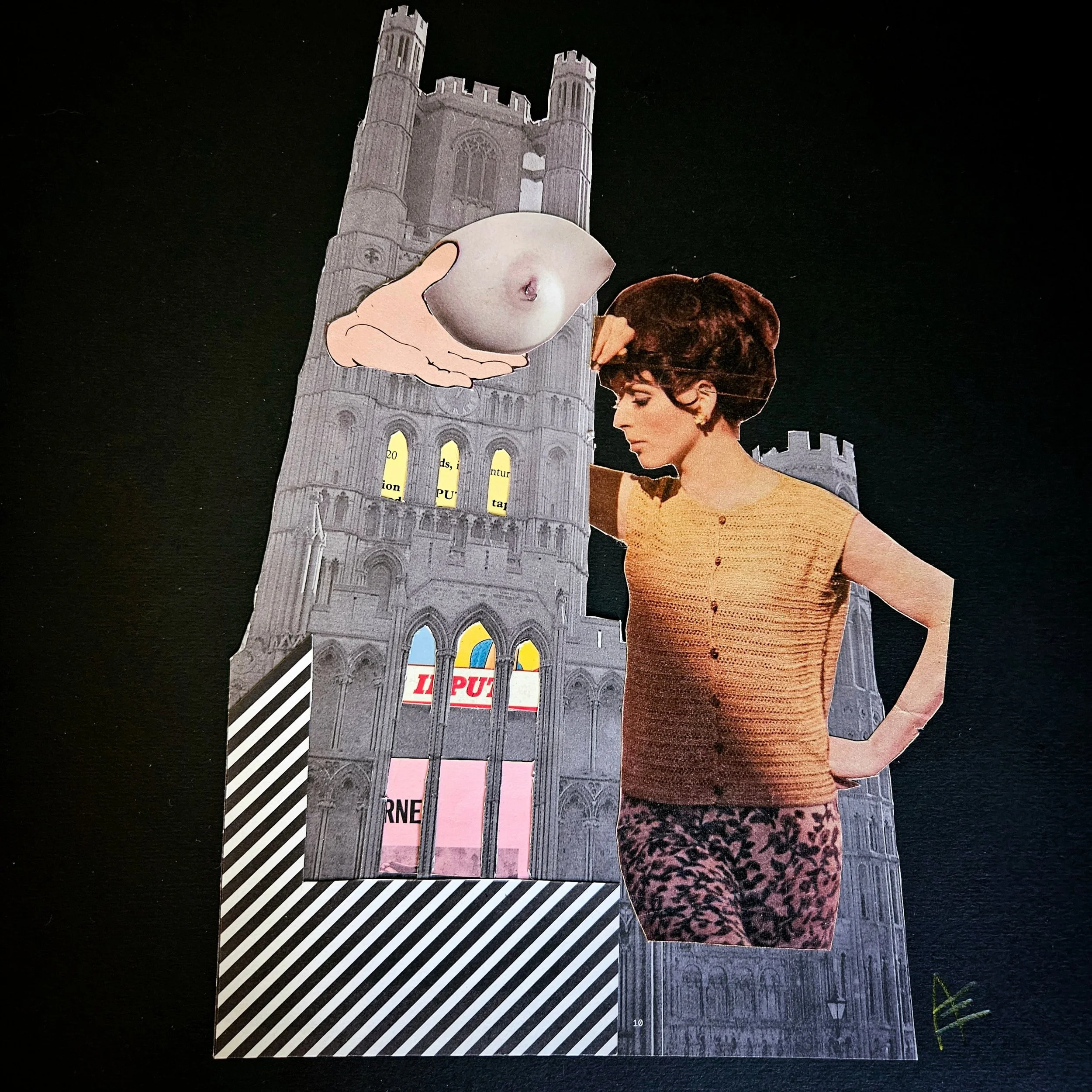
For years she’s referred to it as her Womble.
Great Uncle Bulgaria is currently having a stroke in utero.
MacWomble is bed-side, murdering the bagpipes,
smoking between blasts.
A butt gets flicked onto the hospital floor.
None of them are arsed about litter at this stage.
Who’s the guy who did that film,
the one with the French woman in it?
Orinoco says. As though someone he loves
isn’t neurologically unraveling before him.
You know, the famous guy.
Peri’s got dried black mulberries
in Ziplock bags in the cupboard.
Brazilian women swear by them.
Everyone swears by something.
Far too late, a mother murmured,
“it all stopped for me at forty-two, and Nanna Mo.”
Great.
All sorts get poked in the ear canal
to scratch the itch, against advice.
She likes taking the risk.
It reminds her of an orgasm she once had…
OMG, why can’t she stop thinking about ciggies?
At night Peri takes a tea towel
with rock salt on it to the yard.
She stands on jagged crystals,
looks up at the stars,
drops an Airwave™,
breathes deep,
imagining a lovely crushball menthol.
It detoxifies apparently,
some influencer claimed.
The rock salt, not the chewie.
There’s a relief in handing yourself over
to some hack or other.
Especially when your head is fastened
by a single split-pin,
and it lops at four each day.
Anyway, back to Womble ICU.
Uncle Bulgaria made a recovery
and surprised us all.
He’s currently break-dancing.
Fly kicking punnets of grapes
and Sudoku books into bins.
He needs discharging
before someone gets hurt.
Oh, for fuck’s sake,
Orinoco says.
It was Ethan Hawke.
—
Amy Collins has, in recent weeks, been spotted in her yard at unsociable hours standing on a tea towel covered in pink rock salt and looking at the stars. Gary Chapatti, Liquorice Jim and Martha have all separately observed this development from their kitchen window and have formed a small union of objection. Amy maintains that the practice is grounding in the strict sense and that the cost of one tea towel and a bag of crystals from the Tesco spice aisle is a defensible price for forty minutes of not actively thinking about a crushball menthol. She has taken to referring to her own hormonal apparatus as ‘The Common’ on the grounds that something inside it is definitely picking up litter that should not be there in the first place. You’re right to be concerned.
The Gen Alpha Lexicography
by Maya Chen
22: 'Lore' (The Personal Wikipedia)
Etymology: From Old English lār (teaching, learning, doctrine), via folklore (coined by William Thoms in 1846), through the narrative universes of late-twentieth-century video games, and arriving in 2025 as the curated, algorithmic backstory of any given individual under the age of fifteen.
"Mum, the new girl in my class has no lore."
I looked up from the dishwasher where I had been reorganising plates with the quiet despair of someone trying to impose taxonomy on chaos. I had been ready for an update on the new girl's name, her parents' professions, possibly her stance on the school's recent uniform policy revisions. I had not been ready for an ontological judgement.
"No lore," I repeated, in the tone of a researcher confirming a transcription.
"Yeah. Like, she hasn't shared anything about herself. She's just there."
I weighed up the responses available to a working linguist whose daughter has just used a term derived from Old English to describe a classmate's failure to perform identity. I settled on, "Right."
"Lore" is one of those words I’d assumed had died sometime in the 1970s, taking the printed encyclopaedia and the regional folk society with it. I was wrong. It has, like most of the words I once lived with in their original senses, been quietly resurrected by my children and reissued with new packaging.
In Old English, lār meant teaching, learning, doctrine. It is the parent word of learn, and the same root as the German Lehre and the Dutch leer. For a thousand years, lore was the accumulated knowledge of a community: how to plant, how to heal, how to bury the dead. In 1846, the antiquarian William Thoms coined folklore as a one-word replacement for the cumbersome 'popular antiquities', and lore was reassigned from the university to the village. It became, in effect, the curriculum of the people. Then in the 1990s it migrated again, this time to the gaming sub-culture, where it described the established narrative universe of a fictional world. Halo lore. Witcher lore. The accumulated knowledge held by people who can tell you who the third Spectral Lord of Thras was, and why he matters.
In the hands of Gen Alpha though, lore has done something none of the previous custodians thought to attempt. It has migrated from the collective to the individual. A person now has lore. Lore is not what we have collectively accumulated about the world. It is what we have algorithmically accumulated about each other. It is the backstory of someone you have never met, organised into easily consumable instalments. The new girl has no lore because because she has not yet released any of her history for public consumption.
What makes this fascinating, beyond the obvious linguistic vertigo, is what it reveals about how my daughter understands identity. Selfhood, for her generation, is no longer an interior quality. It is an exterior file. You build your lore the way previous generations built reputations or careers, by adding entries. You do not 'know' someone in the older sense. You know their lore. The two are not the same. The first implies time, intimacy, contradiction, revision. The second implies a Wikipedia page that updates automatically and never deletes anything.
There is something melancholic in this, beneath all the comedy. My generation built selves slowly, often in private, and were occasionally embarrassed by them. The current generation builds them in public, in instalments, and seems to be embarrassed by their absence. The privacy of the unfinished self has been quietly priced out of the market. The new girl will, presumably, release her lore in time. She has no choice. To remain lore-less is, in Lily's universe, to have failed to exist at all.
Next time: 'Sigma' - the eighteenth letter of the Greek alphabet, now the preferred identity of boys who claim to need no one and post about it twice a day.
—
Maya Chen has begun curating her personal lore in a leather-bound ledger she keeps in the kitchen drawer, alphabetised by year and cross-referenced by her emotional register. She’s consulting with a heraldic illustrator about the design of a personal coat of arms, on the grounds that "a family crest is just lore with better typography." Her son has rejected her offer to share key plot points from his early childhood, citing concerns about narrative drift and the unauthorised use of his image. Lily has filed a formal complaint, demanding that any future entries about her be subject to editorial review and accompanied by a more flattering author photo.
Notebooks AKA Jesus Christ!
by Michael Stoddart
Notebook Chapter One: “Jesus Christ”
Get a notebook. In fact, get a really good one, no frills, just solid function. Nothing with springs or anything intrusive; nothing flimsy that feels like an exercise book; nothing that makes grandiose claims of being a “reporter’s notebook,” thus serving up delusions of journalistic grandeur for 59p. No, the more money you spend, the more you will serve up delusions of your own! Go to a shop with some kind of artistic foundation, i.e. not Spondland. They will give you a posh Moleskine for a financial layout that will convince you that you have a higher calling. Carry it with you everywhere, in the lovely leather messenger bag you “had to” buy because the notebook you chose was too big to fit in your pocket. And hello, what’s this? Ooh, the bag has a pocket for pens. Mmm, pens! Nice pens though, none of your common or garden biros, not for your newly-elevated musings. You now have a writer’s notebook, a classy leather messenger bag and an incipient stationery perversion, the ideal furniture for your mental garret. All it needs now is a lovely fountain pen. No, several. You will assign a purpose to each of them. One for idle thoughts; one for “finished writing,” whatever that means; and one for all the stuff in between, you might say works in progress. Well, you never know when the muse might come a-calling.
You will soon learn, though. The muse will only come a-calling when your hands are wet or filthy. In the shower, washing the dishes, doing a bit of potting-on. You’re not really going to sully that gorgeous notebook with hands covered in John Innes Number Three? Surely you can remember it for a minute or two while you sort yourself out?
You can’t. It has gone. Sic transit gloria mundi. And where did it go to, anyway? It went to see your friend in Edinburgh, who is, ooh, hang on, just feeding her cat while she holds that thought, and... Bugger, there it goes, all the way back to Liverpool to see your mate who’s been a writer and an artist for decades but still gets these little will-o-the-wisps popping into his head while he’s wiping paint from his fingers. But wait, doesn’t this suggest that your fugitive idea might have time-travelled to any number of literary greats before deciding you were an equally worthy next stop? Er, no. It just popped in to laugh at you, just as it pops in to have a cheap giggle at so many others. Your idea thinks you’re a bellend. Just take consolation from having some of the very same problems as so many others who produce screeds of half-formed notes with a view to crafting them into something of eternal beauty.
Assuming something of eternal beauty is a possibility in a book full of random jottings, of course. Your notebook will be eventually be filled with depictions, in varying length, of undimmed wonderment. It’ll also have stuff of which you have no recollection at all. If you read through it all you’ll see pleasing little grace notes intended to enrich some imagined future work, alongside some absolute shite: smeared scrawl from a drizzly walk, the odd shopping list, and some scribbles that will make you wonder what you were thinking of. A quick scan of one of my own revealed:
“Help is available for Peter Brotzmann converts.”
“00g ullannnco d iellecta.”
“But listen to it with your other ear and it sounds like a crow kicking off.”
“The Close Lobsters.”
“Aeolian folk mode.”
And my personal favourite:
“Why toast hates us.”
Jesus Christ! What did any of this guff mean?
But of course, once you’ve started scribbling the ramblings of your inflamed mind into a notebook, you’ll find it becomes hard to stop, even if you are drawing a road map to a boiling brain. It won’t just be the pens any more, you’ll be sticking things in it, notes made on paper napkins and what have you, but only with the right glue stick. You might even start to draw things in there, if you are blessed with this superpower. In good time you’ll forget the cause of the toast conflict, and you might even pop down some short poems about musicians that you’d thought up on the bus into work. Yes, even that one about Lee Morgan and his steam-powered organ! Your world will be enriched by a book full of well-intentioned madness, and a little while down the road you’ll look back at it and realise you’ve forgotten virtually all of it. Then you'll have to go and get another one. Hard habit to break…
Get Yourself Connected
by Angie Woolfall
Disconnected through a screen by misreading someone’s tone
Using the emoji laugh instead of the crying face
A digital stench we can smell but can’t quite place
So we turn off tune out and drop into a hot spot zone
There’s shiny opinions repackaged ideas as advice on twenty four seven streams
Are you ok as you didn’t react to my post again but I saw you were online
Ghosted for lacking all seeing eyes or possessing finite time
A comment like and subscribe to all would help you reach your friendship dreams
In days of old the after school fight two tribes met and performed
And the only passwords you needed were because you were being a spy
Like James Bond crafting elaborate traps securing secret diary thoughts from prying eyes
Not shared with fifty thousand followers on multiple platforms
You met up when you felt like no email for your team’s meeting
If you wanted to go incognito you asked your mum to lie
Say I’m not in but don’t tell them why
Then turn up at theirs like RentaGhost and walk straight in
The secret trysts of lovers held behind churches devoid of meaning
The Northwest's Montagues and Capulets
Different school ties part time enemies at best
Risking it all for the thrill of chasing that feeling
Bus rides with forged Saveaway tickets intrepid travellers of the roads
Tar bubbles to burst on the hottest days you ever saw
A loosey a match and new postcodes to explore
Everyone had a nick name conversations were in codes
Days filled with playing out and dancing through the nights
The world seemed smaller like there was endless chances
Laughing at nothing flat on your backs sideways looks and wistful glances
The late night lounging bodies squinted their eyes at the arrival of the morning light
If you go right now and make somebody a mixtape or write them a letter
Enclose some personal facts that show your shared history
Choose songs that for you conjure them when you’re listening
And add their nick name to show you knew them better
As they hold the love you spent on them with their heart, hands and ears
They’ll become a quantum leaper a temporary traveller of time
You’ll have opened up the portal that connects us all and access is never denied
And it welcomes all time travellers those with glasses tinted rose or clear.
—
Angie Woolf of Wall Street has begun a programme of tactical de-programming, attempting to scrub the digital stench from her fingertips using a combination of heavy-gauge tape hiss and the grit found at the bottom of an old 1980s school bag. She reckons that the way to achieve genuine "quantum leaping" is to bypass the fibre-optic grid entirely, and to transmit her thoughts via the low-frequency vibrations of a radiator or a well-timed wink at a passing postman. Her current project involves the creation of a definitive dictionary of North-western nicknames, which she asserts is the only password strong enough to protect a secret from a James Bond villain. She was last seen on the top deck of a bus, attempting to pay her fare with a hand-written letter and a list of songs she thinks the driver might like, claiming that a "Like and Subscribe" is no substitute for a forged Saveaway ticket and a pocketful of tar bubbles.
Nothing To Fix
by Fiona Bird
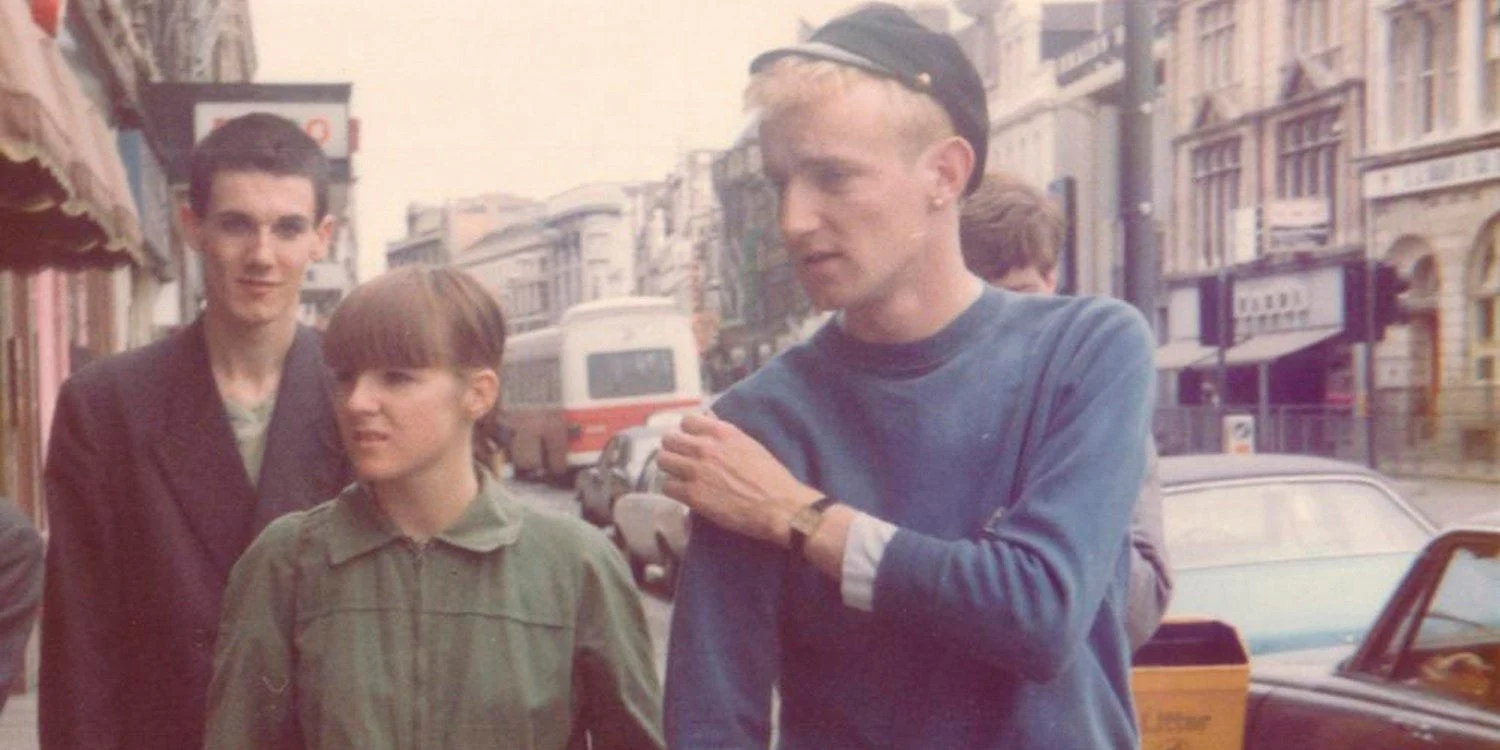
On the DVD that came with the 40th anniversary edition of Colossal Youth in 2020, there is footage of Young Marble Giants playing the Hurrah club in New York in November 1980. It was their last show in the United States. Inside a few months, the band would no longer exist. You can watch three people, three thousand miles from Cardiff, playing songs they made in five days at a studio in mid-Wales the year before, and you can see, with no particular effort, that none of them is having a brilliant time.
That’s the thing that this record does that no other can. There is no compensation in it. There is no triumph waved in front of the discomfort. Alison Statton sings as though she has been required to address a meeting she would rather not be at. Stuart Moxham plays a guitar only when he can find no honourable reason not to. Philip Moxham, holding the entire melodic structure on his bass while the drum machine patters along underneath, plainly understanding its role as the cheapest thing in the room, is the structural support of the whole enterprise. The band looks, on the footage, exactly the way the record sounds.
Colossal Youth was made at Foel Studios in mid-Wales and released by Rough Trade in February 1980. Fifteen tracks. Thirty-eight minutes. A budget of one thousand pounds. Dave Anderson, formerly of Hawkwind and Amon Düül II, engineered the sessions and apparently had the rare instinct to stay out of the way. The result was a record that bore no detectable relationship to any other record being made in Britain that year, and bears, forty-six years later, no detectable relationship to any record being made now.
The press at the time were polite without quite knowing what to do with it. The post-punk canon was being constructed in real time by men with strong views and louder amplifiers, and Young Marble Giants did not lend themselves to any of those available frameworks. They weren’t angry. They weren’t political in any of the directly available ways. They were not, in any meaningful sense, performing. They were three people from Cardiff with very little equipment and an apparently complete indifference to the conventions of the form, who had made a record about loneliness, disconnection and the specific texture of a post-industrial city in decline that did not require its listener to be impressed by it.
Kurt Cobain, who told Melody Maker in 1992 that Colossal Youth was one of the ten most influential records he had ever heard and put it at number twenty-two on his personal list of fifty, was not commenting on a sound. He identified a posture. The album refuses, throughout, to oversell what it has. 'Searching for Mr. Right' is delivered at the emotional temperature of an end-of-month bank statement. 'Credit in the Straight World', the closest thing the record has to ‘a single’, is a song about not knowing how to be in the economy. Hole covered it in 1994, ran it through their amplifiers and produced a version that confirmed why the original was the original.
The three of them stopped in 1981. Statton went on to Weekend, then returned to Cardiff and trained as a chiropractor while teaching tai chi, then made records with Ian Devine as Devine and Statton and later with the producer Spike. Stuart Moxham formed The Gist, had The Gist's 'Love at First Sight' covered by Étienne Daho as 'Paris, Le Flore' and watched it become a hit in continental Europe, survived a severe motorbike accident and continued making solo records of considerable strangeness. Philip Moxham, whose bass holds Colossal Youth together, went on to play with the Communards and toured with Everything But the Girl in 1985 on Love Not Money. None of them disappeared. None of them became a household name. All three of them carried on doing the work without the apparatus that would have made the work easier to do.
They reunited for live shows between 2007 and 2015, the final outing being at the Royal Festival Hall as part of David Byrne's Meltdown. The reunions weren’t a comeback but three people who made one extraordinary record agreeing, more or less, to be in the same room again on occasion. There was no new album. There was nothing to fix. There was nothing to add.
Which leaves the 2020 deluxe edition as the most recent piece of evidence that the music industry continues to behave as though Colossal Youth is a curiosity it has to dress up with extras to justify the shelf space. The package is admirable and the package is also, fundamentally, beside the point. The record was complete in February 1980. The forty years of accumulated context haven’t improved it. They haven’t been able to.
You can put it on now, on a small speaker, at the volume at which it was intended to be heard, and the room will adjust around it. The record doesn’t require the listener to assemble anything. It is already complete. Forty-six years has changed nothing about it. The reissue industry has changed nothing about it. The accumulated apparatus of critical reverence has changed nothing about it. The three people who made it have, in their separate ways, mostly gone on doing other things. The record stays where it was put down. That is the entire achievement, and the achievement is large enough not to need anyone arguing for it.
—
Fiona Bird has been measuring rooms with the Colossal Youth method, which involves a small speaker, a low volume and a patient assessment of whether the furniture has adjusted. To date she has tested seventeen rooms across South Wales and the Bristol area. Eleven adjusted. Six did not. She has not yet decided whether the failures lie with the rooms or with the furniture, though she has begun to suspect that the rooms that don't adjust are the rooms that have never been left alone long enough to hear anything.