
Science & Magic | 29
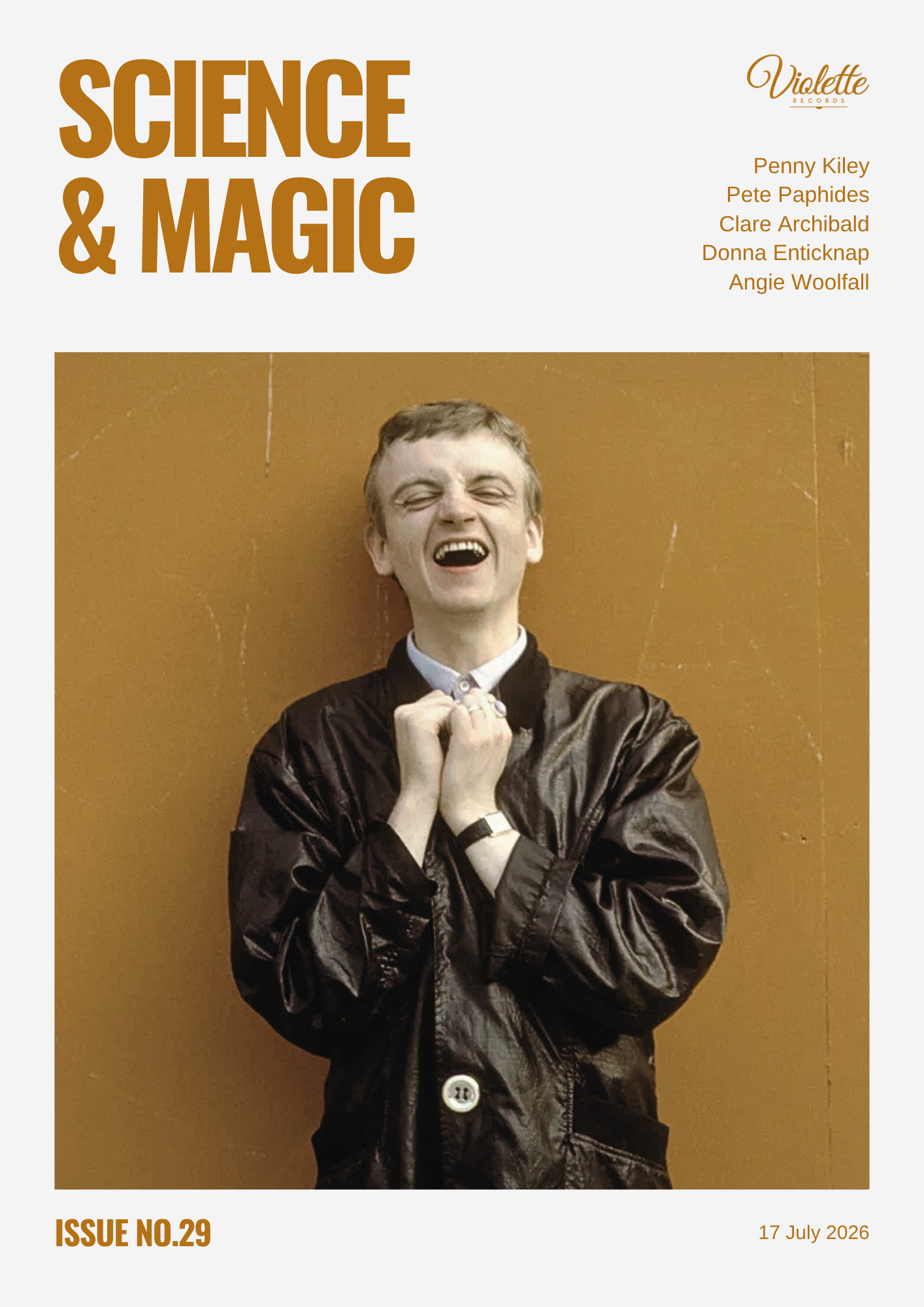
The Fall have a song called ‘British People in Hot Weather’. Five words. It's on Extricate in 1990. Mark E Smith, past thirty, delivered it like the diagnosis was already old news. He never actually needed to say what the behaviour actually looked like. In abstract, he simply described a species you could walk past on any high street between June and August.
We’re all watching it now. Somewhere in gardens between Wallasey, Whitby and Wallsend, a man is removing his shirt to move a wheelie bin twelve feet. His shoulders are a colour that doesn’t exist in nature. His neighbours are drinking cans in silence. This is no party. It’s a compact.
We seem to hold ourselves together for eleven months of the year….and then the sun comes out.
The pub garden queue at 11am. The gravitational pull between an English body over forty and the nearest paddling pool. A union jack beach towel that lives rotting in the airing cupboard all winter and suddenly appears in bright sunlight without any conscious decision. The moment when a British man realises he can wear shorts he first wore in 2004 and does so in defiance of his own reflection. The woman on a delayed overcrowded public transport, reading a novel about a cottage in Provence. The Pimms panic-buy. The suddenly-recovered sunhat, discovered under a stack of Christmas jumpers, worn without any irony whatsoever.
We insist we can handle it like Italians and we just cannot. Italians have a system. Italians have shutters. Italians have scooters. Italians have public infrastructure that was designed by a civilisation that has been living in heat for over four millennia. We have a Ford Focus with all the windows down and a Boots meal deal melting on the dashboard. Our schools don’t close. Our trains don’t run properly. Our office buildings turn into ovens because someone in 1978 decided that the concept of air conditioning was decadent and now we honour that decision by dying slowly in our own juices at our desks.
And still. The Instagram post about how the office reached 38 degrees today, with small pride in the number. We frame our national failure of infrastructure as an act of our stoic character. The sunburn worn as evidence of moral fibre and an outdoor life. Because a proper English person doesn’t use factor 50. That would be admitting the sun is stronger than us. It isn't. We're English. And we're getting ‘a bit of colour’ thank you.
Then the football. There happens to be a World Cup landing on the hottest days since records began, or since the last hottest days since records began, whichever is sooner. Everything already fraying goes tribal. The St George's flags appear the moment we get past any ‘proper football country.’ The late-evening roar from the beer garden three streets away. The way a bad refereeing decision becomes a matter of race and nation and personal grievance rather than a matter of a man trying his best in shocking humidity. Anyone within a mile of a full English pub garden on the day of an England semi-final in a heatwave should know they are witnessing the closest we come to a national spiritual event. It’s also the closest we come to a fight.
I mention all of this without any disgust. I am in it. I have queued at 11am. I own those shorts. My shoulders have been the colour of a warning label in a soviet nuclear power plant. My relationship with sun cream is, at best, ambivalent. The point is not that we are worse than other people when the temperature climbs and other nations have their own unique spectacles of embarrassment. The point is that we are not actually different when it's hot. We are the same as we are in February. The mask just doesn't fit as well when you’re sweating through it.
Mark E Smith nailed it in five words in 1990 and we’re all the living field research in 2026.
Matt
Ten Questions
by Penny Kiley
Penny Kiley has been writing about Liverpool music since 1979, when Melody Maker sent her out as their Liverpool correspondent and, on her own account, their token punk rocker. She was at Eric's often enough to remember the gigs by their exact dates, at Probe Records most of the time in between, and her copy from those years now sits in Rock's Backpages alongside the other writers who taught most of us how to think about the records that came out of the city.
She wrote for Smash Hits through the early eighties and ran a pop column at the Liverpool Echo from 1988. Her memoir Atypical Girl - Punk rock, Liverpool and trying to be normalwas published by Polygon. She writes about the scene from the inside, which is a rarer form than the industry pretends. The archive lives on her Substack.
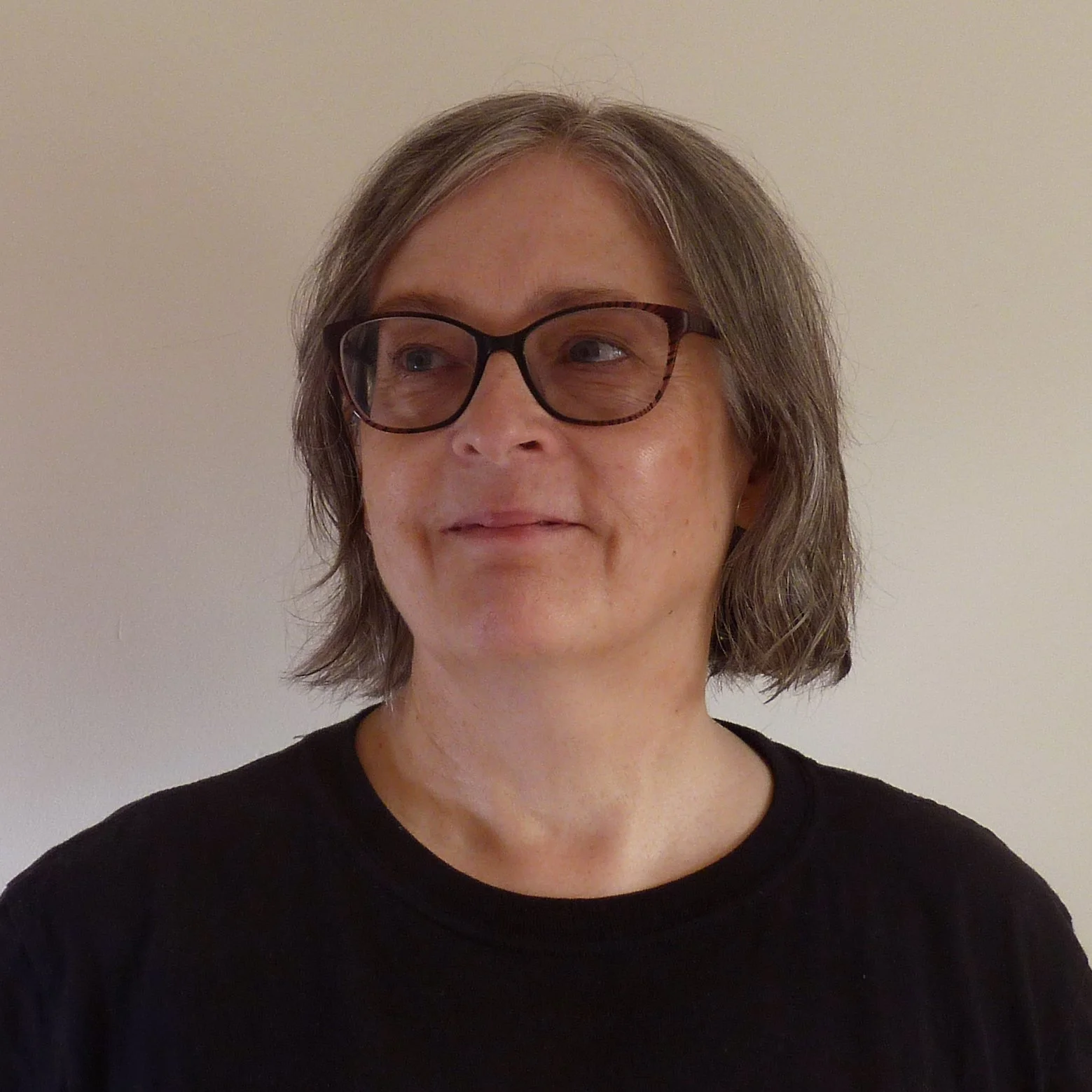
Penny Kiley
● What album would be most likely to bring you out of a coma?
The Ramones’ first LP. It never fails to bring a big grin to my face. With Blitzkrieg Bop as the opener, it would wake anyone up.
● If you could time-travel to witness one musical moment in history, when and where would you go?
1954/55 and Elvis Presley’s early live performances. When he was still on Sun Records and was just learning the huge power he had over an audience. Watch the videos now and he’s still electrifying. I’d be at the front, screaming. As Alan Bleasdale said when I interviewed him about his Elvis play ‘Are You Lonesome Tonight’ : “I've never seen a man that erotic.”
● Which band from Liverpool deserved to be huge but wasn’t?
Pete Wylie should have been bigger. He’s made a great success of being (in his own words) “part time rock star – full time legend” but he’s also made some brilliant music. His album Songs of Strength and Heartbreak, reissued last year, is a masterpiece.
● What album got you through your toughest time?
Not strictly an album: a Hank Williams box set. He’s one of my favourite songwriters. Anything you’ve been through, he’s been through too. And he writes about heartbreak in a way that’s real: messy, bleak and sometimes ridiculous.
● What's your go-to song for pure, uncomplicated, turn-it-up-and-dance joy?
'Do You Love Me' by The Contours is my favourite record for dancing. Ignore the cover versions; it’s got to be this one. There’s a false ending but it never catches me out – I always stay on the beat.
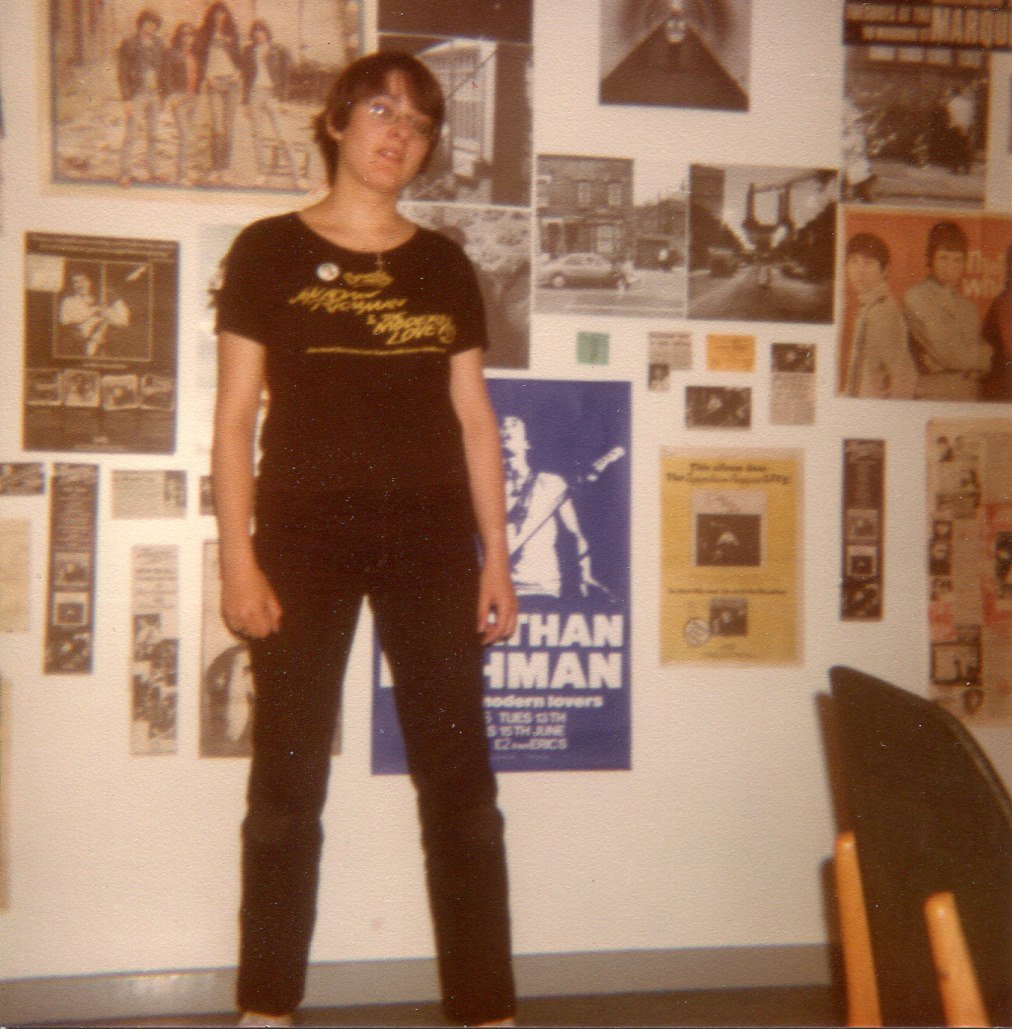
Going faster miles an hour - 1978
● What's your favourite sound that isn't music?
Birds. Like many people I know, I’ve got the Merlin app (which identifies birds by sound) and it gives me joy to sit in my garden and find out who is sharing the space. File under “small, good things”.
● What's the best gig you've ever been to?
The Clash at Eric’s, 22nd October 1977. Their gig there in May that year went down in history as THE one when everyone in the audience went on to form a band. I had exams and missed it. They were bigger by October (the gig was supposed to be secret) and the place was packed. I managed to get to the front though.
● What album captures a specific cultural moment better than anything else?
Street To Street, subtitled A Liverpool Album, a “various artists” LP from 1979 on the Open Eye label. A snapshot of post-punk Liverpool and a historical document of a time when music-making was adventurous and constantly evolving. It includes Echo and the Bunnymen, Big in Japan, OMD forerunners The Id, plus a bunch of other people who I still remember.
● What album would you want played at your funeral?
Elvis again. I’ve got a compilation of his gospel records that would go down well. It includes recordings from the early seventies when he was at his peak vocally (the period covered in Baz Luhrmann’s recent film) and they sound fabulous. I hope they’d send everyone away with a smile on their face.
● What song would you send into space to represent humanity?
Well, they’ve already sent 'Johnny B. Goode' so does it need anything else? Maybe we could add Little Richard doing 'Tutti Frutti'. "A-wop-bop-a-loo-bop-a-lop-bam-boom" is a pretty good way to represent the language of humans.

If you want to know any more, you’ll have to read the book.
Magnetic North
by Jeff Young
29 : The Icehouse
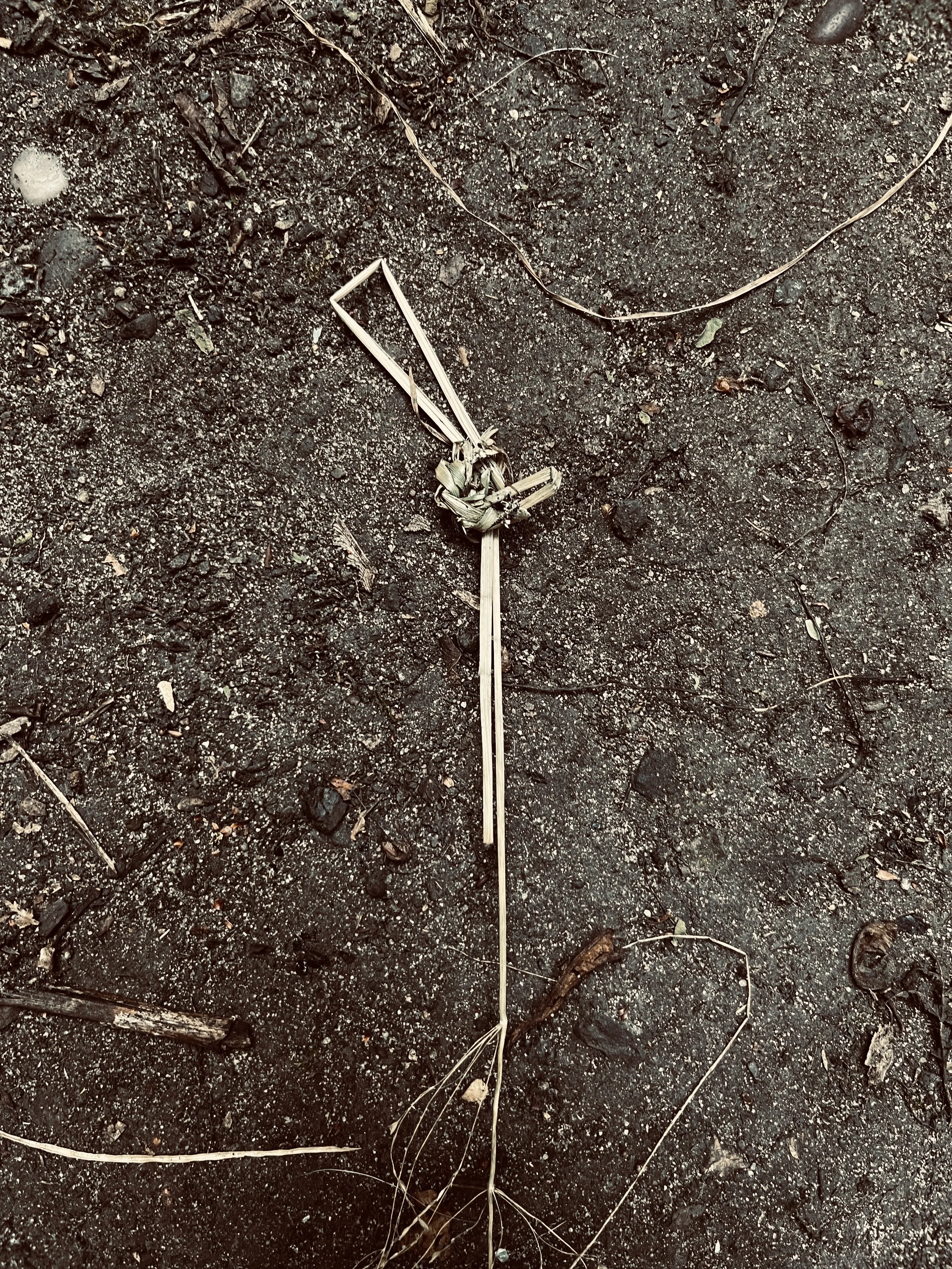
I’m walking through the Icehouse Plantation in Hale with my friend Ed Rimmer looking for the spirit of place. It’s early, Monday morning before the heat kicks in and we pause at the edge of one of the ponds to listen to a raven. Lying on the dirt path leading to the icehouse there’s a grass stalk crudely fashioned into a knot – perhaps a love token or a pagan warning, a magickal sign warning us that we should not be here. And nearby, between the burned roots of a tree I find a bunch of dead flowers and a greetings card containing a message: It seems so strange now that you’re gone, you were too good for this world. Wherever you are you will be having a boogie and no doubt causing trouble.
Long ago in the winter months people would harvest blocks of ice from the frozen ponds and carry them to the icehouse. This was their refrigerator, a brick and straw lined subterranean chamber where the ice - the harvest of the cold months - lasted until summer. Nowadays the entrance is a sealed portal in the undergrowth, but you can just about imagine how it was two hundred years ago, imagine the journey of ice from frozen pool to underground vault. A chamber full of winter.
These woods - the pathways, the trees, the icehouse, the scattered stones of Hale Hall, the collapsing barn - this was Ed’s boyhood kingdom of dens and secrets. Just as the ice melts and seeps into the earth, time and place dissolve into the rememberer. Territory and memory come together. As Rebecca Solnit says, ‘When you give yourself to places, they give you yourself back.’ You can feel the place remembering. As Ed remembers, the place remembers him.
What if we walk through childhood haunts and meet ourselves at play when we were young? What if we make field recordings and capture our childhood voices? We pause, in silence, we listen. The silence is not silence. Overhead, the holiday planes from the nearby airport; the creak of rusted metal in the ruined barn; in the trees, a breeze coming in from the river; beneath our feet, dried leaves like crackling fire. The call of the raven. The footsteps of ghosts. This is the memory archive. The spirit of place is here.
— Jeff Young, 15 July 2026
—
Jeff Young was once mistaken, at a bus stop in Aigburth, for a man who had been dead nine years. He apologised. The person who had mistaken him also apologised. Both walked away convinced the other had come off best.
The Paphides Principle
Pete Paphides has one further theory and that is that the best records get made by the same six or seven people playing together for the fourth or fifth time. Supergroups sound like auditions to Pete. It takes years for a group of players to make a record that sounds like a decision none of them ever has to explain. ‘In The Night' is the second single from Beck's forthcoming Ride Lonesome. The album reunites the studio band that made Mutations,Sea Change and Morning Phase - the fourth instalment of what has quietly become a de facto series. Pete has form on Beck. It goes back further than most.
Beck - ‘In The Night’
It’s never the future you expected, is it? In the future I expected, it seemed pretty clear to me that, as long as he stayed alive, Beck was set to become one of the five or six most feted artists on the planet. I was fortunate enough to spend an afternoon with him once, up in the Hollywood hills. There was Beck in his manager’s house, nonplussed by the stardom conferred upon him by Odelay. And if you believe that dues need to be earned, then you wouldn’t have begrudged him this moment. That day, he recounted how he’d gone from bottom-of-the-bill slots in Greenwich Village fleapits that had yet to become stop-offs for Bob Dylan legacy tourists to MTV ubiquity with ‘Loser’ – a joke song that people instantly mistook for the real Beck Hansen.
Asked to choose between being a one-hit wonder and no-hit non-wonder, he chose former, but only because it bought him sufficient time to hook up with The Dust Brothers and make an album of such sky-high forever brilliance that from hereon in, he could do whatever he wanted and people would always want to hear it. That afternoon, we talked about Os Mutantes, Them, The Meters and Steely Dan. Beck also told me about this new French duo called Air. If their latest EP Casanova 70 didn’t blow my mind, he promised to remove his Burritos-issue Nudie jacket from his back and give it to me. Quite what use skinny, beautiful Beck thought his spherical interviewer could have for his jacket is another question.
Anyway, the reason I mention all this is that, sure, in 2026, Beck does perfectly well. But he’s not seated at the very top table is he? Even ten years ago, the release of his Morning Phase album was trumpeted on billboards across London. Like you would a new album by Bruno Mars or Beyonce. For that album he reunited with the dream team of Nigel Godrich, Smokey Hormel, Joey Waronker, Justin Meldal-Johnsen, Roger Joseph Manning, and Jason Falkner – most of whom were present at some point or other when he made Sea Change and Mutations. You might remember ‘Heart Is A Drum’ and ‘Country Down’ in particular – songs which seemed to posit a world in which Van Morrison had summoned Robert Kirby to create arrangements for ‘Veedon Fleece’.
And the reason I mention all this is that his new album Ride Lonesome sees him reunite the aforementioned gang for the latest instalment of this de facto series. “This time,” he said, “It felt like the playing and the chemistry had evolved and deepened— a sound that’s come together over the decades of working together.” And if the two songs released from that album so far are anything to go by, Beck’s claims are demonstrably true. The first to emerge was the languorous dawn rapture of the title track – but, if anything, ‘In The Night’ is better still: a lovelorn acoustic reverie set to a tidal swell of strings, the spell occasionally punctured by sudden spikes in the soundscape that bring to mind Harry Robinson’s work on ‘River Man’. So, no. This isn’t the future I expected. But as long as Beck continues to draw little miracles like these out of the ether and I’m here to receive them, I shouldn’t dare complain.
— Pete Paphides, 16 July 2026
What Needs No Explanation But Still Asks For One?
by Eimear Kavanagh
The other day I got a life. I took myself into the city with the intention of soaking up some art and maybe even some chance encounters if I was lucky.
I love a graduate exhibition - Partly because they are so varied and full of surprise but also because of that level of freshness that you can sense in the art, the excitement that hangs in the air of your first ever exhibition! I would like to share a selection of work that captivated me, from the Newcastle University Fine Art Degree show.
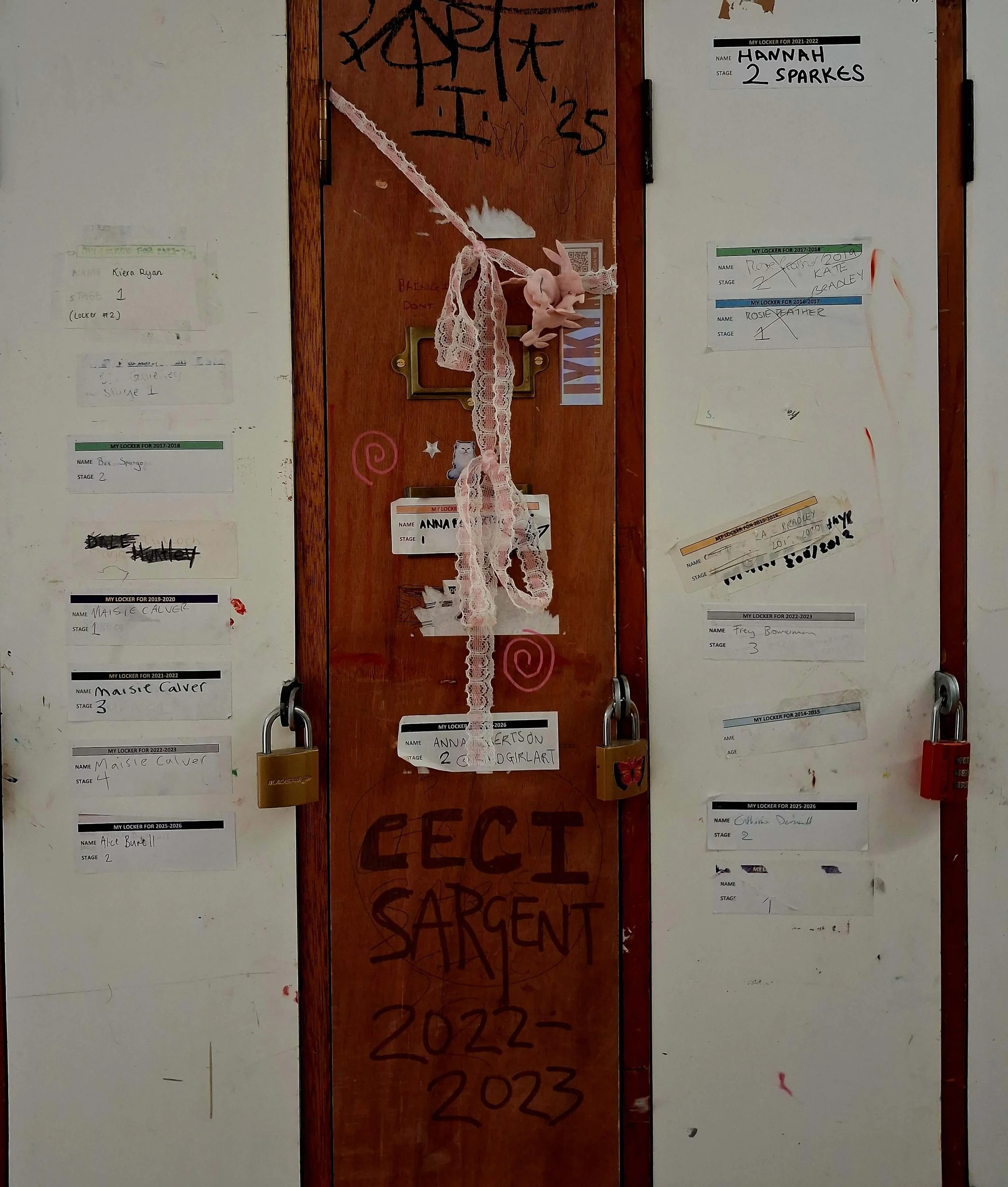
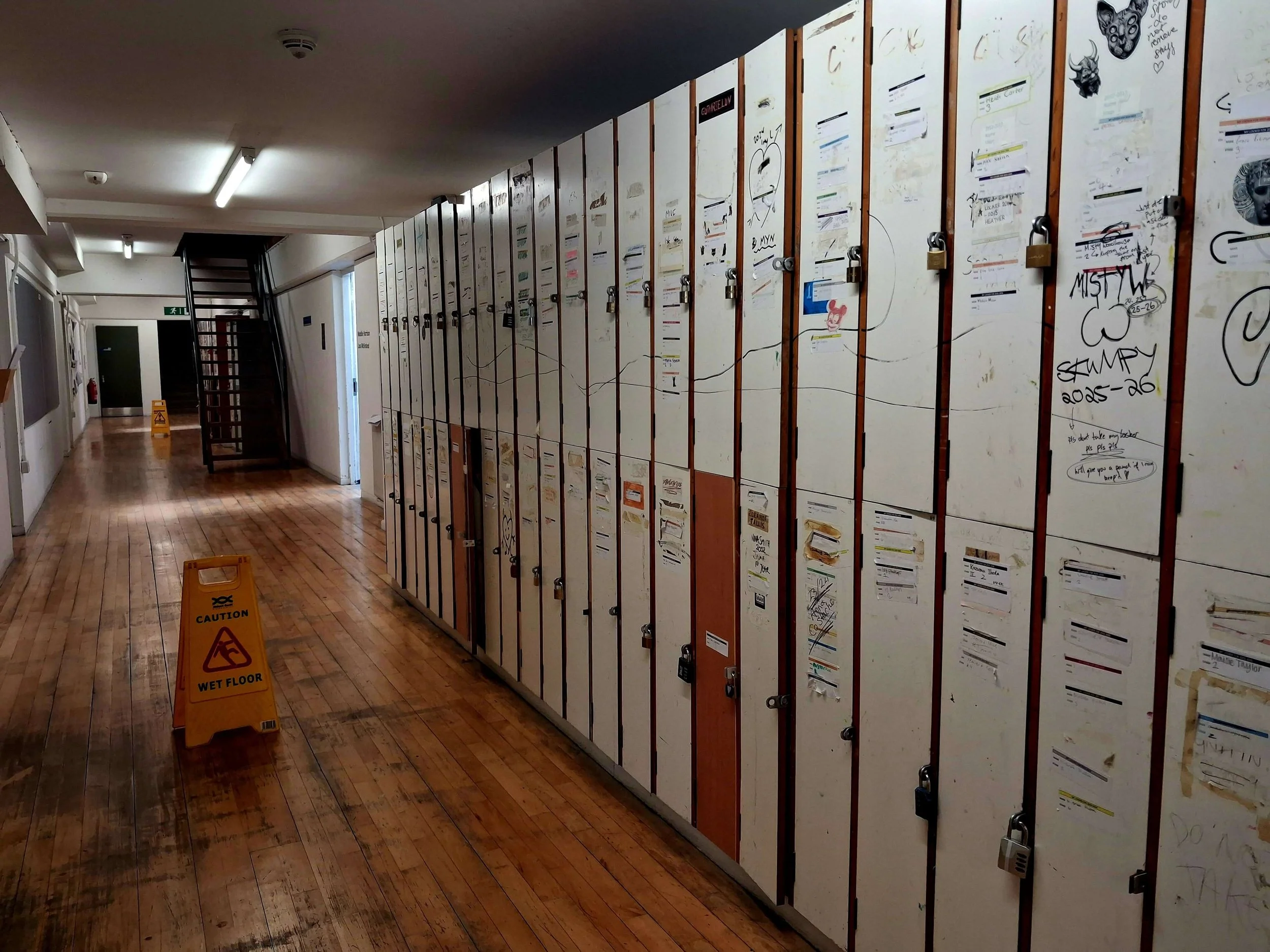
But before that, here are some shots I took inside the building. The exhibition was spread throughout the various spaces where students work and hang out, the heady aroma of schooling followed me around as I weaved through the corridors. The starkness of the bare walls and strip lighting. The graffitied lockers, a peek into artists work spaces where they spent their years exploring both wildly spectacular and ridiculous throw-away ideas.
Then I arrived at the works by Libby Reay. In total contrast I felt myself as though wrapped up in cotton wool and candy floss. Here I found a collection of paintings in soft sensual pastel colours and remarkably clever brush strokes depicting close up scenes from a massage treatment. Some zoom-in compositions where you can see the strong hands of a masseuse pressing deep into flesh and the pleasurable expressions of a woman's face. I felt my body melt down a peg or two from the corridor's impact. Some poses of a woman in lingerie and smaller portraits of women in rest, which seemed to me like the after-massage moments. They felt erotic, without them even trying to be erotic, or maybe that was the whole point.
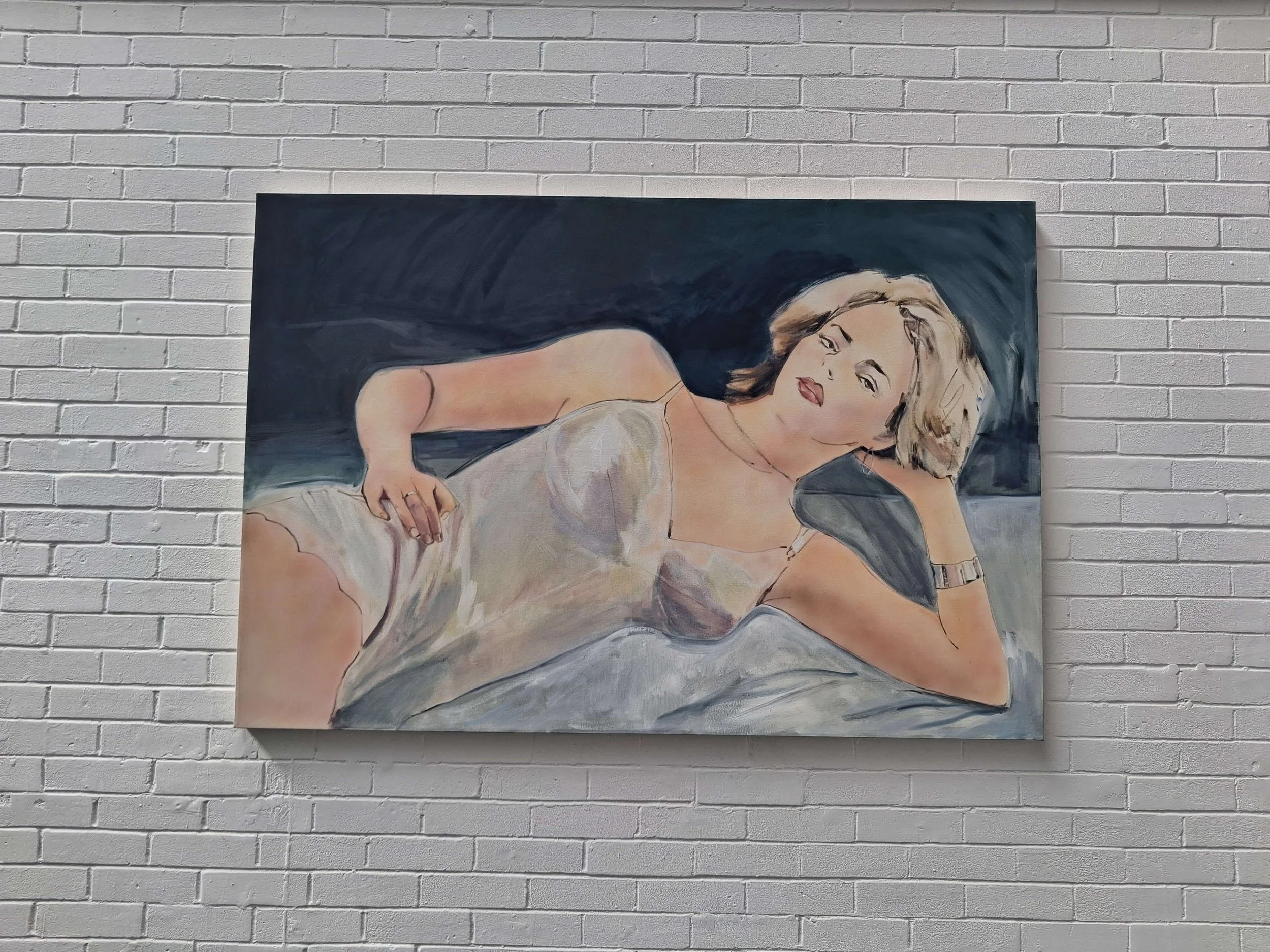
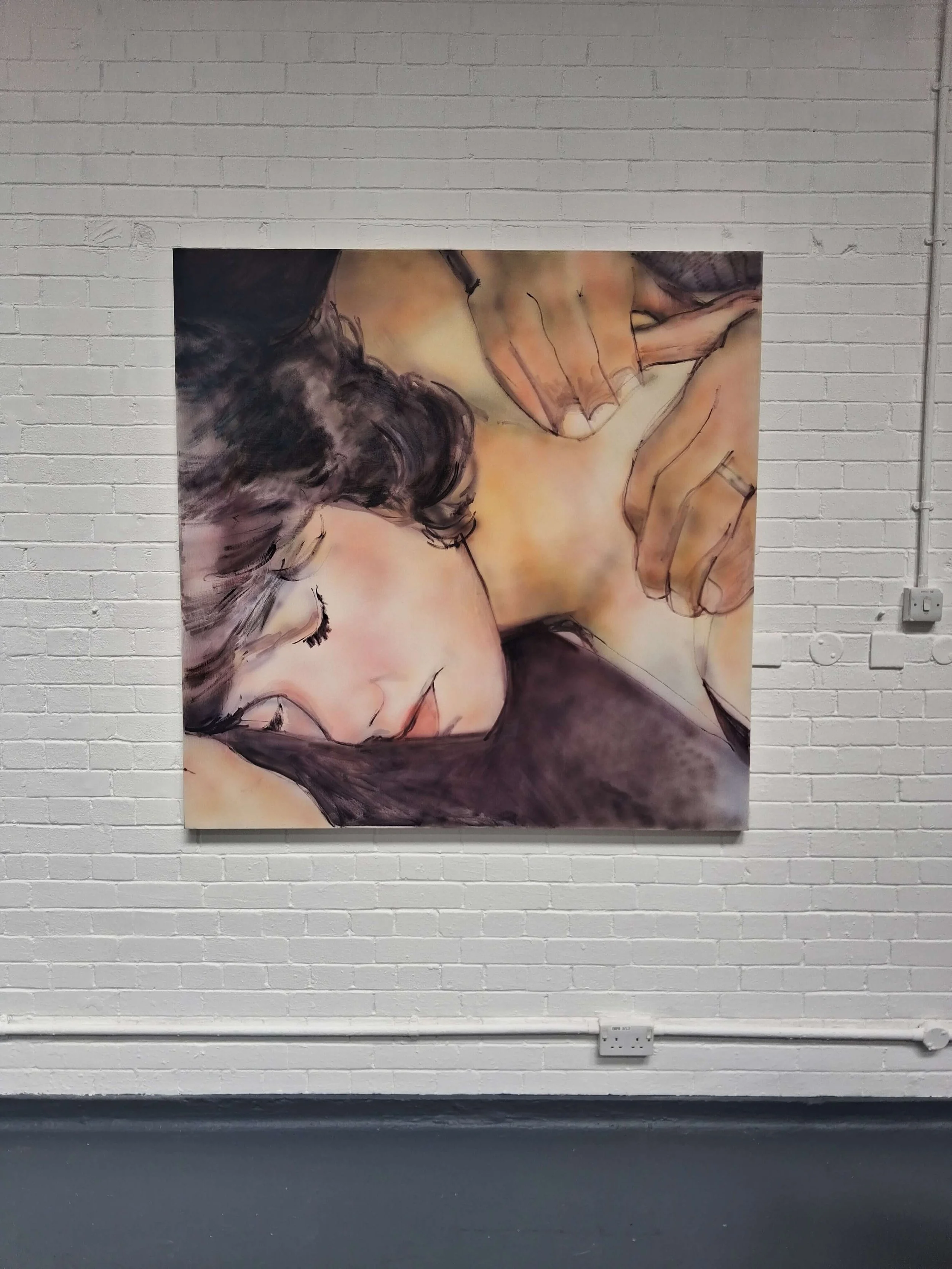
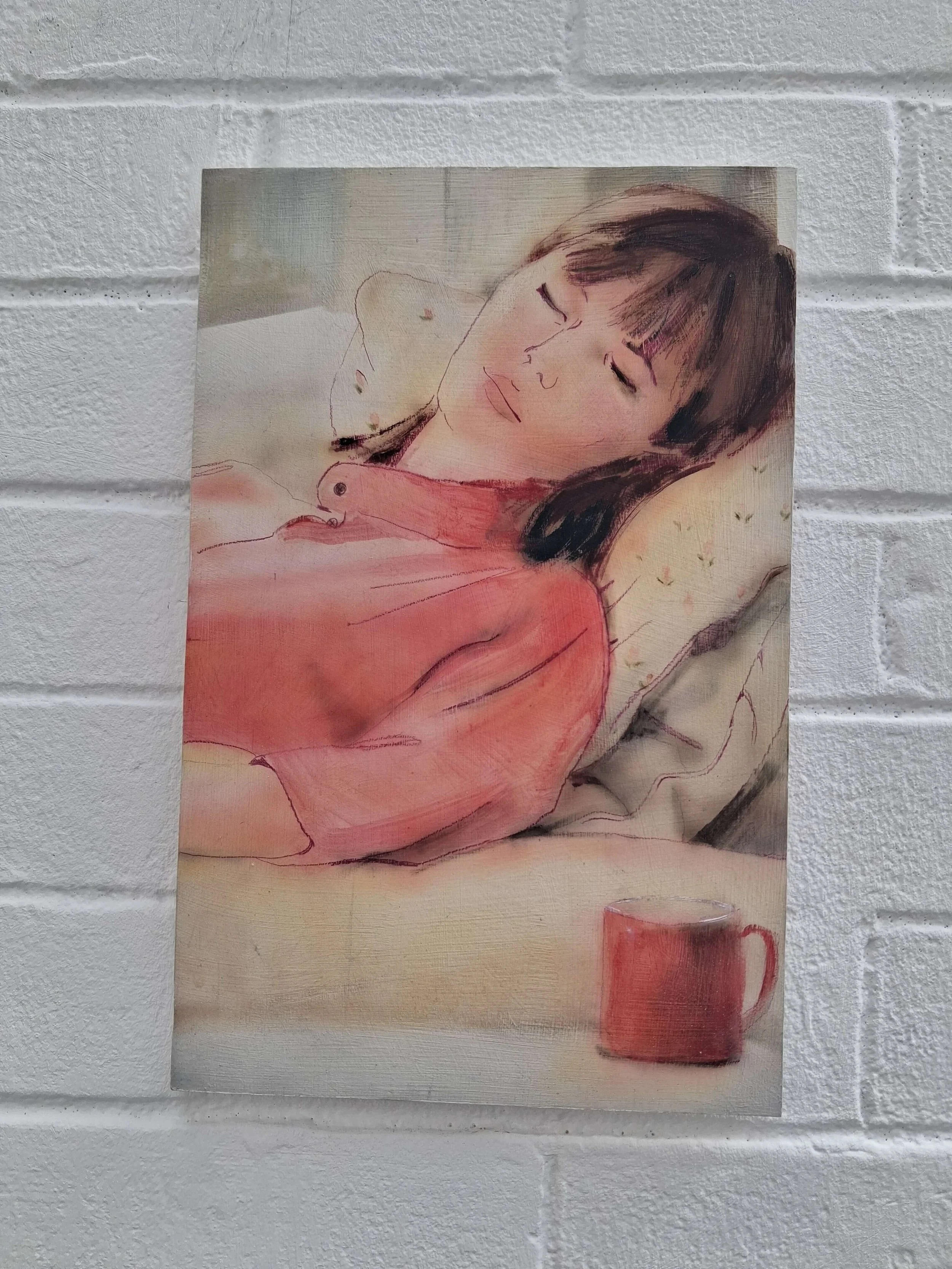
I don’t know anything about Libby Reay the artist or her intentions behind these works, and I wonder if it is better to experience art in this way. I left the Hatton Gallery filled with my own individual experience. But then something stayed within me for sometime and I arrived home wanting to know more. The subject matter intrigued me… Why this subject? Do I need to know why? Or do I let it remain a mystery?
Who is asking all the questions - Is it me asking myself, or are the paintings asking me?
Maybe some things are better left unexplained.
I felt my spirit revived that day, and I even made some new friends on the train.
Love, Eimear
—
Eimear Kavanagh treats graduate shows the way other people treat coastal towns in autumn. She goes for the strip lighting. She stays for the graffitied lockers. She was mistaken for a first-year twice and took it as a compliment both times. She left with the numbers of two artists, a flyer for a show in Gateshead and the quiet alarm of someone who set out looking for chance encounters and appears to have found them.
Hallelujah Trial
from the nave to the lathe
Hallelujah Trial are Tom Roberts (Beatowls, Cranebuilders) and John Canning Yates (Ella Guru), two Liverpool songwriters who have circled each other for twenty years before finally sitting down together in a front room. They have since recorded their first album in the Scandinavian Seamen’s Church in Liverpool. This is where it has got to.
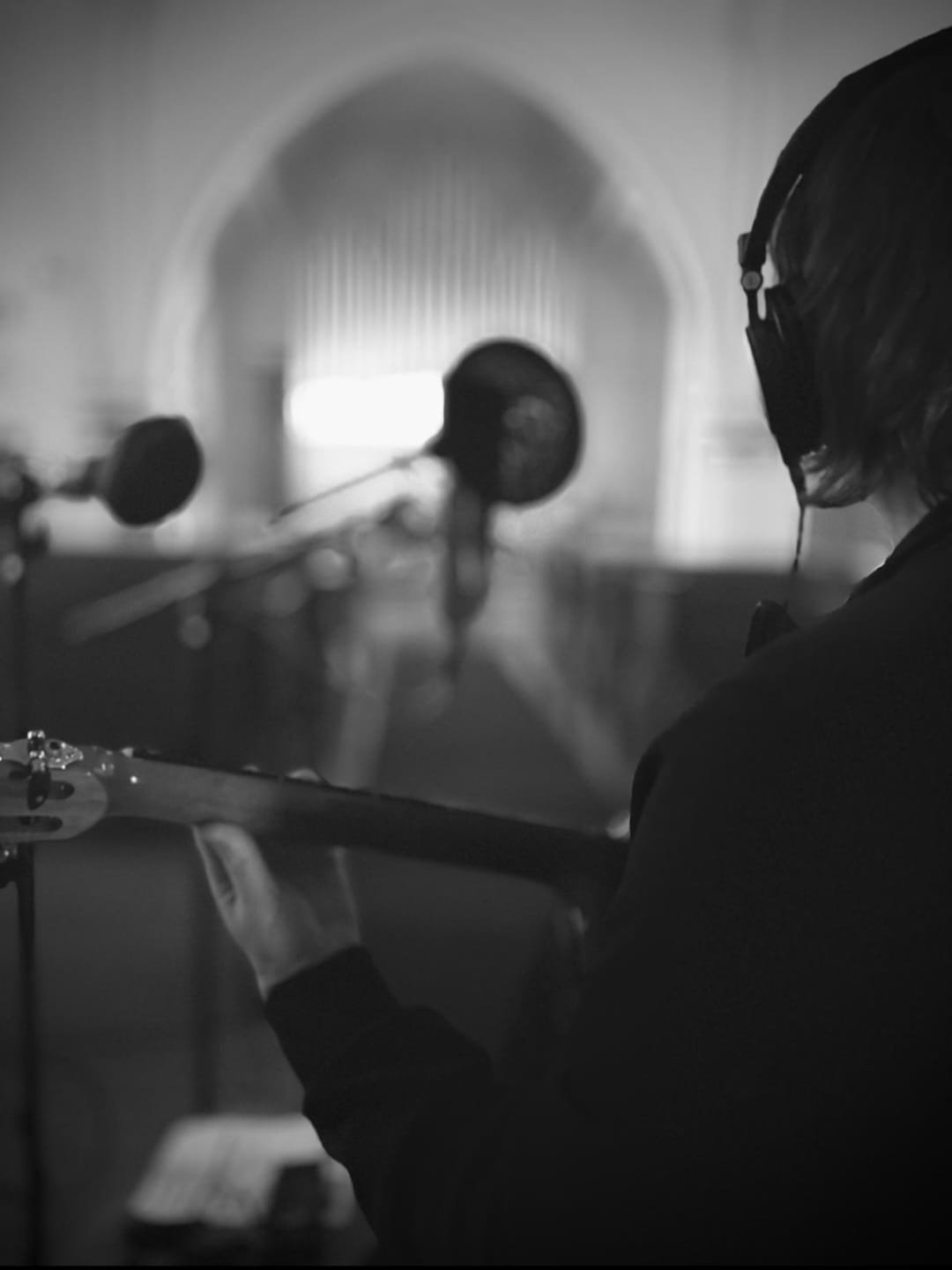
Tom Roberts
Last time we left them in a church, with a promise that more would follow as the recordings took shape. They have taken shape.
The tracklist has landed. Twelve songs, and the album is self-titled, which by now feels less like a decision than an admission. VIO-088. John’s mixes should be finished by the end of the week.
From there the record goes to Devon, to Jason Mitchell at Loud Mastering, which is where albums stop being a set of files and starts becoming an object you can drop a needle on.
Mitchell is Grammy-nominated and a quarter of a century into the work. His client list runs through PJ Harvey, Aldous Harding, Tindersticks, Robert Forster, Christine and the Queens, Baaba Maal, Dry Cleaning, Josh T Pearson, Nick Mulvey and Kneecap. He cuts lacquers on John Dent's customised Neumann VMS70, the lathe he has been sitting at for twenty years, and he gives each one the kind of attention you’ll still hear in the top end six years later. Songs recorded in a room with a ceiling like the Scandinavian Church deserve someone who knows exactly what to do with the air around them.
There’s family history here too, which is generally how we always like to end up doing things. Jason mastered Tigers & Flies last record for us. He also mastered JCY's solo record too. That he is back at the desk for this one was never really in question.
So the artwork is finished. We aren’t showing it yet. That’s deliberate and it will make sense in due course.
And the ritual continues. The front room, the tea, the talk, the plan, exactly as before. Only now there is an album at the end of it.
Everything else you can have when it's ready.
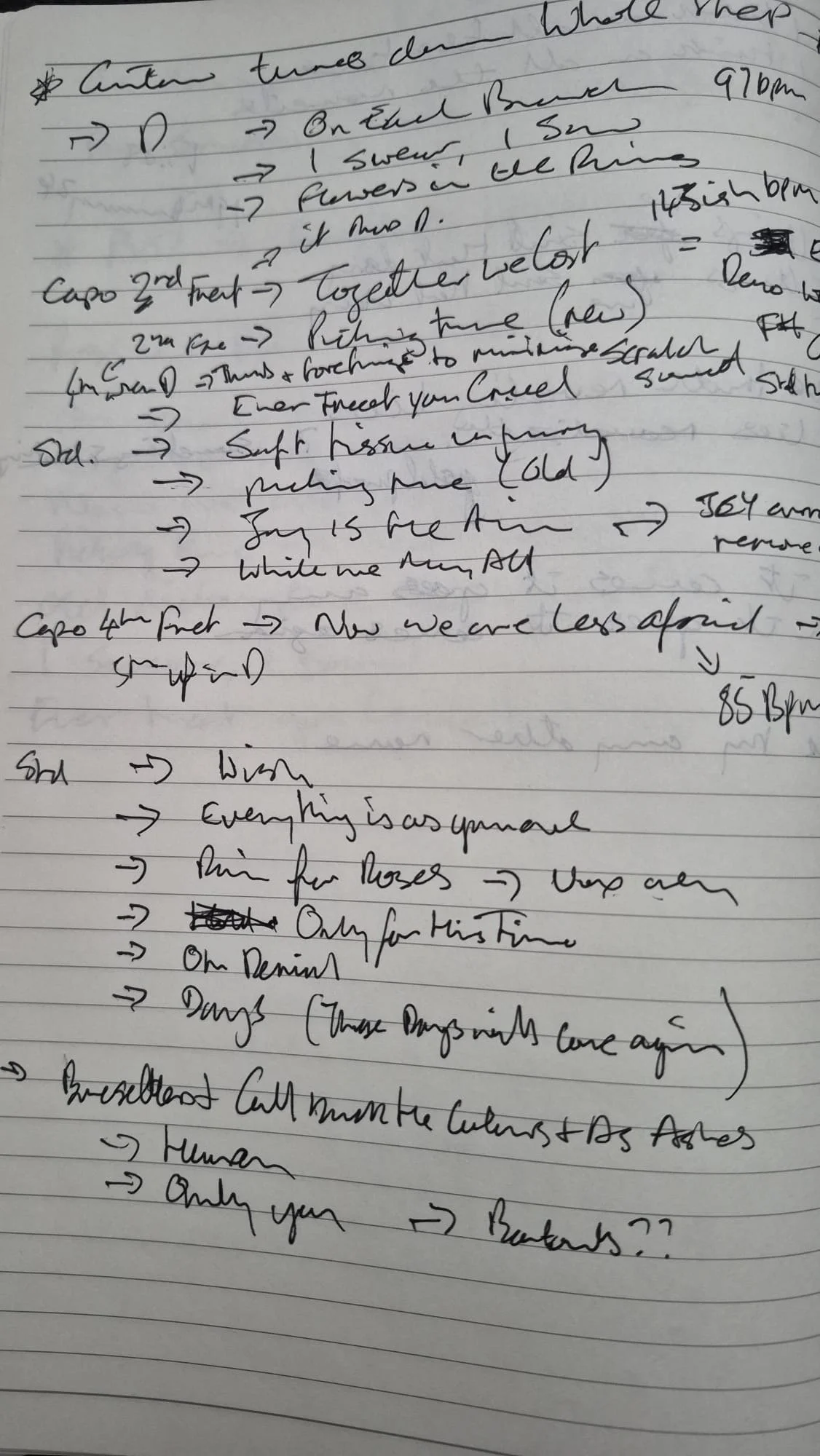
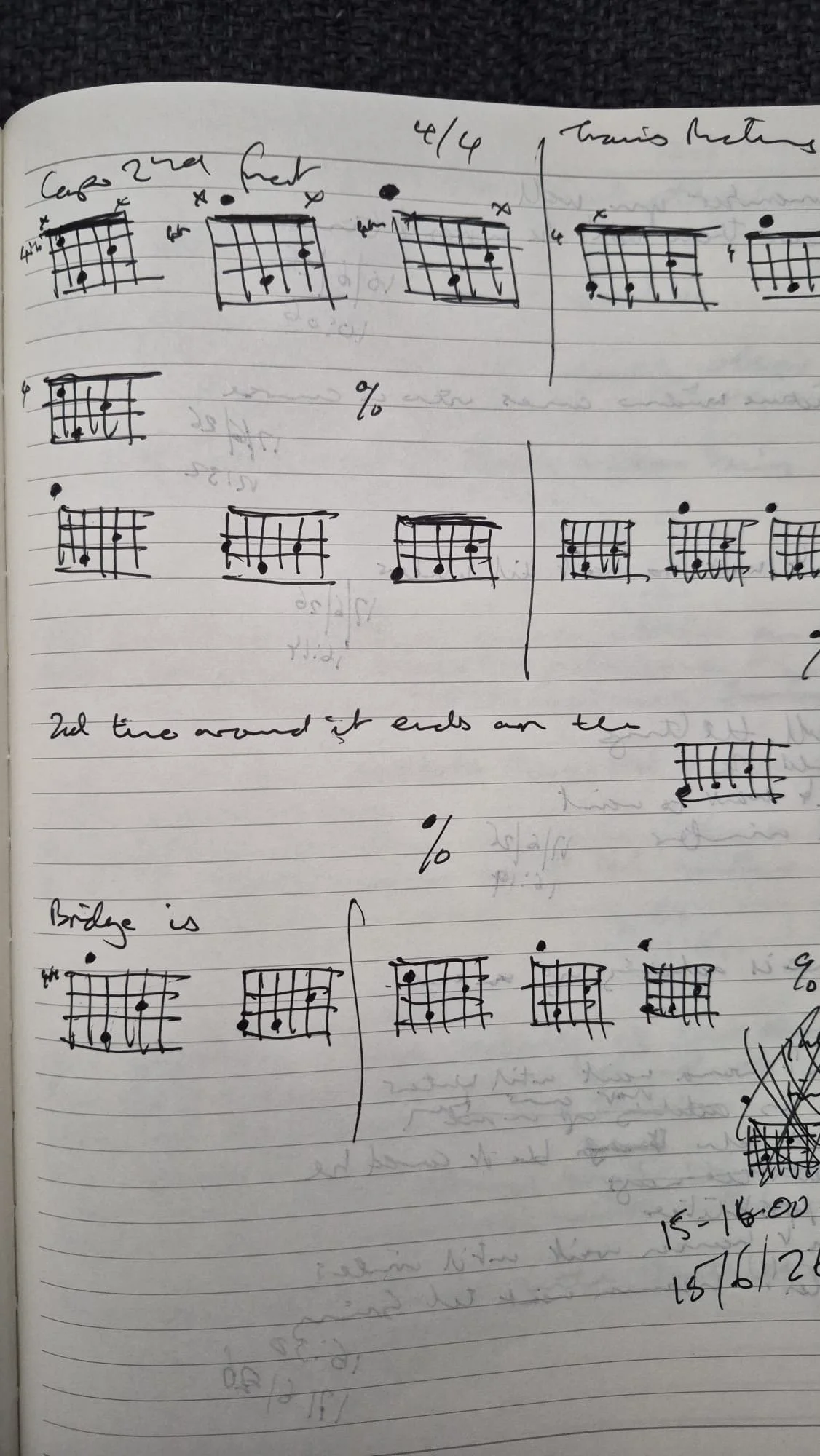
Incantation For Small Solar Bodies
by Donna Enticknap
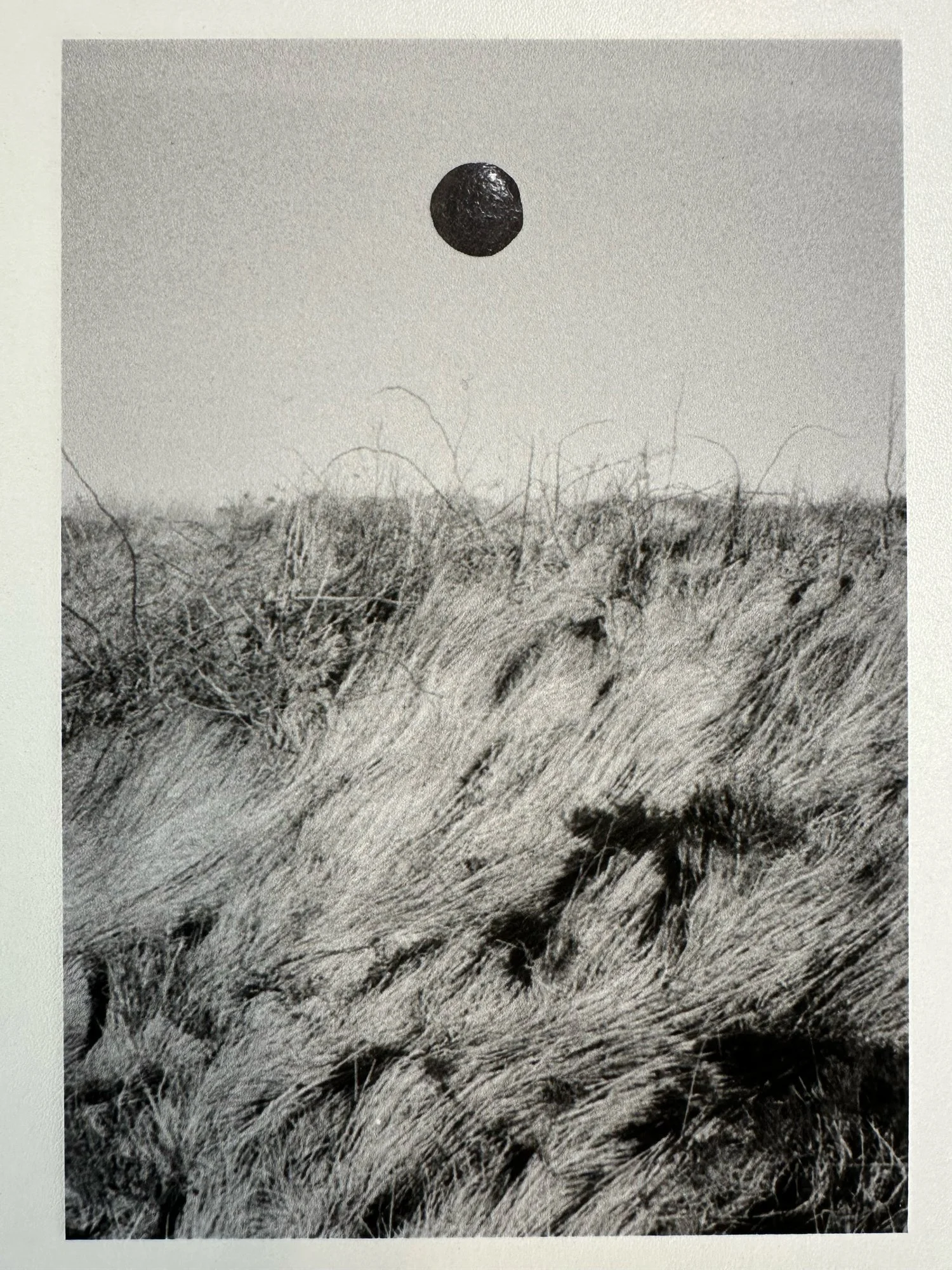
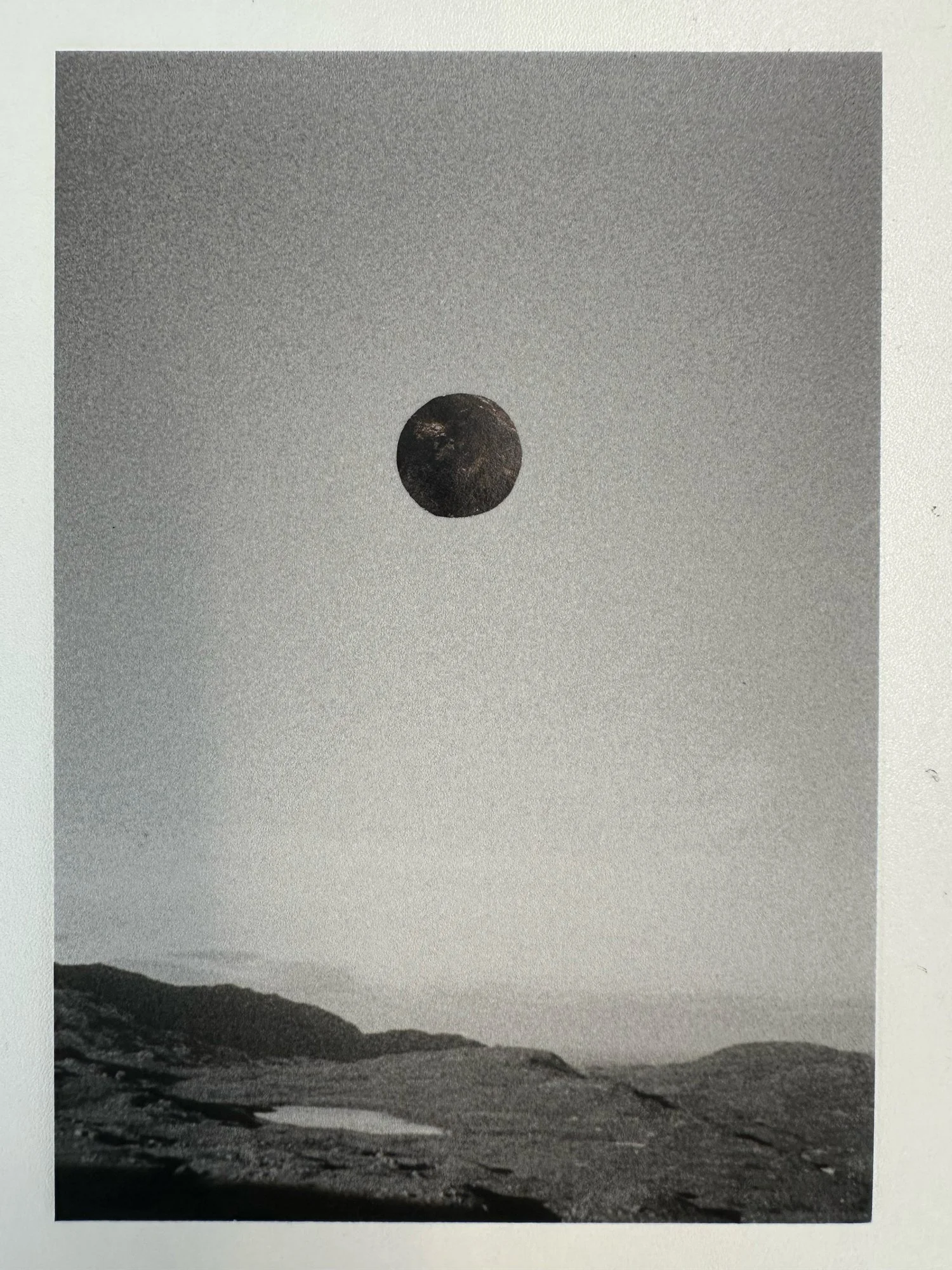
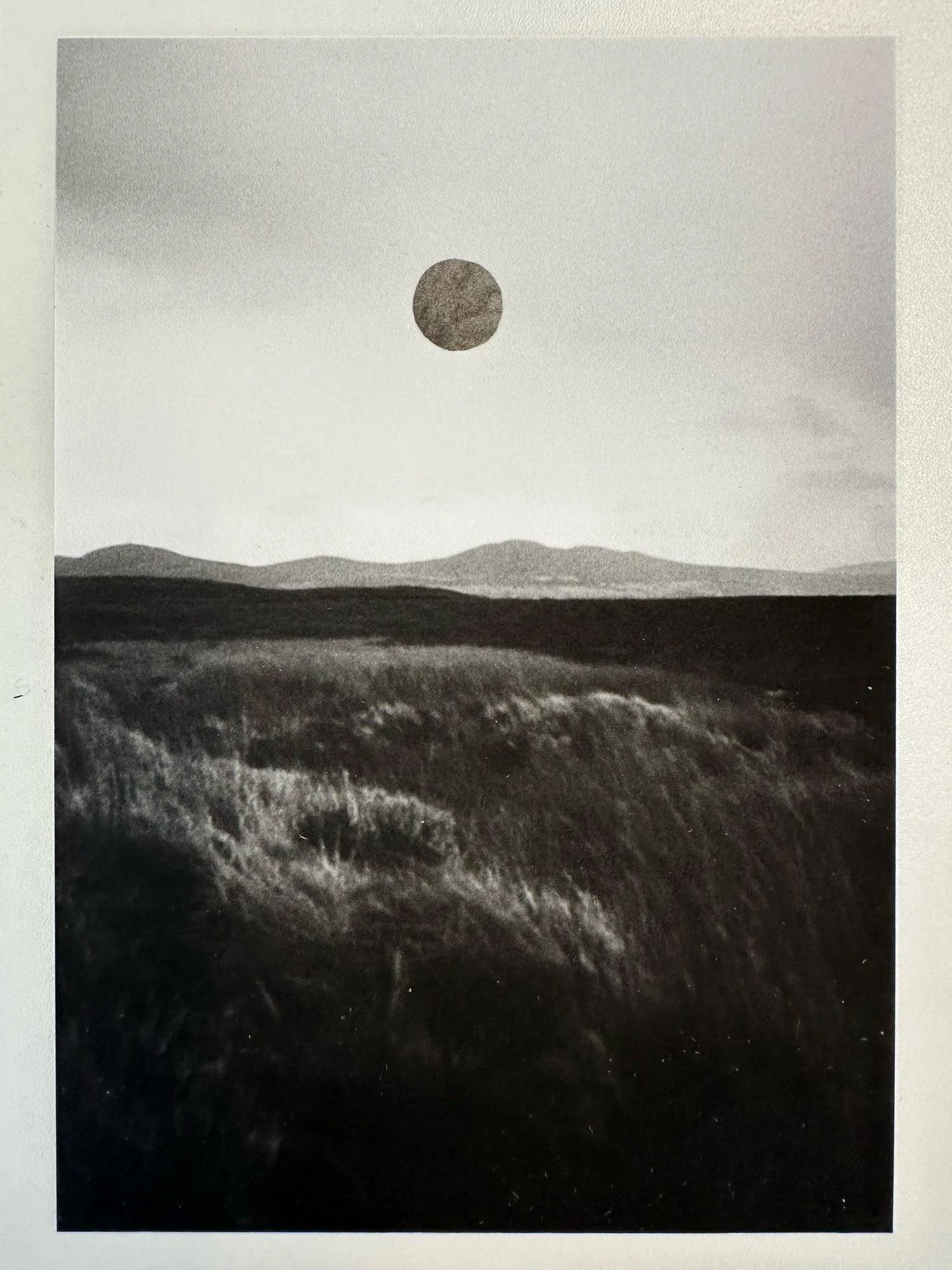
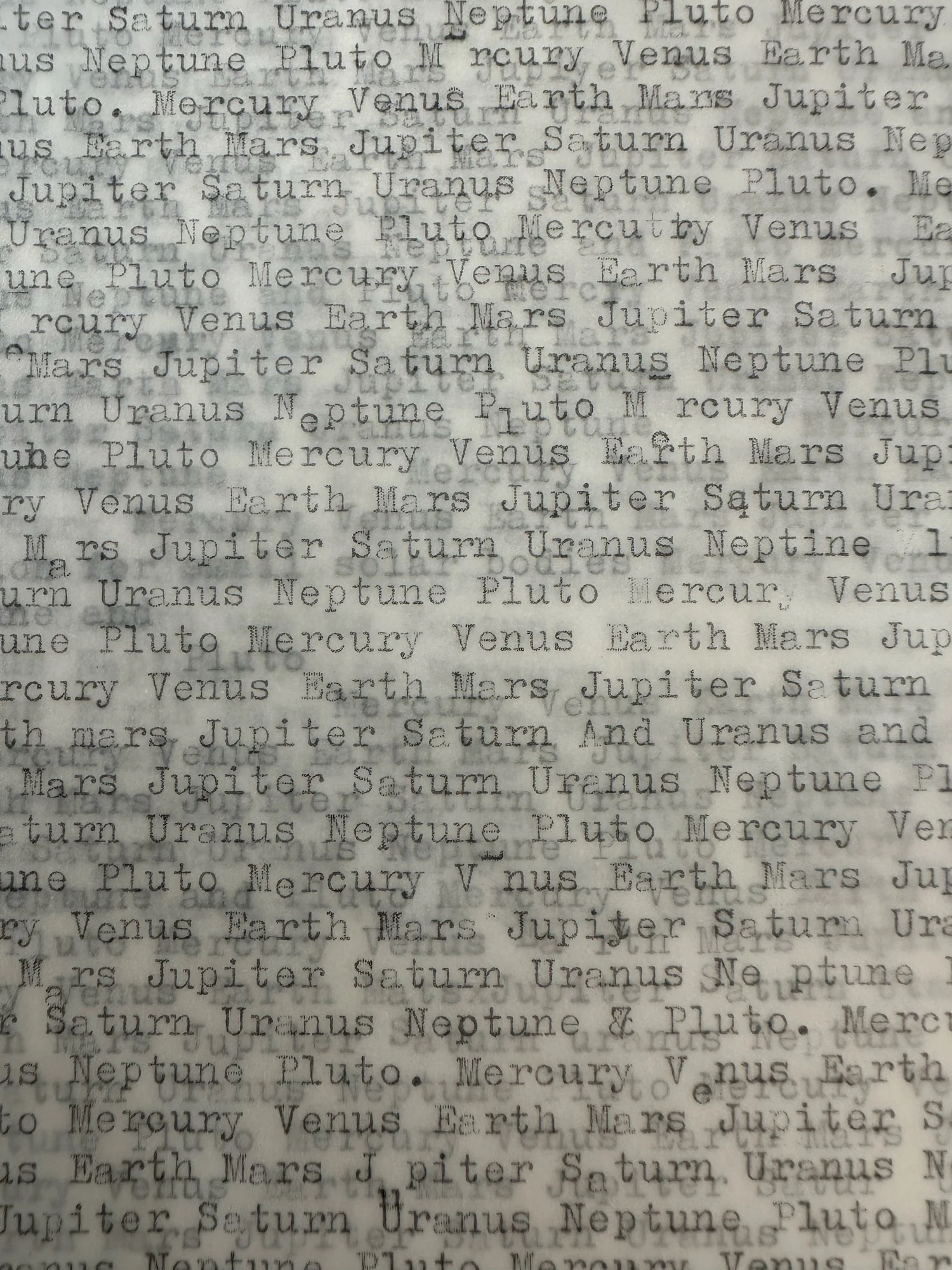
—
Donna Enticknap’s head is currently somewhere 2.66 billion miles away, recreating the image from a dream she had years ago and still thinks about often. She still sings Pluto in the song of the planets, and types furiously and very inaccurately with one finger.
Nighthawks
by Rob Schofield
It’s not that we didn’t think our work was important, but we had our way of getting things done. No one paid any attention to how that was until the virus hit. Maxwell, our supervisor, called us the Nighthawk crew. From the tone he used when he said that word – his pre-COVID default – we knew he wasn’t heaping praise on us, even though he might have done if he had allowed that we, too, had the capacity to be aware of one of the most famous paintings of the twentieth century. For that matter, if he had asked he would have discovered that we were also familiar with the birds which aren’t hawks but which have a certain beauty, especially on the wing, and which choose to fly and feed at night, perhaps because there is less competition for food and it is safer to do so away from the gaze of predators. What Maxwell was thinking about when he labelled us nighthawks were those losers at the counter or the sad soul who was paid to serve coffee and whatever else was on the midnight menu in that corner café with the big windows. They don’t look happy, I grant you, but you should never presume to know a single thing about a person unless you take the time to make their acquaintance and give them the opportunity to open up, should they wish to do so.
Big Al told us about the birds. Before things turned upside down and we were all of a sudden employed in labour of national importance – we’ll come back to this, but for now I’ll say that it was one of the management, who had found his way into the warehouse in the middle of the night, who used that phrase – we were in the habit of taking our breaks as a group. Maxwell could not have cared less how we managed our time so long as the orders were picked and made ready for dispatch around sunrise. We never witnessed what happened to the cargo – precious to someone, I suppose – we stacked on pallets at the end of our shift, but sometimes when I couldn’t sleep I swear I could hear the beep beep beep of articulated lorries reversing into the shipping bay. Depending on the time of year, we’d gather in the Team Breakout Zone – believe me, it deserved neither the name nor the capitals – or we would drag chairs into the yard and drink tea, eat our snap, play cards, swap stories and cadge cigarettes if you were that way inclined. We had our favourite chairs and corners, and Big Al, who had laid claim to an old wooden dining chair with a padded seat, liked to deal the first hand of cards and suggest topics of conversation.
‘Went up to the heath at the weekend,’ he said one night between mouthfuls of one of the buns he crammed with ham and cheese, but never lettuce or tomato. ‘Dusk, to see the nightjars.’
‘Is that what you call it?’ Marvellous (real name: Marvin) cupped his hand to light a roll-up.
‘Outside with that.’ Maxwell didn’t sit with us, but he liked to issue orders over his intercom.
‘Fucking cameras.’ Marvellous let his cigarette burn out and waved it in the air.
‘Trumps,’ said Big Al as he cut the pack, ‘is Clubs.’
‘Bring it on. Ten pence per hand.’ Alice pulled a sock jingling with coins out of a pocket.
‘Last of the big spenders. The stakes are too high for me.’ My one joke, which I used three or four times a week.
‘Gambling on the premises is a sackable offence.’ We raised fingers in the direction of the intercom and where we figured the camera had been hidden.
That was how we learned about nightjars and others such as frogmouths, goatsuckers and oilbirds – you could not and I am not making those up – from the Caprimulgiforme family. As Big Al’s phone was passed around to prove he wasn’t talking shit, I noticed little grins and nods from the others. Perhaps some of us were admitting to a kinship with these twilight and night-loving cousins; whatever, we were a curious bunch in that we were eager for knowledge, rather than curious in the way that people say when they don’t want to use words like odd, strange or peculiar. What I found fascinating about nightjars was that while Big Al claimed to have observed them in flight during his weekend jaunt, he could have seen no more than silhouettes. He played us the sounds he had recorded, like a dial-up modem or when you used to load computer games on cassettes. He had not seen the whites – or the blacks – of their eyes, or the colour of their feathers, but from the photographs on his phone we could see that they were well camouflaged. This allowed them to exist alongside us on their own terms. I liked the idea that our paths would never cross, even though we knew they were there and vice-versa. I played my cards in silence that night.
We were one hour into our shift the night everyone was told to stay at home. I was reversing the forklift (more beeps) down a row of vertiginous racking when I heard text messages pinging through the darkness. The lights in that corner of the warehouse were on sensors and lit up as I approached. I reflected for the hundredth time that hell would be like this if the devil was forced to embark upon a programme of cost savings. They had called me a dreamer in school, but not as a compliment. Now that I am an adult and in control of my own destiny – I remain a dreamer, even in these accursed times – I prefer to think of these reveries as philosophical flights of fancy. If only a teacher had been able to comprehend and harness my imagination I might have been Maxwell instead of the forklift guy with one joke. Maxwell’s monotone, as it so often did, interrupted my meditation with a request for Nighthawk crew to gather in the Breakout Zone without delay. The thing about working nights is that you can ignore the news and the outside world for days at a time, but we had not missed the increase in orders and the type of items that people had been ordering. We had discussed what was happening out there – as though out there was somewhere separate – and I can’t have been the only one braced for change.
‘There has been an announcement.’ Maxwell wheeled his executive chair into our midst.
‘Paid holidays?’ Big Al settled into his seat.
‘Time off for carers?’ said Alice.
‘He got that from a skip,’ Big Al leaned towards Alice, but we all heard him.
‘Settle down. This is important.’ Maxwell smoothed a sheet of paper on his thigh.
‘Redundancies,’ said Marvellous. ‘Fucking knew it.’
‘No one is losing their job.’
‘Have you seen how much toilet roll we’re shifting? They need us more than ever.’ I gestured at Maxwell. ‘It’s true, isn’t it?’
On my way home I noticed that the queue at Tesco twitched through the car park and onto the road. The shoppers who had chosen to cover their faces were also wearing gloves. I saw Marigolds, ski mittens (they hadn’t thought that through), woollens and the none-latex ones that decorators and medical staff use. Some of the eyes above the masks looked frightened as did some of the eyes above noses and mouths that had not been covered. I saw defiance in others. It was like Black Friday, except the trolleys of the lucky ones who had got in early were filled with toilet roll, pasta, wet wipes and tinned tomatoes. Welcome to my world. There was no chance of me getting inside to rummage through the yellow stickers and I went to bed hungry, but not before watching the news.
Eight hours later I got out of bed and turned on the radio. Everything had changed, but nothing had changed. Nighthawk crew was not required to stay at home. Some of us – I can’t speak for everyone – had chosen the life we led, which when all was said and done was a life of isolation. We lived and worked in the shadows. Aside from the increased activity in the warehouse and the afflicted tone to Maxwell’s more frequent announcements, the most significant change we noticed in those early days was the lack of traffic on our commute. That was something we talked about a lot for a couple of weeks. We also discussed our personal circumstances, and that is how we learned that Alice worked nights so that she could take over from her brother to look after her father. Big Al told us about his partner and their kids, which was a shock to us all. Marvellous spoke about his Nan, who he adored despite her devotion to Jesus and the fact that he had to smoke outside and there was no booze allowed in the house. She liked a bet, though, which amused him. Maxwell piped in with his concerns for his brother who was on the spectrum and lived alone and how the hell would he cope? What did I reveal? Nothing. I listened and nodded and made eye contact, but I wasn’t ready to share.
Three weeks in, we were joined for five shifts by a masked official with a clipboard. He followed us around making notes and asking questions. We answered some, but ignored others. We never saw him in the Breakout Zone, but Marvellous spotted him in the yard once or twice having a crafty fag. ‘Takes one to know one,’ I said, but Marvellous made it clear that he had neither smoked nor fraternised with the management and if the bosses wanted to talk about productivity they should get their fat arses down here in the middle of the night. We had been skipping breaks to keep up, but none of us expected our sacrifices to be recorded in the masked marvel’s report.
‘Sanitise your hands every fifteen minutes and wear your masks whenever you approach a colleague.’ Maxwell read from a list which had been handed down from on high.
‘We’re passing each other stuff all of the time,’ said Alice.
‘Two metres apart whenever possible.’
‘I can’t be wearing masks. My glasses steam up and I can’t breathe.’ Big Al put his head in his hands.
‘You’ll get used to it, Al.’ Easy for me to say, given my truck kept me at arm’s length most of the time.
‘What about when we’re having our break? When we’re eating?’ Marvellous said it like he knew what was coming next. The muscles on his neck were straining as he spoke.
And that was the end of the card games and the jokes and the sharing. We no longer stopped to chat, since the masks put paid to our awkward intimacy. The orders increased and so did the pressure. The next time we were together was when Mr. Blanchard showed up to give us a pep talk. I wasn’t convinced we needed one in our little world. We didn’t have to face the press briefings and the daily statistics and the endless stories of illness and death. We were cocooned in a bubble when bubbles were something politicians talked about in abstract terms. I wouldn’t say we were happy with our lot, but the eyes over the masks looked focussed and determined and I think there was a sense of us doing our bit and missing out on the horrors illuminated by daylight. That’s how I felt, for a while at least.
‘You may not think of it as such, but what you are doing is of national importance.’ Mr. Blanchard had commandeered Big Al’s chair and was squirming on what was left of the padding.
‘He may not think of it as such,’ Marvellous hissed in my ear.
‘We really appreciate what you are doing. Mr. Maxwell informs me that you have been forgoing breaks. You mustn’t do that. We want you to look after yourselves.’
‘He doesn’t want us going off sick.’ Marvellous again, but I was watching Mr. Blanchard. His eyes and furrowed brow looked genuine to me. It could have been fear of course, because the warehouse can be a strange place at night when you’re not used to it. He’d never met any of us until now and this was no backslapping meet and greet. He was sitting in front of us when he could have been at home in the bosom of his family, sipping wine and chewing on a steak. He didn’t look like a pasta and tomatoes man to me, but I don’t hold that against anyone.
‘And as we are aware that you are working at full capacity, we will be strengthening the team.’
‘We’re going to need more chairs.’ Big Al paced the floor behind us.
‘Of course,’ said Mr. Blanchard. ‘New chairs for the new blood.’
An apposite phrase, given the widespread adoption of the language of epidemiology. The new blood arrived the following week, doubling the team and, as Alice remarked, our chances of infection. We were each assigned a colleague – Maxwell called them Newbies – who shadowed us for five shifts before being set free to go it alone. Shadowing a forklift isn’t so easy when there’s only one seat and you’re supposed to keep your distance, not to mention the usual health and safety guidelines. My Newbie, Eddy, hung off the back of the cab when out of sight of the cameras. Most of the time he followed on foot, making notes on a pad he carried in his breast pocket. He balanced his pen behind his ear, but it didn’t look natural to me; from the faraway look in his eye and his reluctance to engage in any kind of conversation – don’t get me wrong, I might have throttled a banter-merchant – I surmised his heart wasn’t in it.
‘Shift’ll take twice as long if you don’t get stuck in,’ I said halfway through the week.
‘Sorry?’
‘Fucking masks.’ I pulled mine below my chin. ‘No point dawdling or thinking on what might have been. You’re here now and the best way through is to get stuck in.’
‘Y-yes.’ He moved back and then forward when I pulled the mask up.
‘It might not be your dream job, but it is what it is.’
‘Ah.’
‘Think of it like this: you have a series of jobs to complete over a set time period. Focus on the task in hand until it is finished and then move on to the next. Think about each action as you are doing it and once it’s done, let it go. It’s like mindfulness. Nothing else matters while you’re in here.’
‘Are you working to forget?’
A crackle from above heralded another of Maxwell’s interventions. The buzz of static was excuse enough for me to shrug my shoulders, raise my eyebrows and move my head to the left. I drove into the darkness as Eddy padded along behind. That was the longest conversation we had that first week and on the following Monday Eddy was driving his own forklift. They’d given him a new model, but it was impossible to ascertain whether it was faster than mine: he worked at a funereal pace, infuriating Maxwell whose encouragements over the intercom became a regular sideshow until the day he didn’t turn up.
Marvellous was the first one in that night. He stood by the door, mask hanging off his ear as he grabbed a pre-shift nicotine hit. ‘Maxwell’s isolating,’ he said as I passed. We gathered in the Breakout Zone where Mr. Blanchard introduced us to Sullivan, who may or may not have been our old friend the clipboard warrior. Whoever he was, he seemed to know the ropes, by which I mean his command of the intercom and CCTV were Maxwellesque. I noticed a fair bit of sweat above the masks that shift, and some of the hands were shaking as boxes were passed to and fro. Eyes asked questions, but mouths remained shut. At home time, Big Al hovered at the door and ordered us all to stay safe and take care. He stuck a hand out to shake mine, but we remembered in time.
I called in to Tesco on the way home, taking advantage of a lull in the panic. There wasn’t much on the shelves, but there is always tea and milk and a sandwich or two that are on their way out. I considered a scratch card, but it felt like taking the piss so I settled on a newspaper for the hell of it. My nose was deep in hospital admissions and numbers of deaths when I crashed into a youngish man who was rushing into the store.
‘I’m so sorry. I wasn’t looking...’
‘Don’t come closer. Step back.’ He pushed himself up off the floor.
‘I didn’t mean any...’
‘I know, I know,’ he said, bursting into tears.
We walked outside – at a safe distance – and sat at either end of a bench next to the trolley shelter. It might have been two metres, but with the adrenaline and emotion it felt as though we were miles apart. He stared at the empty road beyond the car park. I shoved the newspaper into my backpack and let the silence play out.
‘I’m exhausted,’ he said. ‘Shift’s just ended.’
‘Same here.’
‘You need to keep an eye on yourself.’ His eyes were bloodshot and his skin was grey, as though he hadn’t seen the sun for a while. It was like looking into a mirror, albeit I had ten or fifteen years on him.
‘We all do.’
‘No, you really do.’
‘I don’t have much contact with people. I work nights and I live alone.’
‘That’s something, I suppose. But I have contact with people. Sick people.’
‘What kind of sick people?’
‘Our infection control is pretty good, but we don’t have everything we need.’
He didn’t say whether he was a doctor or nurse or cleaner or anyone else who might work on a COVID ward. He told me a little bit about what it was like, but I sensed he was holding stuff back, as much for his benefit as mine. It’s not as if I get out of work and take pleasure in reviewing my working day. He wished me luck and went back into the store, probably in search of tea and milk and the sandwich I had rejected. I sat there for five minutes, listening to the birds. Who would have dreamt that a time would come when they would outnumber the cars in town? I saw him again two days later and a few times after that. We fell into a rhythm of quick conversations – he introduced himself as Andy, but never did reveal his occupation – and had a running gag about us being on parallel shifts. The last morning I saw him I tried a joke about us being zombies – I should have known better – which elicited a grim chuckle and a remark about it being too close to the bone. That was the day my cough started. I called work and was instructed to take two weeks off by a woman who informed me that I would need to self-certify in order to claim sick pay. I decided not to bother trying for a test.
About four o’clock one afternoon I put down my book to answer a loud knocking at the door. Marvellous was standing away from the step where he had deposited two bulging carrier bags.
‘How you doing buddy?’ He had his mask on, a roll-up burning by his feet.
‘How did you know where..?’
‘ Sullivan. Nice house.’
‘Yep.’ I gestured towards the bags. ‘For me?’
‘Nan’s been cooking. Curry, rice, peas. Chicken. What you doing working with us lot with a house like...?’
‘So generous. Thank her for me.’
‘Course I will. You know how it is. She’s a feeder.’ He patted his stomach, which showed no sign of excess.
‘I’d invite you in.’ I looked down the hall.
‘No, no. Of course not. Stay well. You look okay.’
‘Just a cough, I think. Honestly, nothing more.’
‘Better safe and all that.’ He stuck a thumb in the air, picked up his roll-up and turned away.
I watched him swing the gate twice as he admired the ironwork. After so many years of keeping to myself, it shocked me to realise I would have enjoyed his company and how much I was missing the other Nighthawks, none of whom knew – because I hadn’t told them – about my big, empty house.
No comments were made about the house when I returned to work. I assumed – hoped – that Marvellous had kept his counsel; but I might just have been old news. Maxwell was back, having declared himself match fit, which was a bit of a stretch given he had lost at least a stone and as far as anyone could make out under the strip lighting, his hair had turned grey. He’d moved his brother in with him and it was working out okay, despite the phone calls, one of which we heard over the intercom. Alice was the next one to fall ill, but it could have been anyone given how much coughing I heard from the seat of my truck. The eyes above the masks spoke of anxiety and fear and we moved about at pace, desperate to avoid each other. Except Eddy, who continued to labour in his unique way and who greeted my return with a nod, the speed of which a somnolent tortoise could have matched. Big Al volunteered to check on Alice and called me and Marvellous to one side the following night.
‘It’s not her.’ He fell into his seat and dropped his chin to his chest.
‘How do you mean?’ Marvellous moved his chair towards Al, checked himself and shuffled backwards.
‘It’s her father. She said they wouldn’t have given her the time off...’
‘Did she ask?’ I linked my hands behind my head and surveyed the roof.
‘Not worth it,’ said Marvellous. ‘How’s her old man?’
‘Not good at all, so she says. She didn’t look that good either. Not ill, but you know.’
When her father died, Alice decided to take time out. That was how Maxwell put it, but none of us believed she would come back. Why would she? We all had our reasons for being there; Alice’s had expired and with it her time amongst the Nighthawks. We weren’t the type of company to have a whip round, but it would have been good to wish her all the best. Whatever accidental alchemy had been involved in the success of our team, the magic had spoiled and the comfort we had drawn from our peculiar ways of working dissipated with Alice’s exit. God knows we tried, but we were up against a pandemic. Everyone had something far more important to worry about such as partners, kids, grandmothers, siblings and staying alive. I had at least the latter in common with my colleagues. Taking our lead from Eddy of all people, we worked as though our hearts weren’t in it, going through the motions along with everyone else out there in the daytime world.
I stop outside Tesco every morning, but I never bump into Andy. I have read the stories about NHS workers dying – fit ones, with no underlying health conditions – but have no desire to speculate. My hope is that his shift pattern has changed. I have asked myself several times if mine ever will, but I’m not ready to brave the daylight.
—
Rob Schofield keeps a spreadsheet of the ambient sounds he can hear from his front room between midnight and four, categorised by frequency and menace. There are seventy-eight entries. The most recent addition, filed under 'undetermined', is a rhythmic scraping he has traced to the guttering but is not yet ready to describe as solved. His neighbour, upon reviewing the log, has asked to be de-listed. Rob has since taken to writing the entries in code. His novel The Queen of Kirkhill won a debut fiction award but remains unpublished, which he also curiously files under 'undetermined'.
Other People’s Windows
by Clare Archibald
Self Portrait
Clare Archibald is a Scottish writer and artist who works across text, image, sound and place, circling the same preoccupations we do: time, memory, archive and the between-states where the private and public leak into one another. Her body of work on expected neonatal death and the UK baby ashes scandal has been acquired by the Wellcome Collection. She has broadcast solo from forests, installed sound in disused underground oil tanks and, by her own account, tried stuff.
She arrives with a new strand. Other People's Windows pairs one photograph from her archive – she has hundreds - with a page of comic, memoir, drawing, whatever the window asks for. The editions won't run in order or stay in one place. They connect obliquely, the way everything here does. She is learning in public, which is about the most Science & Magic thing a person can do.
She begins in Burntisland, one word pronounced as two.
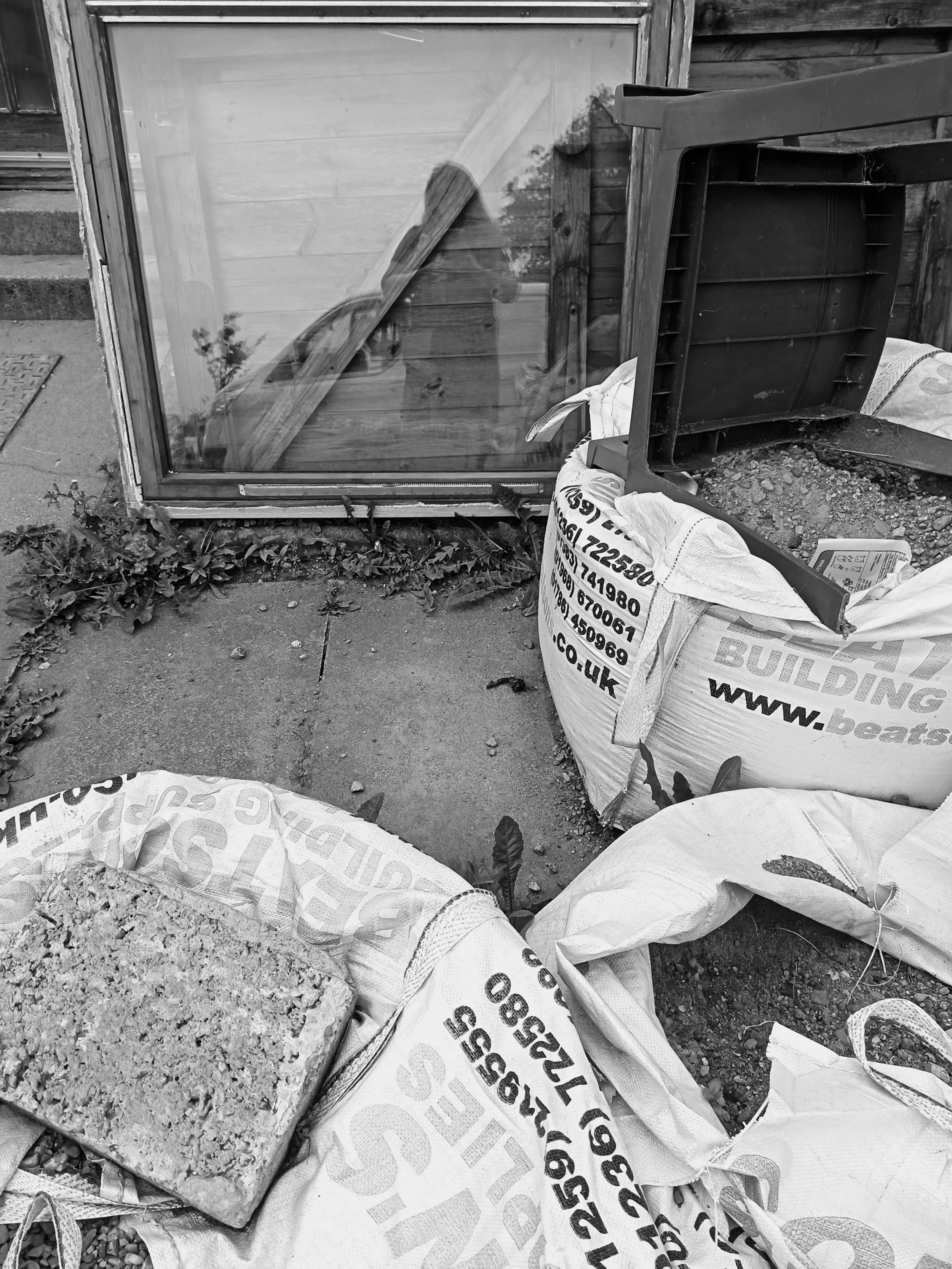
—
Clare Archibald has, at last count, three hundred and eleven photographs of other people's windows and no clear memory of taking most of them. She maintains this is normal. The Burntisland window is now in her house. Her family haven’t noticed, or have noticed and are saying nothing, which she finds the more unsettling of the two. She is building a wall of stuff and the wall is building back. She doesn’t own a horse and cannot ride, a fact she repeats with the serenity of someone who once commissioned a cowboy onto a neighbour's garage door in a dream she is fairly sure was hers. The haar comes in off the Forth most evenings and rearranges the town by a single degree. Clare stands at the window - hers, yours, it stops mattering - and waits for the same thing to happen differently. It always does. She is off the hook. She is a duck.
Transtemporal Fieldwork in The Boundary
by Dan Melling
The past is apparent in every aspect of The Boundary’s appearance. Constructed by Cain’s Brewery, its red brick with pale stone dressings and ornate roofline are characteristic of the Jacobean Revival style of its time. Its time, marked by the gable, is 1902. Above the door is a carved coat of arms featuring a goat; he stands in profile with his legs raised as if invoking the Horned God who would once have been present in the woods that used to stand here. Beneath the goat is carved the former motto of Cain’s brewery Pacem Amo, ‘I love peace’.
Inside, ghosts mingle with the still-material flesh: mosaic flooring and opulent ceiling tiles remain alongside fittings for gas lamps and candelabra. The spectre of a Cain’s advert, painted on the wall of the main room, has outlived the brewery itself. There are also ghosts present in the architecture. The bar area has been outfitted many times, leaving it impossible to know which fittings are original and which are additions from the 1950s or 1980s.
Long before the pub existed, the land where The Boundary now stands marked the edge of the royal deer park that became Toxteth. For centuries, this land was kept deliberately empty. No one but gamekeepers were allowed to settle within the park and the area was uninhabited. The idea of keeping people out – of controlling who could access what and where – was written into the landscape long before the creation of streets.
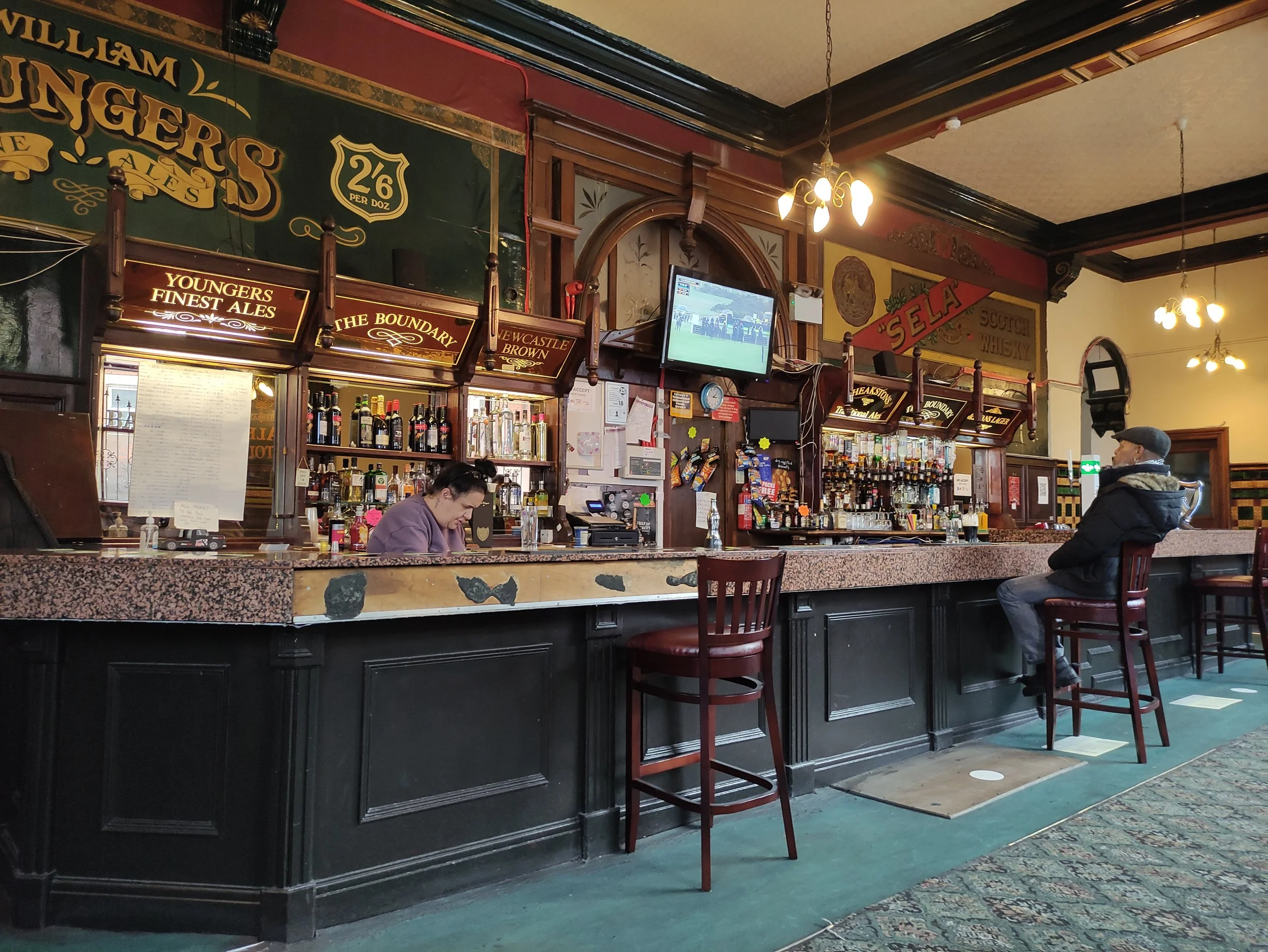
Photograph: Andy Shaw
In more recent history – up until the Uprising of 1981 – the pub served as a cognitive boundary, denoting where members of the Black community could safely drink, without facing racial harassment. Anywhere past The Boundary was no longer Toxteth, and therefore, no longer safe.
Stepping out from The Boundary and into the landscape of 1086, I enter a true boundary zone.
To the north lie the undulating grasslands and peat bogs of Esmedune, a name that will pass through hundreds of thousands of mouths and morph into Smithdown. To the south, stretches the woodland of Stochestede, whose Old English name translates to ‘stockaded place’ and will become Toxteth. Since the Norman conquest, this woodland has been under royal control. Entry is restricted and the collection of firewood, foraging or hunting is forbidden on pain of mutilation or death.
From the pub, I can still hear the slap of dominoes and the faint chorus of Eddie Grant’s ‘Do You Feel My Love.’ The pub’s playlist seems to have frozen in 1981. But here in the forest of 1086, there’s no human sound.
I remain wary of the forest wardens who patrol this part of the West Derby Hundred. Their job is to detect unlawful gathering or hunting. The lives of the people who have long made their living from these woods have now been criminalised. What was once a natural right has been taken away.
Extinguishing my cigarette, I slip back into The Boundary before a forest warden sees me. I sit in the alcove that hugs the wall closest to the crossroad where Upper Parliament Street, Lodge Lane, Earle Road, Tunnel Road and Smithdown Road meet. The windows behind me appear to be original, which would make them around 123 years old. The upper windows are stained glass and several of the top row of panes are missing. Among the sounds of the traffic outside, the men playing dominoes and the clink of pool balls, I hear a stag thrashing his antlers against a long-felled tree.
—
Dan Melling has the disposition of a Victorian naturalist. He keeps a small notebook of sentences he has overheard in the street after eleven at night. He does not use them for anything. He treats the notebook the way a Victorian naturalist treated moths, catching each specimen for the record, not the meaning. June’s entry, and current favourite: "Barry, that's not what a swan does."
A tangentially connected Instagram account, @pub_toilet_windowss, documents Dan’s other lines of enquiry. The second s was not his idea. He’s stopped fighting it.
The Cult Continuum
with Matthew McPartlan
Matt arrived at my office at Wednesday lunchtime, short of breath and brandishing the fifth draft of the seventh entry in The Cult Continuum. He has chosen a character rather than a work: Dr Tobias Fünke of Arrested Development. Fox ran the show for three seasons from 2003, gave it an Emmy in year one and cancelled it in year three on account of nobody watching. Netflix revived it twice. The character he has picked from the ruins is the strangest one in it. Which, given the field, is saying something. The fifth draft is the one that follows. A sixth was, briefly, on the table.
#7 Dr Tobias Funke
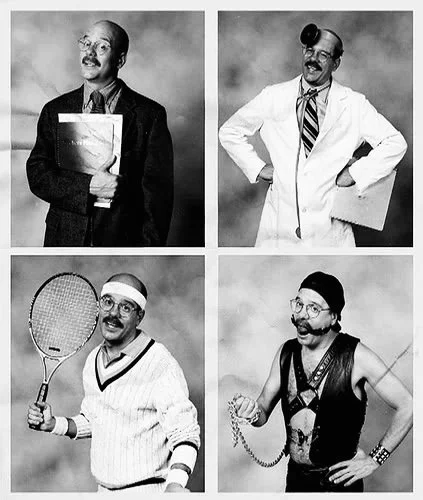
Dr Tobias Funke
Frightened Inmate #2
Some television shows are slow burns, the kind you grow into, the kind that reveal themselves gradually. Arrested Development was not one of these. For me, it was immediate. I knew, straight away, that I loved it, in that strange, all-encompassing way where you recognise something that fits perfectly with you.
Naturally, I made my siblings watch it. They loved it just as quickly. Years later, it is still part of our shared language. "STEVE HOLT!" can still be shouted across a room to absolutely no one's confusion and our WhatsApp group is still called “No touching”.
Season 1 was brilliant. Truly brilliant. But Season 2… Season 2 was transcendent. It was the point where the show stopped being a sitcom and became architecture, a system of jokes, foreshadowing and narrative trapdoors. It felt as though Mitch Hurwitz and his writers were performing a kind of comedic jazz, riffs within riffs, themes folding back on themselves, lines landing three episodes later with the weight of a punchline and the precision of a revelation.
Its stellar ensemble cast operated on the same strange wavelength, each one essential to the machinery of the show. Nothing is wasted. Characters and objects, no matter how small, are recycled, turned into running jokes that evolve over time. Meta comedy before it was even a thing.
Given the sheer depth of the ensemble, choosing one character feels almost absurd but of all of them, Dr Tobias Fünke is the one that lingers.
The hapless former therapist turned aspiring actor is, on paper, ridiculous. A man wrapped in misplaced sincerity who proudly described himself as a professional twice over, an analyst and a therapist, “the world’s first analrapist”.
Outside of The Simpsons, it is hard to think of a character who has generated so many lines that have escaped their original context and taken on a life of their own. These lines no longer belong to specific episodes. They exist independently, fragments of a larger system, passed around as memes, references and signals.
Played with total commitment by David Cross, Tobias exists as part of the wider chaos surrounding Michael Bluth, the lone figure attempting to impose order on a fundamentally disordered family. Married to Lindsay Bluth, itself a comedic masterstroke, a pre‑Instagram socialite clinging to a life of inherited glamour.
He is a “never nude”, a fictional condition that means he can never be completely naked, instead remaining permanently in cut-off denim shorts. What begins as a throwaway joke becomes something the show repeatedly returns to.
Some of the highlights include Mrs Featherbottom, an idea he hatches to spend more time with his family, borrowing from Mrs Doubtfire and strangely blending it with Mary Poppins. The disguise convinces no one, yet they allow it to continue, “the house has never been tidier.”
He becomes a stand in member for the performance artists The Blue Man Group, which he initially mistakes as a self-help group for depressed men, leading to full blue paint transformation and the iconic declaration, “I just blue myself” along with the running gag of unexplained blue handprints that begin to appear throughout their home.
His countless failed attempts to land an acting part include the infamous fire sale audition, which he later admits he “focused more on the fire, less on the sale”.
Tobias generates endless confusion around his own identity and language, much of it self-inflicted, driven by a complete lack of awareness. The reactions to his constant faux pas and accidental double entendres are rarely dramatic. More often, they are met with a pause, an unwillingness to acknowledge what has just been said, a quiet refusal that diminishes him in the moment, even as he continues entirely unaware.
He is endlessly quotable, endlessly remixable, endlessly rediscovered. A character you can dip into in isolation and still feel the full effect, because the joke is never just the line. Even if you have not seen the show, you will have seen the image of Tobias crying in the shower that exist as instantly recognisable GIFs.
Arrested Development is packed with characters worthy of a place here, but Tobias somehow transcended even the finest television comedy of the past thirty years. The Cult Continuum is about the things that survive beyond their original form, sit outside of the system and that stay with you. Tobias Funke meets all the above.
The wild ride that was Arrested Development has long since gone but the things that resurface years later, unchanged are still capable of making me laugh in the same way. Long after the plotlines and the running jokes he remains perfectly intact, wandering around my head in denim cut-offs, completely oblivious to why everyone else finds him so funny.
— Matthew McPartlan, 15 July 2026
Wildfire’s Coming Home
by Karl Whitney
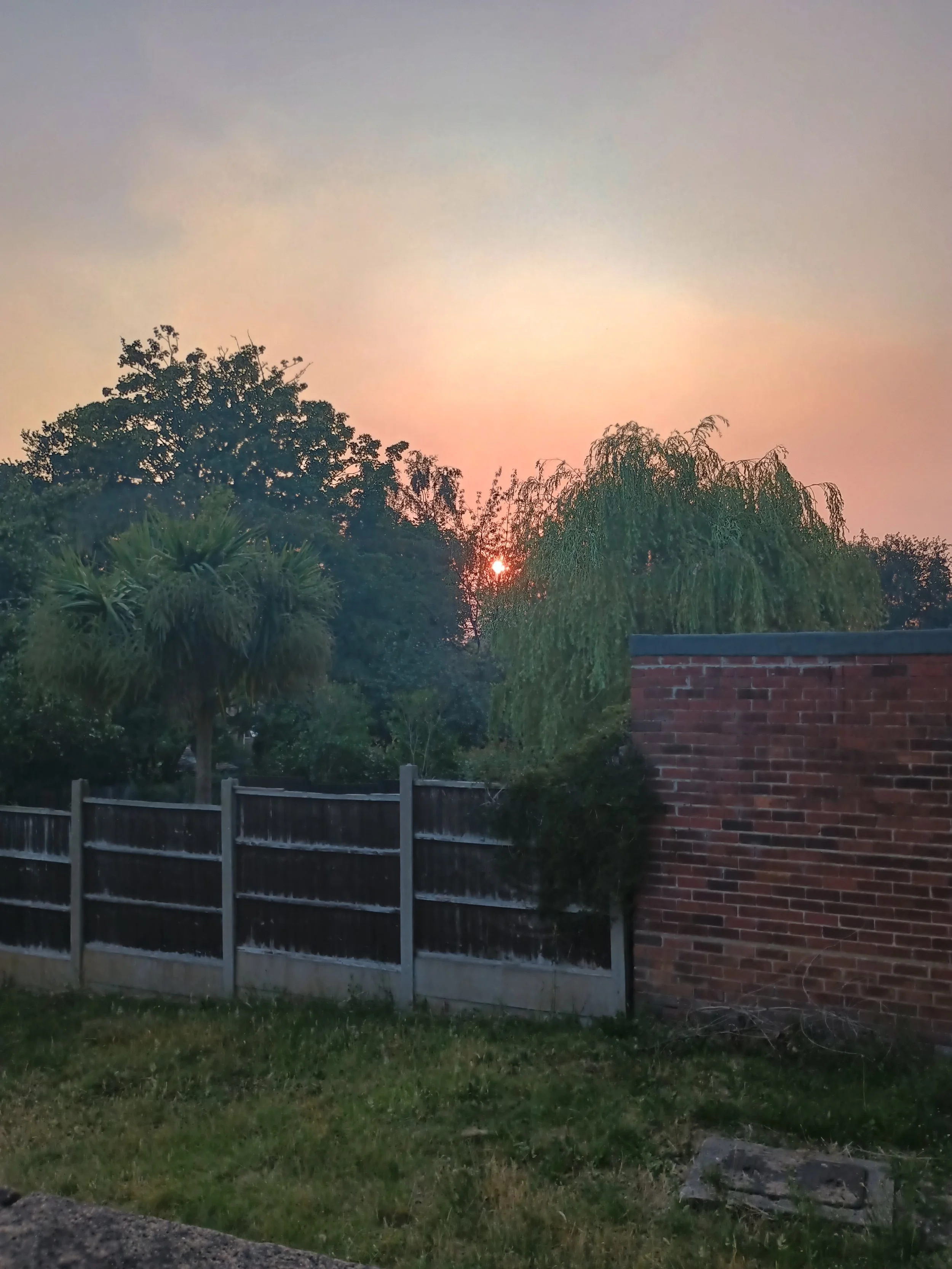
A layer of smoke insinuated itself between me and the familiar landscape of my garden, a fuzzy lens blurring the edges of everything. It made the most summery of days suddenly seem autumnal; like we were at the end of something. The smell of burnt wood from Manchester, or from north Wales, or from Derbyshire, had worked its way across borders, through cities, and now here it was, in my back garden in south Liverpool. If nothing else, wildfire was coming home.
The intimacy of the unexpected, of the catastrophic, is what most shocks us: that it can happen to us, here in the place that we mistakenly thought would remain untouched. Magical thinking from another era. I glanced at the sun, glowing blood orange through the roaming cloud of smoke, watered some plants and withdrew to the flat, closing the windows against the smell.
From a certain perspective, that of fire, everything is fuel: trees, grass, the earth itself, your SUV. I first thought this seriously when I visited a golf course in Gateshead, part of which, I had read, had been scorched by an underground fire that had burned for years. Having reached the burning area, and seen the smoke billowing from cracks in the ground, I walked back to the railway station through a nearby village. At the time it seemed to me that everything – the buildings, trees, landscape – was suffused by a thin layer of smoke seeping from below.
The next morning, the day after I first saw wildfire smoke in Liverpool, things looked normal again. But, venturing out that evening to walk to the shops, I glanced ahead along the main road and there was, still, something shrouding the trees. The smell of wood smoke was now fainter than before, but unmistakably remained. The sun continued to glow orange unseasonably. I thought of October evenings when chimneys belched out coal and wood smoke.
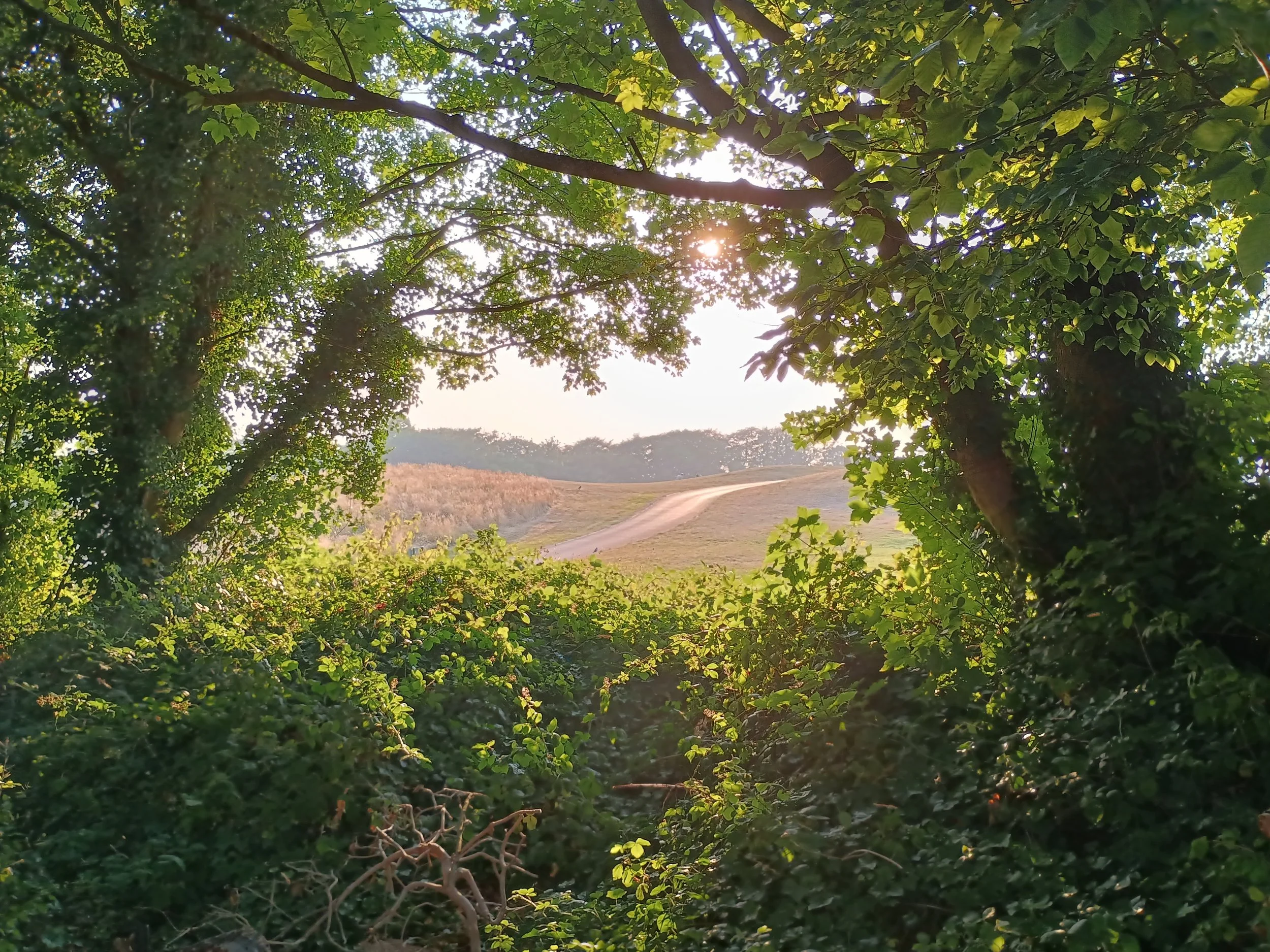
Pollution is picturesque. A photo of a burning planet taken on a smartphone can superficially resemble a painting by Turner. As I walked back from the supermarket I looked across a field, my view framed by trees. The landscape faded into the horizon, its edges smudged by a smog nurtured by fires that had already burnt many miles away. I snapped a photo on my phone and it took a second to automatically adjust it using whatever AI features I hadn’t unchecked in the app.
The resulting photo looked like an idyllic summer scene, a direct result of an entwinement of technological advance and climate disaster. I had read much about the summer heatwaves, and many experts said that they were merely the beginning. Temperatures would rise. Dry landscapes would make it more likely that fires would take hold. Was this picture a sign of things to come? A sinisterly split signal, a false memory, transforming a moment that felt so bad into something that looked so good.
—
Karl Whitney has a running argument with the AI in his phone about what a sunset actually looks like. He has, so far, lost every round. The AI has begun writing the sunsets. He has continued to photograph them anyway. If he stops, the AI wins by default. He has returned, on three separate occasions, to the Gateshead golf course where the underground fire has been burning for years. He has established nothing new on any visit. The fire continues to burn. The golfers continue to golf. He continues to return. He suspects that this is what fieldwork actually is.
A Foot In Two Seas
by Victoria Raftery
There's a beach located at the southernmost tip of the island where two seas meet; given the right tides and weather conditions, you can walk across a spit of sand and place one foot in the Med and the other in the Aegean.
The minute I felt those waters swirling around my ankles, I came to a realisation: it didn't matter that both sides were so different; in fact, it made sense.
After all these years, it made sense.
My parents met in ‘52. They were sixteen. Well, Mum was: Dad had five months’ catching up to do.
‘He was a child bride.’
She’s ninety now and he’s long gone but she still cracks the joke.
They married in ‘59 and I came along in ‘63.
Cold. Cold. Cold.
So cold for two winters; winters so cold, cars had been seen driving on The Dee.
‘Frozen solid, never seen anything like it. We watched them all skating from the big window on Grandad's birthday. It was a great do, Champagne, the lot.’
A month after I was born, Kennedy was shot.
‘I know exactly where I was. It was seven o’ clock. You'd stopped crying for once and I was putting the nappies in the bucket. The smell of that bucket. I'll never forget it.’
My brother arrived in ‘66.
‘They say if you can remember the Sixties, you weren’t there; well, I missed the whole bloody decade because of you two.’
Nana and Grandad would gather us all on special occasions to look out over the river and the meadows and the Welsh hills from the big window. We're family, Grandad would say but I knew even from being quite small that they were never quite ours and we were never quite theirs.
Granny and Grandpa's house was different to Nana and Grandad's but with similarities. It was cold and there were coal fires in every room, even the bedrooms, just like the river house. But it was smaller, much smaller, and there weren't as many rules. You could eat with whichever utensil was to hand and no-one chastised you if you wiped your greasy hands down your skirt under the table. There wasn't a view but there was a small garden and a back gate to the ginnel: a secret path like the one at the river house which meandered down to the boathouse, not quite as glamorous but equally as exciting because it led to the Rec.
At Granny and Grandpa's, if you wanted a wee, you had to go outside.
‘You’re having me on,’ Grandpa would say, heaving himself up from his chair and away from Grandstand and his pools coupon, his cigarette putt-putting between his lips in synch with the putt-putting of the coals. ‘You can't need to go again.’
I loved going to the privy. The garden path, a mosaic of unevenly-cut red bricks, was lined with cockle shells and huge blooms of pink-and-purple hydrangea. I'd wave to Mrs Aspirin Wall next door if she was pegging out, Grandpa chivying me along like he had something important to get back to. It was cool and dark inside, last week's news cut into pieces, Sydney The Spider scurrying into the shadows. The privy made going for a wee an adventure.
Gran would nab me on my way back in.
‘You come here, young lady; wash those hands before you start on that comic again.’
Coal tar soap in the kitchen sink.
Nana and Grandad's river house had sinks which looked just as worn as Gran's but theirs were called basins.
There were lots of basins in the river house and their soap was called Pears. Nana had a basin in her bedroom, hidden behind a screen of mahogany and mother-of-pearl birds.
‘Marble,’ said Nana. ‘Anita says the veins are a bugger to clean.’
I played marbles with Grandpa; he helped me collect them when we went to the Rec. He spun me on the roundabout and pushed me on the swing.
‘You've a beauty there; a cat's eye. Quick, put it in your pocket before they cotton on.’
We played cards before bed. Snap, and then once Philip was tucked up upstairs, Newmarket.
Nana and Grandad played poker. I still have their old chip-holder; I use it as a door-stop. A pair. Three of a kind. Two pairs. Full house. Straight flush. Royal flush. Four of a kind. Five of a kind. Aces high!
Grandpa's dad built lots of houses. In Pendleton and Salford and Sale. The plans were drawn on linen. I have them, in a box somewhere.
‘Nana's knives and forks have letters on them,’ I told Gran.
‘I'm sure they do.’
I piece together Twinkle's outfits in front of the fire. Gran had taught me to cut carefully round the tabs: ‘Fold them over firmly,’ she cautioned. ‘Otherwise her clothes will fall off.’
On rainy days, Nana and I played tea sets with a miniature collection of china cups and saucers. I once drank from hers by mistake; the clear liquid burned my throat and rosied up my cheeks. I liked it. It made me sleepy.
On rainy days, Gran and I would clean out the cinders and then we'd do a jigsaw and then peel some spuds and then pop round to Mrs Aspirin Wall's for some dandelion and burdock and then come home and light the fire and then sit quietly with Twinkle until Grandpa arrived and it was time for tea.
On summer days, Nana and I would go down to the boathouse. I carried the picnic basket.
‘Watch your step!’ she would caution.
There were seventy-five steps down to the boathouse; seventy-five watches.
She carried two fold-up picnic chairs, a sun umbrella and a copy of The Daily Telegraph. Boodles and Snippet came with us, threatening to trip us up, every step of the way.
The boathouse smelled of creosote and paraffin. Before Grandad came home from the office, before we took the boat out for a putt-putt down The Dee, Nana read out the letters page and then gave me another lesson on how to do the cryptic crossword.
On summer days, Gran and I made dens with her old clothes-horse and some worn-out flannel sheets, our egg-and-cress butties tasting so much better for eating them in the fresh air.
A foot in both seas.
Gran crying over broken glass, sweeping the pale-pink shards of her dressing-table set into the coal pan, Grandpa looking on, helpless.
Grandad crying over broken glass, the Lalique bird having narrowly missed annihilating the ormolu clock on the mantelpiece (she hadn't been aiming at the clock)
I wiggle my toes in the sand.
Right foot.
Left foot.
Med.
Aegean.
A foot in both seas.
—
Victoria Raftery still uses Nana's poker chip-holder as a doorstop. Grandpa's cockle shells line a downstairs windowsill. Every birthday she pours Boodles into one of Nana's china cups and drinks it very slowly at four in the afternoon, which is what one of them taught her to do, though she can no longer remember which. Her mother still cracks the joke about the child bride. Nobody has yet thrown a Lalique bird at anything, but the day is young.
The Gen Alpha Lexicography
by Maya Chen
26: 'Goated'
Etymology: From the acronym GOAT (Greatest Of All Time), traced to Muhammad Ali's habitual self-description as 'the greatest' and formalised in his wife Lonnie's 1992 trademark of G.O.A.T. Inc. Adopted through the 1990s and 2000s by North American sports commentary as an honorific reserved for career-defining excellence. Verbified around 2018 in Anglophone online youth vernacular as goated, a stative adjective describing the condition of having, however briefly, entered the category of the greatest. Deployed today as the highest available accolade in a system that has, by default, decided most things are mid.
Lily arrived home from school last Wednesday and, without removing her coat, informed me that her English teacher was goated. She said it with the reverence of a scholar announcing a canonical addition. I nodded and asked what had prompted this. She waved her hand in the direction of her rucksack, from which I inferred that the teacher had returned a piece of homework, or perhaps had played a good film in class, or perhaps had simply existed on a Wednesday. I did not press. I have learned not to press.
By the following Monday the same teacher was, in Lily's assessment, mid.
This is the phenomenon I have been trying to name for six weeks. Goated is not a stable descriptor. It doesn’t attach itself to a person or object and remain there like a Latin epithet. It is a momentary ranking, valid until the next data point arrives.
What is interesting is not the word itself but the system in which it operates. Gen Alpha has, so far as I can determine, arrived at a three-tier assessment framework. The default is mid: mediocre, unremarkable, sufficient, not worth thinking about. Below that sits trash. Above that, and reserved for genuine moments of exception, sits goated. Almost everything falls into the middle. That’s the whole point.
I say the point because for a while I read this as cynicism. A generation that has decided most things are unremarkable seemed to me a generation losing its capacity for enthusiasm. I now realise that this was the wrong reading. Mid is not disdain. Mid is the default calm of a generation that has been served more content than any generation in history and has learned that most of it is, by mathematical necessity, average. The word is not judgement. It’s efficient inventory management.
Which makes goated significant in a way that older superlatives are not. "Amazing" was devalued by overuse. "The best" was worn thin by decades of advertising. Goated, in its reserved usage, actually functions as a rating. When Lily tells me that something is goated, she is telling me she has cleared it through the mid-filter, which most things do not survive. I should be honoured. I am usually not being told that I am goated.
Occasionally, only very briefly, I have been. That Tuesday I made pancakes with the correct proportion of chocolate chips. The Sunday I didn’t comment on the state of her room. The evening I told her, without asking her to elaborate, that yes, she could stay up an extra fifteen minutes. On each of those occasions I entered, momentarily, the category of the greatest. By the following morning I had reverted to mid. This is how the system works. It’s not personal. It is inventory management.
I have been thinking about what this might mean for the generation itself. If most things are mid, then most things do not require your attention. That is a form of discipline. It is also a form of protection. There is only so much noise a nine-year-old can be expected to process, and the mid-filter is how they cope. Goated is the small circle they have decided is worth their care.
Occasionally, if we are lucky, we are inside it.
Next time: 'Delulu' - the philosophy of choosing your own version of events, and why we might all be doing it.
—
Maya Chen is considering a walnut plaque, hand-engraved in Baskerville typeface by a retired signwriter based in Chiswick, listing every occasion on which her daughter has, however briefly, ranked her as goated. There are just seven entries. The engraver charges by the letter. The plaque will hang in the downstairs cloakroom, opposite a towel rail that has not been rated goated since 2021. Her son, upon reviewing the mockup, observed that seven is not, statistically, a lot. She has noted this response and is having a re-think.
Love letters (straight to your heart)
by Angie Woolfall
J- How can I go forward when I don’t know which way I’m facing?
P- I have no answer for you little lamb.
J- How can I go forward when I don’t know which way to turn?
P- I can help you out, but ...
J- How can I go forward into something I’m not sure of?
P- ... I cannot help you in.
J- How can I have feelings when I don’t know if it’s a feeling?
P- Sometimes you think that life is hard...
J- How can I feel something if I just don’t know how to feel?
P-... And this is only one of them.
J- How can I have feelings when my feelings have always been denied?
P- My heart is breaking for you little lamb...
J- You know life can be long and you’ve got to be so strong ...
P- I can help you out...
J- ... and the world is so tough- sometimes I feel I’ve had enough..
P- ...But we may never meet again.
J- How can I give love when I don’t know what it is I’m giving?
P- Dragonfly- fly by my window- you and I still have a way to go.
J- How can I give love when I just don’t know how to give?
P- Don’t know why you hang around my door- I don’t live here anymore... since you’ve gone, I never know...
J- How can I give love?
P- I go on- miss you so...
J- Love is something I ain’t never had.
P- Dragonfly, don’t keep me waiting. I’m waiting- can’t you see me- I’m waiting.
J- You know life can be long...
P- Dragonfly, you’ve been away too long.
J- And you’ve got to be so strong...
P- How did two rights make a wrong?
J- And the world she is tough- sometimes I feel I’ve had enough.
P- Since you’ve gone I never know- I go on but I miss you so- in my heart, I feel the pain- keeps coming back again.
J- How can we go forward when we don’t know which way we’re facing?
P- Dragonfly- fly by my window- I’m flying- can’t you see me- I’m flying...
J- How can we go forward when we don’t know which way to turn?
P- You and I can find a way to see. Dragonfly, the years ahead will show how little we really know. Since you’ve gone it’s never right- they go on, the lonely nights- come on home- make it right.
J- How can we go forward into something into something I’m not sure of?
P- My heart is breaking for you little lamb- I can help you out, but I cannot help you in.
—
Angie Steppen-wolf is the kind of person who reads footnotes first, endnotes second, then, if there’s time, the book. She has thoughts on every editor of the Penguin Modern Classics range from about 1972 to 1989. Nobody has yet asked her for them. She’s not holding her breath. Her favourite Beatle is Paul. He is, she maintains, the only one who’d ever read the small print.
The Fortnight
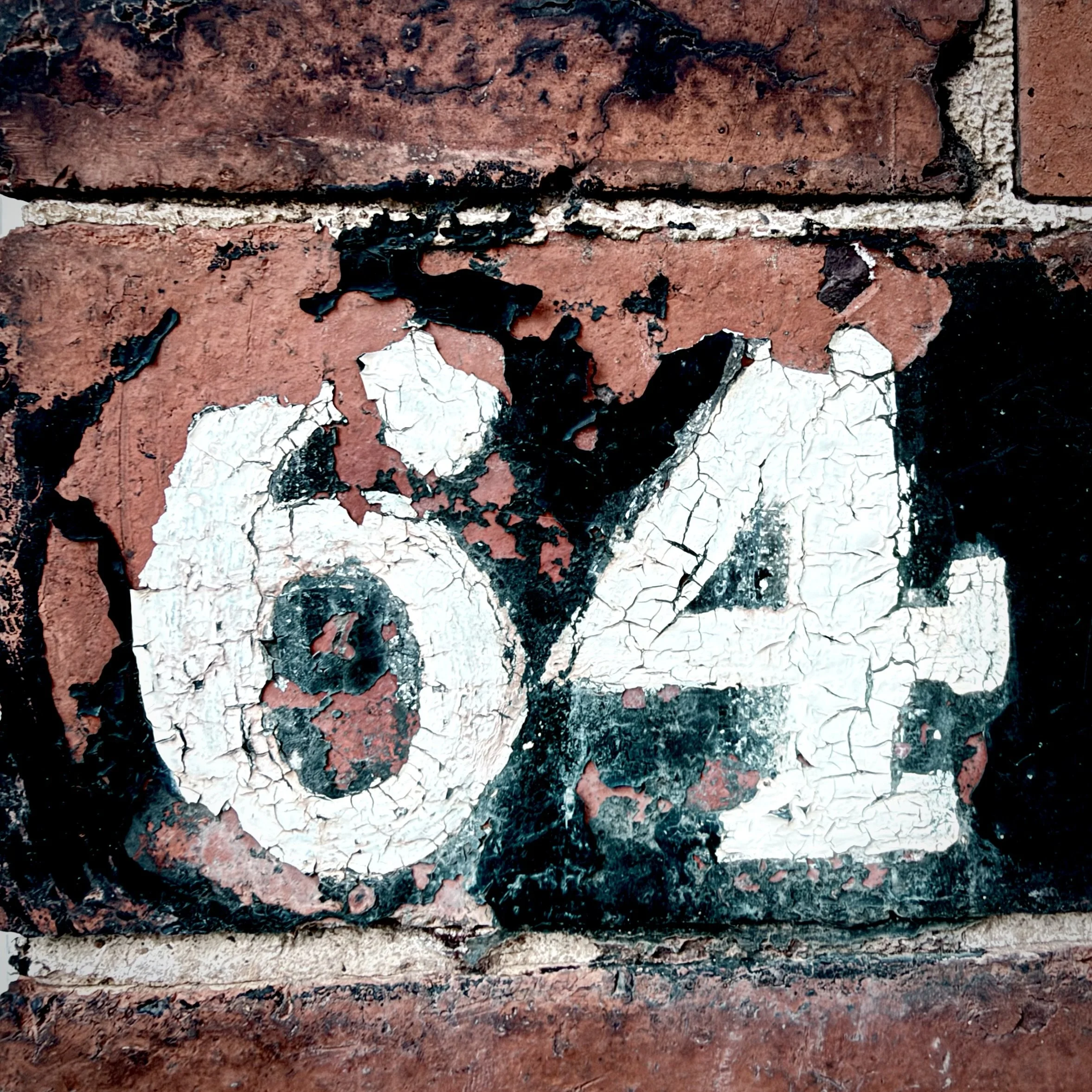
Sixty Four Zoo Lane
Blame / Gabriels
"Not a captive if it's where I want to be"
Swingin' Party / Kindness
Some songs turn any kitchen into a good one. This is proven.
Unread Books / White Fence
Coincidentally. Three books on the bedside table. One of them I've been on for eleven years.
Plenty / Concrete Jane
Third cup gone cold. Same chair. The song, the reason and the excuse.
Paris / Moondog
Someone else's Paris, in someone else's kitchen.
The Balcony / The Rumour Said Fire
Hottest day of the year. Someone else's pop radio drifting up from a garden three doors down.
Actor / Widowspeak
Her armchair in what won't turn out to be its final position. Neither of us saying so yet.
Sandplace / The Grove
A Sunday when none of the things I had planned turned out to be things I did.
Russian Hill / Jellyfish
Later. Cohen in the wings, quietly astonished.
Pass in Time / Beth Orton "
Then watch your fear just turn into relief…"
I'm Not Afraid / Howling Bells
The Pennines from the M62 look the same in every weather. The song does most of the correcting.
The Kiss / Judee Sill
Woke early somewhere I don't sleep often. Ceiling unfamiliar in a way I quite liked.
Tiny Blessings / Michael J Sheehy
Soho Radio, Monday afternoon, staring out the window, wondering. Small mercies.
Strong Ankles / Melodiesinfonie, Fiona Fiasco
Six miles I hadn't planned. Legs kept quiet.
Falling Over You / The Triffids
Past midnight. Deep on the David McComb documentary.