
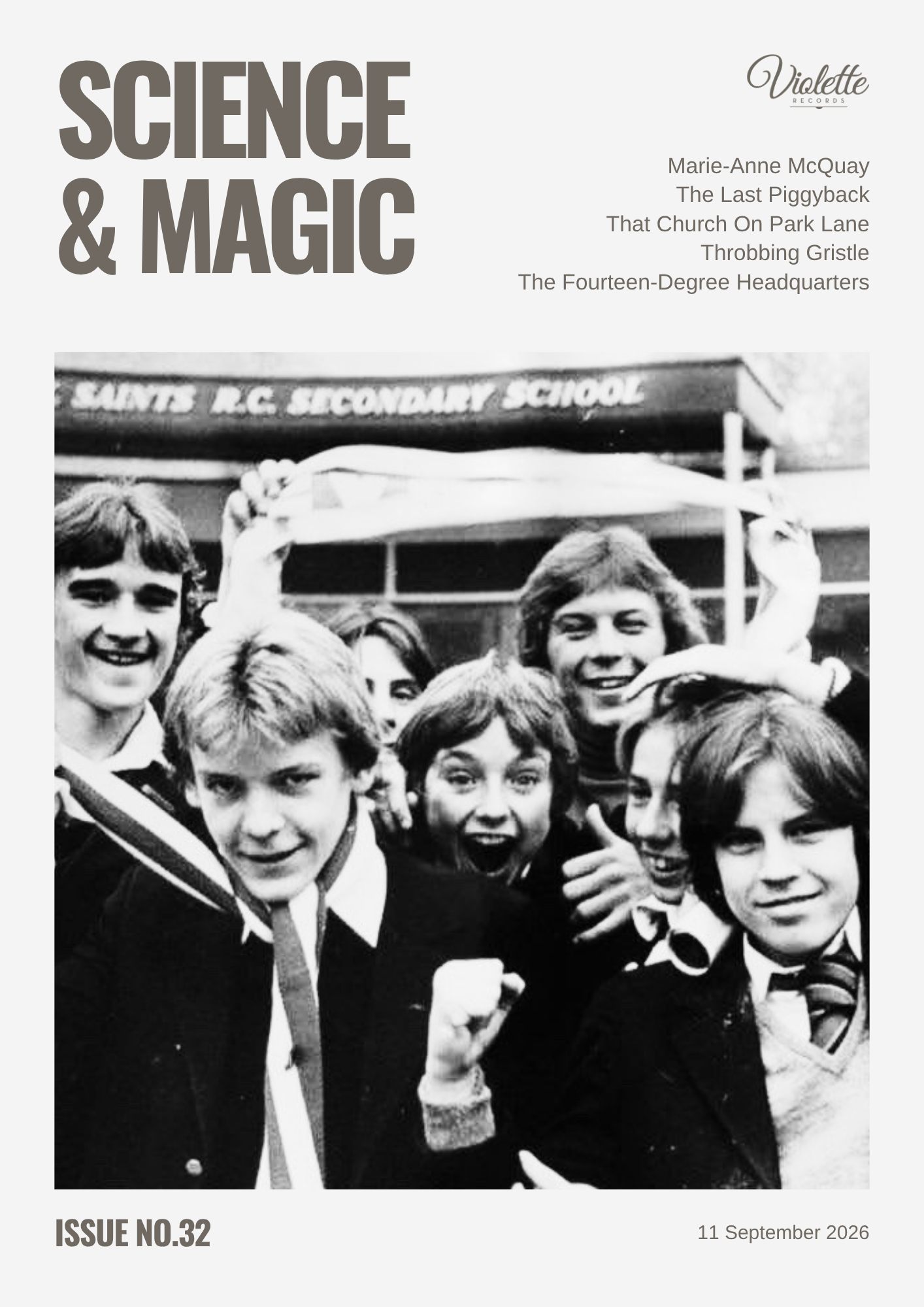
The First Week Back
Something always seems to happen to me in the first week of September. Nobody has set me any homework in years, my year isn’t divided into terms and there’s no register, form room or list pinned to a corridor window. If the weather allowed it, I could spend the whole month in shorts without anybody asking where I should be.
Then one morning the temperature drops and my stomach does something it learned at eleven.
It remembers the first day back.
Somewhere in July, while we were eating orange Club biscuits and falling violently off bikes trying stunts Evel Knievel would probably frown at, an adult we’d never met decided which room we’d sit in, which twenty-nine people we’d spend the year with and whether we were clever enough for the top set.
There was no discussion and definitely no appeal. You couldn’t explain that you’d been distracted during the maths exam because Paul Regan was trying to set fire to a crisp packet. You found out from a sheet of paper, usually taped to a corridor window with the names arranged in a column.
There was your name, your room and the broad outline of your new life. A deputy head had spent most of August arranging fifteen hundred children into manageable portions. The school had six BBC Microcomputers and they definitely weren’t involved. I’ve seen more sophisticated microwave ovens.
Friendships, enemies, what you thought you were good at and the things you decided you weren’t any good at, all began to become determined around that sheet of paper.
You’d been placed beside certain people and away from others, which was enough to alter the entire physics, chemistry and biology of your life. Somebody you’d never spoken to had moved one name from Room 12 to Room 8 and you were expected to get on with it. I haven’t been asked to consent to anything with that much riding on it since, and I’ve signed a mortgage.
Adults carry on being sorted long after school has stopped doing it visibly. You get a new job and a seat in an office. People decide what you’re good for, then you help them by behaving as though they’re right. You can go decades without finding out which set you’re actually in. By then you’ve likely furnished it.
Every September I still buy a new notebook, convinced this will be the year I become organised, with lists, dates, proper handwriting and a system that doesn’t rely on finding the back of an envelope at the precise moment I need a phone number.
I’ve got a drawer full of them now. Each one begins with three pages of immaculate writing before falling apart into appointments, shopping lists and a note saying “look into this” with no indication of what “this” might be. The notebooks are all waiting for the version of me who knows where things are and what I’m doing with my life.
Remember when your hands went strange after six weeks away from school? You picked up a pen and it feels like operating a small, badly trained animal. The first sentence comes out like a ransom note, with the letters leaning into each other for support. After that it gradually remembers what it’s supposed to do.
The children change over the summer. They come back taller, shinier and somehow less available. Faces alter around the edges. A uniform that likely fitted in July is too short in the leg by September and somebody’s hair has acquired a new political situation. Six weeks of nothing turns out to be plenty.
That first cold morning still catches me even now. I’m back in a corridor with a sheet of paper in my hand, waiting to find out who I’m going to be spending the next year with and whether Paul Regan has been put in my class again.
I’ve got a notebook somewhere for this. I’ll start it in September.
This edition arrives in the first week back. Nobody in it has been sorted into anything.
— Matt
i
Ten Questions
There is a moment in Marie-Anne McQuay’s answers where she describes standing near a small cluster of trees in a city centre and tuning in to the chitter of goldfinches underneath the shriek of the gulls. She calls it a later-in-life revelation.
She is a curator and writer, based in Liverpool. She curated Liverpool Biennial 2025: BEDROCK. Her current project is MURMUR, a solo exhibition by Anthony Shapland at Tŷ Pawb in Wrexham, running until 31 October. Shapland blends documentary and fiction and writes out of a rural queerness and a childhood spent performing straight; his first novel, A Room Above a Shop, took both the Hay Festival Book of the Year and the Waterstones Welsh Book of the Year in 2025 and is now in paperback.
She offered to cut anything that ran long. Nothing did.

What song is permanently fused to a specific place or holiday—to the point where hearing it transports you instantly?
The Breeders - ‘Cannonball’, in a club somewhere in Greece in 1994, age 17.
What song instantly takes you back to your school disco?
Primary School 1988: Tiffany - ‘I Think We’re Alone Now’.
What’s the first record you saved up to buy with your own money?
Nik Kershaw - ‘The Riddle’ on vinyl probably from Our Price on the High Street. After that any number of Now That’s What I Call Music… on cassette.
What song served as the backdrop to your first genuine heartbreak, and troubles you to hear now?
Measuring my life in PJ Harvey releases, we got together around the time Is This Desire? (1998) and had broken up before Stories from the City, Stories from the Sea (2000) came out. Both albums take me back to the breakup but in terms of tracks: ‘The Sky Lit Up’.
What’s your favourite sound that isn’t music?
Bird song. If you’re near a small cluster of trees in a city centre it’s possible to tune in to the chitter of goldfinches underneath the shriek of the gulls. A later in life revelation.
What’s your favourite album to listen to alone in the dark?
Recently, The Cure - Songs of a Lost World (2025). Now I just want them to play an indoor seated venue in the UK so I can do that with other people.
What’s the most beautiful piece of music you’ve ever heard live?
Composer, vocalist and artist Hanna Tuulikki: the bird that never flew (2023) at Glasgow Cathedral. A song cycle for three voices grieving the loss of birdsong. Her latest release with Tommy Perman is nature related - bats - and out on Kin-tu: Echo in the Dark
What’s your favourite cover version of someone else’s song?
Thelma Houston ‘Don’t Leave Me This Way’ (1976).
What album reminds you of someone you’ve lost?
Tea for the Tillerman - Yusuf Islam / Cat Stevens. My Dad has dementia and I’m taking care of his vinyl collection - this is an album he played a lot so I’m getting to know it too.
What was the last gig that genuinely surprised you?
Sound & performance artist Lola de Mata and electronic composer & sound artist Kepla / Jon Davies invited Rie Nakajima, sculptor and Pierre Berthet composer & musician to play their co-creation Dead Plants & Living Objects at Bridewell Studios & Gallery here in Liverpool August 2026. It’s an installation of everyday objects that turns into a concert and it was incredible, ending with us all listening to the rain together: the space and atmospherics were also part of the composition. Working in the arts I’ve experienced a lot of this kind of work but it was one of the best I’ve encountered live for a long time. Given how much music knowledge Lola and Jon have between them, the surprise wasn’t that it was good, but just how moving it was.
ii
Magnetic North
The Measurements
(For Pearl)
Our daughter is no longer in the house, but the house remembers her now that she’s gone. Whenever she goes back to London, we say the word ‘Lundun!’ like they do in Coronation Street. We wave goodbye at the train station, and we wait until the train has left the platform. Then we go home to the now quiet house.
I had a dream where the dream seemed to pin itself to the ceiling of her bedroom and hang there, cobwebby, misty, like a memory of her childhood, suspended in dreamland. Like the memory of the kite flyers on Parliament Hill when she turned to me, just a few months old and laughed at the joyousness of kites. Or like the memory of that day she discovered her own feet. But when she’s not here, in the house, the memories are mostly of her being here, in the house. The house holds its breath and settles slowly into her absence and yet somehow, she’s still here.
On the office door there are biro and felt pen markings from when we used to measure her, once or twice a year, because the height you are when you’re a child is very important. (We sometimes measured the cat too, or best friends, and once or twice we measured granny.)
OCT 2009, 3ft 5 inches: The house remembers her in the tiny door in the skirting board outside her bedroom where the imaginary mouse lives.
JAN 2014, 4ft 3 inches: The house remembers her in her childhood chair – the chair that’s shaped like a cat’s face.
JUNE 2016, 4ft 7 inches: The house remembers her in the bright red of her infant school painting of a ladybird, vivid red daubs and black spots the size of biscuits.
NOV 2017, 5ft 1 inches: The house remembers her in the flowers she makes out of wire and beads arranged in a jug on the upstairs bookcase.
AUG 2019, 5ft 3 inches: The house remembers her in the Glasto wellies in the hallway and the baseball boots she always leaves by the couch. (The ones I sometimes mistake for Pepper the cat who died a year ago.)
SEPT 3, 2020, no measurement: The house remembers her in the toothbrush she leaves behind because it’s her Liverpool toothbrush.

The dates and numbers are a coded index of time captured - portals into entire calendars of memory. Hieroglyphs or hobo alphabets on a doorframe in a Liverpool house. A scrawled algebra of the not forgotten. When you give your child their last piggyback you don’t know it will be the final time. When you measure your child’s height for the last time – the ritual of marking that measurement with great, important accuracy – you don’t know it will be the final time and you forget to record her height.
You wave your child off on the train to London and you watch the train depart. And then you go home and take a photo of the measurements that will be there forever. And the house remembers everything. And so do you.
— Jeff Young, 9 September 2026
—
Jeff Young has started measuring the things that refuse to grow. The coat stand is 5ft 8. The jug on the bookcase is 11 inches. The third stair is exactly the same as it was in 2011, though he says it looks tired. He records everything twice a year, in June and October, when the light in the hallway is suitable for comparisons. The figures are written in biro on the doorframe. Nothing has changed. He remains suspicious.
iii
The Paphides Principle
The Ghost Of O’Donahue
Pete’s got a theory that some songs need a few years before they know what they’re about. They begin as one thing, then life gets hold of them and puts a different meaning in their mouth. You hear them again after a death, a divorce or a house you’ve left behind and suddenly the song has acquired a history of its own.
This week, Johnny Flynn revisits ‘The Ghost Of O’Donahue’ with his sister Lillie. Pete has been listening to it long enough to hear the years gathering around it.
Not a new song this week, but a new recording. ‘The Ghost Of O’Donahue’ was originally written by Johnny Flynn in 2008 when he visited the National Gallery of Ireland in Dublin and “thought I saw a painting called or about a story named the ghost of O’Donoghue”. The name stayed with him and he wrote the song as the tour van wound its way through the Irish countryside and he thought about his own Irish ancestry.
Like the album from which it comes, ‘The Ghost Of O’Donahue’ sees Johnny and his sister Lillie sharing equal billing. The album takes its name from Beam Cottage, the Sussex house where the pair spent their earliest years. This was a paradise of of befores: before a music scholarship sent Johnny off to boarding school; before the death of their father. Years that now “feel like an idyll of happiness and togetherness before life began to feel more complicated and we were separated from each other”.
The track list is a combination of revisited old songs, brand new creations, covers of ‘Moon River’, ‘Boy In The Bubble’, ‘Hares On A Mountain’ and ‘Between The Wars’, and also ‘Sleepy Head’, the original song Johnny and Lillie’s father used to sing to them as they fell asleep.
What it all amounts to is a melancholy, bucolic, British version of The Everly Brothers’ Roots album or, more recently, Dolly Parton’s 2024 release Smoky Mountain DNA – Family, Faith & Fables, albums conceived and created as celebration of those artists’ formative musical experiences. And setting the standard is ‘The Ghost Of O’Donahue’, for whose seven glorious minutes the Flynns have co-opted the elemental power of South African quintet The Joy, who grew up on the harmonies of Ladysmith Black Mambazo.
Sometimes you reel in a chorus from the deepest of waters and you know its truth exceeds your accumulated wisdom by several years.
Well it isn’t hard to see why the shadow of this song has lengthened over time, both for the Flynns and for anyone who has lived with it through the years.
— Pete Paphides, 10 September 2026
iv
A Building With An Opinion

The Gustaf Adolfs Kyrka went up on Park Lane in 1884, for the Scandinavian seamen working the port and for the Nordic emigrants going through Liverpool on their way to America. By the early 1880s that second group was running at 50,000 people a year. Most were in the city for days. Some for hours. The building was there for people who’d left one life and hadn’t arrived at the next one and it gave them their own language, their own hymns and somebody on high keeping half an eye on them while they waited.
Tom Roberts and John Canning Yates made a record in it this April. That’s not the interesting part.
The interesting part is why they went, which is that they’d got stuck.

They’d been meeting for months in John’s front room. A pot of tea, no plan and nothing that had to be finished by any particular deadline. Songs turned up and they got worked up and recorded as they went. Then one day they looked at what they had and there was far too much of it. Hours. Going back through all of it to work out what was any good would’ve taken longer than they had left in them, and the focus was going. Anyone who’s ever made anything knows the exact spot they’d arrived at. It isn’t a shortage of material that stops you. It’s the opposite, and it’s way worse.
John suggested the church.
Tom said whatever they got in there would be the record. Mistakes included.

There’s a board on the wall with three numbers still on it. 17. 470. 451. I’ve no idea what they refer to and nobody has ever offered to tell me.
Rooms like this always have an opinion. They’ve got sustain and delay you can’t argue with and can’t take off afterwards; whatever you play, the building answers and the answers are there on the tape. And you only ever get a window of days because somebody has lent you a church and churches have other jobs on. Nobody’s popping back in on Tuesday for another go at the second verse. The room takes those kind of choices away. Which is lucky because taking the choices away was the one thing the two of them couldn’t do for themselves.
That’s pretty close to the original brief. This place was never put up to make anybody holy. It went up for people caught between one thing and the next and to give them somewhere to stand while it resolved. A hundred and forty-two years later two songwriters turned up in exactly that condition and it did the same for them.

I’m no advertisement for any of this. I’ve rewritten the email announcing this record eleven times since Tuesday. Eleven, that’s right. Six different headlines, two of them handed back to me as not good enough (correctly, both times) and at no point did my written material improve. Only the version number went up. Tom and John solved that by walking half a mile down Park Lane and removing the door. I had to solve it by opening the file again.
The phrase they landed on started as a joke. Something borrowed from jazz, where players used to tell each other that what happens in the room is the show. Tom heard it. It was funny, and then it stopped being funny and turned into the rule: what happens in the room is the record. Once that was the rule the rest simply followed, launching the album in the same building included. Concept, or a coincidence that got promoted. I know which I think.
You can hear how it came out on ‘On Each Branch’. It’s Tom’s song, written with David McDonnell, of the ever-so-wonderful The Sand Band, and the first song John sent back with piano on it. It’s about four minutes of voice, guitar and piano and a Scandinavian seamen’s church wrapping itself around all three. No reverb was added to any of it because there was no need. John says they were after a little bit of magic and they had it on take four, which I think is the most useful thing anybody has said to me about making things all year.

I should declare an interest, since this is my newsletter and my label and I’ve spent the morning failing to write about it. Hallelujah Trial is out on 17 October, 250 copies, and that evening the two of them go back in and play it end to end to ninety people sitting in those pews.
There’ll be drink taken. Under the circumstances I think the building will allow it.
v
Contributors
Wreckers of Civilisation
Friday 14th July 1978. Bastille Day. The start of my summer holidays at the end of third year seniors (Year 9 in modern parlance). The Saturday was the Rock Against Racism Northern Carnival in Manchester, with The Buzzcocks headlining, and there was a bus going from The Bridge Hotel at the end of the High Level, organised by the Tyneside Anti Nazi League. My dad wouldn’t let me go, not for ideological reasons, but because I was only 13, even though my cousin John was going with his mate Big Wilka, but they were two years older. To make up for my disappointment, the Auld Fella slipped me a couple of quid to “go and buy yourself one of those punk rock records.” Considering he only ever listened to The Dubliners and The Clancy Brothers, this was a major surprise. Thus, soon as school kicked us out early Friday afternoon, I got the bus from Felling Square to Worswick Street by myself and headed for the much missed Listen Ear on Ridley Place. The only place in town to get thoroughly obscure and cutting edge music.
Despite the previous reference to punk, it was a genre, certainly this side of the pond, that largely left me cold. Of the first generation, only Wire and The Buzzcocks appealed; the rest seemed to be glorified pub rockers or glam wannabees cashing in on the New Wave by attaching safety pins to their clothes and singing in a mockney sneer. I still hold by that judgement, but luckily by this time I’d started to read the music press to help broaden my horizons. My periodical of choice was Sounds, as I wasn’t clever enough for the NME until I reached sixth form and Melody Maker seemed obsessed with Barclay James Harvest and desperate drivel of that ilk. In Sounds, the likes of Sandy Robertson, John Savage and Dave McCullough championed weird, underground acts that were utterly uncommercial, totally uncompromising and seemingly innovative. However, unless you chanced upon a random John Peel airing for one of these outfits, there was no way to hear their music.
One act that had stood out in press coverage was Throbbing Gristle. They seemed to be scary and beyond anything that had gone before. Serendipitously, when I stepped into Listen Ear, the strange sound that assailed me was the rerelease of Second Annual Report, the debut TG album. Specifically the track ‘Slug Bait’, which was genuinely shocking in terms of both lyrics and sounds. It was abrasive, confrontational and unique to my tender ears. I didn’t buy it though, because the disc was about six quid. I inquired if there were any other TG products available, which is how I bought, unheard, the 7″ single ‘United’ / ‘Zyklon B Zombie’. I still have it, in the original austere monochrome sleeve that depicts a row of council garages, and it’s in pretty good nick. ‘Zyklon B Zombie’ was an unintelligible stream of distorted vocals and guitar abuse that reminded me of ‘I Heard Her Call My Name’ by The Velvets. However, ‘United’ was something else entirely, a hypnotic plodding, minimalist synth driven love song that got inside my head from first play and, like ‘Do The Mussolini (Headkick)’ by Cabaret Voltaire has remained there as the original and best examples of primitive industrial electronic music. Jean Michel Jarre they were not.
Following that, I counted Throbbing Gristle as one of my bands. I bought DoA: Third And Final Report at the end of 1978 and the magnificently titled 20 Jazz Funk Greats when it came out in 1979. I adore both records and have near played them to death, much to the disgust of my cousin who then championed such aural excrement as Cockney Rejects and UK Subs and tried to persuade me that TG weren’t musicians, but actual murderers. He almost echoed the words of the bibulous Scottish Tory Sir Nicholas Fairbairn, who had described TG as “wreckers of civilisation,” which they took as an enormous compliment.
To be fair, TG were an odd bunch, who were clearly more than the sum of their parts. I’m not being glib, but the phrase used by criminologists for the collective evil of The Moors Murderers and the Wests is folie a deux. For TG it was folie a quatre, as some kind of alien chemistry bonded Genesis P-Orridge, “Sleazy” Peter Christopherson, Cosey Fanni Tutti and Chris Carter, allowing them to make such challenging music in their initial iteration. In fact, it was something of a menage a quatre as rehearsals and recording sessions often began with a rampant sex session, “to break the ice.” Quite. You can’t see The Dubliners doing that can you? I mean, I’m a tolerant sort of person regarding what people do in the privacy of their own practice room, but these lot were proper deviants. “Sleazy” was well nicknamed and you can get an insight into his predilections from the title of his subsequent project Coil’s album Scatology. Cosey made ends meet as a porn actress and stripper, but claims never to have been exploited as it was all performance art. I’m not sure I accept that, but it’s her body and her call I guess. Her life partner Chris just seemed to be the geeky one who made all the gadgets, but he was an enthusiastic participant in the art film ‘After Cease to Exist’, the soundtrack to which is on Second Annual Report, that climaxes (pardon the word) with Cosey seeming to castrate him.
And then there’s Genesis. Born to an indulgent middle class family in Cheshire and given the birth name Neil Megson, other than his work with TG there’s little to recommend him as a human being. A vain, narcissistic sociopath. A gaslighting, misogynistic control freak who modelled himself on Charles Manson and helmed the bizarre Temple Ov Psychick Youth, before undergoing body modification along with his final wife, a dominatrix called Jaye Breyer, that saw them attempting to be body doubles, as part of their pandrogyne project. He’s dead now. So is “Sleazy,” whose heart conked out at 55 from a life of decadent drug excess. Chris and Cosey are still going; DJing and releasing records under the Carter Tutti moniker. I’ve never heard any of them. Not interested, same as I never investigated Psychic TV and Coil, or even the reformed TG. As far as I’m concerned, TG existed in a specific period (1976-1980), before imploding. Anything else they did, singly or collectively, could never match their original oeuvre.
In research this piece, I finally bought a copy of Second Annual Report on CD. Almost half a century later it remains a chilling, inspirational record that is as important as it is angry. The use of home made synths, broken instruments, tapes and effects was genuinely groundbreaking and the results stand the test of time. The horrific imagery of ‘Slug Bait’ and ‘Maggot Death’, the ambient menace of ‘After Cease to Exist’, as well as subsequent albums and singles such as ‘United’ and ‘Discipline’ tell the story of a band like no other. This is truly music for the ages by one of the most important avant garde outfits ever.
—
Ian Cusack has been asked to stop describing Throbbing Gristle as “the most important band in history” during family meals. He says the request shows a failure of imagination. His wife has hidden the good cutlery and his daughter has banned him from choosing the music in the car. He is currently preparing a written defence, with supporting evidence from 20 Jazz Funk Greats and a man called Sleazy.
vi
Contributors
Saving Kenny
Riley Morgan, the little shit, is hopping on his tip toes. It’s a decent tactic when someone’s got a grip on your balls. Not the twist, DC, he whines. It’s my signature move, and these fuckin wannabees, road men, scallies, whatever you call them, they’re fuckin terrified of it. There’s an urban myth going round – which I started – that I detached a lad’s right nad who’d crossed me. Thing is, it’s harder than you think, but these fuckers don’t use their brains that often. Not for anything useful. So like I say, they’re shit-scared of losing one of their precious bollocks. Some say I’d be edging towards doing society a favour. That’s me: all heart.
What’s your old fella’s name, Riley? Wha, he says. It’s a simple enough question. What’s your dad called? Tony, is it? He stops hopping for a moment, but stays on his toes. How did yous know? We were at St Pat’s together. Tell him Deggsy Collins says hello, but it’s Sergeant Collins to you. Call me DC one more time and I’ll start twistin’. Go on lad, try me. I move my hand as if I’m making the last turn to tighten a nut, which in a way I am, and his eyes flood with fear. I won’t D… er Sergeant Collins, straight up. He’s got one of those taches, our Riley, that when you see him from a distance, you can’t be sure it’s there. It’s not much better at close quarters. Insubstantial, like the cocky fucker who’s trying to grow it. His dad had one. That’s how I clocked the family resemblance. That, the pointy nose and chin, and the fact he’s all skin and bones. He’s inherited his dad’s good looks.
When did he move from Bootle? He didn’t. I live with me ma. Figures. I wouldn’t have put Tony down as one of those who’d get away. He had nothing about him except an attitude. Was all, like, the world owes me and I’m gonna take it. How did that work out, Tony? How do things look from your terrace in Bootle? Came as far as Kirkhill to impregnate your mother, did he? How would I know, sniffs Riley, and I can tell by the way he’s sagging that the strength has gone out of his toes and he’s going to faint any second. I relinquish my grip and pat him on the head, taking the opportunity to remove his cap and lash it behind me. Air Jordan: his gang’s brand of choice. They might as well print a t-shirt saying Stop and Search Me.
Turn out your pockets, I tell him. Ar ey, he says, don’t be like that. Like what? A police officer? G’wed lad, turn ’em out. Chewy, two phones, two vapes, and a small wad of notes. I press him against the wall and look right and left. The alley’s clear because everyone scarpers when I make an appearance. Still, someone might be filming from a window, so I make a show of giving him the money back. I sniff the vapes. The one that stinks of weed goes in my back pocket. Did you know this is illegal, Riley? He shakes his head, and I half believe him. They think because it’s a vape it’s not the same as smoking it. Or maybe they don’t care. I press a finger into his temple and push. It fucks with your head, dickhead, I tell him, and if I catch you with one again, I’ll nick you. I won’t – it’s not worth the hassle – but he doesn’t know that. The vape will go home with me to join the rest of them. I give them a wipe, leave them for a few hours, and we’re good to go. I haven’t had to buy one yet.
Why two phones, sunshine? One for you ma and one for your da? He looks at the floor. I press my palm into his chest. What’s your number? He thinks about it for a moment, and then rattles one off. Slow down, I tell him, while I put his mobiles in my breast pockets. I take mine out and get him to repeat the number while I tap the screen. The one above my heart rings, so I give him it back. This one locked, I say, pointing to the other. Yis, he says. Give it to me, then. 1-2-3-4. I put the code in and sure enough, I’m in. Fucking hell, Einstein, is that some sort of double bluff or are you as soft as you look? He shrugs, and I get the feeling – call it experience, a copper’s instinct, whatever – that the fight’s gone out of him. I could crush him now, wring all the information he knows and doesn’t know he knows out of him, but today I’m playing the long game. I want Riley Morgan to think he’s got one over on me, but also remember how I had him by the balls. Besides, I’ve got his burner. I can get what I need in the five minutes he takes to shut it down; and the other thing is, I’m fairly sure that money isn’t his. I’d rather have him on the street as an asset than get the shit kicked out of him by some goon who gives him the choice of exile or worse.
Right lad, on yer way. The moment he realises I’m letting him go, the pep returns to his step. He sticks his bony shoulders back and sniffs an unhealthy amount of snot to the back of his throat, the sound of which echoes off the bricks. He scrabbles on the floor for his cap, so I give him a boot up the arse for a laugh. What d’yous do tha for, he moans. Shits and giggles, Riley, why the fuck not? Don’t forget to say hello to your old man for me, I shout after him. He’s standing in the sun now, where the alley meets the street, and in that moment I’m struck by the framing. It would make a good photo. I won’t, he shouts back, proper bold now he can make his escape. Won’t what? Forget to tell me da. I wobble me legs so he can see. I’m scared, I yell, fuckin brickin it. Yous fuckin should be, he screams, D fuckin C. He’ll rip yer ’ead off. A scrawny middle finger is Riley’s parting shot. The way he says that, though, about telling his dad: maybe that twat Tony’s got something going I didn’t know about.
Back against the wall, I have a go at Riley’s phone. A fucking Nokia. Takes a couple of minutes to remember how to use one, then I’m scrolling through his contacts. He’s used first names or nicknames, and it doesn’t take long to find the one I’m looking for. I hold my thumb over the name and wait. Three long rings. I picture him rocking back and forward in a tatty armchair, staring at a phone on a side table or little shelf. He answers. Martin Hughes, he says, and reels off his number. Best not do that in future, Martin, I tell him, you never know who’s calling. Martin Hughes, he repeats, who is calling please? There’s a tension in his voice, underneath that beautiful, but dangerous innocence that our Kenny has too. It’s Derek Collins, Martin, we‘ve met a few times at the day centre. I’m Kenneth’s brother. Do you remember me? Silence for a beat or two. No, no, no, he whispers, I must not talk to the police. Yep, that’s me, Martin, Sergeant Collins, but I’m Kenneth’s brother. He told me he hasn’t seen you for a while and he’s worried. Sorry, Mr Sergeant Collins, he says, I’m not to talk to police. Are you on your own, I ask, but he puts the phone down.
I’ve been looking out for Martin since his mum died last year. He’s thirty, a year older than Kenny, but the pair of them are like kids. They’ll trust anyone who makes nice with them. Riley and his scrotes will have watched to see if he had any other family or regular visitors. They’ll have seen him getting the bus to the day centre Mondays and Thursdays. They might have followed him while he did his shopping – fuck, they might have seen him with our Kenny – and when the time came to find a new place, they’ll have swarmed in, bees to a honey pot. They might have used a girl – another victim – to weasel their way in; and once they were in, he was screwed. His gaff will be a stash house, a place to deal, or a brothel. Christ, I hope it’s just drugs. If the neighbours have noticed, they’ll be too scared to say anything, and there’s a good chance they’ve been threatened. It’s happening everywhere, but I made a promise that I won’t let it happen to our Kenny. His best friend is too close to home, and no one shits on my doorstep.
The toerags on my patch know better, but Riley Morgan’s not part of any crew I’ve come across in Kirkhill. I’d clocked him of course, but not as part of any ongoing investigation, official or otherwise. These kids, though, one minute they’re all noise and nuisance in parks and outside shops, and the next they’re keeping watch while their mate sells baggies from a bike. They’ve spent their lives roaming the streets, in and out of the back alleys and passages. It’s like they were in training. Unofficially, I don’t object; but once they come close to defecating in my front garden, the gloves are off. I’d had my eye on Riley and his gobshite mates for a couple of months, on and off duty, waiting for the right moment to pull him aside and inform him of my rules and terms of business. One, no one under fifteen; two, no knives or guns; three, respect established boundaries; and four, pay your taxes on time. Things got urgent first thing this morning when I called round to our Kenny and he’s heaving big, snotty sobs at his table.
What’s up Ken, I asked him. Has someone said something? He banged his head against the table-top and left it there. Wouldn’t say nothing. Come on, Kenny, you know I‘ll fix it if someone’s upset you. He thumped the table and started wailing. Martin’s gone. I pulled out a chair, sat next to him and rubbed his back. Martin, my friend. From the centre, I said, what do you mean he’s gone? He lifted his head and wiped his hand under his nose. He doesn’t come any more and Pauline says he doesn’t answer his phone. Pauline, who works at the centre, is my first port of call. I can’t give you his address, she says. But I’m a police officer. Then you know you have to go through the official channels. Data protection, sorry lovely. I did hear something, though.
She’s heard from someone who’s heard from someone else – I get a lot of that – that Martin’s been seen with a gang of kids, taking money out of the cash machine outside the Londis on Liverpool Road. That’s another thing they do – relieve the poor bastards of their savings – and that’s when my hackles go into overdrive. I should report this at HQ. I should leave it to plain clothes to get off their arses and make enquiries; but I don’t want those knobheads vexing our Kenny. They’re patronising enough with women and pensioners and besides, their success rate is not what you’d call stellar. So it’s up to me to drive these cuckoos from the nest, off the books, so to speak. Hence my run in with Morgan junior.
Martin and his mum are on the electoral roll, registered to vote at 17b Braddock Row on the Worthington Estate. It’s where they house the pensioners, so I’m guessing the council doesn’t know she’s gone. Good for you, Martin. It’s a sedate, friendly place where we don’t have much cause to call, except when someone hasn’t seen their neighbour for a couple of weeks and the smell under the door’s attracting flies. Shame, then, if Riley Morgan has set up shop there. I clock his lookouts within two minutes of cruising by in the patrol car. They scatter into the stairwells or take off on electric bikes, into the passages where the car can’t follow. I drive around the back of the estate, park up, and wait at the end of one of those passages. Lo and behold, a grey tracksuited goon flashes past, not registering me in the shadows. He jams his brakes, pulls a skid and whoops, figuring, I guess, that he’s escaped the clutches of the feds. He adjusts his Air Jordan cap, pulls a bundle of cash from his pocket and begins to count. Spotty face a picture of concentration, I let him finish his arithmetic before I step out and bang the heel of my hand into his solar plexus. He goes flying off the bike, but fair play to him, he holds the cash in the air as he hits the ground, and the bike falls on top of him. I grab the notes and flatten a boot onto his groin. Thanks mate, that’ll do for starters. Shitbag has tears in his eyes. The fuck are you doin, he whimpers. Cleaning the streets, scumbag. Better give that back, he tries. I put more weight into my boot, and I can hear the air leave his chest. Or what? I let him consider my question, then push again. I’m going to take my foot away, I tell him, and we’re going to have a chat. Tell me what I want to know, and I might let you keep your bike.
He won’t name names, but his eyes are a dead giveaway. You can tell Riley that Sergeant Collins says that when he comes by tomorrow, that flat better be empty of everyone except the person who should be living there. Touch a hair on that boy’s head and I’ll reciprocate. He looks pained and puzzled. Word too long for ya, fuckin dunce? Put it this way: hurt Martin, and I’ll make you suffer. He swings a leg over his bike and rises on the pedals. You’ll get yours, he says, fuckin DC. I twitch my torso towards him, give him my best snarl. His feet come off the pedals as he thrashes at his bike. Ey big man, I shout after him, ask your ma for a clean pair of skiddies when you get in.
Back at the station, I call my old mate Mickey Fitz. He transferred to Bootle a while back, after a run-in with an inspector who wasn’t a fan of old-fashioned policing. Turns out Riley’s old man is very much on the radar. Tony Morgan’s a nasty bastard, according to Mickey, and he’s causing a lot of misery. Drugs and loansharking mostly, and there’re rumours of a violent extortion racket. A real charmer. He’s kept himself clean so far, which is a surprise. I wouldn’t have credited him with the nous for that. I’m on my way out at the end of shift when Ally Blake, the titanic lump on our front desk, calls me over. A couple of messages, Derek, he says, from the same person. Loves calling me Derek, does Blakey. He knows how much it winds me up, but I won’t let it show. Anything urgent? He shakes his head and sneers, like he can smell shit under his broken nose. Not that special brother of yours, Derek. I’d have radioed if it was Kevin. Other than that, I’m not known for my mind reading skills. I have a name and a number if you can be bothered. He waves a scrap of paper above his head, eyes returning to whatever he’s reading under the counter. It’s Kenneth, as you well fucking know. And far as I’m aware, Blakey, the only skill you’re known for is stuffing your face. How‘s the diet going? His grill goes purple, and he drops the paper onto the floor in front of the desk. I have a thyroid problem. I bend down for the paper and mutter a fucking huge one, making sure he can hear me. I stuff the paper into my jeans pocket and wait for him to buzz me out. Goodnight Ally, I say when the doors open. Same time tomorrow, Deggsy, he replies, safe home.
My phone pings when I’m getting into the car. It’s from Kenny, in caps as usual: CHICKEN. I must get round to teaching him lower case. Good idea Ken, I think, patting the notes I’ve stashed in my waistband. Riley Morgan’s henchman can pay for our tea. The rest of his dirty folding can go to a sports club or a day out for a seniors’ group. Or my pension. Kenny’s favourite chicken shop is on the parade on Pembroke Road. Finger Licken’ Chick’n, it’s called, an up yours to spelling, grammar, and the Colonel himself. Sami and Mo, who run the place, have this spicy rub that Kenny loves. I think it’s Moroccan, and I won’t deny it gets me salivating too. Mo raises a hand when I walk in and join the queue. Ten minutes, Derek, he says, bucket for Kenny? I put a thumb in the air and sit on a stool opposite a couple of kids who are all over each other. Judging by the state of their necks, they’re at the love bite stage. How fucking romantic. The lad catches my eye and detaches his lips from his girlfriend’s ear. Fuck are you looking at, mate? The girl jerks her head towards me, ready to join in, but she must recognise me. She whispers to her beau, and he lifts his palms. Sorry bud, he says. If you’ve finished your meal, I say between my teeth, you can fuck off. They slide off their stools and out of the door. Just kids, Derek, says Sami, coming over to clear their leftovers. We pump fists. He started it, I reply, so I nipped it in the bud. Sorry, I don’t mean to scare your customers. You don’t, says Sami, not every time.
We argue over whether I’ll pay. I leave a twenty under a hot sauce bottle next to the till. Give the change to charity, I say, tucking the bucket under my arm. God go with you, Mo says, as he plunges a basket of wings into the fryer. You too, I answer, although he might have given up on me. Sami holds the door with his foot as his presses his hands together. He doesn’t give up on anyone, he tells me. Yeah, right.
I put the bucket on the roof of the car while I fish the key fob from my pocket. He’s a good lad, our Kenny, but he goes apeshit if his food’s cold. I get in the car and send him a text: ten minutes. A reply comes through before I’ve started the motor: no rush soon as you like, winking face emoji. Kenny doesn’t have the thumbs for a speedy response; he thinks emojis are the work of the devil; and it’s in lower case. I feel a tightening under my bollocks, and my stomach flips for good measure, which means three things: that old copper’s instinct again; the fight or flight response (very much the former in the case of yours truly) has been activated; and an idiot who has sworn to protect his brother has made a rookie error. I snatch the paper from my pocket and switch on the lights, cursing Blakey’s handwriting. The numbers are obvious, but it takes a moment for the name to come into focus: Anthony fucking Morgan. If he’s got Kenny, and anything happens to him, I’ll never forgive myself. I put my foot to the floor.
Riley’s scrolling through his mobile on Kenny’s front wall, vape in his gob and a smirk on his chops. At the far end of the road, where the path runs parallel to the railway line, three more Air Jordan fans are arsing about under a streetlamp. The light’s on in the downstairs front room, which Kenny doesn’t use. Mum kept it for special guests, and we haven’t got round to changing anything. I throw the car door open and stand over Riley, fists balled. Alright DC? That chicken, he asks, lips curling with the smirk. Me belly thinks me throat’s been cut. He traces a finger from left ear to right. I think about launching him over the wall and stamping on his head, but if Riley is outside, pound to a penny his dad is sitting in our mam’s house. There’s a second of comfort that she’s no longer with us, but Kenny… Go on in, Riley says, he’s waitin’. I’ll mind yer car.
I leg it up the path, all sorts of scenarios going through my head. Kenny tied to a chair, on the floor covered in blood, that kind of thing. I keep my cool in most situations, but where my brother’s involved, stay out of my way. I try the handle, and the door opens. The chain is on the runner halfway down the hall. He tried at least, Kenny: he put it on the latch like I showed him, but they must have kicked it in. I turn left into the front room and there he is, Tony Morgan, still skinny as fuck with his nose and chin like a bastard woodpecker. In Mum’s chair. Tracksuit bottoms, and a hoody, at his age. A scouse Peter Pan. Worst of all, he’s chugging on a spliff in Mum’s best room, flicking ash all over the place. If yous have put any holes in that chair, I tell him, I’ll do the same to your fuckin arm, burn for burn. He flinches for a moment, then runs his shoe over a pile of ash. Nice to see you, too, Derek. How long has it been? I look about for signs of Kenny, a struggle, anything. Not long enough, I spit. Where’s me brother? Calm down, he says, and take a seat. Him, offering me a seat, in my mother’s house. I’m ready to tear him to pieces with my bare hands and fuck the consequences. Where. Is. My. Brother? He puts the spliff to his lips, inhales long and hard, and holds it in. I count to five before he bellows rancid smoke in my direction, like a gangster in a shit film.
You had a go at my lad, he says. Put him up against a wall and took his phone. You made threats. Where’s me brother, I repeat. One of his lads says you took my money and made more threats. I stand and go to the window. Riley is peering into my car. I should have given him the bucket to keep him busy. Know what a cuckoo is, Tony? Course I do, he says, it’s that bird that lives in clocks. I turn away from the window. Funny guy, I say. D’yous know what else a cuckoo is? He gets up and comes close, nose to pointy nose. Sit down, Collins, like I told yer. I count to ten and go back to the settee. He takes a mobile from a pocket, a Galaxy like the one I gave our Ken. He dials a number and sits next to me. He hands me the phone and says go on then, speak to your brother. Kenny’s on the screen, which is cracked in the same place as his. He loves that phone, and Morgan, the fucker, has taken it off him. I can’t see any marks where he’s been smacked, and as far as I can tell he hasn’t been crying. Alright Ken, I say, you okay there? You’re in Mum’s room, he says. We’re not allowed in Mum’s room. Special occasion, I tell him, we’ve got a visitor. Mr Morgan, he says, he was sorry about the chain. Where are you, Ken, I say, everything okay? Hungry, he replies, where’s my chicken? Morgan takes the phone from me and ends the call, but not before I’ve noticed the red plastic chair Kenny is sitting on.
St Pat’s was closed years ago. I thought they’d knocked it down. I remember getting a hiding in assembly once. Mr Carney, the headmaster, had me face the wall while he banged on about how it didn’t matter if a ball went on the roof, it was out of bounds at all times. The teachers were sitting on those red chairs, looking away while their boss gave me six of the best with a steel ruler, three on each calf. The school badge was painted on the bricks. I stared at it for twenty minutes through my tears. Funny how the memory works, because there it was, on the wall behind our Kenny.
Still in Bootle, I ask Morgan, who is back in Mum’s chair. Can’t see any reason to move, he says. Happy where I am. Same house, I ask. Last four in the row, he says. Knocked them through. Not that you’d know from the front. Must be some council tax bill, I say. I get by, he says. Doin what? None of your business. Well, I say, given my profession and the fact that you’ve kidnapped me brother, it is my business. He crosses one skinny leg over the other. I suppose, he says, but it doesn’t have to be. From what I hear, you don’t mind lookin’ the other way, when the price is right. I know what they call you, Dirty Cop. The way I see it, he continues, I’ve already made a payment with what you took from that lad. Gave it to charity, I tell him. Oh aye, he replies, the type that begins at home. Tell you what we’re gonna do: I’m gonna move Riley’s lads out of that flat, and I’ll bring your brother home. Very kind of you, I say, gripping the cushion at my side. He points a dirty finger at me. I haven’t finished. I’m gonna do that, and you’re gonna look the other way. No cuckooing, I say, not on my patch, and no guns. Your patch is it, Morgan says. I need to expand, and I like the look of Kirkhill. You’re gonna smooth my way in. Anyone gives me trouble, and yous’ll sort it out with your contacts. An’ obviously I won’t get any hassle from the boys in blue. Goes without sayin, I say, thinking I might as well play along while I work out what to do.
He fiddles with another phone and waits for an answer. Bring it in, he says. He takes two papers from a packet of Rizla in his hoody pocket, licks them along one edge and sticks them together. Got a job for you, he says without looking up. I hear a car pull up and a brief conversation. The car drives off, and moments later there’s a knock on the front room door. Come in, lad, says Morgan, as though it’s his fuckin house. Riley enters, and hands a jiffy bag to his dad. On your way, son, says Morgan. Go and sort out that thing we talked about. Okay, says Riley. You sure you wanna move… Morgan raises a hand towards his lad. I’m not tellin’ you twice, he says. Do what I said. Riley cowers and backs away. I’m on it, Dad, he says, and disappears.
Fuckin’ kids, hey, he says to me. Let’s not pretend we’re mates, Morgan, I say back. Tell me what you want and let’s get on with it. He throws the jiffy bag into my lap. You’re gonna deliver this for me. Where? I’ll text you an address in the morning. You haven’t got my number. He waves Kenny’s phone at me. From your brother then, smartarse. He points at the package. Take that to the address, and when I hear it’s been delivered, I’ll bring him home. I turn the jiffy bag over in my hand and give it a squeeze. Powder. If anyone’s hurt him, I’ll come for you, I tell him. Well, says Morgan, you know where I live. Good luck with that. But I’m not an animal. No one’s hurtin’ your Kenneth. Look, Derek, all I want is to go about me business. I think he’s about to give me the old we’re-not-so-different-me-and-you-two-sides-of-the-same-coin shite, so I shut him up with a question. What about the cuckoo? Riley’s sortin’ it, he says, I wasn’t happy with the arrangement anyway. He finishes rolling his blunt, slips it behind his ear and gets to his feet. The cheeky get brushes the shite off his tracky bottoms, onto Mum’s carpet. I’ll let you clear up, he says. Don’t forget to leave yer phone on. You’ll be hearing from me. I jump up when he leaves, and go to the window. He climbs into a black Evoque at the end of the street, and that’s me alone, making plans while I clean up.
First thing I do is go back to the chicken shop. They’re closing up, but Sami comes outside when I thump on the door. Need you to do me a solid, I tell him. Name it, he says. I give him the lowdown and say I’ll see him in the morning. After that I drive to Braddock Row where all is quiet. I creep up the stairwell, but there’s no one about. I knock at 17b. A voice from behind the door tells me to go away, they’ve gone. It’s Derek Collins, Martin, you can let me in. The door cracks open an inch, and Martin noses into the gap, opening up as soon as he sees it’s me. Come on, lad, we’ll tidy up later. Get your coat and you can come to mine until we’ve got this sorted. Have you got a console, he says. Is Kenneth there? He will be, I say, one thing at a time. I get him into the car and drive to my pad in Blundellsands. You don’t live here, he says as we turn left off Crosby Road, you live near Kenneth. I do sometimes, Martin, when I want some peace and quiet. We cruise down College Road, past Marine’s ground, over the bridge and right onto Warren Road. I feel like a different person whenever I come here, which is good because I wouldn’t fit in otherwise. Can we go see the sea, Martin asks. I shake my head, pulling the car off the road. Not yet. Let’s get you settled, and then I’ll go for Kenny. I’ll set up the Switch, but you’ll have to use headphones.
Martin is happy as a pig in shit with Mario Kart, a can of coke and a bag of Doritos. I hear Mum’s voice telling me I should feed him properly, but it’s the middle of the night, I’m not used to having guests, and there’s the matter of my brother being in the clutches of low-rent hoodlums. I tell him not to answer the door to anyone, and he nods. Half an hour later I’m crouched behind a bush in the old playground at St. Pat’s. There’s a red Astra, which you can’t see from the road, parked by the fire doors at the side of the assembly hall. I crawl up to a window. There’s only two of them with Kenny, who is lying on the floor, asleep on a shitty-looking duvet. They’re sat on the plastic chairs, and one of them is also asleep by the looks of it. I leg it back to the car and open the boot, quiet as you like. I clip the standard-issue TASER to my belt, zip a cattle-prod into my bomber jacket, and grab the crowbar and a dozen cable ties. I run to the back of the school, praying that the drainpipe will hold my weight. I was about six stone lighter last time I used it to get on the roof, where I hadn’t been looking for a ball like I told them. What I’d been interested in was the skylight over the staffroom. Always a nosey bugger, me, and light on my feet when it’s needed. My calves throb with the memory of that beating, but the drainpipe holds up, and I’m forcing the skylight open quicker than Usain Bolt.
I get the one who isn’t sleeping with the TASER. By the time the other one registers what’s happening, the cattle prod ends his objections. Kenny sleeps through the action, but he’s awake by the time Morgan’s boys come to, tied to the old apparatus bars. I boot them both in the ribs, but Kenny tells me to stop. Don’t hurt my friends, Derek, he says. They’re not your friends, Ken, they’ve been pretending. He looks hurt and confused, but perks up when I tell him we’re going to Blundellsands to see Martin. Can we show him the Iron Men, Derek? When we’ve time, Ken. Come on, we’d better get moving. I just need to borrow these boys’ phones. I lob them down a drain near the car.
I make a few calls when we get back to the flat. My colleagues aren’t over the moon at being disturbed, but when I tell them about Kenny and how Morgan is making a move, they fall into line double quick. My brother and Martin are lost in Mario World when I leave, gobs orange with Dorito dust. I’m back in Kirkhill, outside the chicken shop, by the time the text comes through. I get out of the car, press the doorbell to the flat above, and wait for Sami. He appears in his Deliveroo gear, wheeling his bike in front of him. I give him the jiffy bag and the address. Albert Road, he says, nice part of town. They’ve no respect for anything, Sami. He shakes his head. I check my watch. Thirty minutes, I tell him. Knock on the door, hand it over, and get the fuck out of there. My lot’ll be there in thirty-five, so I want you three streets away by then. I ride like the wind, he promises, and speeds off. I make another call about the shitheads at the school, then get in the car.
A few of the residents of Albert Road moan about their street being cordoned off until midday, but nobody complains about the arrest of the drug dealers who had moved into number seventeen when it had come up for rent. The raid on Tony Morgan’s Bootle citadel is more complicated, but only crims get hurt. They nab the old man, but the kid is tucked up in bed somewhere in Kirkhill, far removed from the action. One for the future, is Riley. I don’t get back to Blundellsands until late afternoon. Kenny and Martin haven’t moved. They’re sitting thigh to thigh, staring at my flat screen, and I remember something I once read about how we come into this world unspoiled, from a shimmering past. What a load of shite. On the other hand, I doubt I’ll see anything more beautiful for a while than two friends playing together, without a care in the world. I drag them from the sofa with the promise of chicken. We wander over to Burbo Bank, where Gormley’s iron men stare out to sea, unmoved by the chaos. Me, I prefer to look left towards the city, where I do my best work.
—
By some fluke of circumstance, Stan Fenton was there when Rob Schofield drew Kirkhill from memory twice. The maps disagree about the river, the school and the location of a chip shop called Golden Dragon. Both maps include the same alley, which does not exist. Rob started using it anyway. It now appears in three stories, one police report and a letter he wrote to the council about parking.
vii
Contributors
Books I Have Read In The Past Four Weeks
I was thirteen going on fourteen when I forsook Anne of Green Gables for The Carpetbaggers.
Thus began an enthusiastic, if clandestine, perusal of my parents’ bookshelves. I became proficient at spacing; gently nudging Wilbur Smith, Jackie Collins, Nevil Shute and Frederick Forsyth a little closer together so as to conceal the abscondment of Sadie When She Died. The 87th Precinct; how I yearned to be Teddy and be married to Detective Steve Carella…
Miss Greenhalgh enters the classroom and we stand.
‘Good afternoon, girls.’
‘Good afternoon, Miss Greenhalgh.’
I’m on point, ears twitching, ink pen at the ready, studiously ignoring the blood seeping through the dingy-white cotton of Janet Barnes’s shirt-sleeve. Miss Greenhalgh keeps sitting me next to Janet Barnes; I want to sit next to Paula Krolikowski but it never happens. Paula Krolikowski is clever. Why does Miss Greenhalgh keep sitting me with the dullards?
After taking afternoon register, Miss Greenhalgh, resplendent in the heavy felt black blazer she always wears whether snowstorm or heatwave, turns to the board, chalking up this week’s classroom assignment: Books I Have Read In The Past Four Weeks.
Hail Hail The Gang’s All Here (from parents’ bookshelves); Angelique and The King (from Grantry Library) and Angelique in Barbary (also from library, both read under the bedclothes by torchlight); The World Is Full Of Married Men (bookshelves); Ross Poldark (bookshelves); Lord Emsworth and Others (library); King Rat (bookshelves)…
Paula Krolikowski has already adopted her usual hunched-over-the-desk position, her left arm crooked around her jotter so no-one can copy what she is writing. I bet she picked Jane Eyre.
Swot.
Janet seems to have stopped bleeding, her shirt-sleeve rolled back to reveal livid ink-stained suppurations spelling out D A V E on her forearm, the letters having been pin-pricked into her flesh with a geometry compass and then inked in indelible navy.
I can compete with Paula Krolikowski; of course I can!
Mr Rochester v. Heathcliff?
No contest.
I sprinkle my literary offering with the correct usage of there, their and they’re in the hope of gaining an extra mark.
I finish with loads of time to spare and watch the First Years out on the field playing rounders. Afternoon sunlight pierces through the windows; windows that let in the most almighty of draughts in the winter months but cannot eliminate this mid-May heat.
Heathcliff.
Hannibal Heyes.
David Essex.
A fly buzzes round my ear and I swat it away, pulling out my rough jotter, doodling words, fending off torpor.
Janet Barnes’s head hits her desk with a thud.
‘That’s what happens when you spend lunchtime bloody tattooing yourself with bloody Quink instead of bloody well eating,’ Mum ranted on our way home from the school bus stop, her burgundied lips (Red Wine Velvet) drawing in another hit from her Consulate.
I wind down the window and take in copious gulps of the Cheshire countryside. Mum’s cigarette packets said they were menthol but they didn’t smell minty to me.
I felt sick. I felt really, really sick.
‘Mum…’ I started; but before the first ‘M’ had left my lips, I was already chucking up out of the car window.
‘For Christ’s sake, Lizzie! You could have given me some warning, you’re not bloody three years old anymore!’
The lay-by was overgrown with nettles and weeds. Mum scrambled about in the glove-compartment for tissues while I spat out bile onto the dandelions.
‘That bloody girl doing that in the toilets! No wonder you feel sick. She’ll be lucky if she doesn’t die of blood-poisoning.’
Janet Barnes wasn’t in the next day nor the day after that. We lined up for morning assembly in alphabetical order as always, conscious of the void between Baker and Bradshaw.
It had been quite an event, an ambulance turning up at school like that. They’d carried her out on a stretcher.
The rumour was she had died. She hadn’t.
It turned out her parents were getting a (whisper it) divorce which was ten times worse.
Miss Greenhalgh returned my class assignment with a B+
‘Not up to your usual standard,’ her comment read. ‘Formulaic.’
After class, she kept me behind.
‘I haven’t given this a formal mark,’ she said, handing me my rough jotter, the jotter that had fallen to the floor after Janet Barnes’s collapse, the jotter I’d forgotten about, what with all the blood and ink and all. ‘However, I’m moving you next to Paula; she could do with the competition.’
Janet Barnes returned to school.
The class assignment that day was Arms Upon Which I Have Written In The Past Two Weeks.
Joke.
I went back to Anne of Green Gables for a while despite being nearly fourteen, adding Gilbert to my list of adolescent loves, not quite ready to put away childish things completely.
There was time enough for that.
—
Victoria Raftery still rearranges bookshelves when nobody is looking. She closes the gap left by a missing paperback, nudges the hardbacks together and leaves the shelf looking innocent. Her sister noticed that four books had moved in April but blamed the cat. Victoria has said nothing. She is waiting to see how far the investigation goes.
viii
Verse
Emotional Landscapes
—
Angie Woolfall has reported snow inside the Science & Magic headquarters twice this summer. Nobody else saw it, although the carpet was damp and one of the chairs had moved six inches to the left. The thermostat is fixed at fourteen degrees because warmer rooms encourage certainty. A knitted object in the corner has been in progress since 2015. Angie refuses to say what it is becoming.
ix
The Gen Alpha Lexicography
Six Seven
No. 29
Etymology: From ‘Doot Doot (6 7)’, a drill record by the Philadelphia rapper Skrilla, circulated in December 2024 and released properly on 7 February 2025, in which the numerals arrive on a beat drop and are never accounted for. Skrilla has declined to account for them since, on the record, saying he never put an actual meaning on it and still would not want to. Candidate derivations include 67th Street in Philadelphia and the police ten-code for a death, neither confirmed and both, one suspects, retrofitted. The phrase left the record through edits of the basketball player LaMelo Ball, who is listed at six feet seven, and was carried into general circulation in the spring of 2025 by an Overtime Elite player who became known as Mr 6-7 and by a boy filmed shouting it at a game. Dictionary.com made it word of the year that October, on the stated grounds that it spreads and connects people long before anyone agrees what it actually means.
My son is eleven and has begun answering questions with a number. Not a number in the sense of a quantity. He was asked at the kitchen table how much longer he intended to leave his bag in the hall, and he said six seven, holding both hands out at chest height and moving them alternately up and down, the way a man weighs two identical melons.
I asked what six seven meant.
He said it doesn’t mean anything.
I said I understood that it might not mean anything to me, and asked what it meant to him. He said it doesn’t mean anything to anyone, that’s the point, Mum, and took his bag upstairs, which I noted at the time as the only measurable outcome of the exchange.
Slang has always worked as a membership test. What is new is the removal of the thing being tested. Sick and wicked did their work by inversion, which is a semantic operation, and a semantic operation can be learned, explained in a Sunday supplement and put to work in a building society advertisement inside eighteen months. The inversion is the handle. You pick the word up by it.
Six seven has no handle. It cannot be defined, so it cannot be defined incorrectly, which means nobody inside the group can be caught using it wrongly and nobody outside it can be caught using it rightly. The test has been stripped back to its pure form. Do you already know, or do you not.
There is a name in my discipline for an utterance that carries no content and exists only to confirm that the channel is open. Malinowski called it phatic communion in 1923 and it has been the dull end of the field ever since, the part that runs underneath the part where meaning happens. Hello. How are you. Cold, isn’t it. A generation has now built a working vocabulary out of the dull end and declined to supply the rest, and I would like to record that this is not a failure to reach meaning. It is a refusal to hand any over.
I have spent a week establishing what six seven means, which is my job, and I would like to record that my son gave me the answer in the first four seconds and I did not accept it.
A dictionary gave it word of the year. There are explainers. There is classroom guidance, and there are schools that have taken a formal position on a phrase whose author has publicly refused to assign it one. Eight months after a rapper declined to say what his own numbers meant, the apparatus had produced a headword and a recommended response, and every one of those is an adult holding up a sign that reads I have understood you.
The children made something that could not be taken and we took it anyway, not by understanding it but by writing it down. It is the only move we have left and we use it on everything.
My son has stopped saying it.
—
Maya Chen has asked the family smart speaker what six seven means on eleven separate occasions, at different hours, in the hope that repetition would produce either an answer or a breakdown. It has offered her the same summary in the same voice every time and has not once asked why she keeps wanting to know. She has begun leaving longer gaps between attempts. Her husband has observed that she is now the experiment.
x
The Fortnight

Estou Pensando Em Você / Nyron Higor, Johanna
At the top of the big one for longer than the kids behind me thought reasonable.
Epitaph Ivy And Woe / Shelleyan Orphan
An hour on the laptop before anyone was up. Said nothing about it.
Na Rua Na Chuva Na Fazenda (Casinha De Sape) / Hyldon
Finished a book. First time that’s happened on a holiday in years.
Feel Free / Jeff Tweedy
Palma for the day, mostly spent finding shade.
Saturday Sun / Sharp Pins
Four days in somebody else’s front room and I never did work out the lamp.
Venice In Vegas / Cool Sounds
First morning and I’m still checking the email I promised everyone I wouldn’t.
For The First Time, Again / Tyler Ballgame
Rain across the bay all afternoon. Nobody moved a chair.
Un jour / Laura Cahen, Saint Saviour
Western Water Park, where the queue was longer than the ride and I went round again.
Living Room / Not For Radio
Birthday on the Saturday, outside, no shoes on.
Coats / Aldous Harding
The garden had got on fine without me and then took two days off me anyway.
Long Way to Fall / Bedouine
Had a list for the week and never looked at it after the Tuesday.
Soft Cover / Widowspeak
A saloon front in the Mallorcan sun, queue round the back.
Train on the Island / Aldous Harding
Awake before anyone, out on the terrace, waiting for the light to do something.
Meaning Business / Wendy Eisenberg
Out early on the last morning and a lot further than I meant to go.
Javelin / Kevin Morby
Home, and the coat back on inside a day.
xi