
Science & Magic | 30
I'm doing something I said I wouldn't ever do. Science and Magic now has an Instagram account. I'm sorry.
I know, I've spent most of the last year or so being tediously loud about "not being on social media." According to me it eats your attention and sells you back the anxiety it created. I genuinely sympathise with those who feel compromised but have to engage with it in order to pay their bills. I just believe that if a piece of writing is worth reading, it shouldn't need to be marketed at people already drowning in a cacophony of information. And I still stand by every word of it. But I've also, as of this month, joined it again.
I've told myself I can play them at their own game and use them more than they're using me. Who am I kidding. Since I opened the account three weeks ago, my feed has already served up a linen-shirted man in a Portuguese olive grove telling me that silence is a form of currency and I am overspending, a carousel titled '5 Things I Unlearned in Bali (save this)' in which number four was "urgency" (number five was "oat milk"), a woman in her kitchen filming herself pouring matcha and saying, in the tone I might reserve for my inaugural UN address, "Your morning routine is your manifesto", and a middle-aged man sat on the toilet declaring that he only reads books that reshape his nervous system now. I've already saved two of them to read later. I didn't mean to but I did.
But the reason I've joined Instagram anyway is very simple and it embarrasses me. Every one of the writers on this page deserves to be read by more people than currently read them. Jeff, Pete, Eimear, Maya, Victoria, Michael, Angie, Fiona, Matty, Tom, John, Amy, Rob, Nik, Matthew, Karl, Dan, Clare, Donna and everyone else carrying on, week after week, filing the kind of writing the weekend papers used to commission before somebody in accounts worked out that eight hundred words on the contents of a celebrity's handbag was cheaper. They simply deserve more eyeballs than I'm currently able to hand them from an email list and a website. And if that means the man who has told everybody and his dog that Instagram is the enemy of reading now has to open an account and 'reach out' to strangers and 'network', then that's what the man is now doing.
So: @science_and_magic_ please follow us. Please tell people about it. If you have any reach of your own, spend a little of it on us. If you write on the page and you have your own account, please share your posts or send your tribe to https://www.violetterecords.com/science-and-magic/30. The only agenda is more readers for the writers here. Every share helps.
One caveat though. I won't be counting likes. I've compromised too many of my principles this week. That one ain't for sale.
Matt
Ten Questions
by Paul Du Noyer
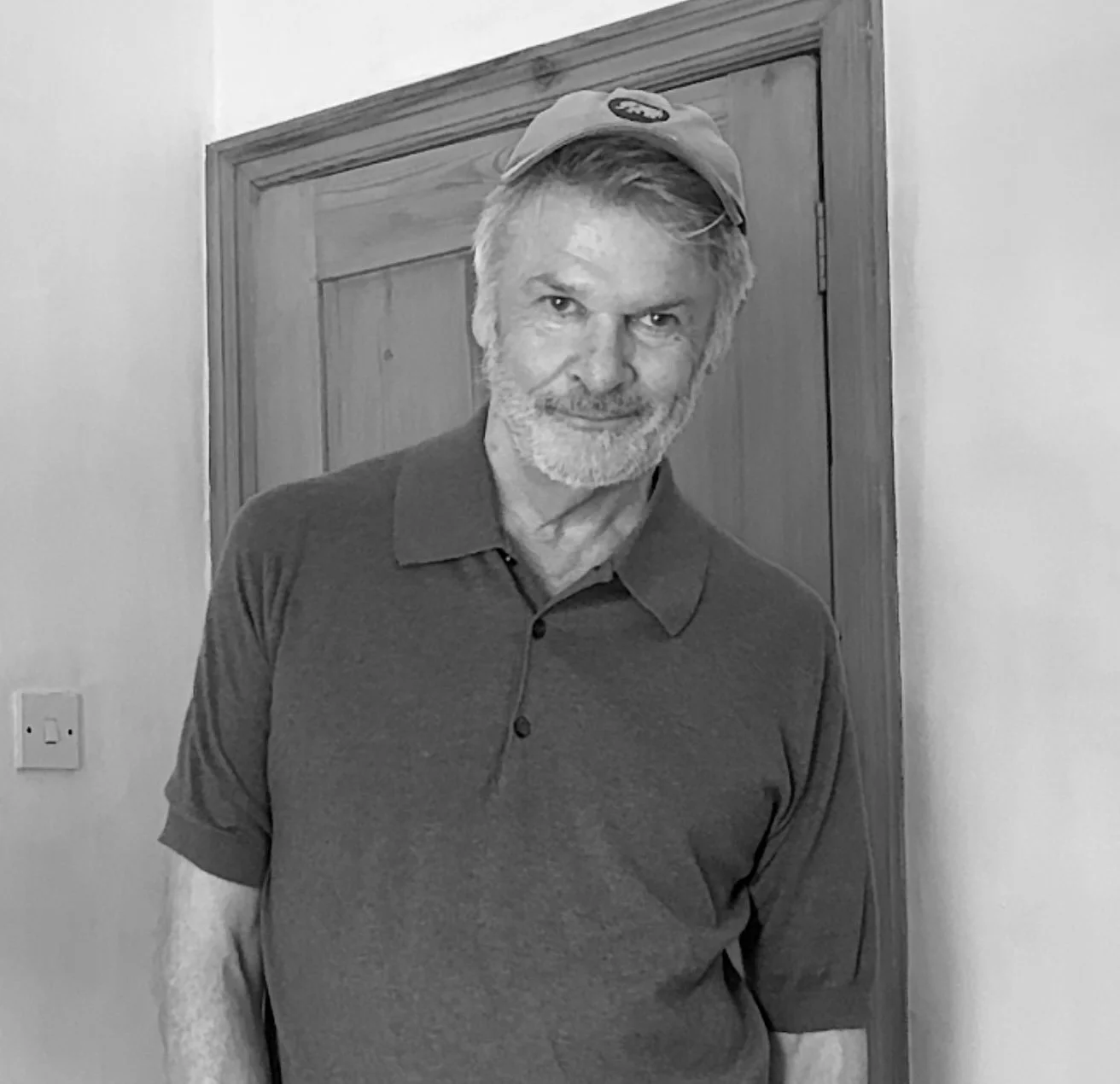
Paul Du Noyer was born in Liverpool in 1954 and left for London at 18, where he built a career as one of British music journalism’s most enduring figures. He wrote and edited for NME, Q and The Word, interviewed artists including David Bowie, Bruce Springsteen and Madonna, and became the founding editor of Mojo. His books include Liverpool: Wondrous Place, In the City, We All Shine On, and Conversations with McCartney.
His book on Liverpool, Liverpool: Wondrous Place, is one of the best books on Liverpool music. Twenty-something years after publication it remains the single essential text on the city's music, precisely because it refused to write another Beatles-and-Merseybeat chronology and instead attempted a proper social history of what a place produces and why. It reads Liverpool as an ecosystem of poverty, wit, defiance, football, television, migration and self-mythology, with the music as a symptom of the whole. Nobody writing seriously about Merseyside music since has worked without a copy of it on the desk. In the City did the same job for London. Conversations with McCartney, drawn from three decades of interviews, is the definitive record of the second half of that career. We All Shine On covers the songs, and life, of the other one.
He recently moved from London to Port Sunlight, which counts, in his own frame of reference, as coming home. His world, by his own account, has rather gone into slow motion. More at pauldunoyer.com.
Paul Du Noyer
● What song is permanently fused to a specific place or holiday - to the point where hearing it transports you instantly?
My mum had a transistor radio in the back kitchen. This was our shared world of immaculate pop hits. It was in the 1960s before Radio One, and we were tuned to the pirate station Radio Caroline North. As it was broadcast from a ship off the Isle of Man, the Liverpool coast got a good reception. Tamla Motown. The Beatles. The Walker Brothers. A blessed cascade of dazzling golden apples. And oh! The Beach Boys. I had no idea what they looked like but I sort of knew their sound. Then suddenly, in 1966, came the single 'Good Vibrations'. I will forget a great many things before I forget that day in the kitchen with my mum. Can this actually be music? Please play it again! I honestly thought the Martians had landed.
● What's the strangest musical tangent you've ever gone down?
The blues may not be a strange tangent but I came across it early. My grandma let her spare bedroom to Irish student teachers. I guess they came to train in Liverpool's big Catholic schools. I was about 12 and worshipped these young men, who smoked, shaved, had girlfriends and listened to hip LPs on Dansette portables. It was the 1960s blues boom and I slowly grasped that blues was really the skeleton in rock's X-ray. A few years later, when hairy mates were shaking their dandruff to Led Zeppelin's 'Bring It On Home', I had the snobbish pleasure of knowing it actually ripped off Sonny Boy Williamson. And whole decades later it was why I called Mojo what I did.
● What song do you associate with a major world event or news story?
That would be Bobby Goldsboro's 1968 hit 'Honey', and the tragic assassination of Robert Kennedy. I was on a school trip around Ireland, and when our mini-bus reached Cork there were people crying in the street. Our teachers were two Irish priests. They found out what had happened, climbed back in the bus and led us in some prayers. On the mournful evening of that day we went to a cafe, where 'Honey' came on the juke box. It's a maudlin country song about a dead sweetheart, with sobbing strings, a heavenly choir and one gratuitous mention of a puppy. But guess what? All around me were silent grown-ups, having a deep moment. I will always respect Noel Coward's line about the potency of cheap music.
● What's your favourite sound that isn't music?
The conversation of friends.
● What song instantly takes you back to your school disco?
Mine was an all-boys school in Bootle, run by missionary priests who weren't really disco guys. But there were always church youth clubs where you got to smoke cigarettes and snog convent girls. At a special moment these girls would all line up and do a leg-kick dance to Bob & Earl's 'Harlem Shuffle'. It was like they were obeying some ancient tribal custom. There were also proto-Northern Soul kids who must have wandered in from the Lancashire savannah. They threw spectacular shapes to 'Here I Go Again' by Archie Bell & The Drells. And then there were marauding skinhead boys, who wanted reggae. This was boot-boy pop reggae, before Bob Marley and so on. A track like The Upsetters' 'Return of Django' could send a sort of Clockwork Orange voltage through the air. All three of those records still give me a visceral thrill, but the memories carry a complicated freight. Nicotine kisses. Ultraviolence.
● If you could time-travel to witness one musical moment in history, when and where would you go?
I was fortunate to witness various gigs that probably were historical. The trouble is, of course, that you don't usually know this at the time. That said, I wouldn't object to seeing Bob Dylan at some beatnik dive in Greenwich Village, circa 1961. I don't especially love his records but I recognise him as the greatest songwriter we will ever know. When I was a journalist I seldom wrote about him. Working in the London music press, you were never more than six feet away from a Dylanologist.
● What album cover has had the most profound impact on you - either as art in its own right or as a gateway to the music within?
Every morning I awaken to a vague sense of disappointment that the actual world is not like a Roxy Music LP sleeve. In my teens I planned one day to live in such a world. I presumed I might find it by moving to London. But, as Humphrey Bogart said of coming to Casablanca for the waters, "I was misinformed."
● What genre or artist did you come to embarrassingly late, kicking yourself for missing out?
I wanted to be a jazz fan, because I liked the clothes and the attitude. It was just the noise it made that put me off. The Bonzo Dog Doo-Dah Band, whom I still revere, had a track called 'Jazz, Delicious Hot, Disgusting Cold'. Somehow I kept encountering the latter sort. I decided the scariest three words in the English language were "Sunday Jazz Brunch". The curse was finally lifted when I discovered an old French film, Lift To The Scaffold, with a soundtrack by Miles Davis. That, for me, was the key which opened a door.
● What album would you want played at your funeral?
If it's not too much trouble I'd like a full-blown Latin mass with Cherubini's Requiem in C Minor. I mean, why not? Beethoven had it at his own funeral. And David Lynch used it in Twin Peaks. But failing that, I'd be touched if they played Marvin Gaye singing 'His Eye Is On The Sparrow'.
● What's a single line from a song that has stuck with you like a mantra or piece of life-changing advice?
"Remember you're a Womble."
Magnetic North
by Jeff Young
30 : Emotional Weather
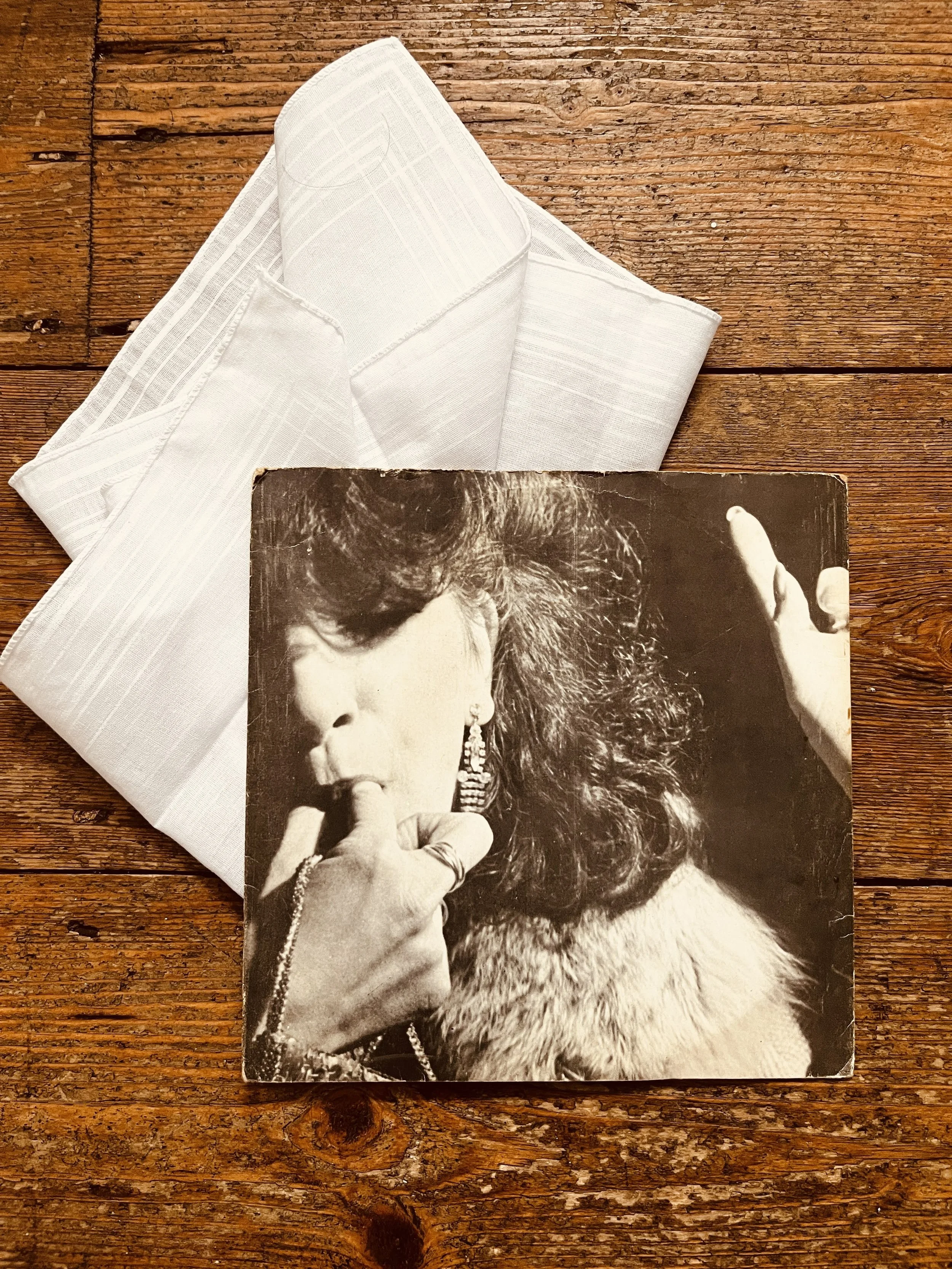
Friday night in the Philharmonic Hall, 1,600 people are waving handkerchiefs above their heads and once again I’m travelling through time. Or rather, time is travelling through me. To be caught up in the wild romantic swoon of this ecstatic ritual feels like being saturated in a fleeting storm of emotional weather and I am moved to tears.
My normal response to a mass outbreak of uninhibited pleasure is to run away and hide but tonight, in this moment, I am one of those 1,600 people waving a handkerchief in the air and I am experiencing transformative pleasure in public. This moment of vulnerability feels like a kind of portal to an altered state, to re-enchantment. The audience – the congregation - is almost levitating and that glimmering shadow-space where memory, time, ghosts, romance and dreams linger opens and pulls me in. And this is when I become aware that I am in the Philharmonic with my 19-year-old self. That’s how old I was when Deaf School last played here in 1976 and I sat in the front row of the circle wearing a suit jacket from Jonathan Silver and second hand black pegged pants with the hems held up with Sellotape.
This group, Deaf School...it was never just about the music. To my mind it was akin to performance art, to the art school attitude, to that whole L8 beatnik, Liverpool School of Language, Music, Dream & Pun, Adrian Henri, Kirkland’s, Atticus, O’Halligan’s Parlour, Ken Campbell’s Science Fiction Theatre of Liverpool, Illuminatus, Picasso Sisters demi-monde Liverpool that existed just before punk happened. Me and my friend Mark Blanchard drifting through the city on the hunt for magic. (Mark, the friend I lost but found again forty years after mislaying him). The weekly search for the first Modern Lovers LP a year before it was released. Falling in love with Samuel Beckett and Jack Kerouac’s faces before we’d even read the books. Me, skiving off work, looking for Jimmy Campbell in Falkner Square even though he’d already gone. Coffee in the Kardomah watching Prunella Scales curling her hair around her fingers...
And yet, despite spending a great deal of my time thinking, writing and dreaming about memory and the past I am wary of nostalgia. I don’t believe the past was better, I don’t yearn for some mythical place called the old days. But what I do believe – and perhaps this is irrational, but I don’t care – is that the past is present in the present. Temporal paradox. Time collapses, beautifully. It colours and flavours, perfumes and illuminates the now. This is not about the past, it’s about this moment, this emotional rain, right now. And in this moment of ecstatic release the world opens up like a Fellini dream and 19-year-old me is leaning into the future. We reach out to each other. The world is beautiful. Look at us! We are dancing...dancing and waving handkerchiefs in the air.
— Jeff Young, 29 July 2026
—
There is a staircase in a building on Duke Street that makes a specific sound, but only in November and only when no one is standing on it. Jeff Young has been trying to record it for eleven years. He acknowledges that this is a difficult specification to meet. He currently has forty minutes of tape and exactly one usable second of audio, which he has played for four people. Three of them heard absolutely nothing. The fourth asked to hear it again, and then twice more, and hasn't mentioned it since.
The Paphides Principle
Pete's theory this week is that the ears finish deliberating long before the conscience does and everything which follows is a man assembling a case for a verdict already reached. He is not always on the side of the ears and is usually outvoted.
Kabanes is Konstantinos Argiros's new album. It is nineteen songs of nisiotika, some of it recorded in a small studio on the island of Kea, and the first Greek-language record to debut on Billboard's Top World Albums chart. 'Gianta' is a traditional song from it and Argiros returns to the Royal Albert Hall in October.
This one reached Pete through his Mum’s television and his Dad’s record collection, which is a shorter route than it sounds.
Konstantinos Argiros - 'Gianta'
The television needs of my mother are all comfortably met by a bundle called Total Greek, which gives you access to half a dozen Greek TV stations. And on those stations, homegrown singing superstar Konstantinos Argiros is a regular presence. As far as I could ascertain, Konstantinos was a mainstream A-lister with cross generational appeal, ticking the sorts of boxes that, over here, might be ticked by your Mumfords or latterly, Sam Fender. So the last thing I expected was to find myself seated at my kitchen table trying to make sense of my obsession with his new album. Were it not for an automated email from the Royal Albert Hall, I wouldn't have known of its existence. Konstantinos is coming to London to sing to all the expats and their offspring.
Whilst it'll do nothing to diminish their longing for home, the songs on his new album Kabanes will turn it into something celebratory. You see, Kabanes is to Argiros what Irish Heartbeat and The Seeger Sessions are to Van Morrison and Bruce Springsteen's canons. It's an album that taps deep into the roots of indigenous Greek music – and in particular, the island music of Crete which typically favours violin over bouzouki – blending traditional and new songs into a seamless whole. In these songs, I can smell the same sweet Aegean sea breezes that Mark Eitzel's Greek accompanists brought to his no less stunning 2002 album The Ugly American. Like all my favourite Greek music, Kabanes is heavy with a lugubrious Asiatic influence. I can't stop playing it. Its songs remind me of all the great popular singers my dad used to listen to when I was growing up: the elemental sorrow of Nikos Xylouris combined with the magnetic presence of George Dalaras.
As I read over details of the ticket presale which had yet to open, I did two things: (i) I ordered a vinyl copy of the album, the very album I'm listening to as I type; (ii) I decided to find out more about Konstantinos. And that's when things took a strange turn. I found out that earlier this year, at the behest of Melania Trump and Konstantinos's 'close personal friend' Kimberly Guilfoyle, ambassador of the Trump administration to Greece, Konstantinos hosted and presented the Greek premiere of Melania's documentary. Woah.
Because I didn't want to undiscover this album as soon as I'd discovered it, I tried to think of scenarios in which Konstantinos might have accidentally accepted this request. Ways in which he blundered into a situation which amounts to tacit endorsement of a regime headed up by one of the most awful human beings on the planet at this moment in time. And then, a few days later when the record arrived in the post, I found that, even in that short space of time, I'd missed the songs sufficiently enough to want to hear them again.
I removed the shrink wrap and opened up the gatefold sleeve. The liner note, written by Konstantinos himself, gave credit to his collaborator on the project, guitarist, producer and arranger Giannis Perdirakis who, previously, had studied at the National and Kapodistrian University of Athens Musicology Department. Giannis's father Panayiotis was native to the island of Kea and it was here that Konstantinos and Giannis set up a small studio "almost on the edge of the waves." Alongside the pungent, heady ambience created by Stathis Koukoularis on violin, it's Giannis's lute work you can hear on this version of the traditional song 'Gianta' I've featured here.
Now you can probably tell what I'm doing here, can't you? I'm painting a picture of an album whose brilliance is attributable to all the musicians on the album, not just the guy who seems to move willingly and comfortably in worlds that, to you and I, might seem like the gold-encrusted banqueting hall of Hell itself. And I thought about the unintended poetic ambiguity of single-artist compilations that call themselves 'The Best Of…' About how, into music, we really can decant the best of who we are. The Best Of Morrissey. The Best Of Primal Scream. The Best Of Ike and Tina Turner. Or as D.H. Lawrence put it: never trust the artist, trust the tale.
— Pete Paphides, 29 July 2026
What Are You Pretending Not To Feel?
by Eimear Kavanagh
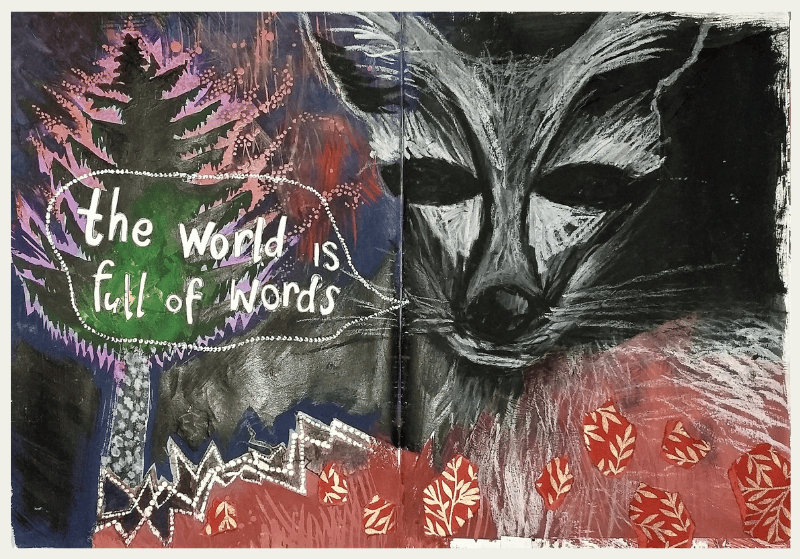
My often-defunct nervous system doesn’t know when to behave itself. Much of the time, I feel overwhelmed. I suppose that by not mentioning it to others, I am pretending that it’s not happening.
Then what if this condition of hyperarousal, amongst the lush green trees and open skies brings me such a heightened state - whereby my entire existence becomes perfectly synchronistic and at peace
What a savage and dazzling territory lies within!
Love, Eimear
—
Eimear Kavanagh's invisible committee has successfully completed its relocation to a field on the outskirts of her consciousness. They’ve established a permanent headquarters under an ash tree. While attendance is reportedly up by two, the specialist in impossible weather remains missing in action, having presumably gone freelance to consult for the clouds. The tree is listening with its customary, bark-covered focus, but it is refusing to take notes, stating that some ideas are best left to dissolve in the grass.
Some Scally From Kirkdale
by Matt Lockett
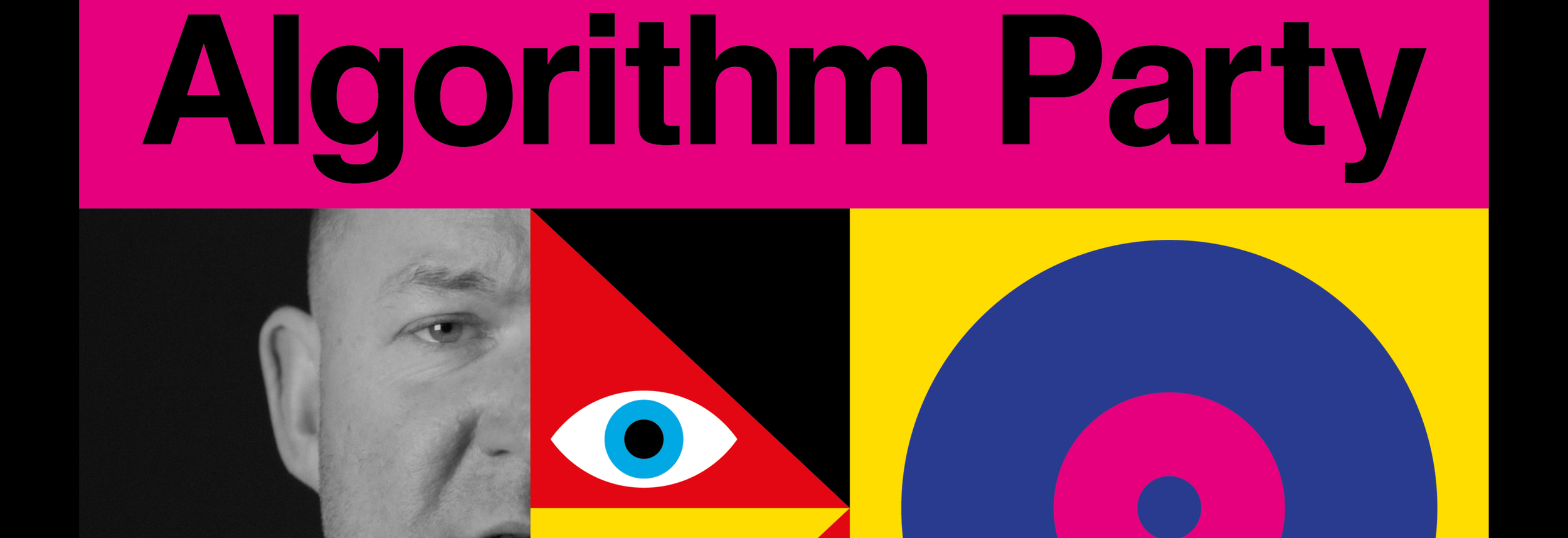
Algorithm Party is Roy Boulter's first film as director. It features PJ Smith alone on the St George’s Hall Concert Room stage, where Dickens once read to packed houses, performing to nobody at all. He's taking it round the country himself, cinema by cinema, one screening at a time.
I met PJ Smith on the internet, back when that still felt faintly disreputable. This was Shacknet, the message board for people who took Michael Head's songs too seriously, and we took them too seriously together for a good while before we ever met in the flesh, me posting as Hazeyjane, him as Oracle Head and on his stranger days as Mal Donaghy. He was someone who turned the usernames into handshakes. Around 2010, in the Everyman Bistro, PJ introduced me to Michael Head, plugged my number into Mick's phone with his own thumbs, and stood back while the thing that became Violette Records began to happen. He does that. Sets something going and steps out of the frame.
Roy was actually already a thing on the page around then. PJ had put him into a couple of pieces he wrote for The Spider Project, the recovery-through-creativity outfit, and when I first read them, around 2009, I thought there was something there and told him so and to keep going. He said he would. Then, in the way of PJ, he couldn't be arsed, struggling to start a story and struggling harder to finish one.
So when we started La Violette Società in 2016, and in true Violette style, PJ was the counter-obvious candidate to make sure it all worked. I had the idea and confided it in him. He booked the artists and made it tick, and he performed at every single night for the next ten years. Every penny of the door went to the acts. He saw to that. What he wouldn’t do, to begin with, was get up himself. That took the first Società to cure. He stood in the Buyers Club and watched the poet Paul Birtill hold a room of three hundred people in flat silence, and something turned over in him. "I first ended up on stage because Matt just put me on the bill," he told Getintothis years later, which is true and also lets me off lightly. By the second night he was up there as Roy. The billing was my condition. He'd once set something going for me and stepped out of the frame. This time I got to do it for him. It made him right, and it gave the stories a reason to get finished at last.
So I came to Roy Boulter's film already compromised. I know the man. We built a platform together and pushed him onto it. I wanted this film to be good. So let’s declare the interest and move on: Algorithm Party is good, and the reasons it's good have nothing to do with my wanting it to be.
A man walks into an empty room and talks for eighty minutes. No plot and no cast. No cutaways to dramatise the stories he tells, just a book on a stand that he opens and barely reads because he's known every word for years. Pitch that in a commissioning meeting and watch the place reach for its phones.
That room is the Concert Room at St George's Hall, and Boulter chose it for the argument it makes before anyone opens their mouth. Charles Dickens read there and called it "the most perfect hall in the world," which from a man not given to modesty is quite a thing. Terence Davies filmed Of Time and the City in the same building. There is a lineage soaked into the plaster. The great and the good of Victorian letters up on that stage, gaslight and starched collars, and now a fella from the north end of the city standing in the exact spot with a Stanley-knife voice and a book of stories about men who drink themselves inside out. Boulter puts it better than I can. "I like the idea of all the great and good of Victorian literature performing on that stage and now we have some scally from Kirkdale doing the same thing." He could have filmed it with a crowd. Roy is a live wire in front of a crowd, feeding off the shouts and the laughter. Boulter emptied the room on purpose. He wanted the voice and the stone and nothing in between.
The voice belongs to Roy, who doesn’t actually exist. His author does though. PJ Smith was a good enough footballer to be on Everton's books as a teenager, before drink and drugs took the years that should have been his best. He got sober in 2007, came to writing properly in his mid-thirties, and published Algorithm Party through Rough Trade Books in 2020. Five hundred copies. Gone in forty minutes. The stories are funny, and violent, and every so often tender, sometimes all three inside a single page, and Smith is unsentimental about where they come from. "All my writing comes from my experiences of dealing with insecure men," he told the writers behind The White Pube. "I am an insecure man as well. We're fucking everywhere. Unfortunately, a lack of awareness around being one, usually means that aggression, brutality and control are about to play out." The gap between the man you think you are and the man you are, and the wreckage that leaks out of the difference.
Roy is a composite, welded together from Smith and the people he came up with. The characters are lifted from life. Brian Scanlon, the small-time dealer turned local legend, wanders in and out of the stories like a face you keep half-recognising. Names surface from Brookside too, Max Farnham the yuppie womaniser among them, because in this city the soap and the street shared a postcode and always did. Smith denies being Roy. He also grew up in Roy's world and lives there still, which is nearer the truth than yes. He carries his notebooks to every gig in a blue carrier bag from Duncan's off-licence on Walton Road, the print on it older than a fair few of the people he reads to.
The sleight of hand is all in the delivery. On stage PJ sounds like a man improvising, three pints in, a natural who wandered up from the bar and turned out to be mesmerising. He’s doing nothing of the kind. He is word-perfect, fixed to a text he wrote and rewrote and can recite in his sleep, and in the Concert Room he keeps the book beside him though he never once needs it, a comfort object for a man who knows where every full stop lives. Boulter saw the potential years before he shot a frame. He had read the book, watched Smith perform, and thought straight away of Swimming to Cambodia, Jonathan Demme's film of Spalding Gray sat behind a desk, holding a cinema for ninety minutes on words and nerve alone. Boulter bet that Smith could carry the same load. The bet comes off.
He breaks the single-take spell only when it earns its keep. The St George's Hall footage is cut with sequences shot separately, the camera is then pushed closer, the face filling the frame, and Boulter is plain about why. "That's when he holds your attention, when you are in close." A few glimpses of the Liverpool that made Roy drift through. Otherwise it's the face and the voice and the nerve to leave them be. No swelling strings to instruct you how to feel about a man recounting his worst nights. The restraint is the craft.
Boulter has served long enough to trust that restraint. He and Sol Papadopoulos founded Hurricane Films in 2000 and spent two decades making room for other people's visions: three Terence Davies pictures, Of Time and the City, Sunset Song and A Quiet Passion; Gillies Mackinnon's The Last Bus with Timothy Spall; Jean-Stéphane Sauvaire's A Prayer Before Dawn. He arrived at directing by the scenic route, drummer in The Farm first, then a television writer with credits running from Brookside to The Bill. He always meant to direct, made a couple of shorts fifteen years back, then, his own word, "bided his time." Algorithm Party is where the biding ends. It's telling that when he finally stepped up, it was for this. A film about a mate, made the way you make something when nobody's actually paying you to.
The two of them go back thirty years, through a Friday afternoon kickabout The Farm started that’s outlived the band. Smith turned up one week and was, in Boulter's telling, brilliant, Everton's-books brilliant. Away from the camera Smith helps run Damien John Kelly House, a live-in centre in Liverpool for men getting clean, which means he spends his working days inside the exact raw material the stories are cut from. None of that is on screen. It’s all underneath.
Which returns us to that commissioning meeting and its phones. Algorithm Party has played festivals, Girona among them, and gone down well everywhere it has been shown. British broadcasters and distributors have kept their hands in their pockets. Boulter is level about the reason. "It's hard working-class stories. While all of the broadcasters pay lip service to working-class drama, when it comes to it being commissioned, there is not a lot of it." A film in which a working-class man speaks at length in his own words, with no middle-class narrator on hand to translate him for the nervous, is a harder sell in 2026 than anyone in that building would admit. They will tell you they are gasping for authentic voices. Then one turns up, complete, and the phone stays face down.
Boulter permits himself a flicker of hope, hung on Adolescence, the Netflix series that turned a working-class catastrophe into the most discussed thing on British television and, he suspects, left the same commissioners suddenly ravenous for the register they had been ducking. "I think if we went back to the channels now, it may be a little bit different." Perhaps. Fashion is a fickle landlord, and a story doesn't become more true the week it becomes marketable.
Someone had to decide this was worth doing. Someone had to find the money and clear the diary, and then point a camera at a man reading short stories to an empty hall and trust it would hold for eighty minutes, no broadcaster attached, no obvious way of ever getting the money back. Roy Boulter did all that, at his own risk, because he thought the work had earned its place and the man had earned the room. In a business that spends fortunes chasing the safe bet, choosing to make a film about a Liverpool storyteller is closer to an act of faith than a career move.
And he picked the right man. No drama school turned PJ Smith out. Not the BRIT School, not LIPA. He came up the other way, through the drink and the drugs and out the far side into recovery, holding a pen because it was the one thing he had and following it with no map and no plan beyond getting somewhere better. He still does it. At the same house where he helps other men get clean he gets them writing too, preaching the practice that pulled him out. Make something, he tells them, and it can set you loose. It can give a man back a purpose, and some idea of who he is, when everything else has gone. He is living proof of that sermon.
A Walton library is where PJ first heard Paul Birtill, the poet who lit the fuse under all of it, a shift skipped to be there, a text fired off straight after: "Who the fuck's this guy?" Libraries did that for him. Free rooms where a lad with no plan walks in and collides with the thing that turns him around. His own library was Spellow, on Spellow Lane, and in the summer of 2024 a mob torched it, a few streets from where these stories live, in the riots that followed the Southport killings. A local woman, Alexandra McCormick, started a collection to put it back together and set the target at five hundred pounds. It passed a quarter of a million. Nigella Lawson chipped in. Frank Cottrell-Boyce chipped in. Queen Camilla sent nearly seventy books. It reopened before Christmas. That’s the film's argument arriving from the other direction: a camera fixed on a Walton storyteller, insisting his words are worth keeping, in the same months his manor was proving both how much these places matter and how fast they can be taken.
So when I sat in the dark and let a man tell me about the worst people he has known and some of the worst things he has done, I came out the far side liking him more than when I went in. That’s the miracle of the thing. Roy never asks for forgiveness and he’s performing no recovery. He tells the truth on a slant in a language that is precisely his, in the most perfect hall in the world, to nobody. Smith has a new book out now, Boomerang Process, and a scripted drama on the way set in these same streets. The character who first found his feet on small stage on Parr Street in a now demolished venue, because I put him on the bill and Paul Birtill had shown him what a silenced room sounds like, is standing now where Dickens stood.
So hats off to Roy Boulter. He's made a beautifully produced document of a time and a writer, both of which deserved one.
Watch it, if they ever let you. Better still, make them.

I caught up with Roy Boulter of Hurricane Films for a quick chat about Algorithm Party on the empty hall and why he thinks television keeps its distance.
● Roy is at his best in a room with all the tension of an attentive audience and yet you put him in an empty hall. A one-way communication is a big call. What were you chasing by taking his audience away from him?
My initial idea was just to catch PJ performing Algorithm Party live in front of an audience - like capturing a great new band touring their first album. I'd seen him do lots of the material at gigs and Violette nights - and the book launch at the Royal Court, but then I decided I wanted to do more than capture a gig - which people can do any time. I always loved Swimming to Cambodia - which was a play - one man telling stories, but the film didn't feature an audience and was all about the story - and staging. So it went from there. The addition of music was a big thing, the two Steves (Steve Powell and Steve Grimes) did such a great job - I didn't want either to hear what the other was contributing - but each score complements the other. We put in applause at the end, a bit of irony, just to point out the lack of a crowd.
● Dickens performed on that stage in the Concert Room. And there’s the links to Terence Davies. Now it's PJ from Newby Street. Half of me thinks the room does him a favour and half of me thinks it's daring us to find him wanting next to the Victorians. What was it in your head?
Dickens performed to - and was loved by - the working class. I wanted to draw parallels - we're not saying PJ is the new Dickens, they just tell similar stories about people. As opportunities to experience long-form working-class stories (rather than clips of people arguing in the street or talking shit in their cars on Insta and TikTok), it's more important than ever to get those stories heard. And I really liked the idea of the tales of Scanlon being performed amongst that splendour.
● Everyone in TV swears they're gagging for working-class stories, then they won't go near this one. Do you think it's the subject matter, or is it that there's no drama-school gloss on it and no posh narrator to hold the audience's hand? And your Adolescence reference nags at me - yes, it's kicked a door open maybe, but it did it around the shock and circumstances of a murdered child. Roy's funnier and arguably stranger than that, less obvious. Do you worry the only way "in" is to make him sadder, straighter and more shocking than he is?
I just think TV commissioners are intimidated by these stories - or they don't understand them because they haven't experienced that world. I don't want to draw parallels between Algorithm Party and the Adolescence plot/themes - just the 'setting' and social strata.
● You've known PJ for 30 years and you handed him this. Did being that close let you catch things a stranger with a camera would've missed or does your association stop you seeing what wasn't landing?
On catching the performance - I think my 'director' credit is doing a lot of heavy lifting on this. There was little or no direction, performance-wise. There was no need, PJ is a natural 'performer'. I think Roy is a remarkable performance / character. Whether it is or isn't PJ playing himself or a version of himself is irrelevant - what we see on that screen is acting and that was all PJ. Honed from hours on stage. The direction was more about the staging, the setting, the addition / selection of the music - and the actual decision to get it done and the execution. So, more like producing - my usual role.
—
Algorithm Party film is screening at :
13 Aug 2026 - Plaza Cinema, Crosby - Tickets
20 August 2026 - FACT Liverpool - Tickets
More dates to be announced soon.
I’m Trying To Follow The Instructions
by Donna Enticknap
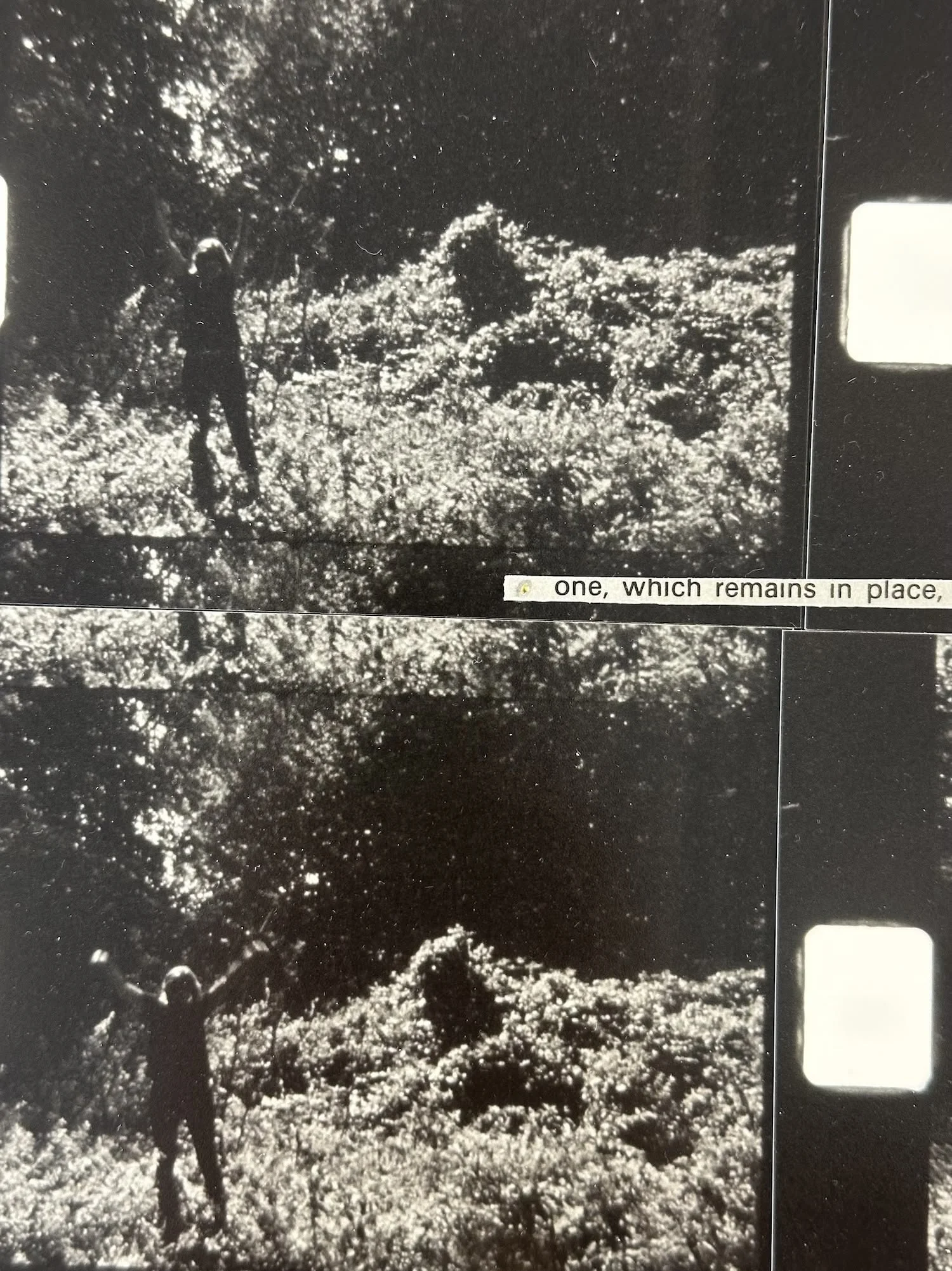
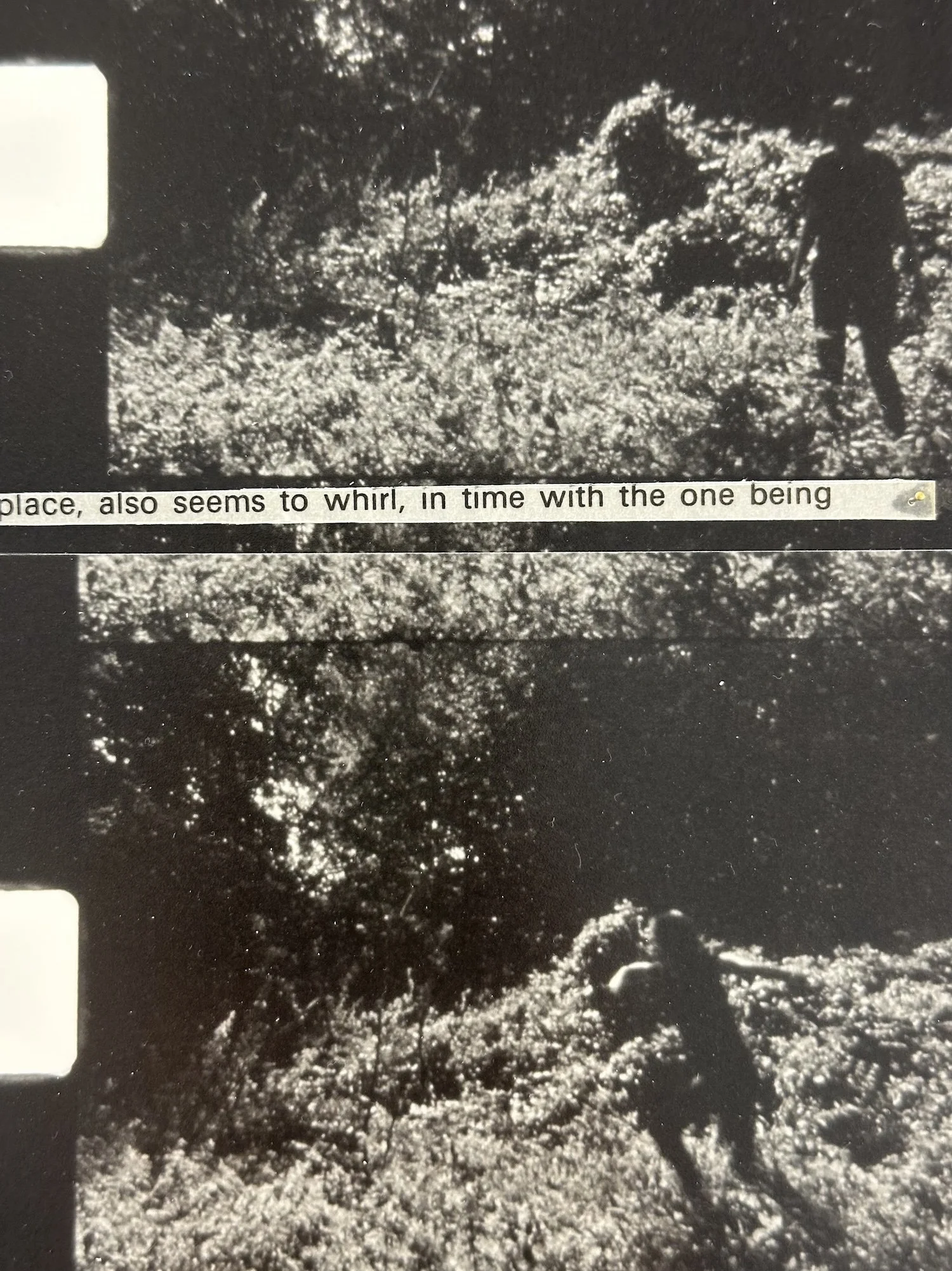
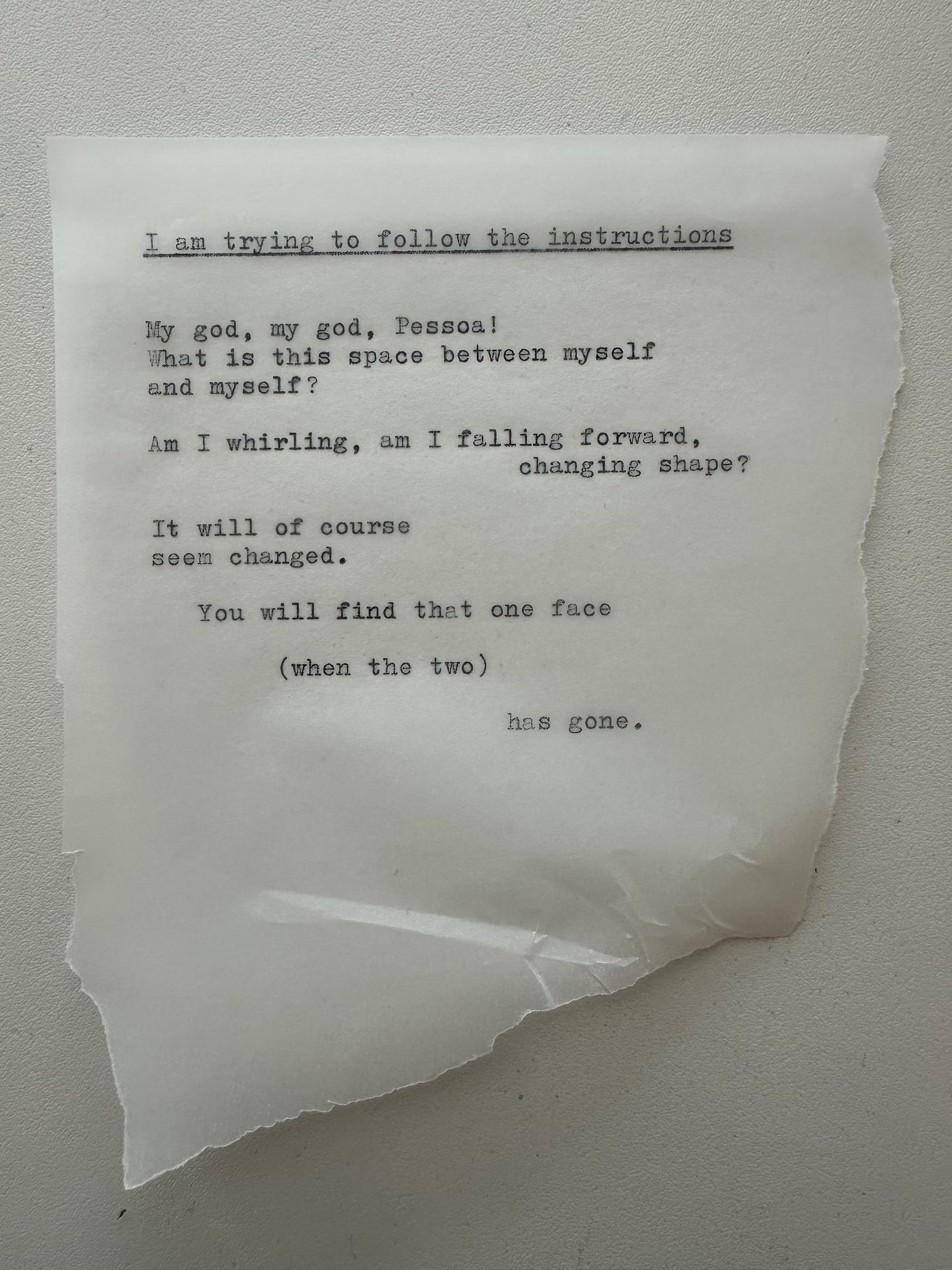
—
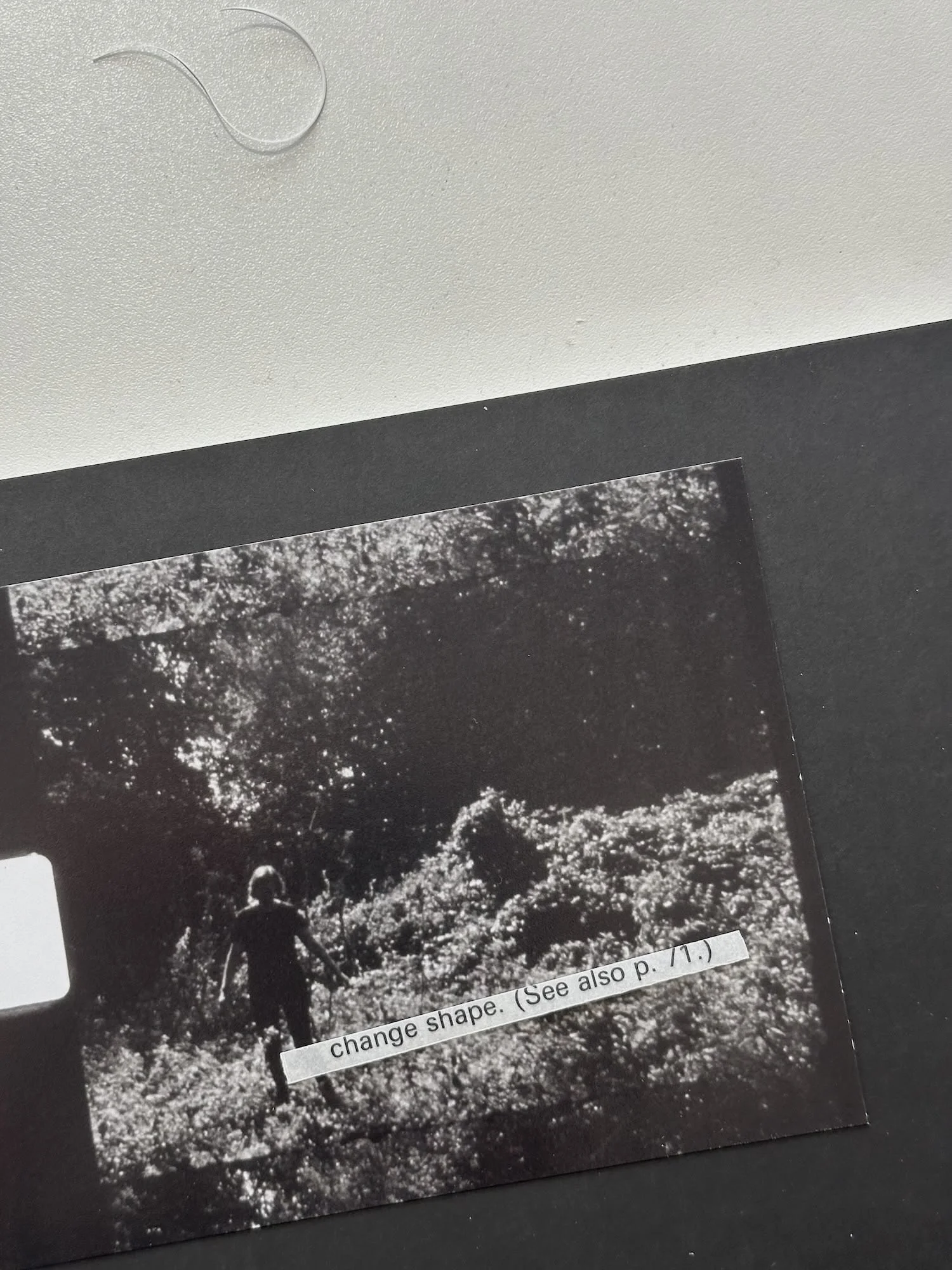
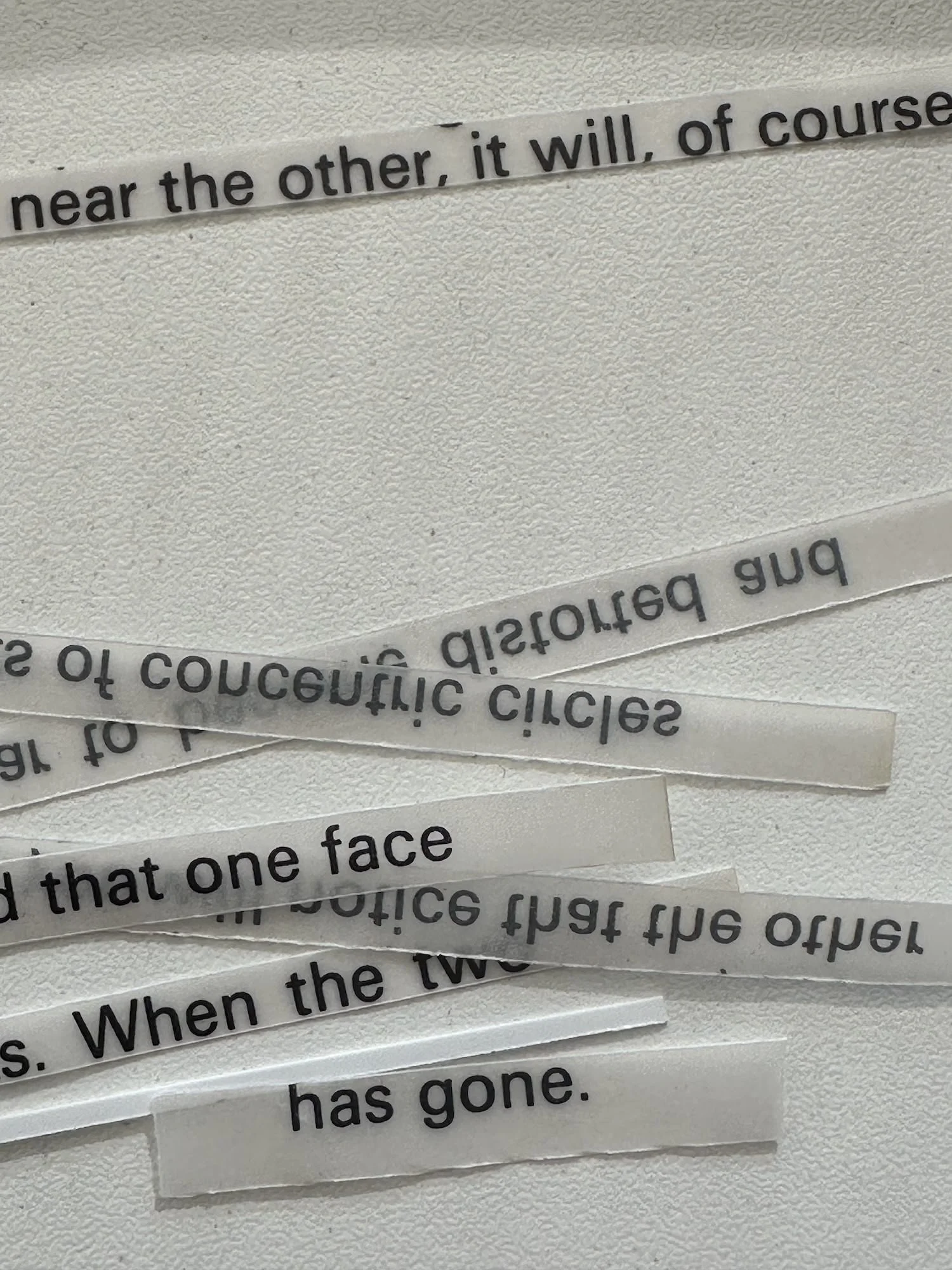
Donna Enticknap has been waiting eleven years for a comet she was promised as a child. Nobody in particular made the promise. The date is written in pencil on the inside of a kitchen cupboard door. She spends her evenings sifting through the cutlery drawer, convinced that the low-frequency hum that sometimes emits from a specific silver fork is actually a countdown transmission from the approaching debris.
On the Town With Bix and His Gang
by Michael Stoddart
As a younger man I was friendly with a swimming instructor who worked Saturdays. I had a frankly agnostic attitude to swimming, instructions and work, but I was devoutly observant about Saturday evenings. On the one in question, she picked me up as usual, and off we drove to town.
“What have you been up to today?”
“Just working, same old. Nobody drowned or anything. You?”
“Same old for me, on the whole. Leisurely croissant breakfast, a trip to the spice shop on Bold Street for some cupboard staples. Oh, and I bought an album of Bix Beiderbecke recordings from the 1920s. It might have already tilted the axis of my life a little.”
“Never heard of him. Is he good?”
Is he good? Was it too early to invoke the divine right of old punk rockers to be pig-headedly opinionated? Careful now…
“Yeah, sounds all right so far. I’ve only listened to it the once, mind you. I’ll give it another go tomorrow.”
He was good, though. Not just “quite enjoyed that” good, but “imminent lifelong exploration of its many moving parts” good. By then I was conversant with many parts of the balloon-on-jumper end of the jazz spectrum, to which one might gravitate after the punk era. But this was the other end altogether, the end where young men looked middle-aged and had off-centre centre parts, given extra sexiness by a little dab of Brilliantine. At this end, people had names like Chauncey and Itzy and, well, Bix. In fact, the chap playing the banjo was called Howdy Quicksell!
I had no idea yet of what place in the music’s history any of these fellows occupied. I didn’t know at first who was playing what, or what I should have been listening out for. Bix wasn’t a top-C-botherer and he enriched the music rather than overpowering it. Indeed, he played only the most fleeting introduction to the first tune before it continued largely as a vehicle for Frankie Trumbauer and his mellifluous c-melody saxophone. A little annoying to some Bix fans, by all accounts, but therein lies the joy of hearing something before anybody tells you that you shouldn’t like it!
I gave it another go the following day, as promised. And the day after that, and forever. It came to sound quite unlike American vernacular music and more and more like autumn in the North of England. Russet brass blew warming auguries of an imminent winter amid the shifting dusks of weekend walks, while undulating woodwind sang of a social life lived among the excitements of a thrilling darkness.
And this beautiful music wasn’t without a certain humour. Bix’s solo on ‘Singin’ the Blues,’ still one of the best-loved of all jazz records, finds him letting rip an uncharacteristically excited high note which sounds as if one of the band had just pinched his arse. On ‘Clarinet Marmalade,’ a tipsy Jimmy Dorsey played a couple of bum notes: a while later, Bix was playing with some scholars who had transcribed the recording note for note, “including Jimmy’s clams!” Now be honest, who among us would not have preferred to have been educated via the medium of Jimmy’s clams? In fact, for your homework I’m going to tell you to listen to the record, paying close attention to the clarinet, and see if you can spot the clams. Who knows, maybe you too will enjoy a ravishingly colourful journey through the panorama of jazz antiquity!
—
Michael Stoddart has been thwarted, for the fourth time, in his attempt to have a blue plaque installed on the third bedroom of a semi-detached house in Old Swan. According to a source, now unfortunately deceased, the house is where nothing much happened in 1978, unless one counts a bottle of Fitou drunk in silence while Coleman Hawkins played on the radio. The council has requested clarification. Mike is preparing his response.
Other People’s Windows
by Clare Archibald
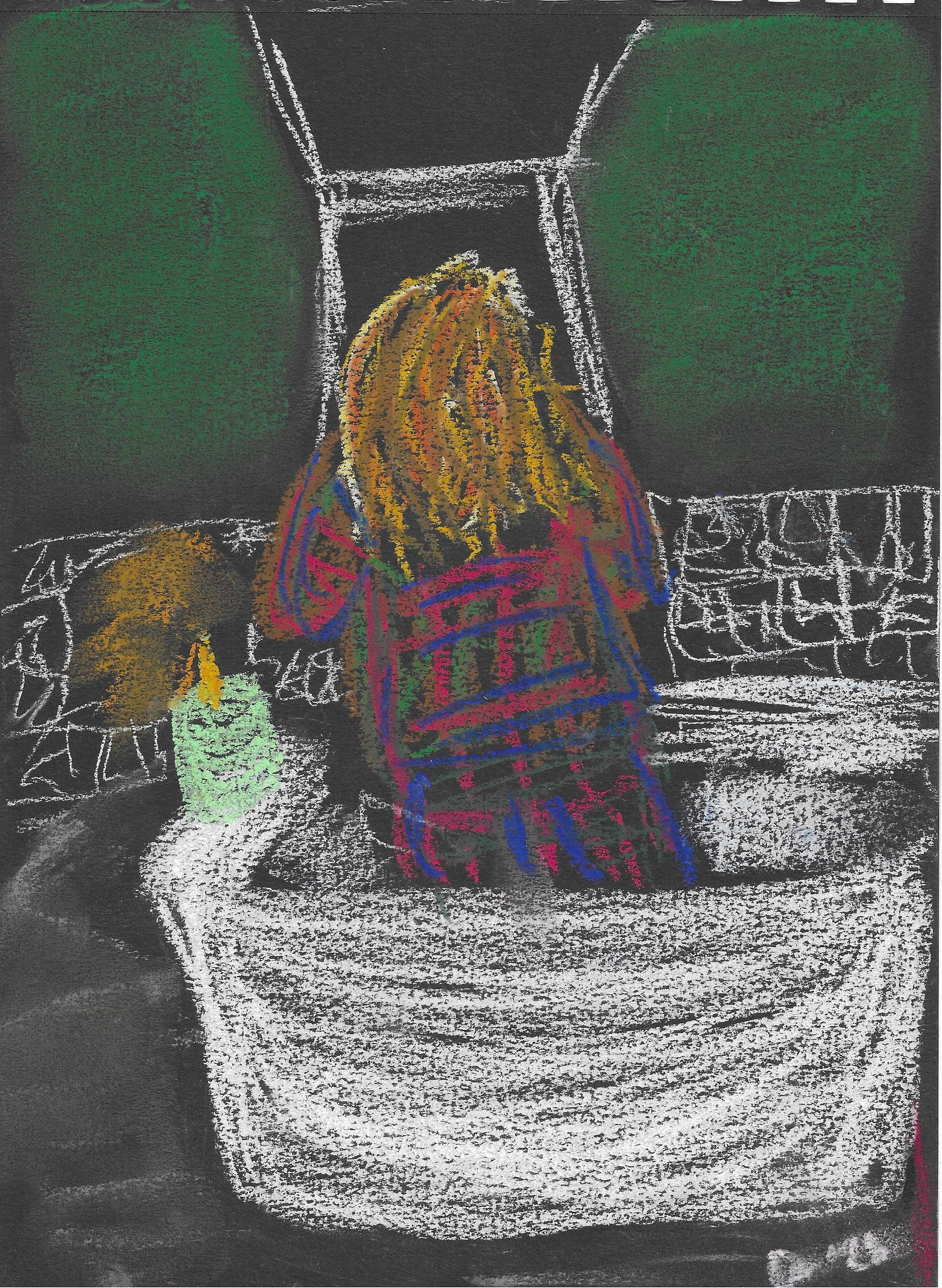
Self Portrait in Pyjamas
There is a window in Burntisland (one word pronounced as two, remember) with a pink light in it and nobody visibly at home. Clare Archibald has been watching it for months.
She is a Scottish writer and artist who works across text, image, sound and place, and whose body of work on expected neonatal death and the UK baby ashes scandal has been acquired by the Wellcome Collection. Other People's Windows is her strand here: one photograph from an archive of hundreds, paired with whatever that particular window turns out to ask for. This one asked for a comic strip.
She told us at the outset that the editions wouldn't stay in one place. Two in, she hasn't left Burntisland. The title suggests she may not be the one doing the choosing.

—
Clare Archibald has written four versions of a note intended for the house with the pink light. The first draft ran to a page and a half; the current one is four words long and she hasn't posted that either. Somewhere between the second and third attempt, she stopped addressing the people who live there and started addressing the light itself.
The Cult Continuum
with Matthew McPartlan
Matthew McPartlan brings his The Cult Continuum to a close here, eight entries on from Michael Hurley in April. His last subject is Ferdinand Cheval, a postman in the Drôme who tripped over a stone in 1879. The Surrealists turned up decades later to claim him, by which point he was safely dead and unable to comment.
Every entry in this run has been about somebody talented and resilient. Matthew has been doing the same in the writing. All eight of them, each one better argued than the last. We’ll have him back tomorrow.
#8 Ferdinand Cheval
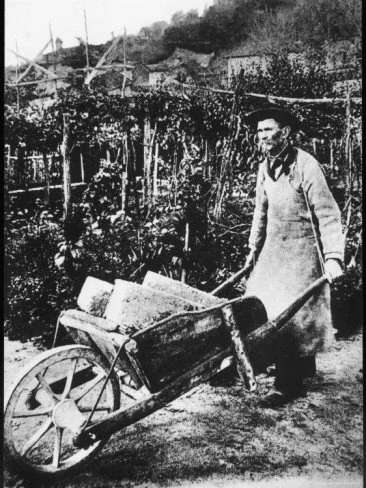
Grave Architecture
A few years ago, a former employer ran some training sessions. A colleague who did his training the week before mine came back with a warning: the training itself was good, but the first thirty minutes were spent on an icebreaker where everyone had to stand up and talk about their heroes. That gave me a full week to overthink it and prepare an answer far more intensely than the situation deserved.
Family felt too obvious. Musicians felt too predictable. Sports stars too boring. I wanted something that said more, something that had quietly endured. Then it came to me: Ferdinand Cheval.
I spent the following week preparing for an off-the-cuff answer to discuss the obscure French 19th century countryside postal worker and outsider artist.
Cheval had never really left my consciousness since I first encountered him years ago in John Maizels' Raw Creation which was loaned to me by a tutor at art school. In preparation for the training I did further research. I re-read, relearned the details, sharpened the edges. I was ready.
The following week when the training session began, our trainer informed us that we would be conducting an icebreaker to get the conversations flowing. She turned to me first and asked:
"Tell us about your favourite TV programme."
Just like that, it was gone. A week of obsession, rendered completely useless in a second. Pure Costanza. The perfect line, delivered to no one.
But if that moment wasted this obsession, ten years later the Cult Continuum redeems it.
For those of you not in the know, Ferdinand Cheval (1836–1924) was a rural French postman who lived in Hauterives, in the Drôme department of southeast France. The story goes that in April 1879, at the age of 43, he stumbled over a stone on his postal round, a route that covered roughly 20–25 miles a day. Something about it caught his attention. He took it home.
Then he brought another.
And another…
What started as curiosity became routine, then compulsion, then something closer to purpose. Over the next thirty-three years (1879–1912), Cheval built the Palais Idéal in his garden entirely by hand, entirely alone, out of stones he found on his route.
No training. No architectural background. No artistic education. Just persistence.
The structure itself is extraordinary: part cathedral, part grotto, part something else entirely. It draws on global influences, Egyptian, Hindu, medieval, without ever feeling like imitation. It's instinctive, almost dreamlike. A complete rejection of formal rules.
He collected stones during his rounds, sometimes carrying them in his pockets, then returning later with a wheelbarrow. Building in the evenings, nights and weekends. It was funded modestly from his wages, but really, it was built on time and sheer endurance.
There was ridicule, of course, from his neighbours, from those around him, from people watching what must have looked like madness. Yet, he carried on. Day after day. Year after year.
Not to prove them wrong in any performative sense but because he'd committed.
He originally intended to be buried within the Palais itself, folding his life into his work. When laws changed and that became impossible, he simply adapted: spending the final eight years of his life building his own tomb in the local cemetery.
After his death recognition came. Figures like André Breton admired the Palais Idéal as a pure form of artistic expression. Comparisons are often made to Gaudí, not through direct influence, but through a shared sense of vision that sits somewhere between architecture and obsession. One working within a recognised system, the other entirely outside of it.
This is why he belongs perfectly in my final Cult Continuum. Because across everything discussed in this series: the outsiders, the obsessives, those steadfastly carving their own path, there's a common thread. The pull towards something just beyond the norm. Work that doesn't rely on validation to exist and Cheval might be the purest example of that.
There's also the Renaissance aspect I keep coming back to, not in the classical sense of mastery, but in the deeper idea that we are not fixed. That capability isn't reserved for the trained or the chosen. It sits there, dormant, until we decide otherwise.
Cheval didn't wait to be told he was capable. He decided he was.
This is the brilliant truth: we are all capable of something meaningful, something lasting. The barrier isn't talent. It's perception, what we think we are and what we assume we're allowed to be.
The Palais Idéal stands as the proof. Built stone by stone, outside the system, against expectation, sustained purely by belief and persistence.
The ideal, in every sense.
— Matthew McPartlan, 29 July 2026
The Paranoid Style
by Karl Whitney
You could call it jumping to conclusions. A man in his sixties, in what seems to be a permanent state of agitation, tells me that the roads are too dangerous because of immigrants' bad driving. Another man, who I encounter in a pub in England, appears to know few beyond his own kind, yet speaks with unearned authority about other cultures and how they're not like 'us'. How are you so certain, mate?
I was thinking of these recent exchanges while reading Richard Hofstadter's essay 'The Paranoid Style in American Politics'. Published in Harper's Magazine in 1964, it anatomises a swivel-eyed tendency in US political rhetoric that continues to feel relevant in the current era. (It was published in Penguin Classics on the 28th May as part of a collection of Hofstadter's essays.)
Hofstadter was writing in response, at least partly, to his contemporary moment: the mainstreaming of the paranoid rhetoric of the extreme right wing, something that particularly came into focus with the Republicans' selection of the proto-Trumpian Barry Goldwater as their nominee for the 1964 presidential election. But, being a historian, he looked further back, at the evolution of that tendency in American political life over the previous couple of centuries, tracing it through fears of the French Revolution, the Illuminati, Freemasons, Catholics. All were perceived by a conspiratorial strand of American political thought as other and opaque, enabling the paranoid projection onto them of demonic practices or subversive intent.
So what are the features of the paranoid style? A feeling of persecution amongst its adherents is essential. It's not necessarily the product of someone clinically paranoid – in fact, it rarely is. Rather than the individual believing that the world is against them, they see it as directed against "a nation, a culture, a way of life". They believe that something is being taken away from them as a group. Hofstadter sees in it a religiously derived worldview that's both Manichean and Apocalyptic; that is, it divides the world into good and evil and anticipates catastrophe – unless, that is, something is done to stop it.
It's style over content: more connected with the way in which "ideas are believed and advocated" rather than whether they're true or false; although, in Hofstadter's judgement, "the paranoid style has a greater affinity for bad causes than good". While mostly seen on the right it's also seen on the left, Hofstadter writes – a both-sides perspective that later led him to see something of that style in the student protests at his own university, Columbia, in 1968.
At the centre of the paranoid style is a break from the evidential and the logical to draw outlandish, fantastic conclusions. It's the whole point, really; the thrill. The paranoid stylist goes from a pedantic presentation of evidence to a flight of fancy: "the careful preparation for the big leap from the undeniable to the unbelievable", Hofstadter writes.
All I can say is that, well, it's an everyday occurrence now. You stand in a pub having a chat with a friend when someone sidles up to you wanting to talk about the world going crazy. Fair enough, you think, but then they open their mouths and whatever emerges succeeds, somehow, in outdoing the craziness of the world by a significant ratio. It doesn't take long for the "big leap" that Hofstadter describes, and you watch the exhilaration enjoyed by the paranoid stylist with a mixture of envy and horror – like witnessing someone who believes they're about to fly wearing wings they themselves have fashioned from waste paper and old underpants.
What's striking about Hofstadter's analysis isn't just that it's still plausible, but that such a style has become common currency – certainly far beyond the reach described in the essay. Politics, Hofstadter writes, is "deeply affected by the way in which it is perceived and felt", becoming a plaything for the "emotional life of the masses".
One can put this down to many things – the internet; so-called 'fake news'; the death-drive politics of Brexit, Farage and Trump; the effects of the pandemic – but at the core of it is the individual's attempts to decode the world, attempts that can often come with an almighty effort to unveil a hitherto hidden aspect that somehow explains everything. The conspiracy theory is never too far away.
These individual attempts at interpretation typically end up resembling one another. Such interpretations trickle down from the top or creep up from the bottom. And they invariably take the form of an unshakeable belief. For all the talk of debating and free speech the paranoid stylist shrugs when challenged and simultaneously indicates that what they say both matters and doesn't matter at all. One can only develop such theories to their fullest extent when one thinks that nothing you say carries weight or comes with a responsibility to provide proof.
The paranoid stylist sees only the consequences of power "through distorting lenses with little chance to observe its actual machinery", Hofstadter writes. Shed light on the workings of power to reduce the effectiveness of the paranoid style? This is a logical position for the eminently sensible author to take, but perhaps the worrying truth about the paranoid style – why so many continue to be drawn to it, why institutions continue to struggle with combating it, why unscrupulous politicians benefit from it – is simply that it's just more fun.
—
Over the last three years, Karl Whitney has become certain that McVitie’s have reformulated the digestive biscuit without a public announcement. He has no evidence, nor does he feel he needs any. He considers the theory unfalsifiable, which he takes as further proof. He also maintains, on grounds he prefers not to discuss, that the city of Norwich has been drifting south at a rate of approximately four metres a year.
Heat
by Victoria Raftery
I wick sweat from my eyebrows with the back of my hand and make for the shade at the end of the garden, fan in one hand, phone in the other. Earbuds in, I bluetooth to yesteryear, to five decades before, to a previous heatwave
You To Me Are Everything so Don't Go Breaking My Heart (he did)
You're My Best Friend; Let's Stick Together (she didn't)
Kiss and Say Goodbye
Misty Blue
Young Hearts Run Free
1976. I was thirteen and it was hot
Jeans On
You Should Be Dancing
(Yes, I should be, so I did)
Heaven Must Be Missing An Angel (yeh, Simon Watts)
Dancing Queen (yeh, Simon Watts, look at me now)
1976, thirteen years old and resiliently dancing through the heat in flares, clogs and a halterneck
Five decades on and it's just as hot
Earbuds out
They're singing down the road, down at our local
Wonderwall
Hey Jude
Sweet Caroline
Youth club discos
Boyfriends snogging friends
Heat
Heartache
Best summer ever
Here Comes The Sun
—
Victoria Raftery is the current holder of a highly prestigious household record: seven consecutive years of announcing she is finally going to sort out the loft. There are boxes up there she hasn’t opened since 1998, and at least one of which she is fairly sure contains her wedding album, and at least one which she is fairly sure doesn’t. The record is safe for the foreseeable future. Her husband has stopped asking for updates and the cat has officially rescinded its membership of the loft-exploration society.
The Gen Alpha Lexicography
by Maya Chen
27: 'Delulu'
Etymology: A shortening of 'delusional,' originating in Korean-pop fan culture around 2014, where it described the very specific type of fan who has decided, in defiance of geography, contractual reality and the laws of physics, that a member of her favourite boy band is on the verge of proposing. It migrated to the broader anglophone internet around 2022, propelled by the maxim 'delulu is the solulu,' a Gen Z philosophical position which holds, roughly, that if you believe something hard enough, it will happen. Employed in 2026 by children who wish to reframe their circumstances rather than accept them, and by their parents, who are secretly doing the same.
Lily arrived home from school on Tuesday and announced, with the air of a woman confirming a booking, that she is going on holiday to Menorca in July with her friend Ivy and Ivy's family. I asked her when this had been agreed. She waved her hand in the direction of nothing in particular and said that it had not, technically, been agreed, but that she was being delulu about it, and that being delulu about a thing was, in her current understanding, the way you made a thing happen.
I sat down.
The word itself is a very short journey. Delusional becomes delulu by the same route that adorable becomes adorbs and difficult becomes deffo. Gen Z, and Gen Alpha behind them, have been shaving the corners off polysyllables for a decade now, on the grounds that if a word can be made cuter, why wouldn't you. What is interesting is not the word but the doctrine attached to it. To be delulu is not to be mistaken. It is to have chosen, deliberately and cheerfully, to interpret the available evidence in the most favourable possible way, on the basis that the alternative interpretation is not actually going to help you.
The relevant slogan is 'delulu is the solulu,' which I have seen printed on a mug. The philosophy is that delusion, correctly applied, is a technology. If you believe you will get the job, you will apply for the job. If you believe he likes you, you will speak to him. If you believe you can perform on the school stage without your legs giving way, you might just do it. Delulu is manifestation for a generation that finds the word manifestation embarrassing. It is a small, portable, deniable form of hope.
It is also, in the wrong hands, a way of ignoring things that require attention. Lily is not going to Menorca, unless Ivy's family unexpectedly extend an invitation before the flights are booked, which they will not. Being delulu about it, in her framing, is meant to prevent the invitation from failing to appear. It has not, so far, worked.
But I have been trying, over the past week, to catch myself out. There are, I realise, several things I am currently delulu about. The book I am going to read this summer. The room I will paint in September. The conversation I mean to have with my mother that has now spanned three years and one recent birthday. The vague conviction that the pile of Lily's outgrown clothes on the landing will move itself, if I ignore it for long enough, into whichever charity shop is planning to take it. All of this is delulu.
I am not sure the word is really a Gen Alpha innovation. It is a Gen Alpha name for something adults have been doing for their entire adult lives. We have always chosen the version of events that lets us keep going. What Lily has done is give it a hashtag and a slogan and a mug. The rest of us have been getting on with it unlabelled.
On balance, she may be closer to Menorca than I am to my mother.
Next time: 'Skibidi' – the sound of a generation deciding that meaning is optional.
—
Maya Chen has decided, for reasons she cannot explain even to herself, that she will run the London Marathon in 2027. She hasn't actually entered yet. She also hasn't run further than the nearest bus stop, an omission she chooses to interpret as "strategic pacing." When her daughter requested a look at the training schedule, Maya explained, with considerable poise, that the plan is currently in its "conceptual phase."
Free Falling
by Angie Woolfall
Highwire walkers know
No net below the void may call
And on firm ground they could not tell
That if they fell
There were other ways to break their falls
As they start to sway
And their body starts to tip
The hearts dead weight
With its eternal longing shifs
The free-will flesh machines
Listing with determinism
Momentum toppling
A façade of toughened stitches rip
Pumping out endless love
Sending a cascade
Descending
It spills
And it will
Land where it lands
Below invisible from above
Parched ground guzzles up
This torrential out pouring of
Long awaited hydration
Causing hidden seeds to burst forth into life
Blooming wildly covering the ground with
The thickest carpet of colour and green
Where into Mother Nature's arms
Like a warm blanket around the shoulders scene
She catches them one by one
Those bravest of hearts
Who high wire walk
Risking it all
To be free
To fall.
—
Angie has read the lease. There is no building yet, which she doesn’t regard as an obstacle, and she’s been through the clauses twice. The room at the back is not to be a bar. The poetry goes upstairs where the acoustics are worse and it simply matters less. She has already selected thirty-one chairs, though she is refusing to reveal their origin.
The Fortnight
Love Factory / Metronomy
Liverpool on a Tuesday morning is a different city entirely from Liverpool at nine at night.
I Guess Time Just Makes Fools of Us All / Father John Misty
An hour roaming town with nowhere I had to be. But I kept checking my phone anyway.
subconscious / DIVIDEDBYZERO
Day forty-one. Legs going, head somewhere else entirely.
Deep In Love / Bonny Light Horseman
Euston, ten past seven, drinking coffee I didn't need. The day hadn't started and already felt too long.
Remember Love / John Lennon, Yoko Ono
You can get most of the way through a day in Liverpool without hearing him. Then you don't.
New Beginnings / Yard Act
Someone had repainted the whole parade in town. The same shops, the same colour.
On a Coconut Island / Louis Armstrong
Barbecue lit. This arrived at random. Nobody asked what this was. Except me.
Lounge Lizard / Molly Lewis
Two hours in the garden doing something that needed twenty minutes.
Kairos / Laura Misch
I love it when nobody wants anything - especially me.
Believe Me / Baby Rose
I told someone in London I'd been running fifty days. It sounded ridiculous as I said it.
Leathery Whip / Aldous Harding
Into town again. A woman walking three small dogs and all of them pretty furious.
Just A Dream / Cool Sounds
On a train back. 2 hours of not doing the work I'd brought with me.
Sarah Waiting in the Car / Elanor Moss
Heard, appropriately, whilst parked up outside for twenty minutes rather than go in early.
Saw You in a Dream / The Japanese House
Woke up convinced I'd missed a day. I hadn't.
Left Over / Cécile McLorin Salvant, Metropole Orkest, Jules Buckley
The morning after a barbecue. Half a bowl of something nobody could identify floating in rainwater.
Louisiana Fairytale / Cosimo and the Hot Coals, Marco Benny Pretolani
Weeding at the back with this on. Maybe the best hour of the fortnight - although not while it was happening.
Duboko Je More / Branko Mataja
Someone else's grandfather's guitar, somewhere I’ve never been.
I Can't Control This Bliss / Marco Benevento, Dream Crease
Mile four uphill and nothing’s hurting. This only happens maybe twice a month.
By a Thread / Raoul Vignal
Day fifty. But if I miss one evening, it's day one again.
La vie à 2 / Manu Chao
Last of the light in the garden and there’s nothing left to do out there.